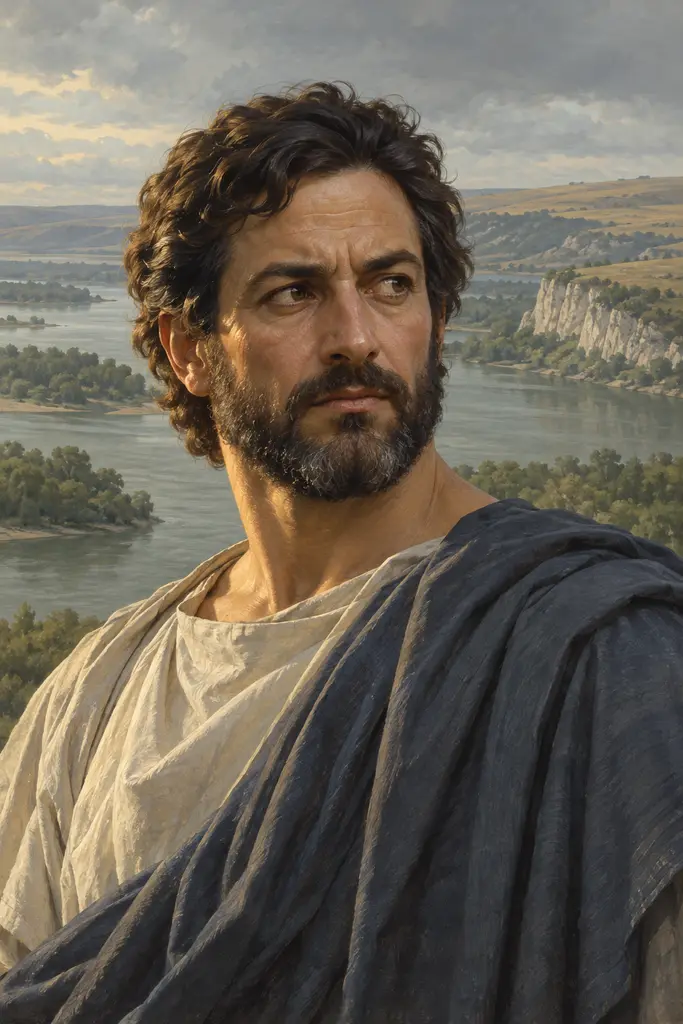
Histiaeus of Miletus
Greek tyrant of Miletus under Darius, keeper of the Ister bridge, died 494 or 493 BCE
In the game: Level 6: The Bridge of Boats, Level 7: Sardis Burns
Histiaeus was tyrant of Miletus, the leading Greek city of Ionia, in the reign of Darius. Herodotus makes him the man who saved the King's bridge over the Ister about 513, and later one of the instigators of the Ionian revolt of 499. Rewarded, kept close at Susa, distrusted and finally executed, he shows how Persia ruled Greek cities through loyal local tyrants, and how fragile that loyalty could be.
In the game: The game's chronicle presents him as keeper of the Ister bridge and repeats Herodotus's tattoo story. It dates his death to 494, but Herodotus places his capture after the fall of Miletus, so it may have come in 493.
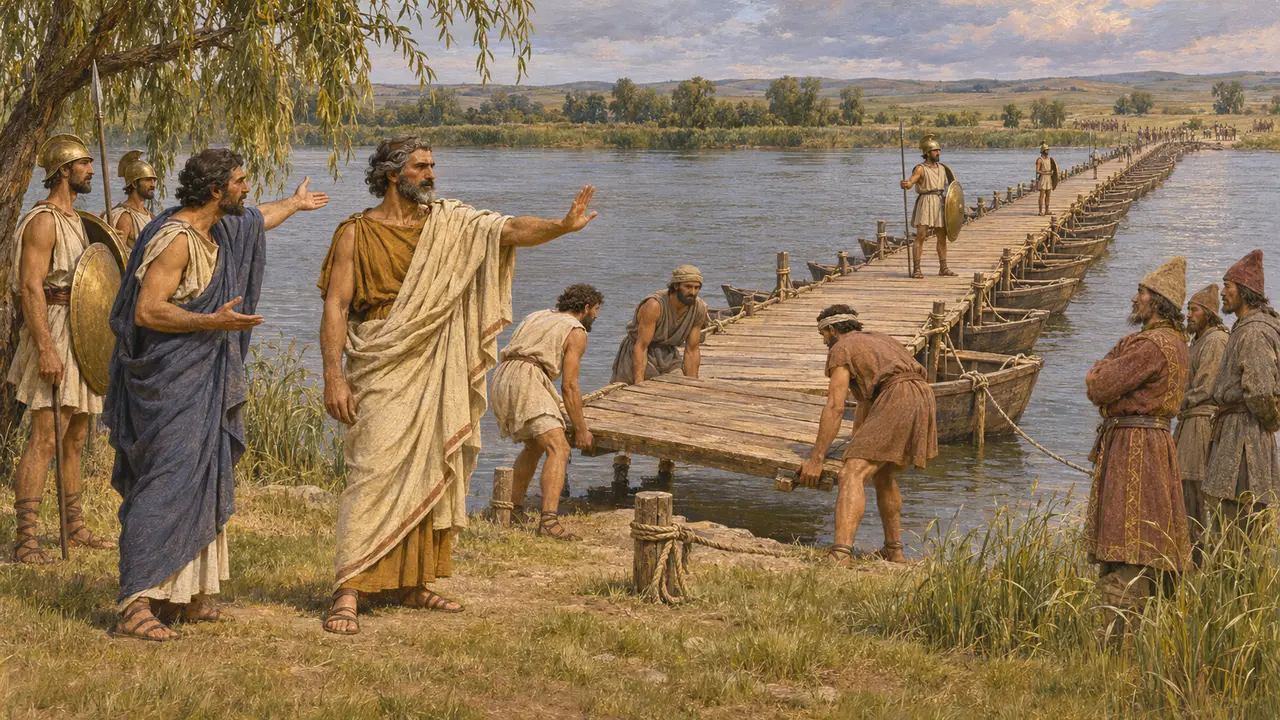
Keeper of the bridge
Ancient accountHerodotus says that when Darius crossed the Ister against the Scythians, about 513, the Ionian tyrants were left to guard the bridge of boats. When the Scythians urged them to break it, Miltiades of the Chersonese spoke in favour, but Histiaeus argued that each tyrant held his city only through Darius's power. The Ionians took apart only the northern end as a show and kept the crossing open for the retreating King.
Herodotus 4.136-141
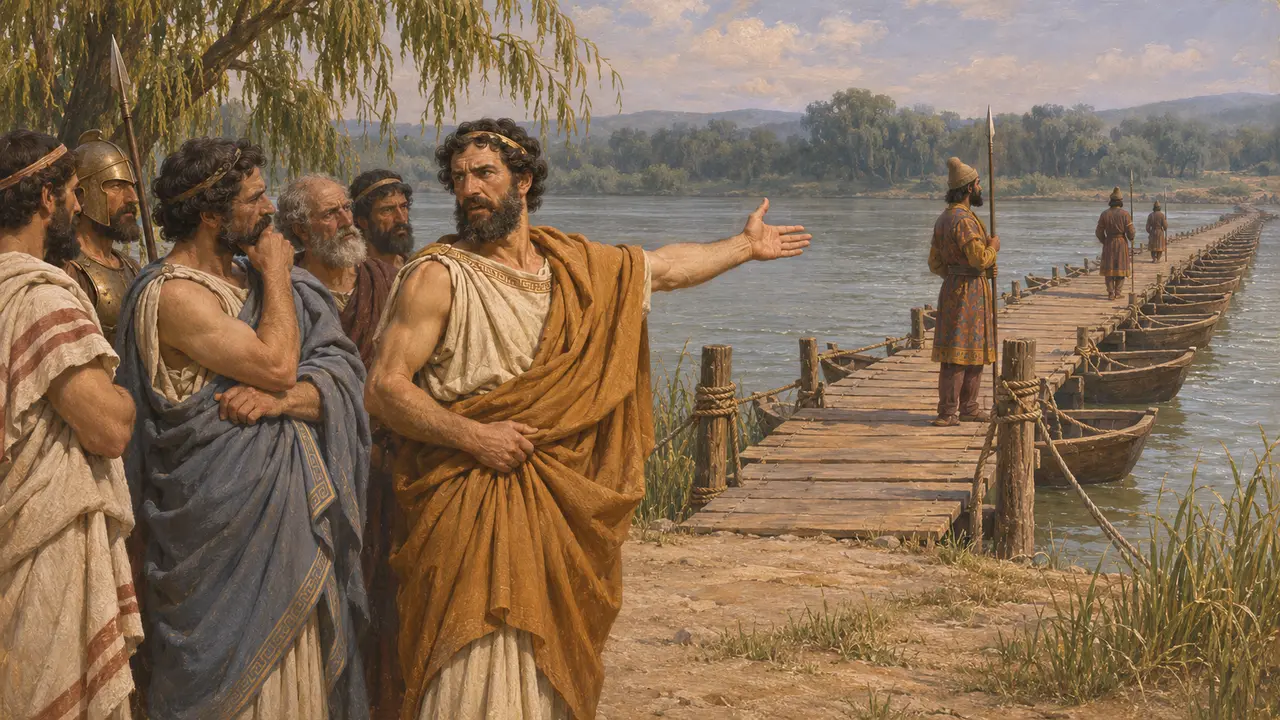
Loyal tyrant or later Athenian story
DisputedHerodotus's version makes Histiaeus the King's loyal man and Miltiades a would-be liberator. Many historians suspect Miltiades' part was told later in Athens, perhaps when he was tried there, to clear him of having served Persia. He stayed in the Chersonese for years afterwards. No Persian text names Histiaeus, so his career is known almost wholly from Herodotus, who treats him with both admiration and suspicion.
Herodotus 4.137, 6.104; P. Briant, From Cyrus to Alexander, 2002
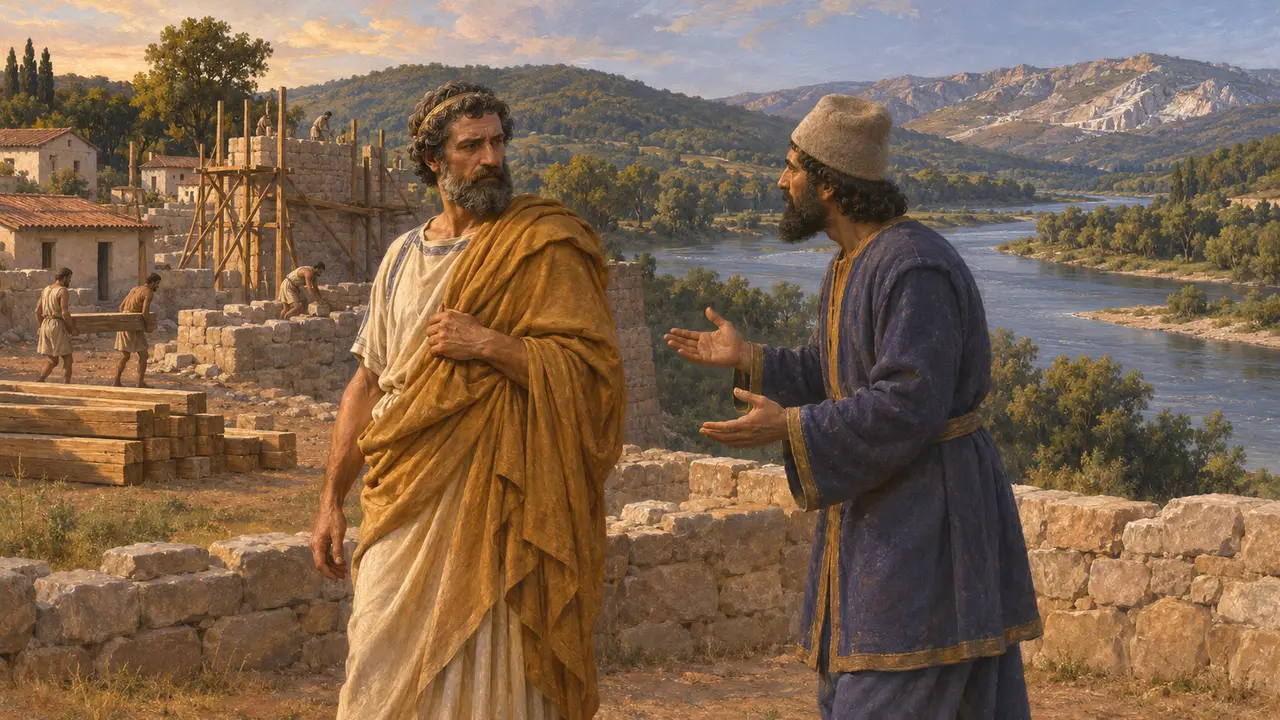
Myrcinus and the summons to Susa
Ancient accountAs a reward Darius granted him Myrcinus on the Strymon in Thrace, a site near timber and silver. Herodotus says the general Megabazus warned that a clever Greek fortifying such a place was a danger. Darius therefore called Histiaeus to Sardis and then took him to Susa as counsellor and companion at the royal table. His cousin and son-in-law Aristagoras governed Miletus in his place.
Herodotus 5.11, 5.23-25, 5.30
The message on the slave's head
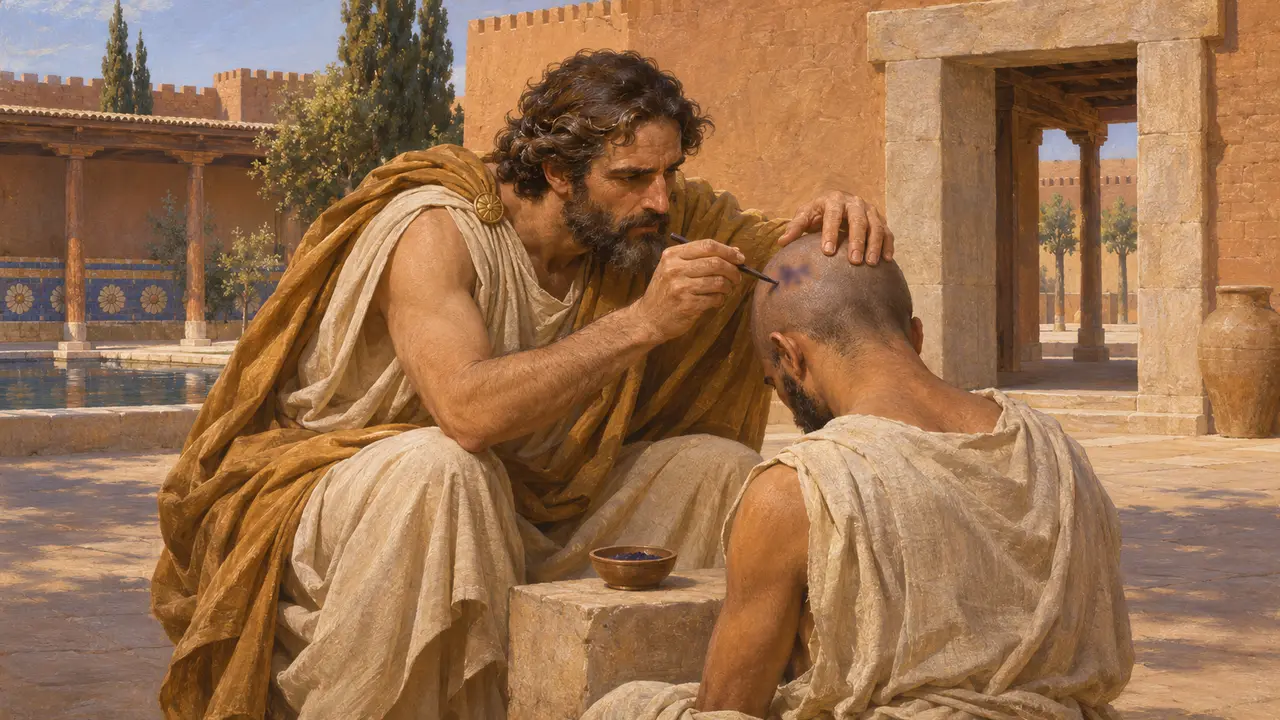
Later legendHerodotus tells that Histiaeus, eager to leave Susa, shaved a trusted slave's head and marked a message on his scalp. He waited for the hair to grow back, then sent the slave to Aristagoras with orders to shave it again, and the message urged revolt. Herodotus admits Aristagoras had his own motives after his failed attack on Naxos, and the tale has the shape of a trickster story that cannot be checked.
Herodotus 5.35
Return, piracy and death
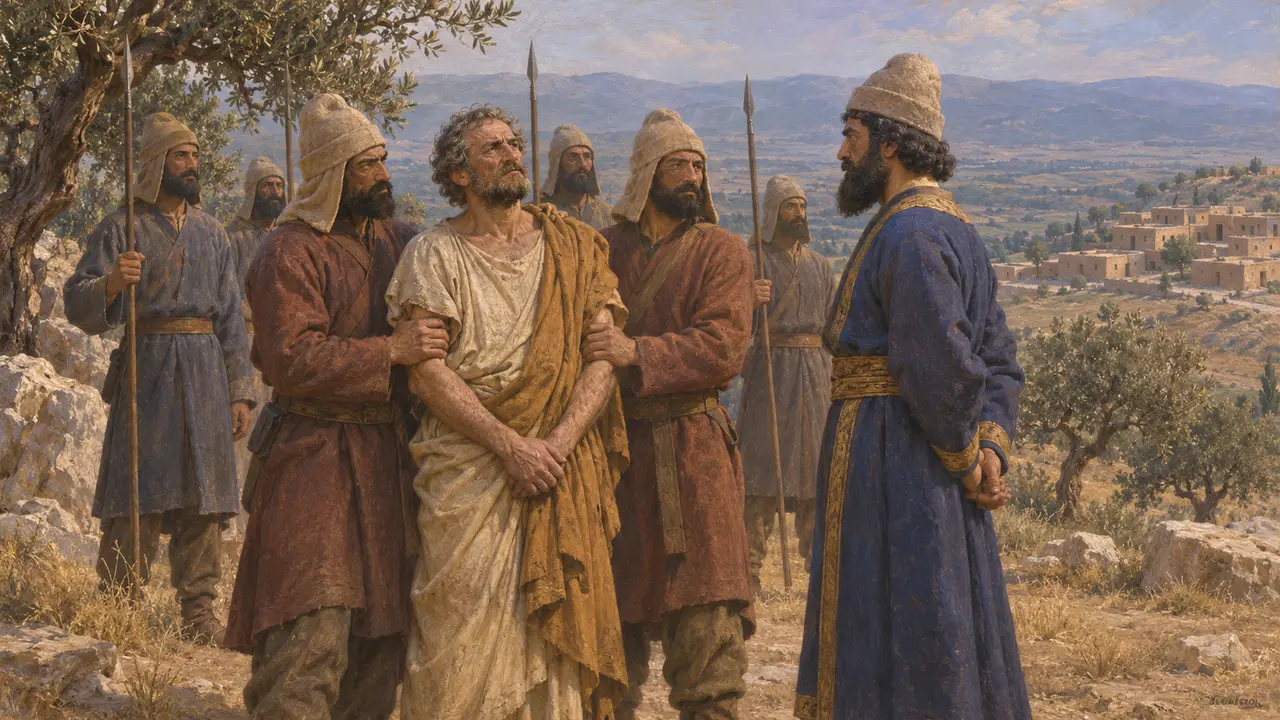
Ancient accountOnce the revolt began, Histiaeus persuaded Darius to send him west to calm Ionia. At Sardis the satrap Artaphernes told him that he had stitched the shoe and Aristagoras had put it on. He fled to Chios, was shut out of Miletus, and raided shipping from Byzantium. After Miletus fell, the Persian commander Harpagus captured him near Atarneus, and he was impaled at Sardis. Darius, displeased, had his head buried with honour.
Herodotus 5.106-107, 6.1-5, 6.26-30
Sources
- Herodotus, Histories, books 4-6
- P. Briant, From Cyrus to Alexander, 2002
- O. Murray, The Ionian Revolt, Cambridge Ancient History IV, 1988