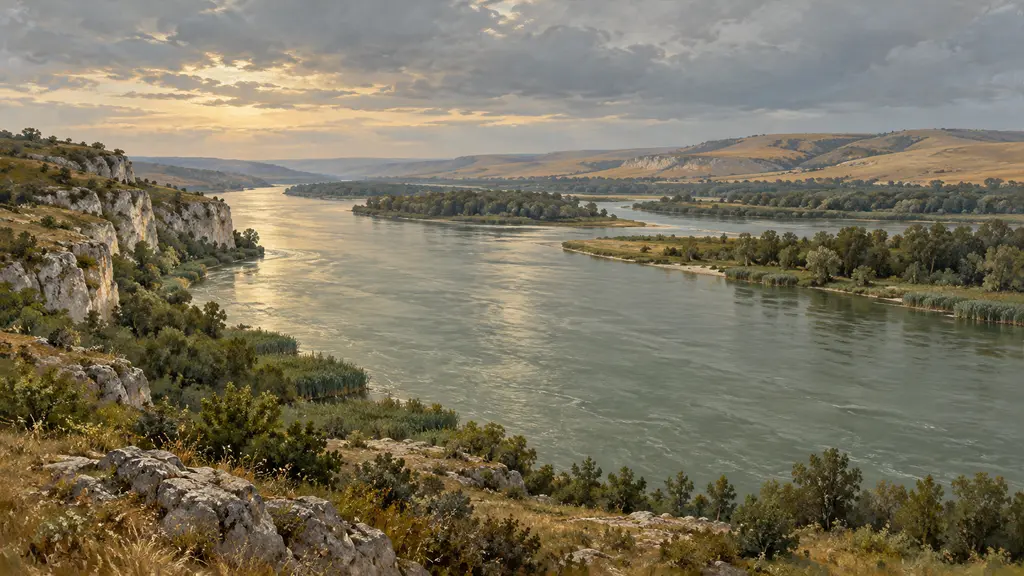
The Ister
The lower Danube, bridged for Darius's Scythian campaign, about 513 BCE
In the game: Level 6: The Bridge of Boats
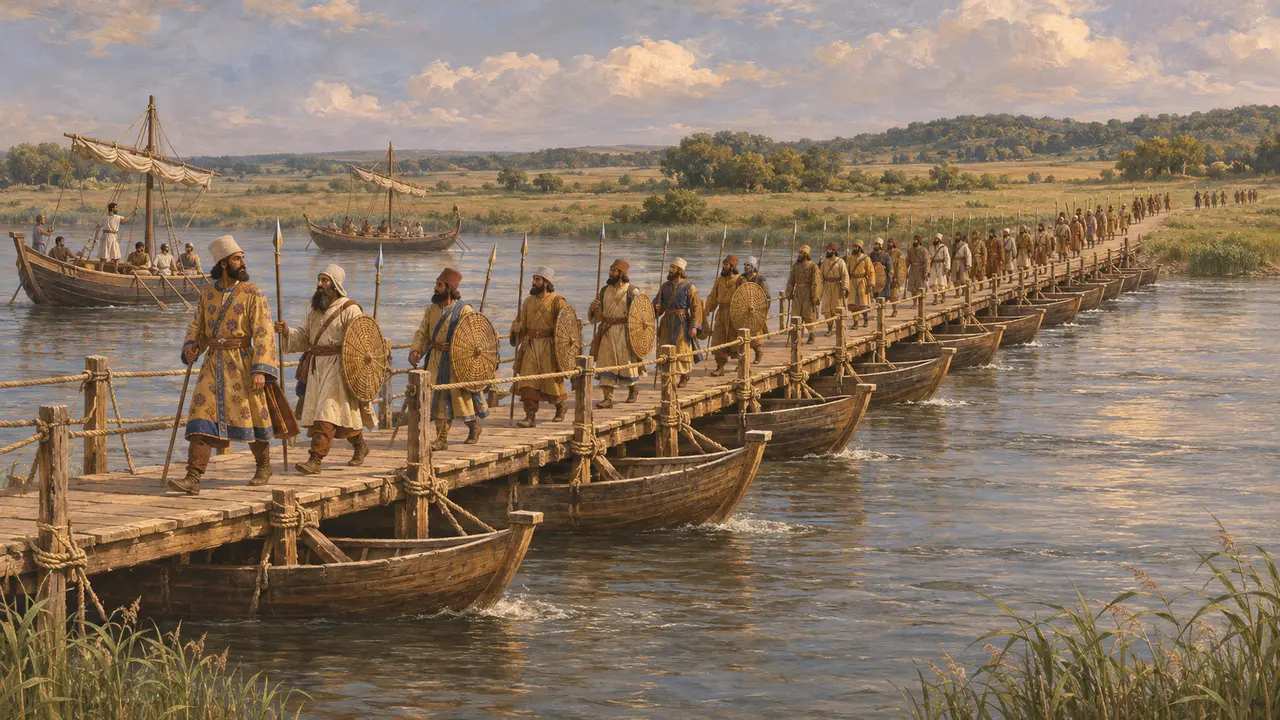
The Ister was the Greek name for the Danube, the great river of Europe. About 513 Darius's Greek subjects bridged its lower course with boats so that the King's army could march north against the Scythians. Herodotus says that when the Scythians urged the Ionians to break the bridge, Histiaeus of Miletus argued for keeping it, and Darius's army escaped across it.
In the game: The Ister is the sixth level, set about 513. Its Chronicle note follows Herodotus: the Ionians bridged the river where its mouths part, and Histiaeus kept the crossing for Darius.
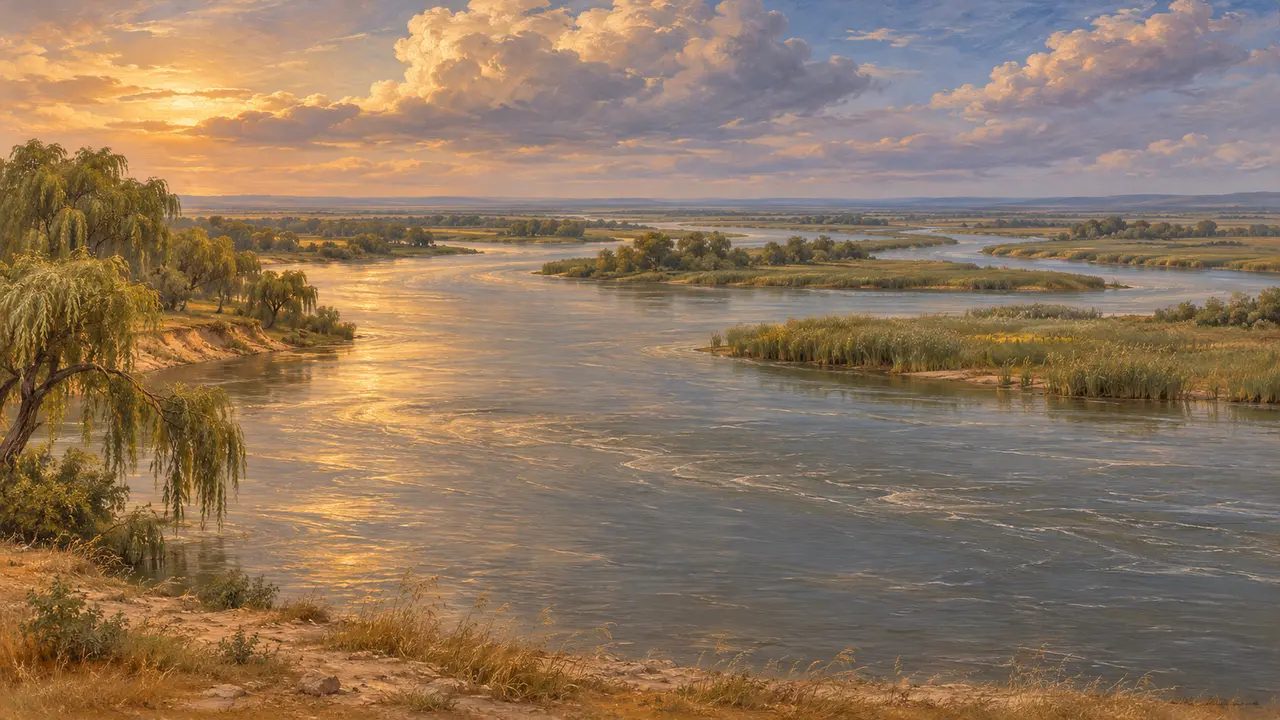
Europe's great river
Ancient accountHerodotus calls the Ister the greatest river he knew. He says it flowed across the whole of Europe from the land of the Celts and reached the Black Sea through several mouths. He lists many tributaries and compares it with the Nile. For Greeks the lower river marked the edge of Thrace and the start of Scythian country to the north.
Herodotus 2.33-34; 4.47-50
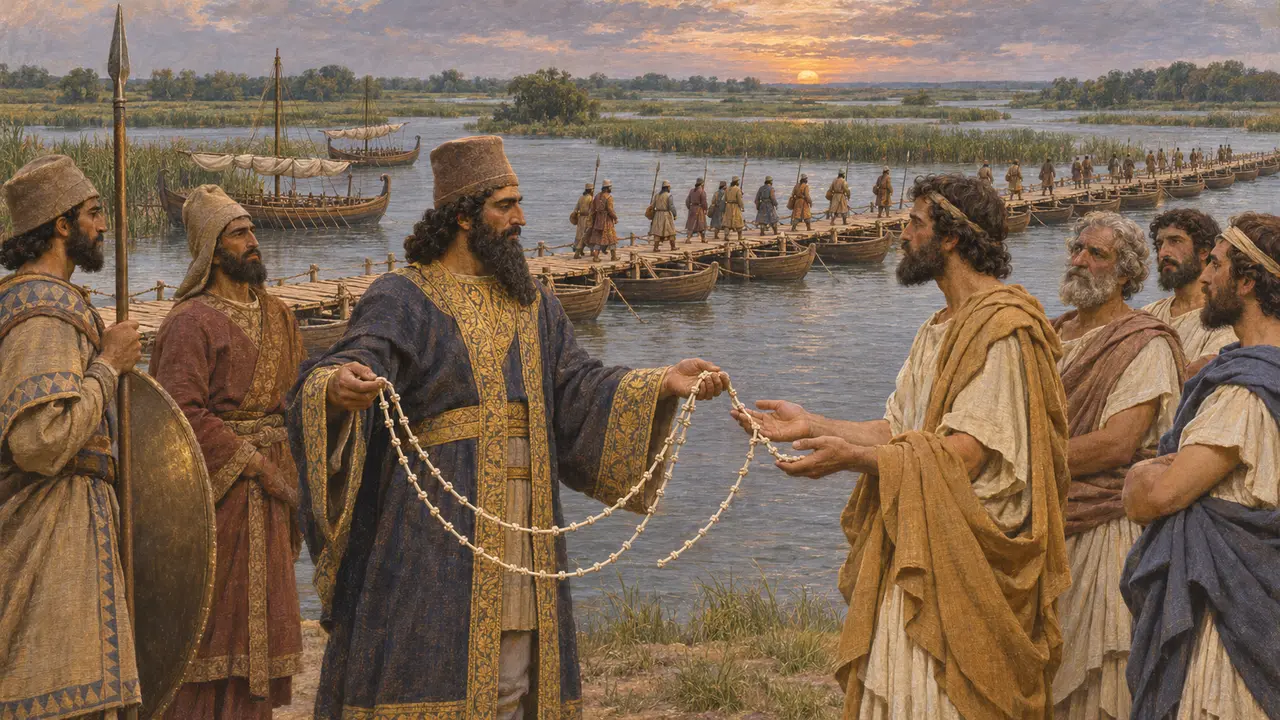
The Ionian bridge and the knotted cord
Ancient accountHerodotus says a fleet of Ionians, Aeolians and Hellespontine Greeks sailed two days up the river from the sea and bridged it where its mouths divide. Darius marched overland from the Bosporus and crossed. He first meant to break the bridge, but Coes of Mytilene advised him to keep it. Darius then tied sixty knots in a cord and told the Greek tyrants to untie one each day, and to sail home if he had not returned when all were undone.
Herodotus 4.89, 4.97-98
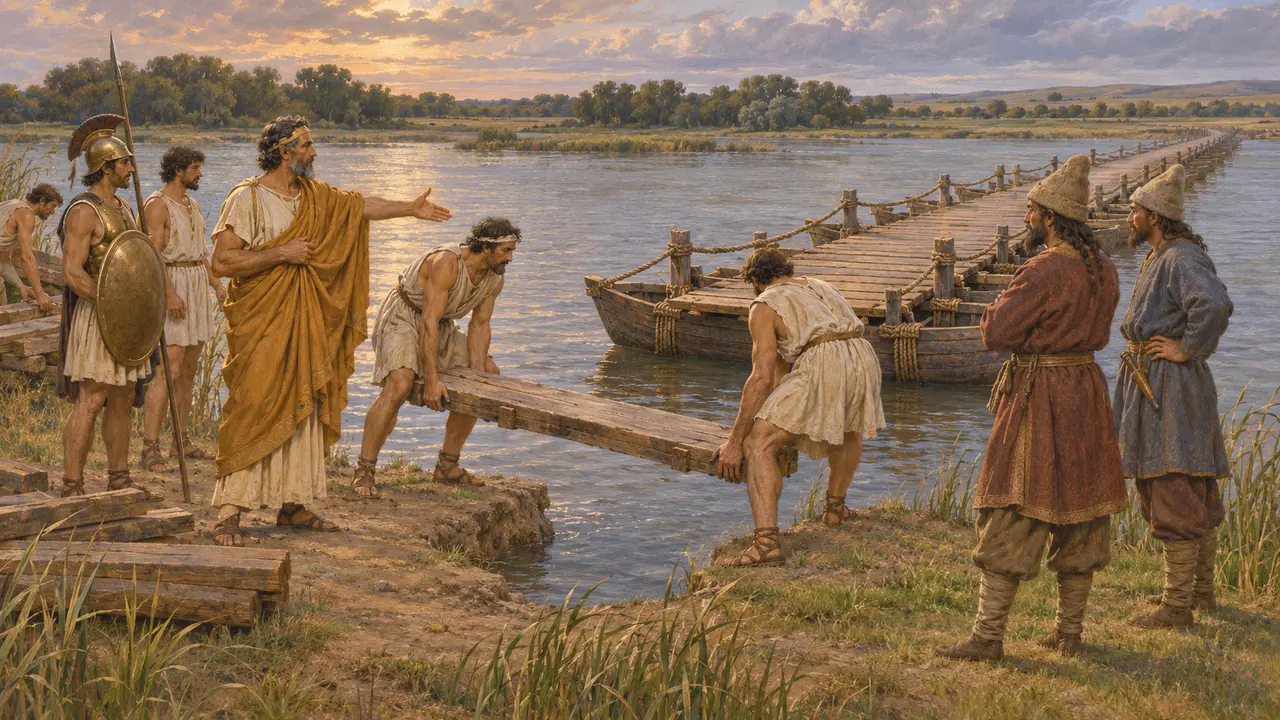
Histiaeus keeps the crossing
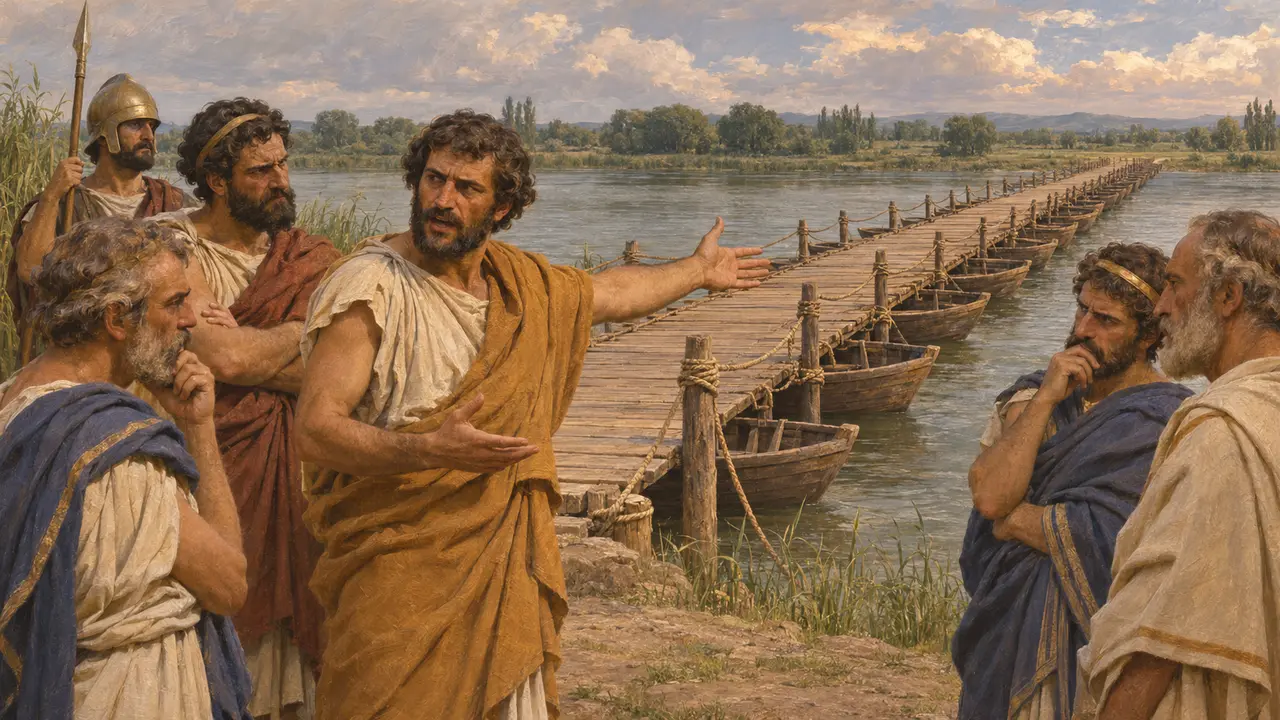
Ancient accountHerodotus tells that Scythians came to the bridge and urged the Ionians to destroy it and leave Darius stranded. Histiaeus of Miletus argued that each tyrant ruled his city only with the King's backing. The Greeks removed a short stretch on the northern bank to satisfy the Scythians. When Darius arrived at night, an Egyptian with a loud voice called for Histiaeus, and the bridge was restored.
Herodotus 4.136-141
Did Miltiades urge breaking the bridge
DisputedHerodotus reports that Miltiades, the Athenian tyrant of the Chersonese, spoke for destroying the bridge. Many historians doubt this, since Miltiades went on ruling the Chersonese as a Persian subject until 493. The story may have been told at Athens to help him when, after his return that year, he was tried for tyranny in the Chersonese.
Herodotus 4.137; 6.104
How far, how many and why
DisputedNo Persian text describes the campaign, though Darius's tomb inscription lists Saka beyond the sea, usually taken to mean the Scythians of Europe. Herodotus gives 700,000 men and 600 ships, figures historians treat as much exaggerated, and his long chase across the steppe is widely doubted. The date, usually put about 513, and the aim, revenge as Herodotus says or control of Thrace and the Black Sea, are still debated.
Herodotus 4.1, 4.87; DNa; P. Briant, From Cyrus to Alexander, 2002
Sources
- Herodotus, Histories, book 4
- DNa
- P. Briant, From Cyrus to Alexander, 2002
- A. Fol and N. G. L. Hammond, Persia in Europe, apart from Greece, Cambridge Ancient History IV, 1988