The Scythians
Nomadic peoples of the steppe north of the Black Sea, foes of Darius about 513 BCE
In the game: Level 6: The Bridge of Boats
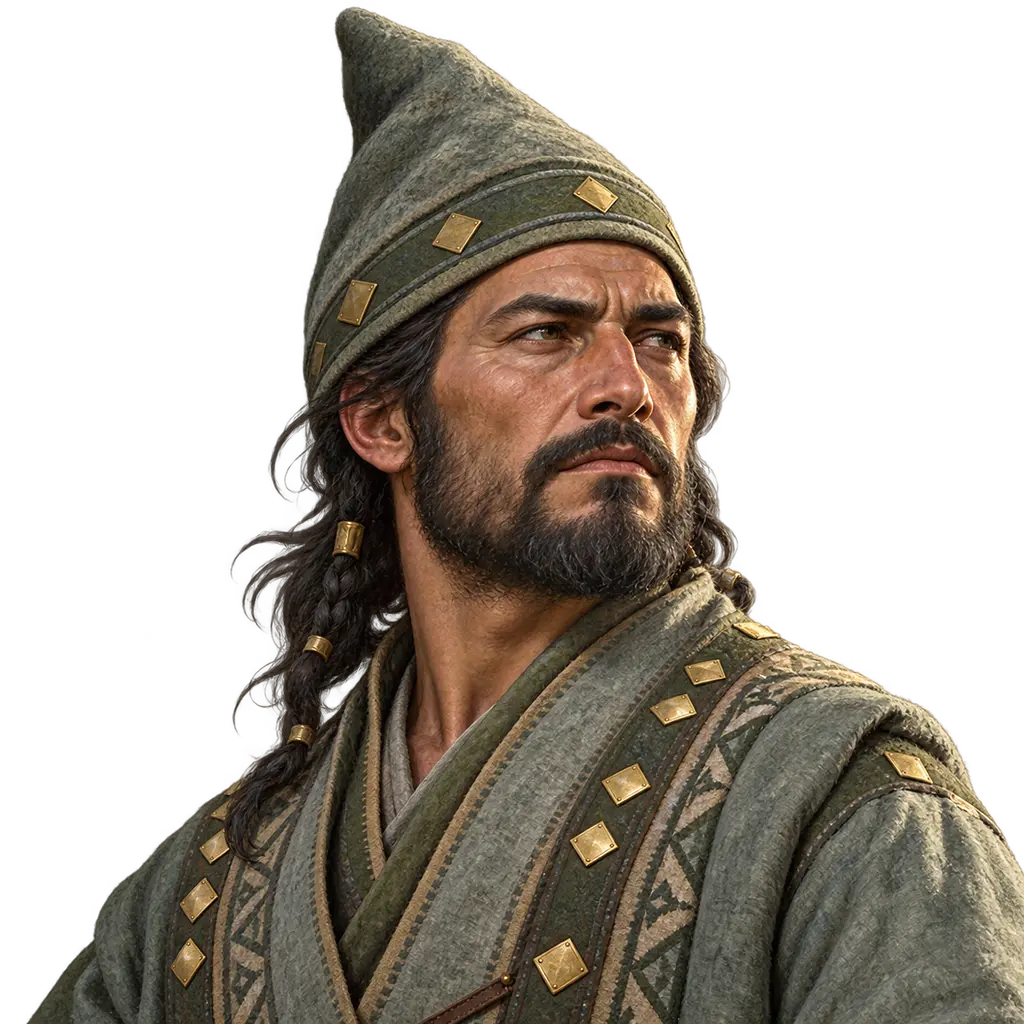
The Scythians were horse-riding, largely nomadic peoples of the steppes north of the Black Sea, speaking Iranian languages related to Persian. In about 513 Darius led an army across the Bosporus and the Ister into their land. They retreated before him rather than fight, and the campaign became one of Herodotus's great stories of a king outmanoeuvred.
In the game: The game makes the Scythians a trade partner and the enemy of the Ister level. In fact their trade ran mainly through Greek colonies such as Istros and Olbia, and Herodotus says they avoided pitched battle with Darius.
Riders and kurgans of the steppe
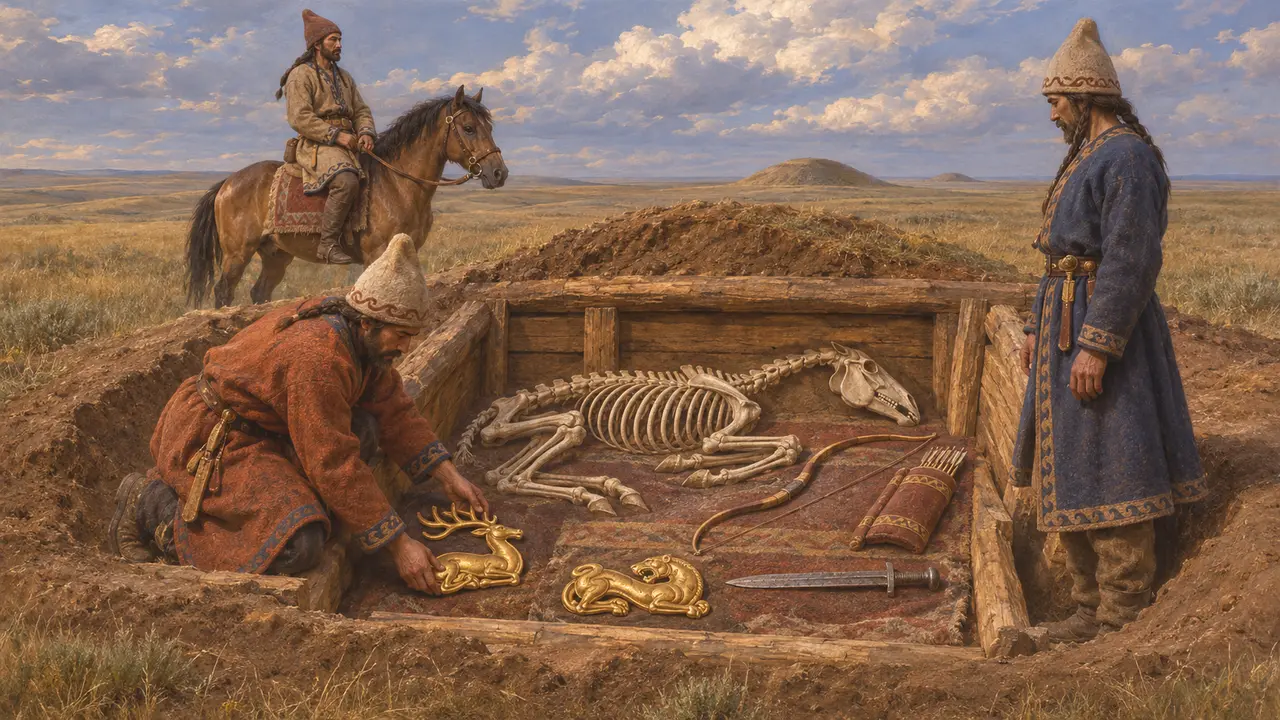
In the recordExcavated burial mounds, or kurgans, across the steppe from the Kuban to the Dnieper hold horses, weapons and gold worked in an animal style from the 7th century onward. Early graves such as Kelermes in the Kuban show contact with the Near East, where Assyrian texts name a northern people called the Ishkuza. The richest royal mounds, such as Chertomlyk and Solokha, are later than Darius and date to the 4th century.
R. Rolle, The World of the Scythians, 1989
Darius crosses the Ister
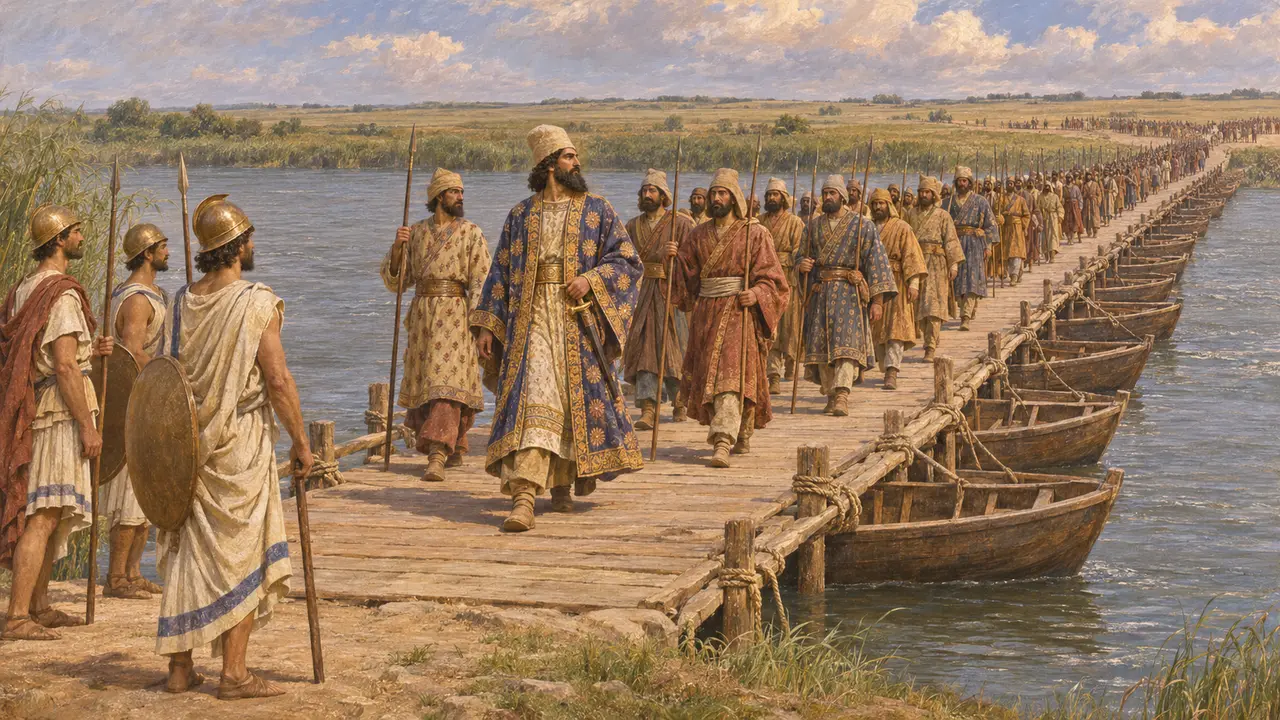
Ancient accountHerodotus says Darius crossed the Bosporus on a bridge of boats built by Mandrocles of Samos, then the Ister on a second bridge guarded by the Ionian tyrants. He gives the army as 700,000 men and 600 ships, figures historians think greatly exaggerated. The Scythians refused battle, stopped up wells and springs and spoiled the grazing. Herodotus says Darius finally slipped away at night, leaving his sick men and donkeys in camp to deceive the enemy.
Herodotus 4.83-98; 4.118-142
The king's riddle of gifts
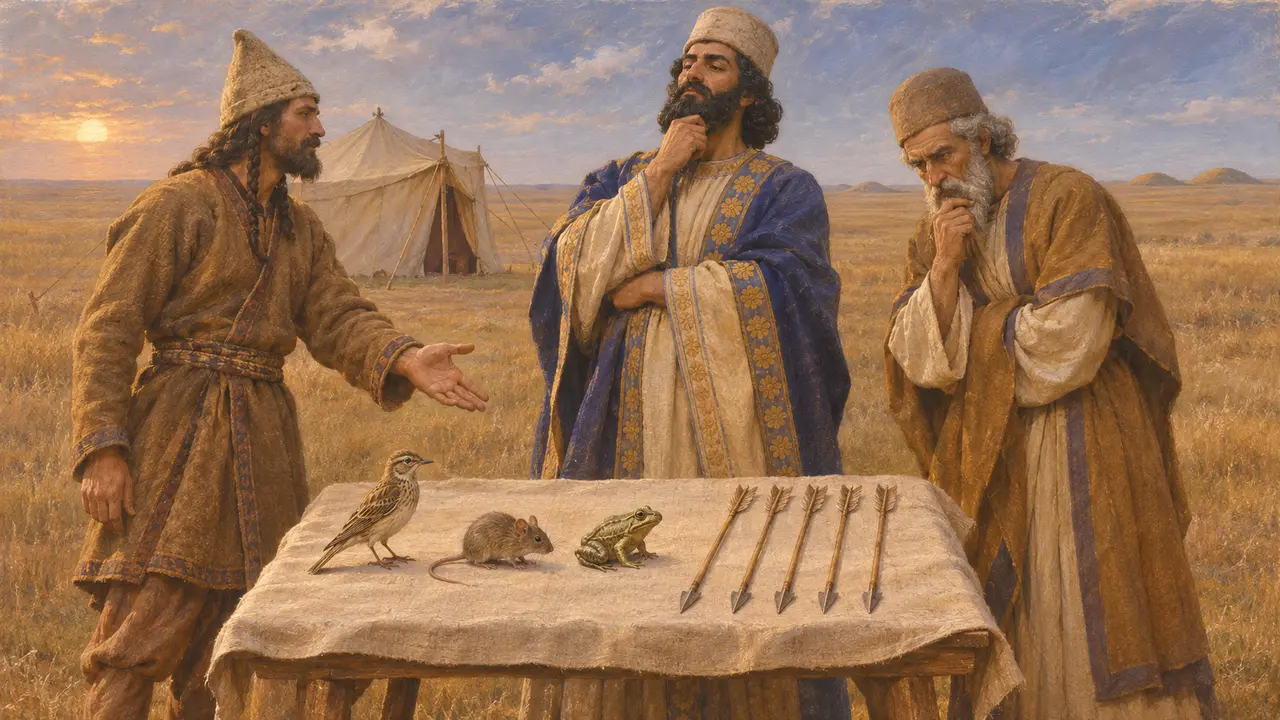
Later legendHerodotus tells that the Scythian king Idanthyrsus answered Darius's challenge by saying his people had no towns or fields to defend, only their fathers' tombs. Later the Scythians sent a bird, a mouse, a frog and five arrows. Darius read them as surrender, but Gobryas said they meant death by arrows unless the Persians could fly, burrow or swim away. The story is shaped as a lesson about royal pride and is best read as a tale.
Herodotus 4.126-132
What the campaign achieved
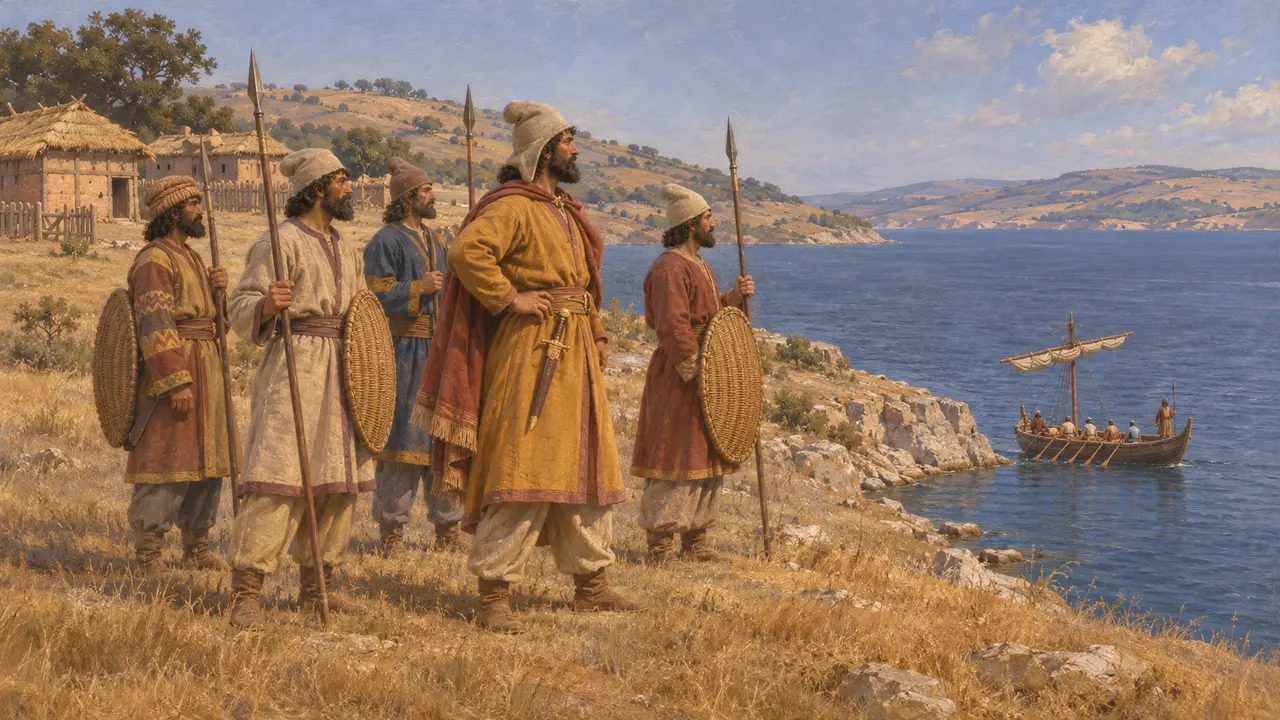
DisputedModern estimates for the date run from about 519 to 512, and the route is uncertain. Strabo places the army's crisis of thirst in the desert of the Getae near the Ister, which some take to mean the march went less far than Herodotus says. Herodotus presents a near disaster, but many historians, Briant among them, see a limited war whose real result was Persian control of Thrace and the straits, which Megabazus secured after the King returned to Asia.
P. Briant, From Cyrus to Alexander, 2002; Strabo, Geography book 7; Herodotus 4.143-144; 5.1-2
Saka beyond the sea
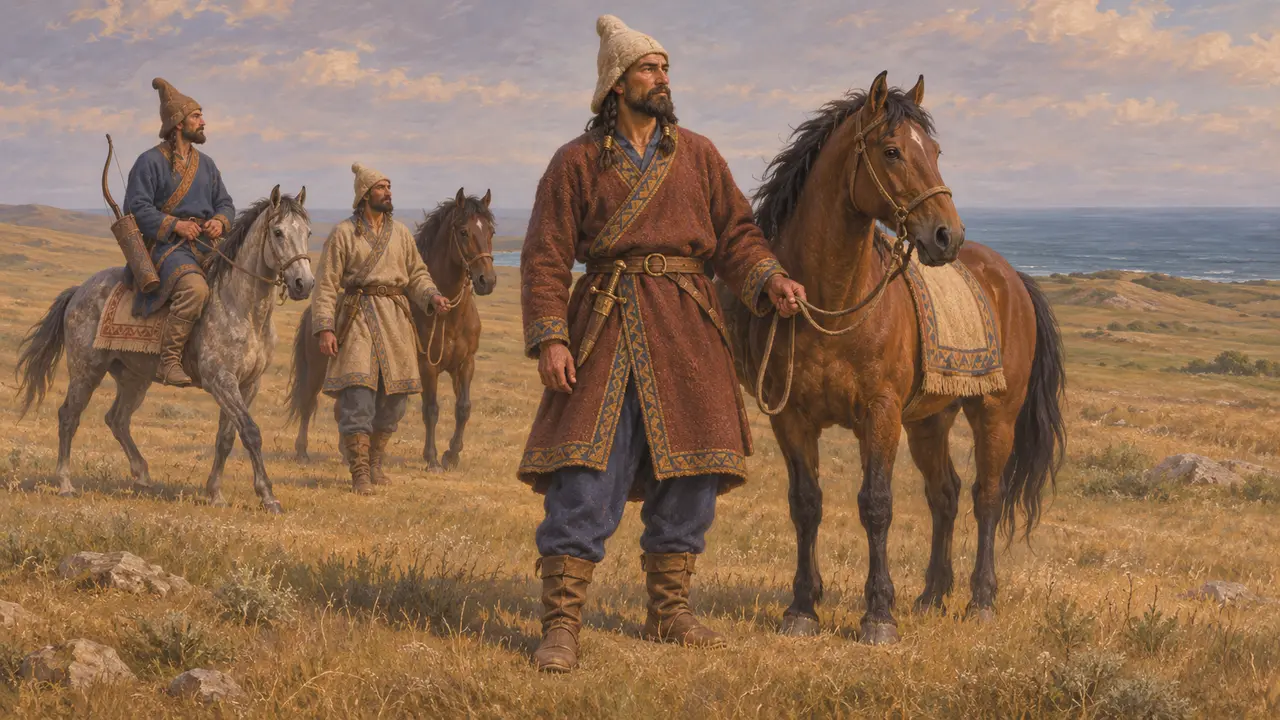
In the recordIn Old Persian inscriptions Saka is the name for several steppe peoples. Darius's tomb inscription at Naqsh-e Rostam lists among the lands of his empire the Saka who are beyond the sea, and a labelled figure of them stands among the throne-bearers carved on the tomb. Many historians identify them with the European Scythians or their neighbours, though how far Darius ruled them, if at all, is debated.
DNa; DNe
The emblem beside its name
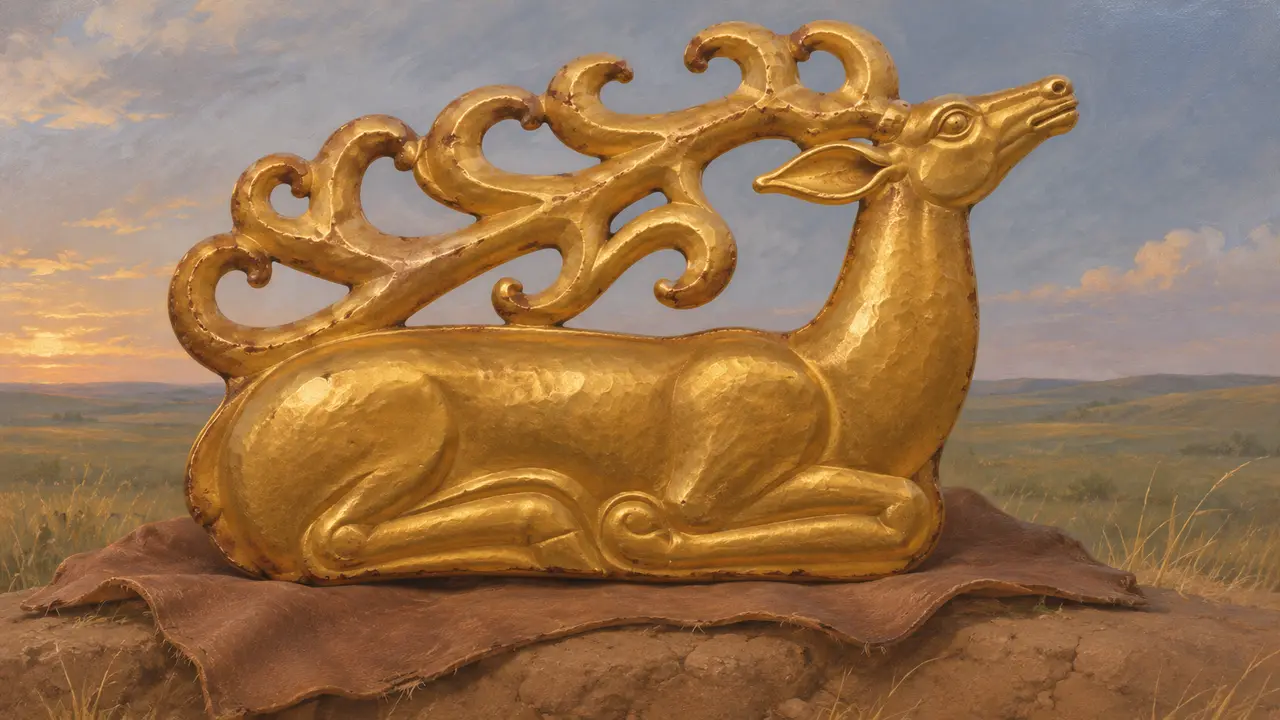
In the recordThe Scythians carry a curled stag, the beast of Scythian animal-style gold, after the stag plaque from the Kostromskaya burial mound of the 7th-6th century. It is an emblem after their art; Herodotus describes no Scythian banner.
Hermitage Museum, Kostromskaya stag; Herodotus 4.1-82
Sources
- Herodotus, Histories book 4
- DNa
- DNe
- P. Briant, From Cyrus to Alexander, 2002
- R. Rolle, The World of the Scythians, 1989
- Strabo, Geography book 7