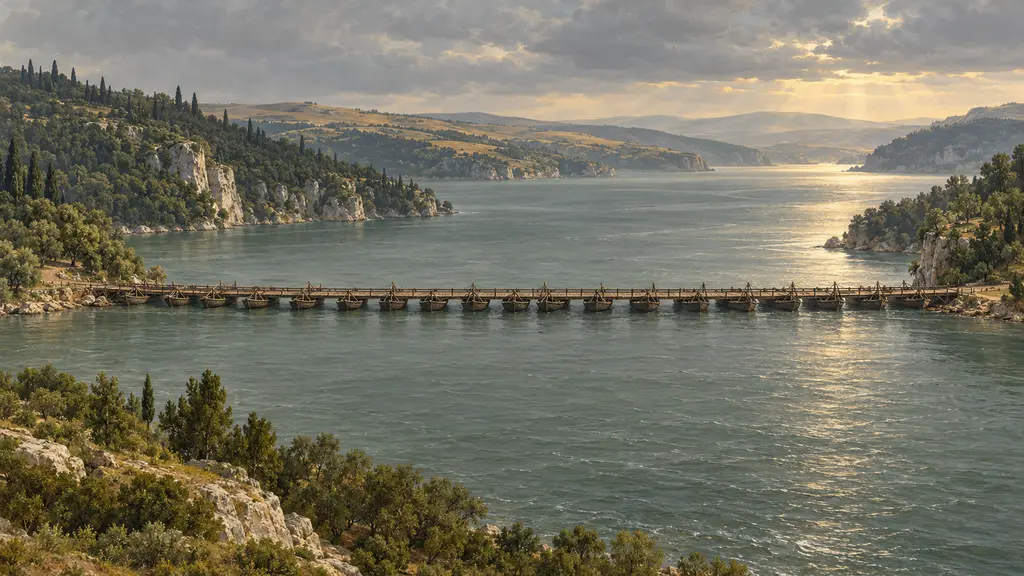
The Bosporus
Strait between Asia and Europe, bridged for Darius about 513 BCE
In the game: Level 6: The Bridge of Boats
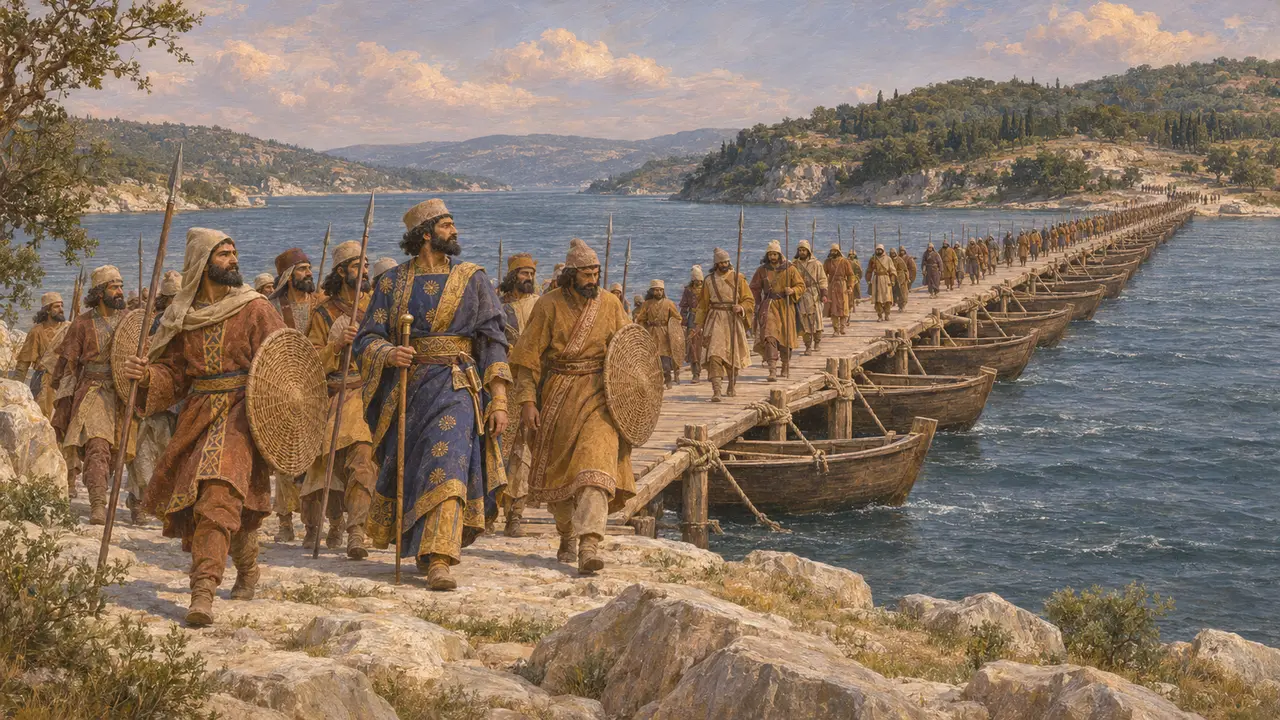
The Bosporus is the narrow strait, about 30 kilometres long, that links the Black Sea to the Sea of Marmara and divides Asia from Europe, with Chalcedon on the Asian shore and Byzantium on the European. About 513 Darius had it bridged with boats so that his army could cross into Thrace against the Scythians. It was the first time a Persian king led an army into Europe.
In the game: The game names the Bosporus in its chronicle, noting Mandrocles' bridge of boats for Darius's Scythian march about 513, following Herodotus 4.85-88. The year is a modern estimate; Herodotus gives none.
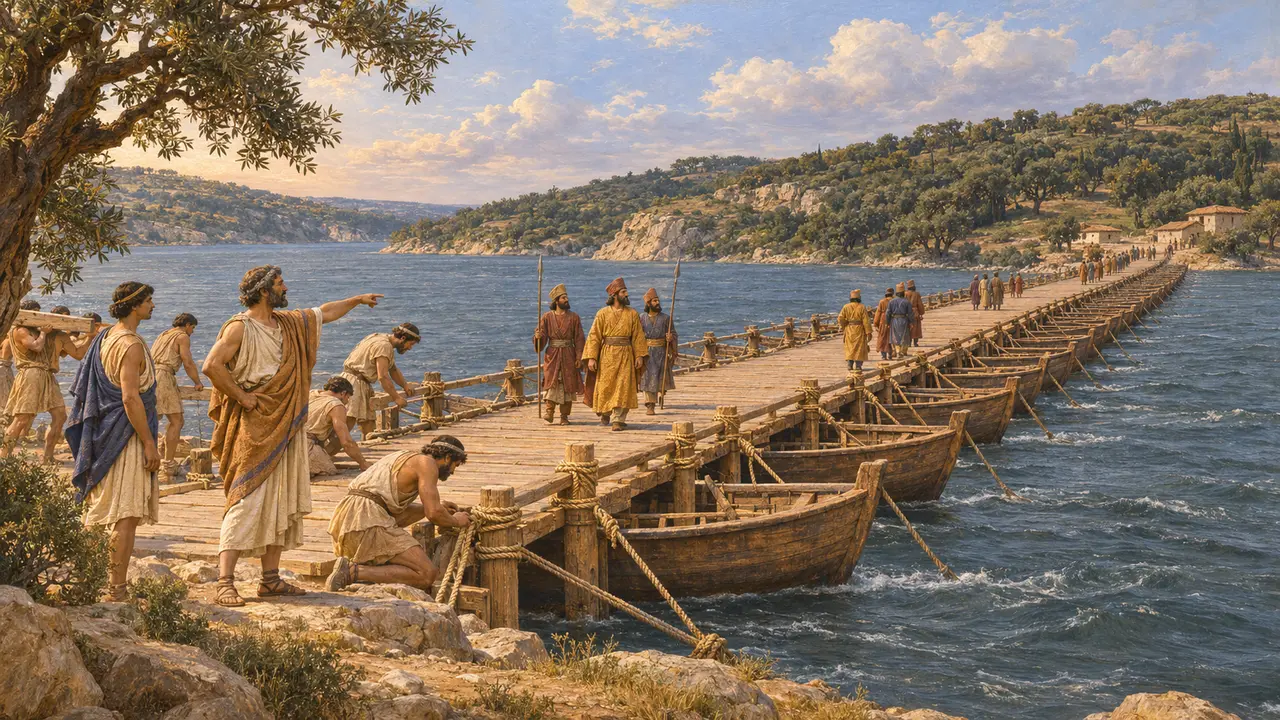
Mandrocles builds the bridge
Ancient accountHerodotus says Darius marched from Susa to Chalcedon, sailed to the temple at the strait's northern mouth to view the Black Sea, and then crossed on a bridge of boats designed by Mandrocles of Samos. By his own guess the bridge lay about midway between Byzantium and that temple. Modern scholars usually put it near the narrowest point, where the strait is well under a kilometre wide. Darius, Herodotus adds, rewarded Mandrocles generously.
Herodotus 4.85, 4.87-88
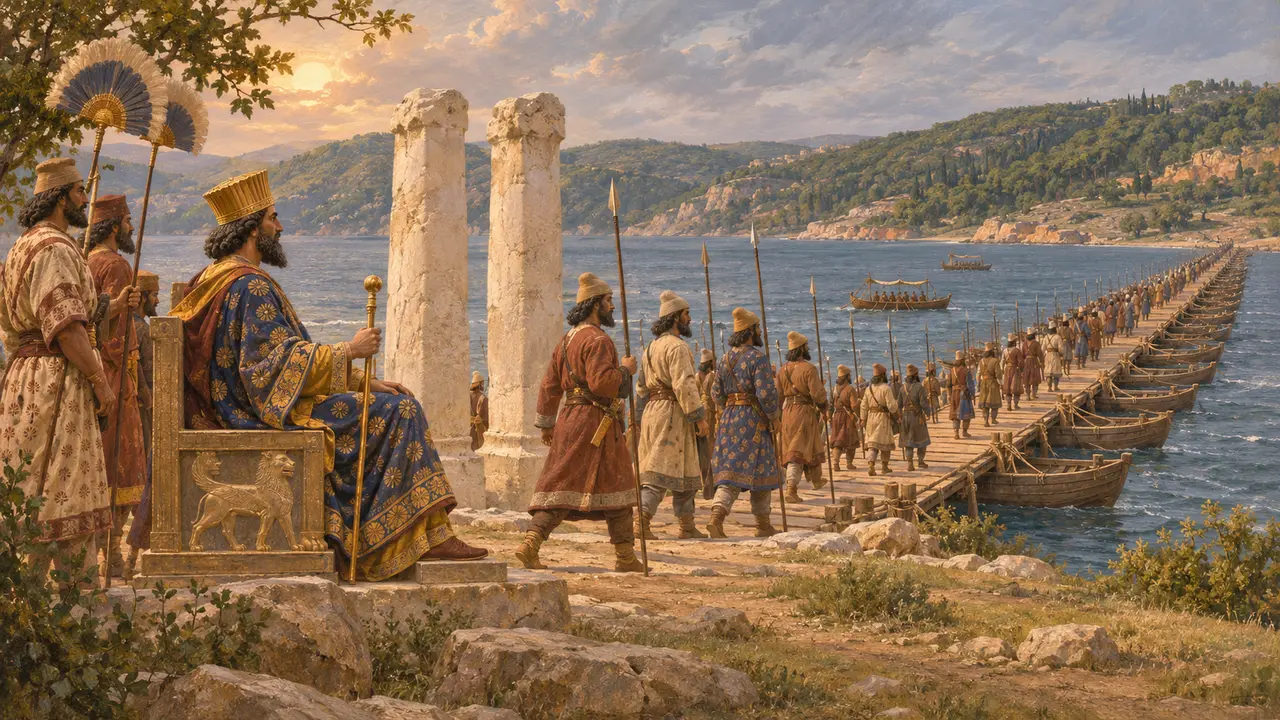
A painting and two pillars
Ancient accountWith part of his reward Mandrocles paid for a painting of the crossing, showing Darius enthroned as his army passed over, and dedicated it in the temple of Hera on Samos with verses naming himself. Herodotus adds that Darius set up two pillars of white stone by the strait, one in Assyrian and one in Greek letters, listing the peoples of his army. He gives that army as 700,000 men and 600 ships, figures historians consider greatly exaggerated.
Herodotus 4.87-88
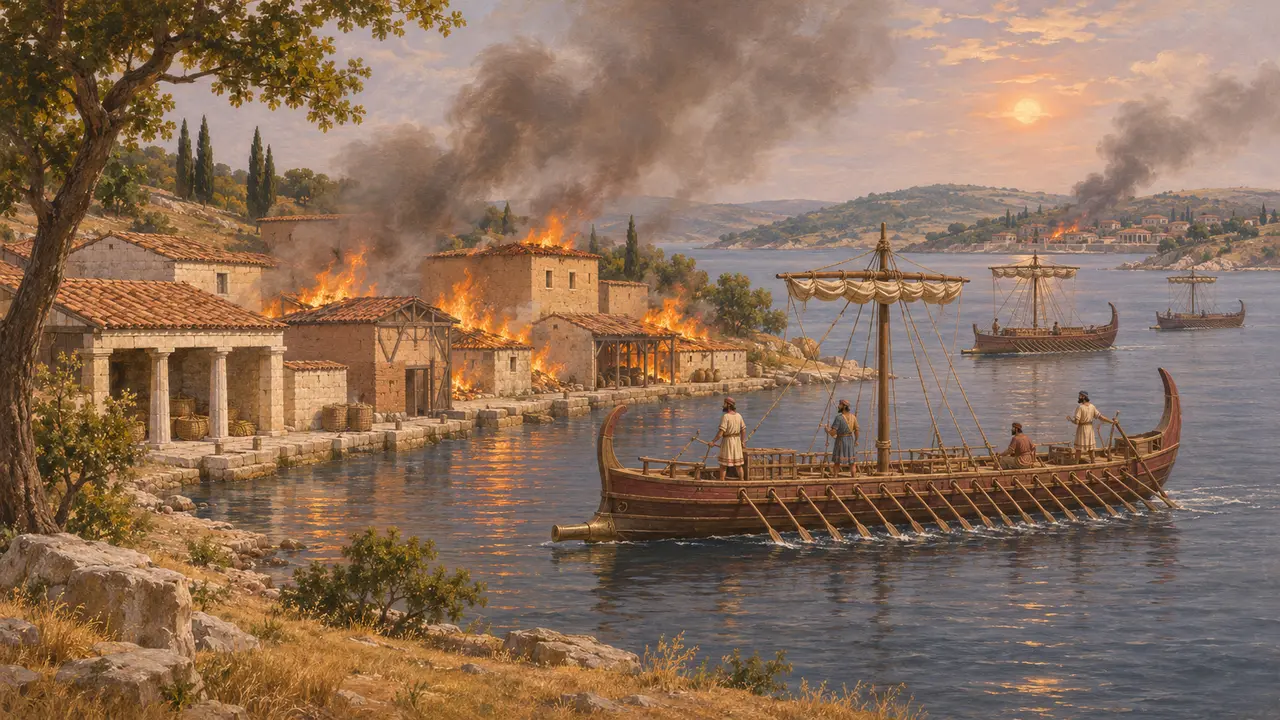
Byzantium and Chalcedon under Persia
Ancient accountHerodotus says the general Otanes took Byzantium and Chalcedon after the Scythian campaign. Byzantium joined the Ionian Revolt about 498. After the Ionian defeat at Lade in 494, the people of both cities fled to Mesambria on the Black Sea, and about 493 the Phoenician fleet burned their abandoned land. Thucydides says the Spartan Pausanias took Byzantium from the Persians in 478.
Herodotus 5.26, 5.103, 6.33; Thucydides 1.94
Date and outcome of the crossing
DisputedHerodotus gives no year. Most historians date the crossing to about 513 or 512, though some have argued for an earlier date in the 510s. Darius's own inscriptions do not describe a European campaign, but the list of lands on his tomb at Naqsh-e Rostam names Skudra, usually taken as Thrace, and Saka living across the sea. Herodotus tells the Scythian war as a failure; many historians think Darius at least secured Thrace and the straits.
DNa; Herodotus, book 4; P. Briant, From Cyrus to Alexander, 2002
The cow's ford
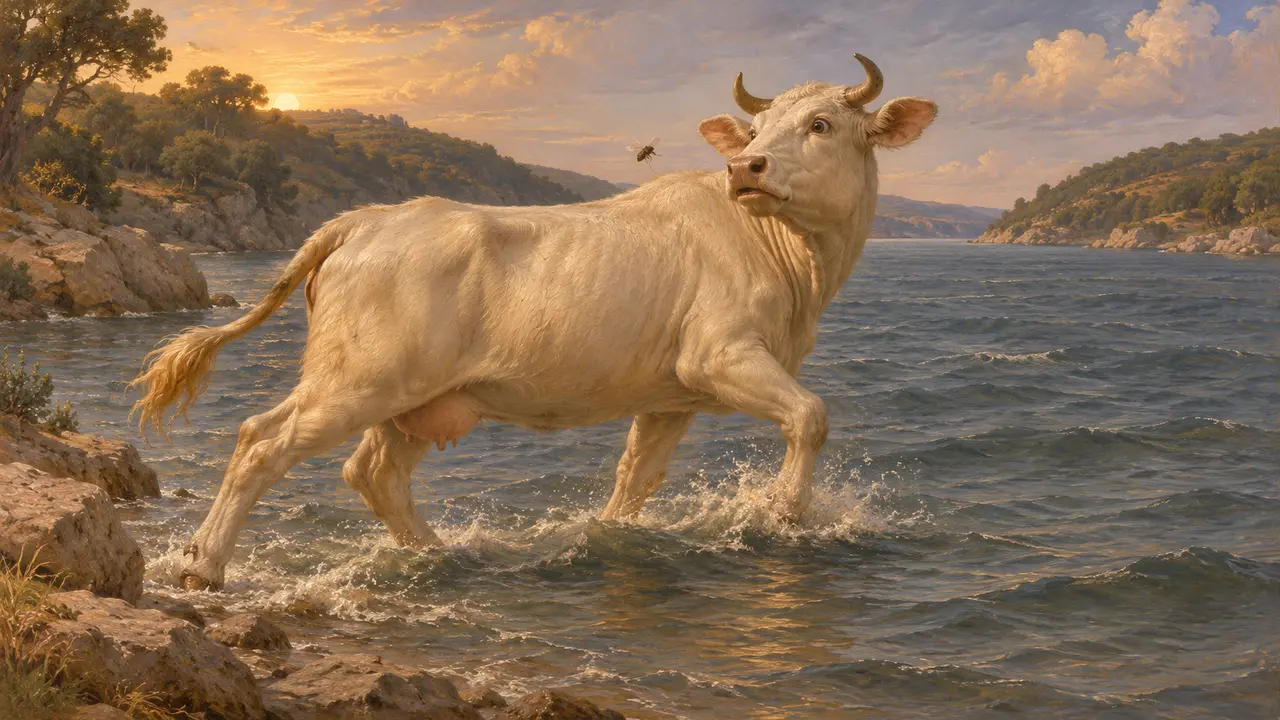
Later legendGreek writers explained the name Bosporus as cow's crossing, from the myth of Io, loved by Zeus, turned into a heifer and driven over the sea by a gadfly sent by Hera. In Prometheus Bound Aeschylus gives the name to the Cimmerian Bosporus, at the mouth of the Sea of Azov, while the later mythographer Apollodorus ties it to this Thracian strait. The tale is myth and tells nothing about the Persian use of the strait.
Aeschylus, Prometheus Bound; Apollodorus, Library 2.1.3
Sources
- Herodotus, Histories, books 4-6
- DNa
- P. Briant, From Cyrus to Alexander, 2002
- Thucydides 1.94
- Aeschylus, Prometheus Bound
- Apollodorus, Library 2.1.3