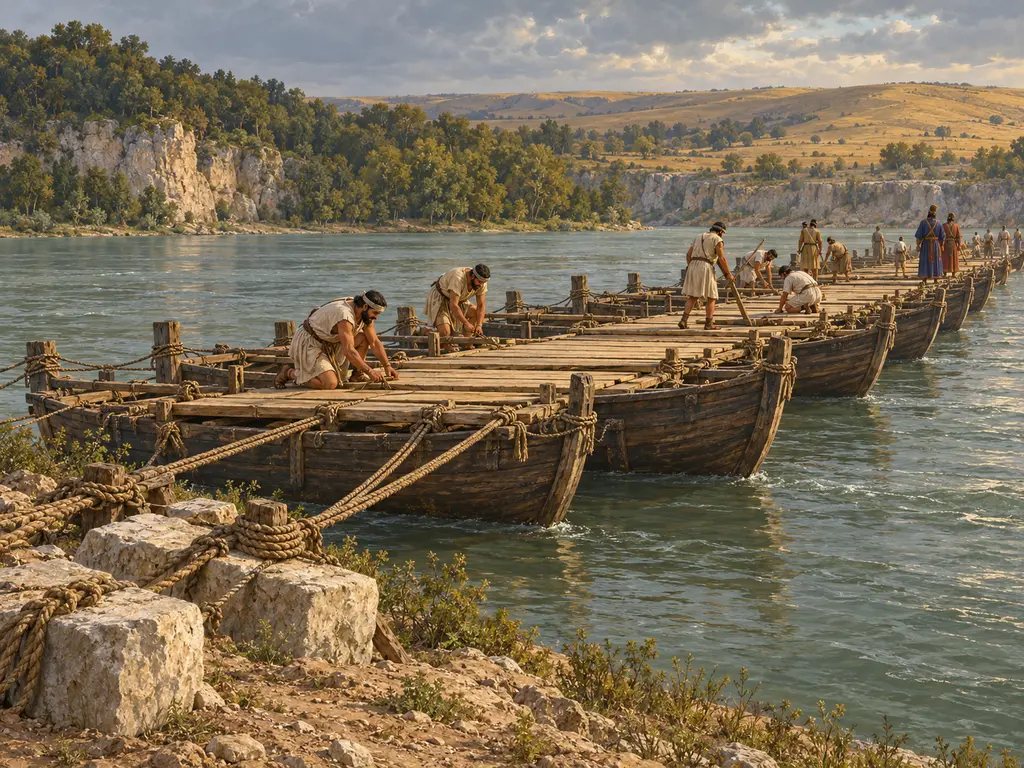
Bridge of Boats
Darius's pontoon bridge over the lower Danube, built by Ionian Greeks, about 513 BCE
In the game: Level 6: The Bridge of Boats
During his campaign against the Scythians north of the Black Sea, Darius had the Greek fleet from Ionia and the Hellespont lay a bridge of boats across the Ister, the lower Danube. Herodotus makes this bridge the turning point of the expedition: the Ionians guarding it could have stranded the King in Scythia, and they chose not to.
In the game: The bridge is founded on the bank, with limestone for its stone anchors, boats moored and lashed in turn, and a timber deck. Herodotus gives no building details for this bridge, so the game borrows them from his Hellespont bridges (7.36).
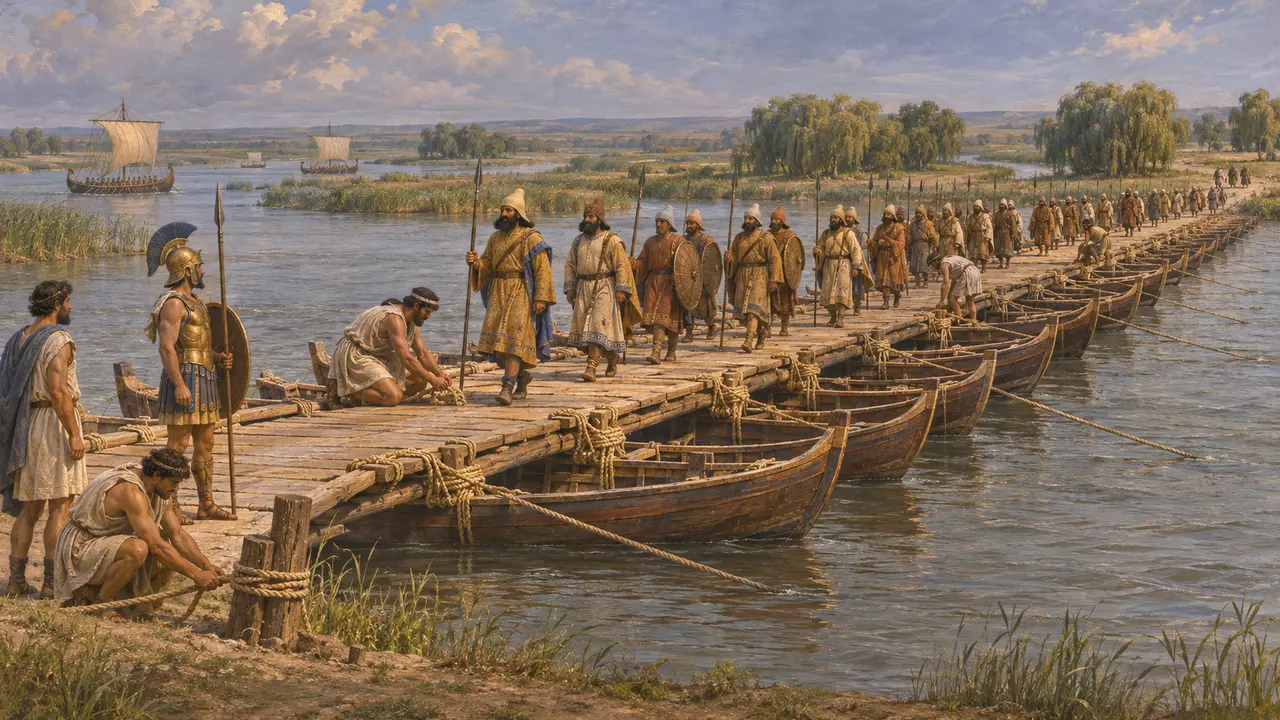
A bridge two days from the sea
Ancient accountHerodotus says Darius crossed the Bosporus on Mandrocles' bridge and marched through Thrace, while the Greek fleet sailed up the Ister. Ionians, Aeolians and Hellespontine Greeks bridged the river two days' sail from the sea, where its mouths divide; the exact site is unknown. He puts the army at 700,000 men and the fleet at 600 ships, figures historians think greatly exaggerated.
Herodotus 4.87-89
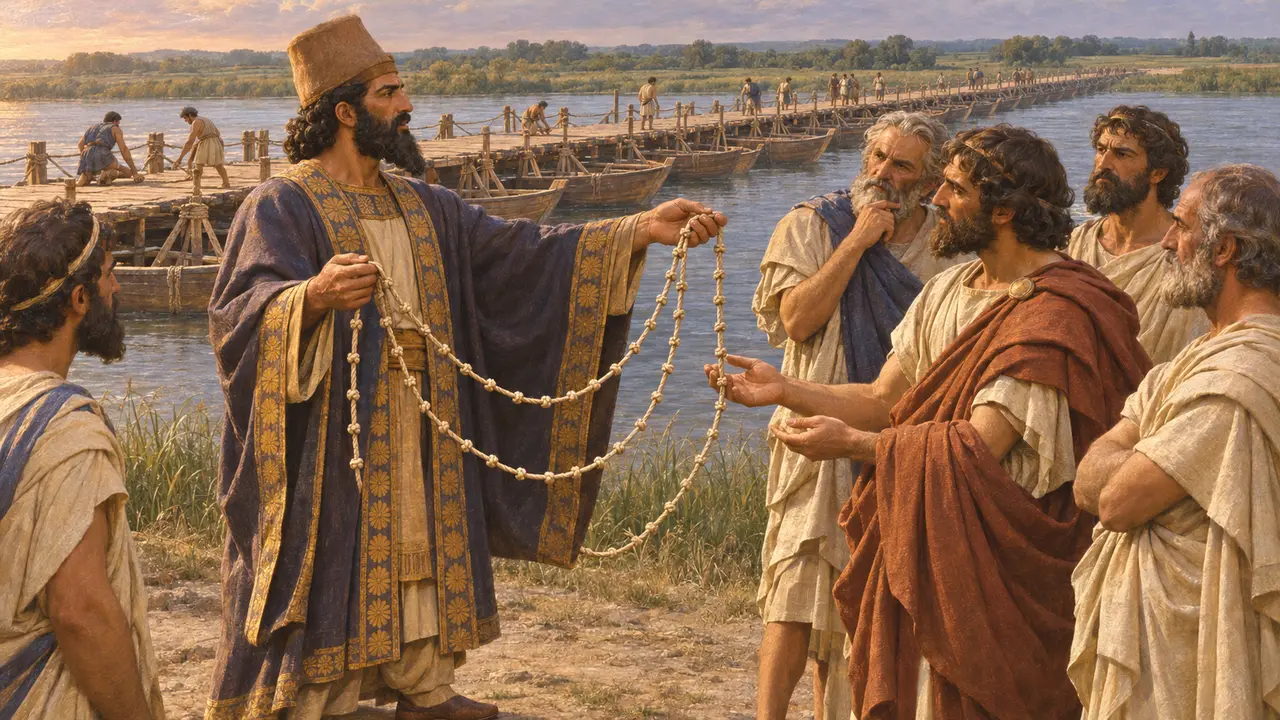
The cord with sixty knots
Ancient accountHerodotus says Darius first ordered the bridge broken up so the crews could march with him, but Coes of Mytilene advised keeping it as a way home. Darius then tied sixty knots in a cord and told the Ionian tyrants to untie one each day. If he had not returned when the knots ran out, they were to sail home. Coes was later rewarded with rule over Mytilene.
Herodotus 4.97-98; 5.11
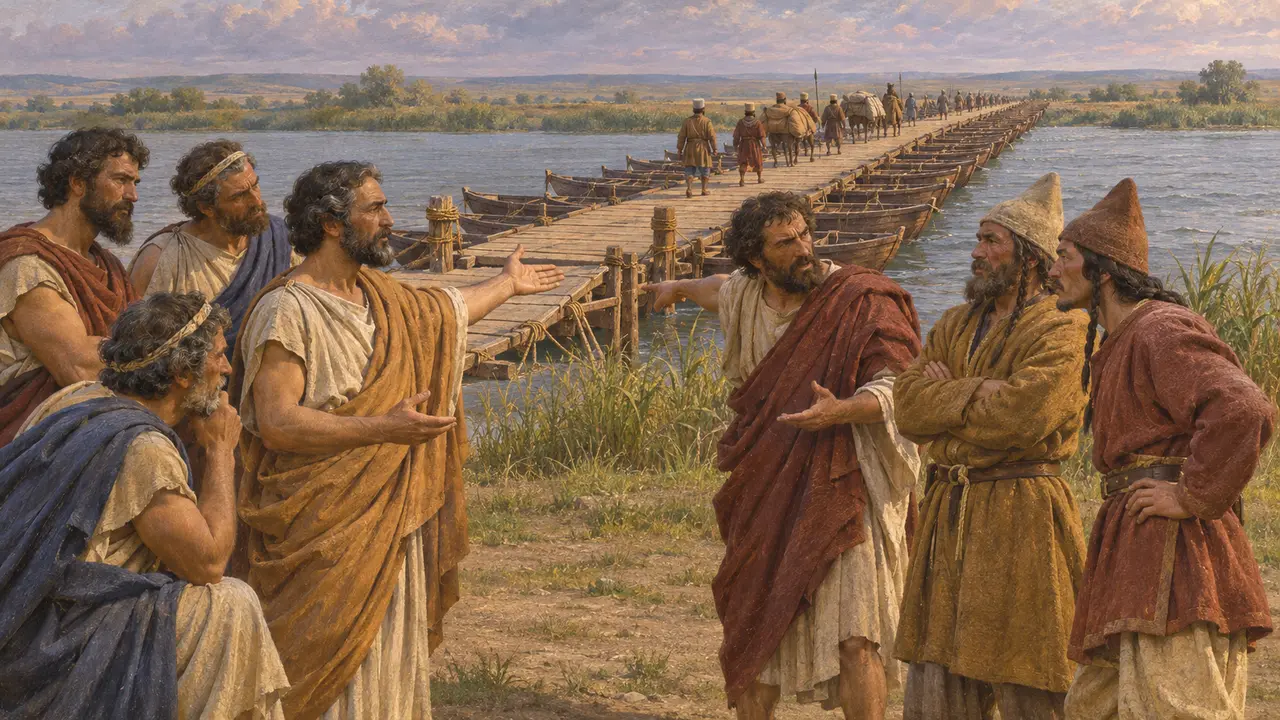
The debate at the bridge
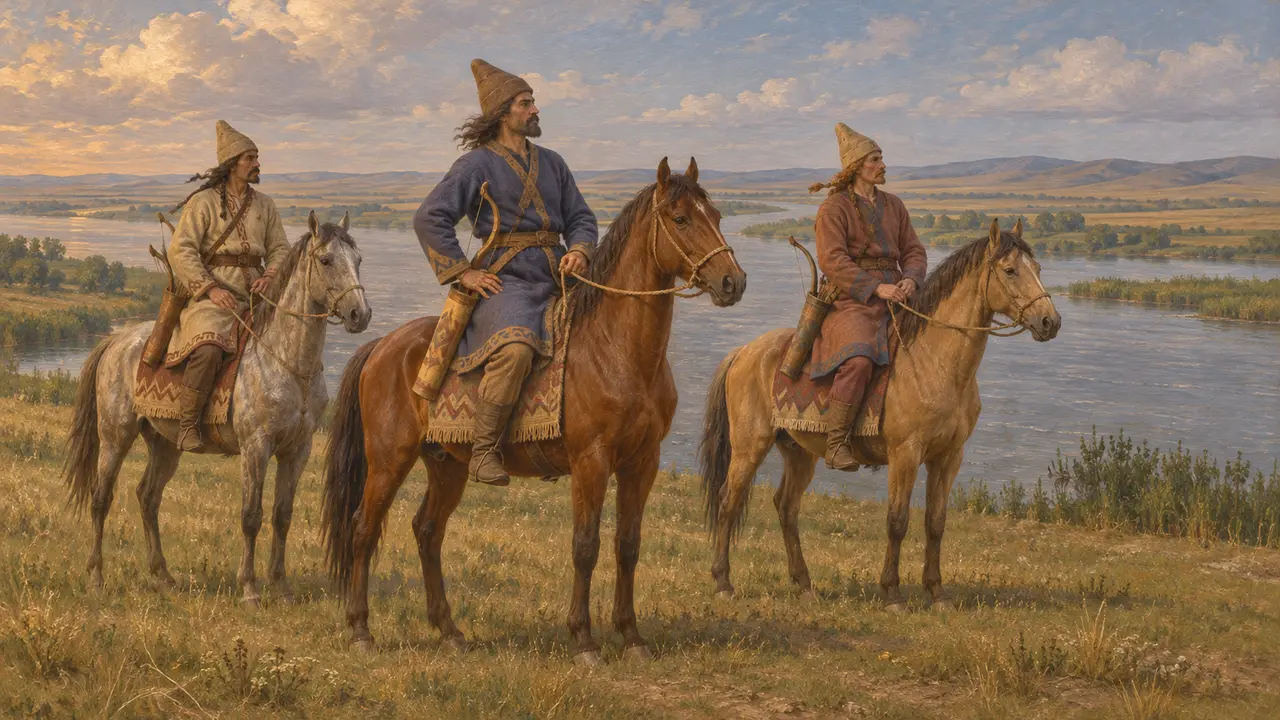
DisputedHerodotus says Scythians reached the bridge before the retreating Persians and urged the Greeks to destroy it. Miltiades of the Chersonese backed them, but Histiaeus of Miletus argued that the tyrants owed their power to Darius, and the rest agreed. Many historians think Miltiades' proposal was a story told later in Athens to honour him, since Darius left him in place afterwards.
Herodotus 4.136-139
The King's return
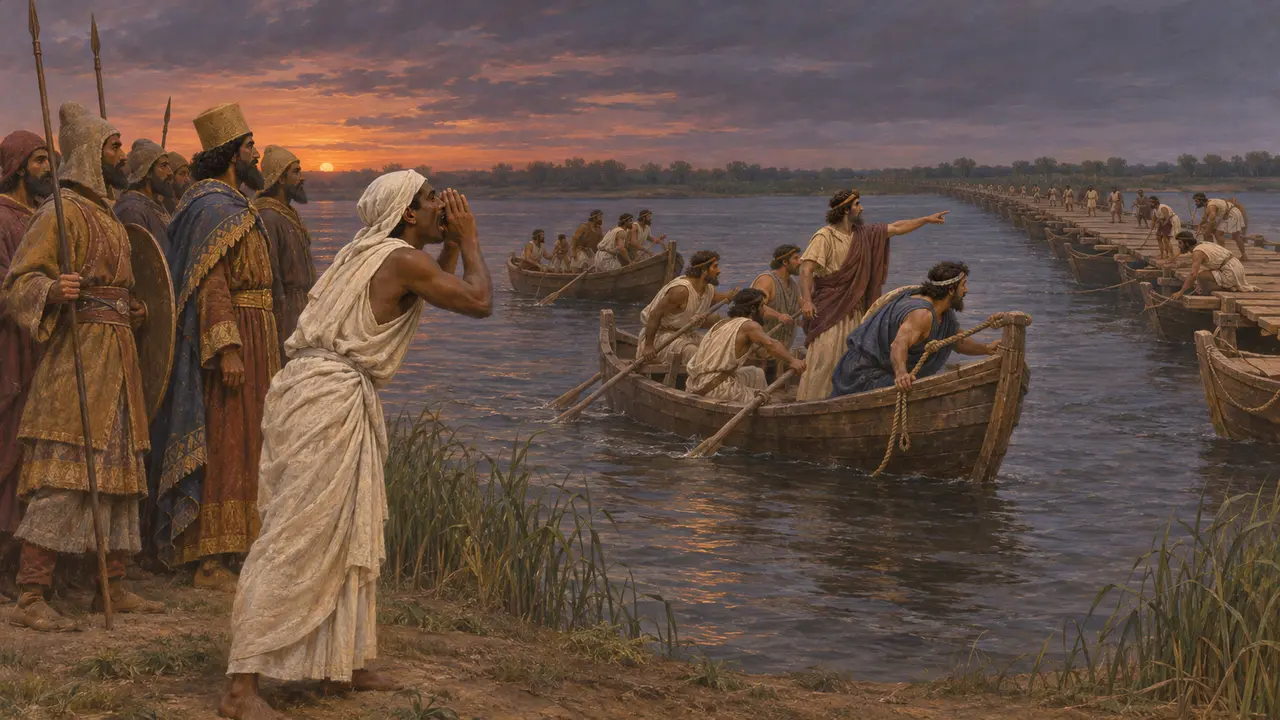
Ancient accountAccording to Herodotus, the Ionians removed only the span on the Scythian side to look obedient. When the Persians arrived at night and found the bridge apparently gone, an Egyptian with a loud voice called for Histiaeus, who brought the boats back. Ctesias tells a different story, in which Darius broke his bridges too soon in his flight and abandoned part of his army to the Scythians.
Herodotus 4.139-142; Ctesias, Persica (epitome in Photius)
Silence in the Persian record
In the recordNo Persian inscription or tablet mentions the Ister bridge or describes the campaign. Darius's tomb inscription at Naqsh-e Rostam lists among his peoples the Saka beyond the sea. Many scholars connect them with the Scythians of Europe, which may mean the Persian court counted the expedition a success.
DNa
Sources
- Herodotus 4.83-98; 4.118-142; 5.11
- Ctesias, Persica (epitome in Photius)
- DNa
- P. Briant, From Cyrus to Alexander, 2002
- M. A. Dandamaev, A Political History of the Achaemenid Empire, 1989