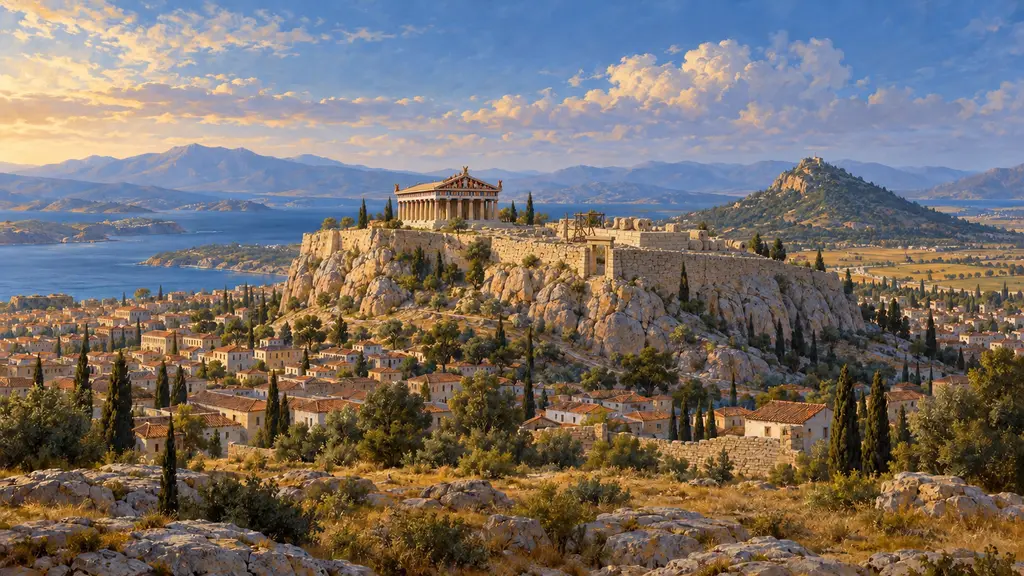
Athens
Greek city of Attica, burned by Persian armies in 480 and 479 BCE
In the game: Level 4: The Terrace, Level 7: Sardis Burns, Level 8: The Bay of Marathon, Level 10: The Hot Gates, Level 11: The Finale
Athens was the chief city of Attica, run as a democracy after the reforms of Cleisthenes about 508, with its sanctuaries on the rock of the Acropolis. Its troops joined the Ionian rebels in burning Sardis in 498 and beat the Persian landing force at Marathon in 490, and Xerxes and then Mardonius burned it in 480 and 479. For Greek writers its sack and recovery became the centre of the story of the Persian wars.
In the game: The chronicle presents Athens as the city of the Acropolis that helped burn Sardis, won at Marathon, and was burned by Xerxes in 480 and by Mardonius in 479. This matches Herodotus.
Earth and water at Sardis
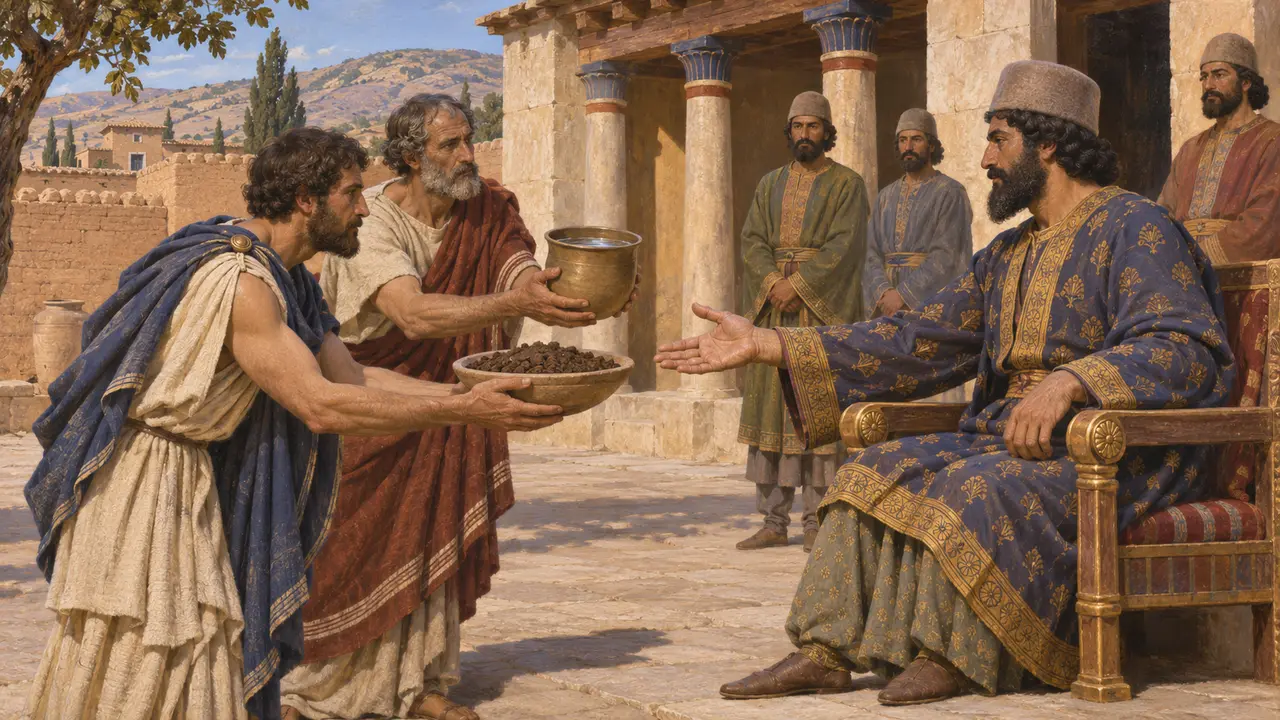
DisputedHerodotus says that about 507 Athenian envoys seeking help against Sparta gave earth and water to the satrap Artaphernes at Sardis, and were blamed for it at home (5.73). Later Artaphernes told Athens to take back the exiled tyrant Hippias, and it refused (5.96). Historians debate whether Persia then counted Athens as a subject that had broken faith. If so, the later campaigns were the punishment of rebels rather than new conquest.
Herodotus 5.73, 5.96; P. Briant, From Cyrus to Alexander, 2002
Sardis and Marathon
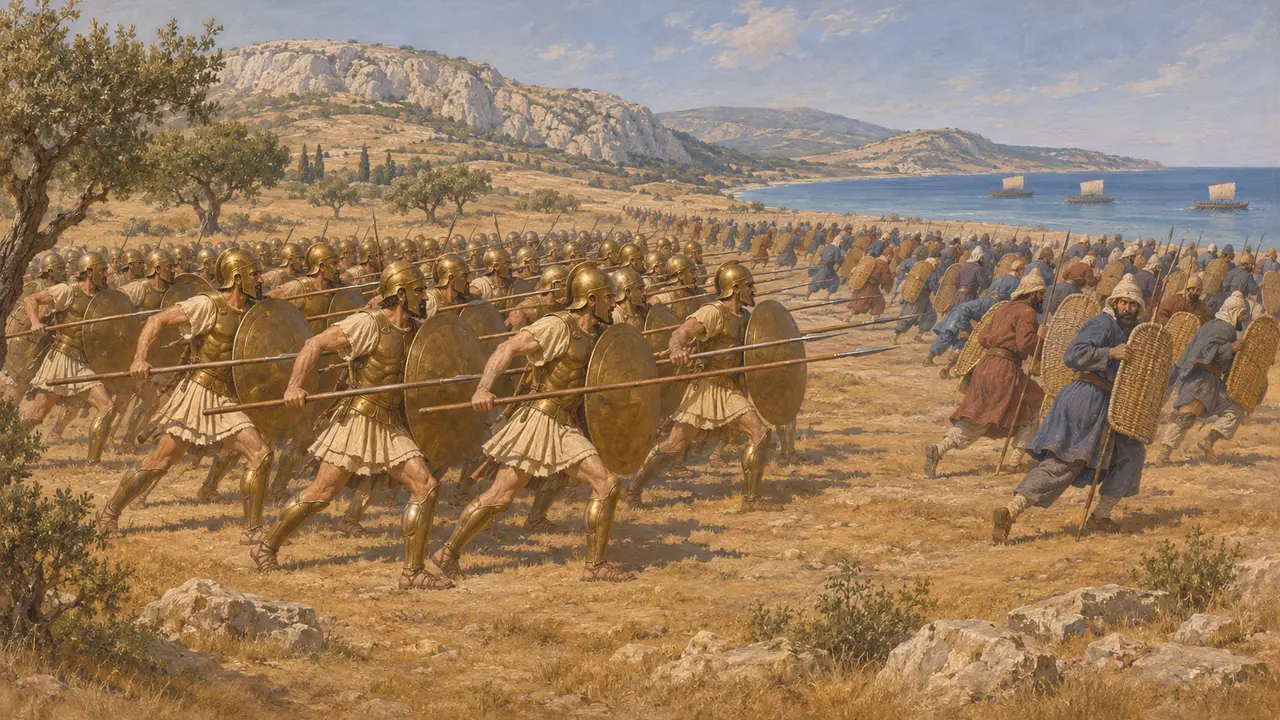
Ancient accountHerodotus tells that Aristagoras of Miletus won over the Athenians, who sent twenty ships to the Ionian revolt. With the Eretrians they marched on Sardis in 498, and the lower town and its temple of Cybebe burned (5.97-102). In 490 the force of Datis and the younger Artaphernes landed at Marathon with Hippias as guide, and the Athenians and Plataeans defeated it (6.102-117). Herodotus counts 6,400 Persian and 192 Athenian dead.
Herodotus 5.97-102, 6.102-117
Two burnings, 480 and 479
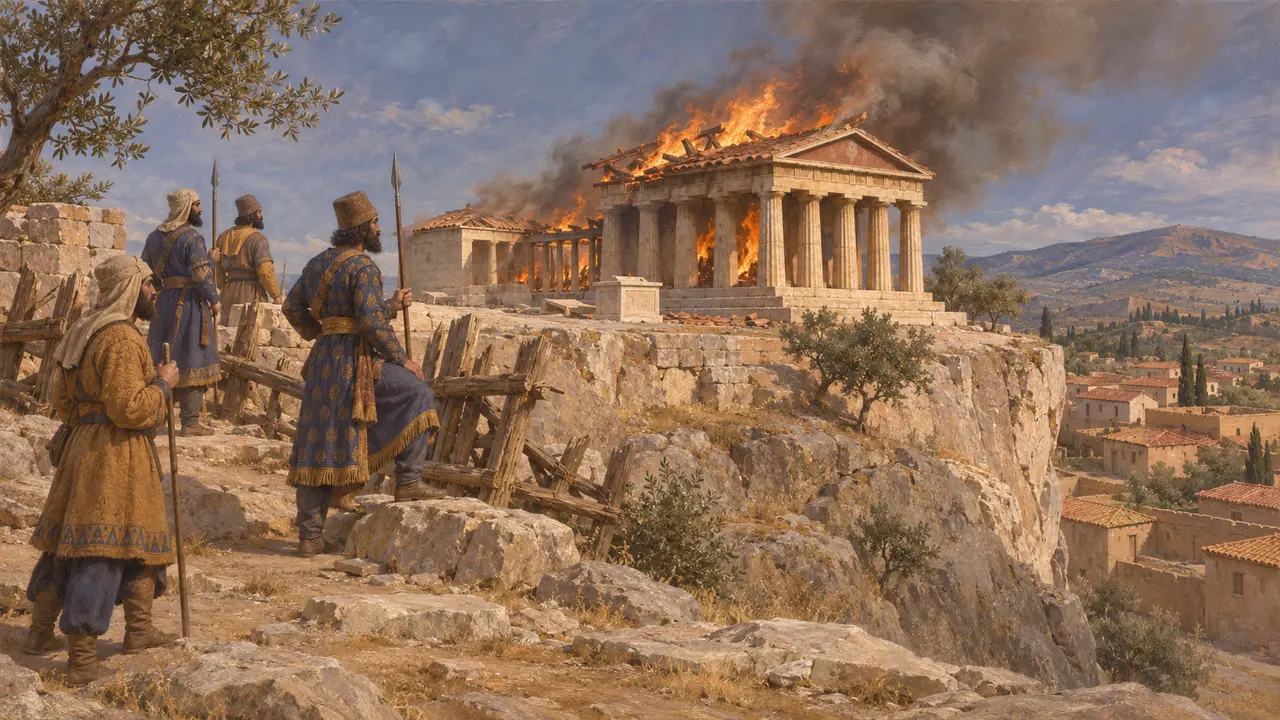
Ancient accountHerodotus says most Athenians left for Troezen, Aegina and Salamis before Xerxes arrived in 480 (8.41). A few held the Acropolis behind a wooden barricade. Persians then climbed the steep side near the shrine of Aglaurus, killed the defenders and burned the sanctuary (8.51-53). Mardonius reoccupied the empty city in 479 and offered terms, which were refused. On leaving for Boeotia he burned what still stood (9.3-13).
Herodotus 8.41, 8.51-55, 9.3-13
What the ground shows
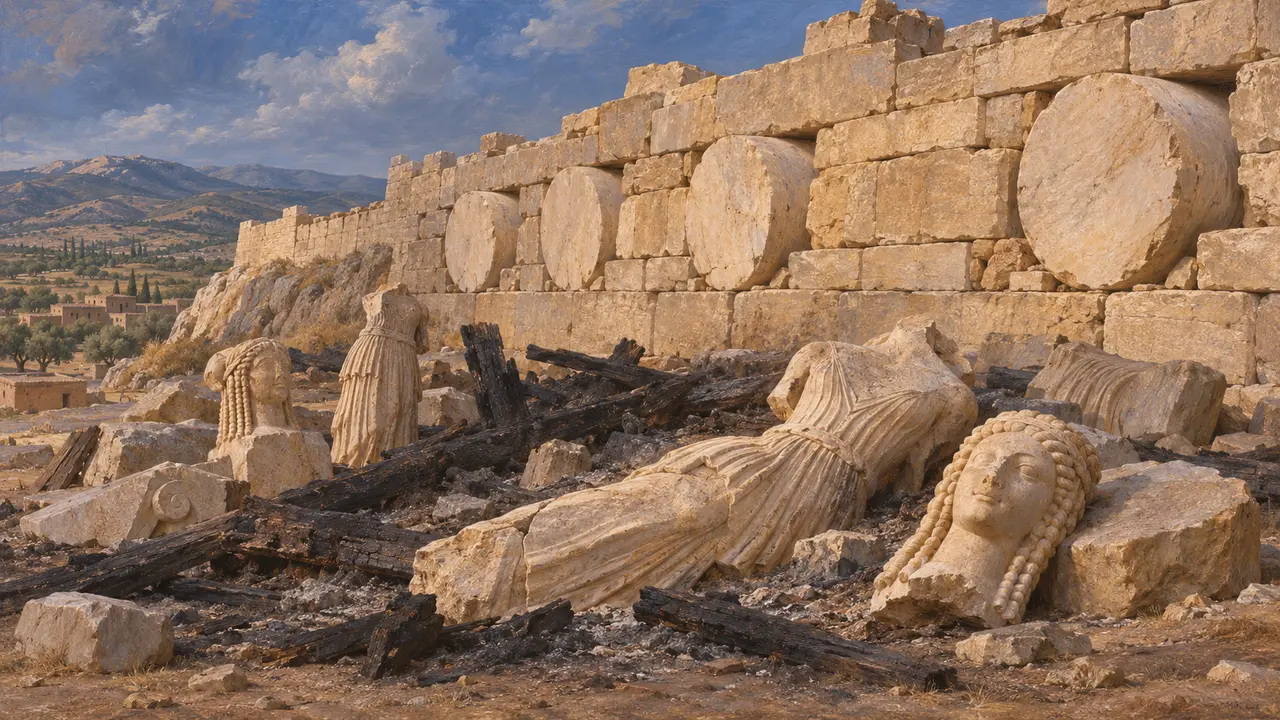
In the recordExcavations on the Acropolis found deposits of burnt debris, broken statues and marble korai. These were long read as debris the Athenians buried when they cleared the rock after 479, though some scholars now think the burials took place over a longer period. Drums from the unfinished Older Parthenon were built into the north wall of the citadel, where they can still be seen. Persian royal inscriptions do not name Athens.
J. M. Hurwit, The Athenian Acropolis, 1999
The arrow and the olive
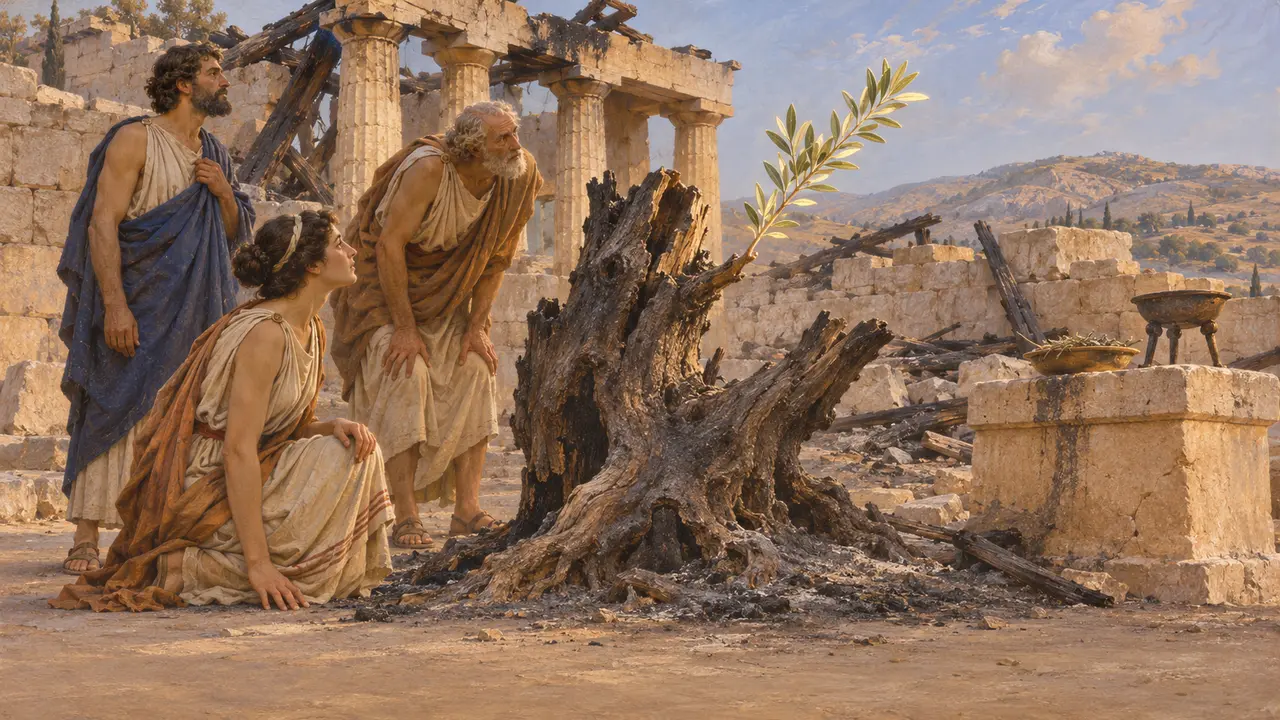
Later legendHerodotus tells that when Darius heard of Sardis he shot an arrow into the sky and prayed to be allowed to punish the Athenians. He then had a servant remind him of them three times whenever dinner was served (5.105). Herodotus also says that on the day after the burning, Athenians sent up by Xerxes to sacrifice found Athena's sacred olive with a new shoot a cubit long (8.55). Both are moral tales of vengeance and survival, not records.
Herodotus 5.105, 8.55
Sources
- Herodotus 5.73-105
- Herodotus 6.94-120
- Herodotus 8.41-55, 9.1-13
- J. M. Hurwit, The Athenian Acropolis, 1999
- P. Briant, From Cyrus to Alexander, 2002