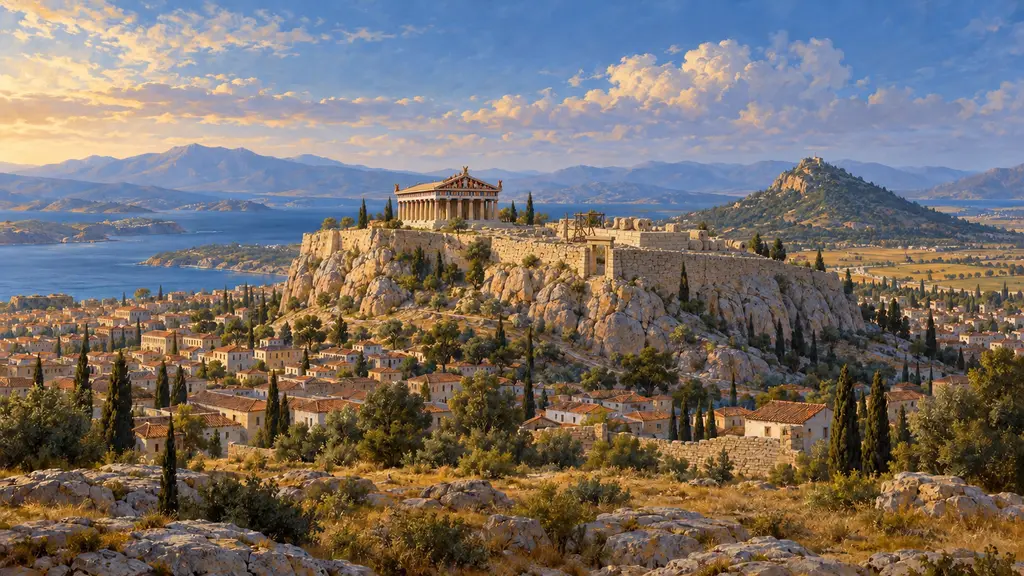
The Acropolis of Athens
Citadel and sanctuary of Athena at Athens, taken and burned by Xerxes in 480 BCE
In the game: Level 10: The Hot Gates
The Acropolis is the steep limestone hill at the heart of Athens. In 480 it held the old temple of Athena and a half-built marble temple. In late summer 480 Xerxes' army took it after a siege and burned its sanctuaries, which Herodotus presents as revenge for the burning of Sardis. The ruins shaped how Athenians remembered the war and what they later built there.
In the game: The game presents the Acropolis as a field stormed in 480, with the old temple of Athena, the Older Parthenon and the wooden barricade. Herodotus and the excavations support these features. In 480 the Older Parthenon was still unfinished.
Temples on the rock before 480
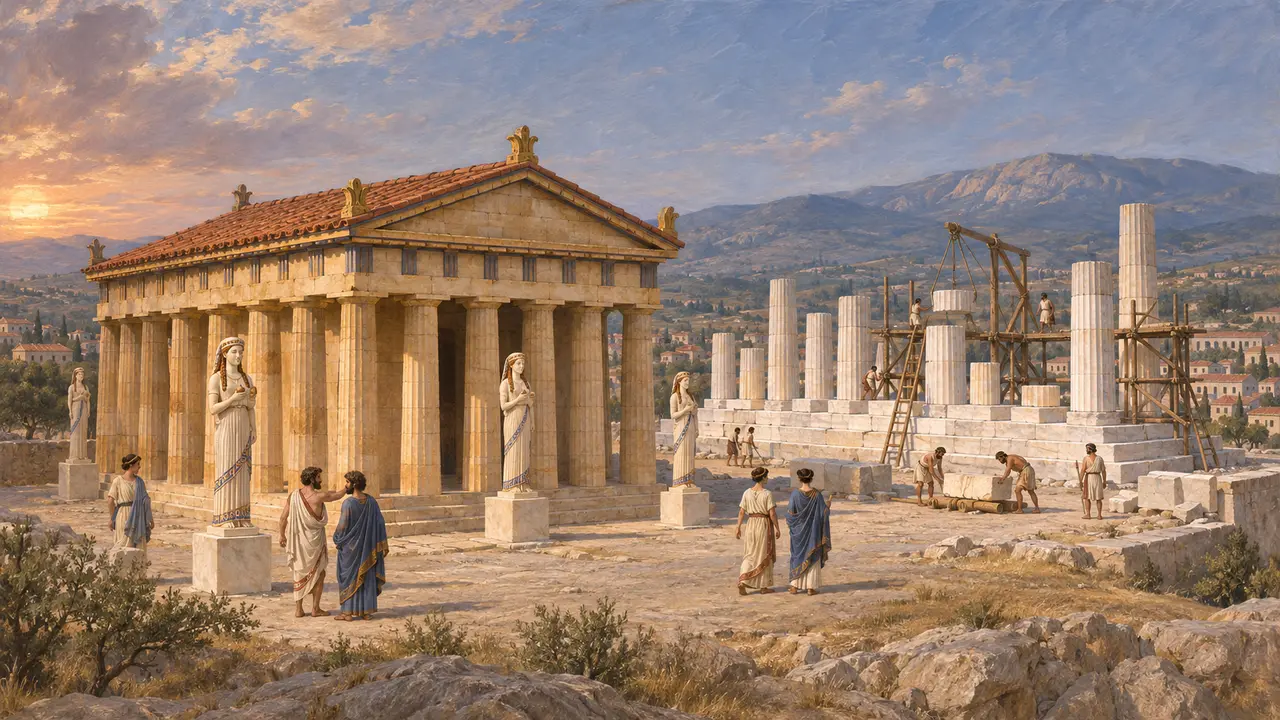
In the recordExcavation shows that by 480 the summit held a limestone temple of Athena Polias. Its foundations survive between the later Parthenon and the Erechtheion, and many marble dedications such as korai stood around it. On the south side a new marble temple, now called the Older Parthenon, was under construction, with its columns only partly raised. Most scholars date its start to the years after Marathon.
Excavation reports; J. M. Hurwit, The Athenian Acropolis, 1999
The siege of the barricade
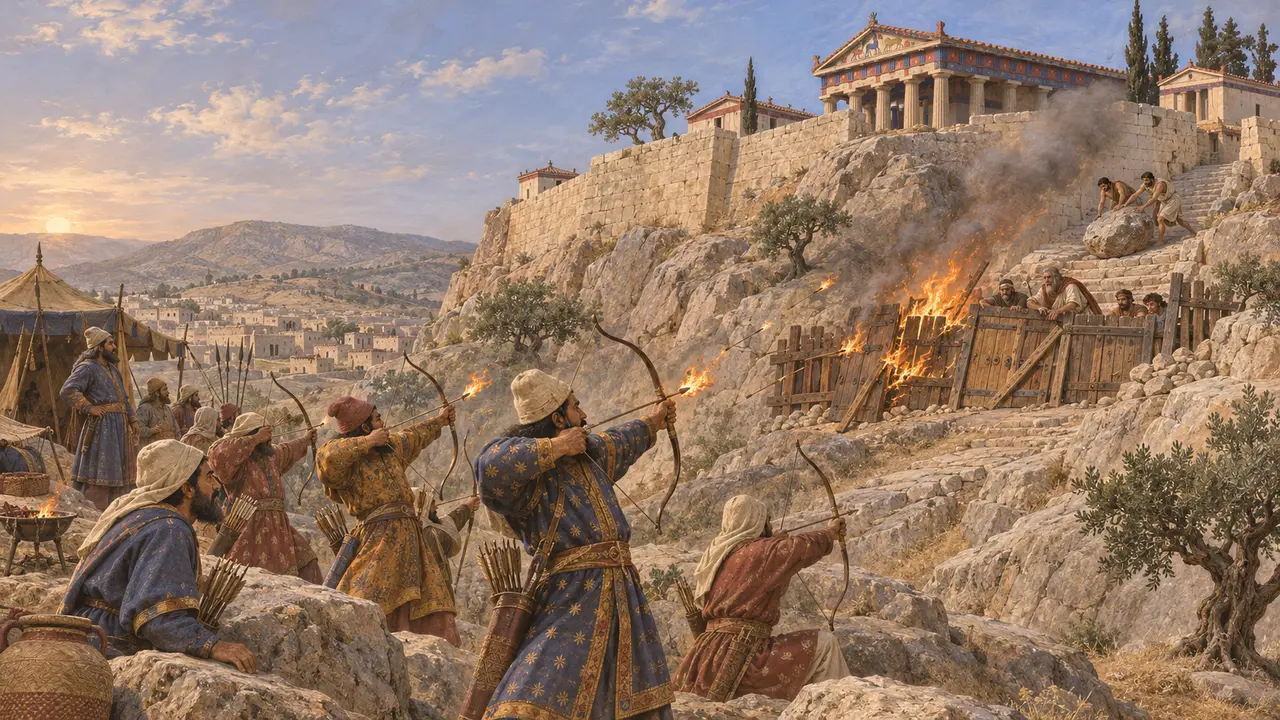
Ancient accountHerodotus says the Athenians had abandoned the city. Only a few temple treasurers and poor men stayed behind, and they took the oracle's wooden wall to mean a barricade of doors and timbers on the Acropolis. The Persians camped on the Areopagus opposite and shot arrows wrapped in burning tow into the barricade. The defenders refused terms offered through the exiled Pisistratids and rolled boulders down on the attackers.
Herodotus 8.51-52
Capture and burning
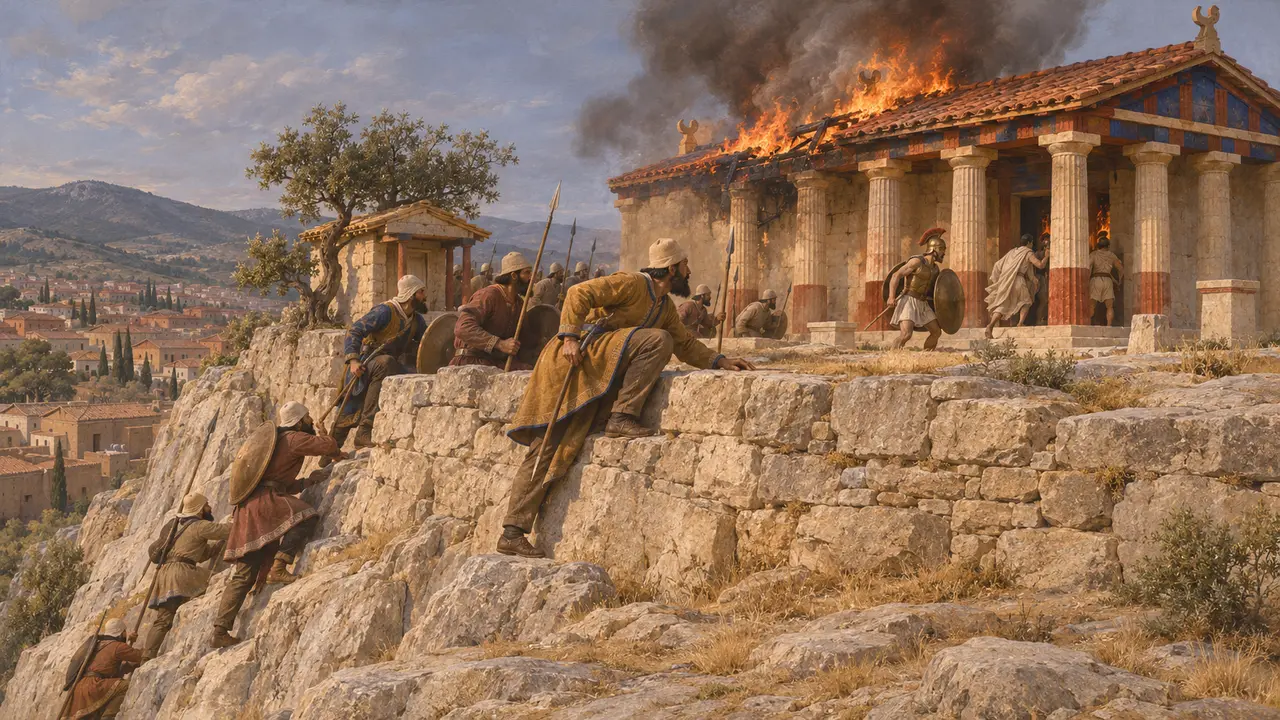
Ancient accountIn the end, Herodotus says, some Persians climbed the sheer face near the shrine of Aglaurus, where no guard was posted. Some defenders leapt from the wall and others fled into the temple. The Persians killed them, stripped the sanctuary and set the Acropolis on fire. Xerxes sent a rider to Susa with the news, and the next day he ordered the Athenian exiles with him to go up and sacrifice in their own way.
Herodotus 8.53-54
What the burnt remains show
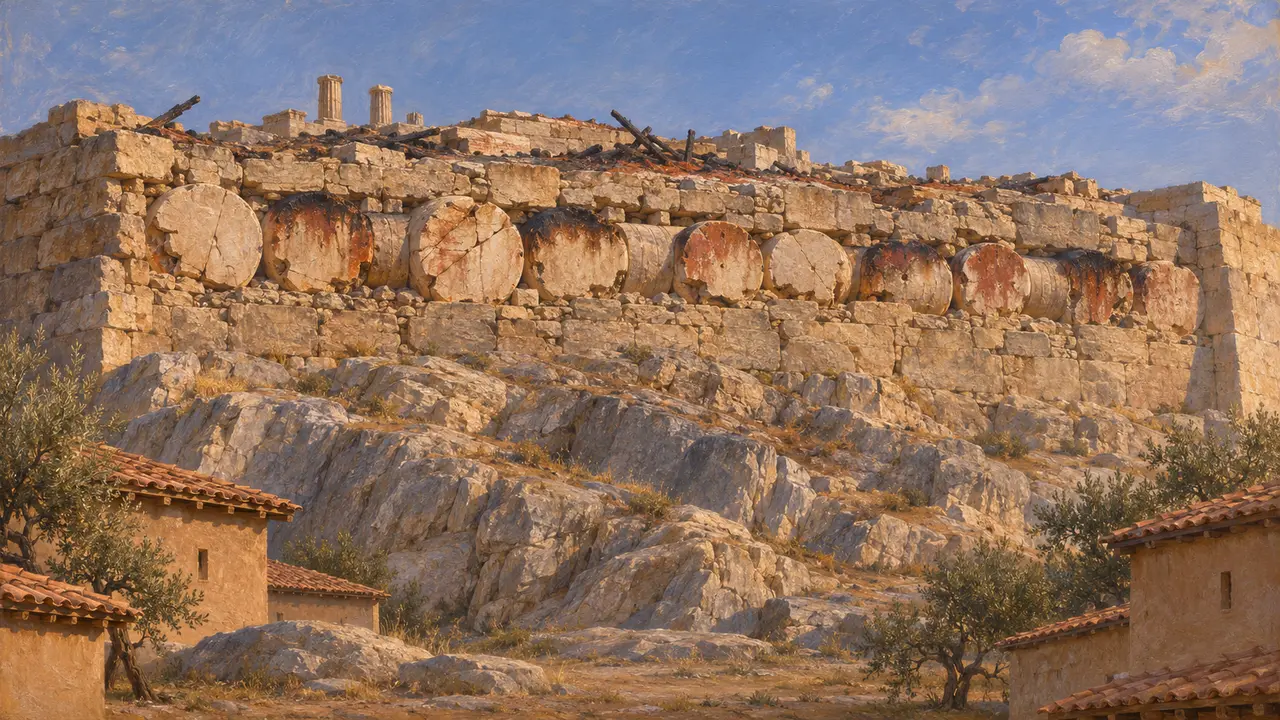
In the recordExcavations from 1885 to 1890 found broken korai, inscribed bases and burnt fragments buried in fills on the summit, long called the Persian debris, though scholars now debate how much of it belongs to 480. Column drums of the Older Parthenon, cracked and reddened by fire, were later built into the north wall of the Acropolis. They can still be seen there from the city below.
P. Kavvadias and G. Kawerau, Die Ausgrabung der Akropolis, 1906; J. M. Hurwit, The Athenian Acropolis, 1999
Revenge, ruins and the oath
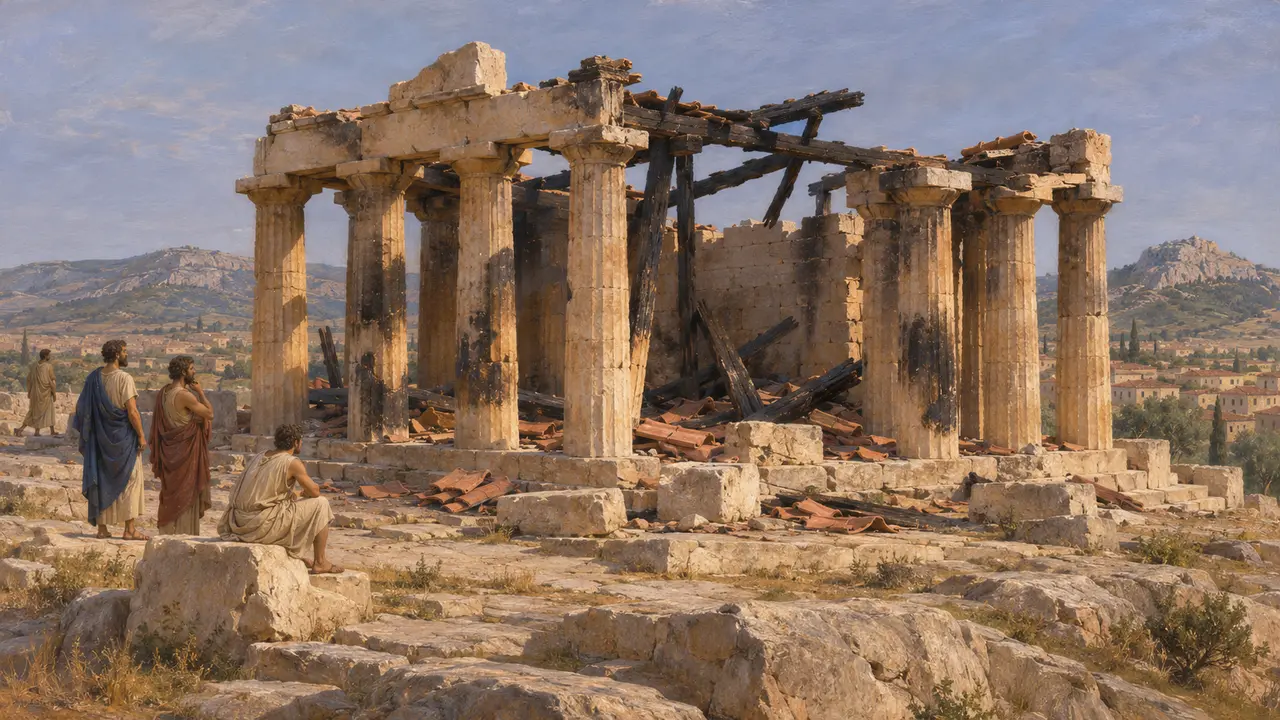
DisputedHerodotus says the Persians later used the burning of Sardis and its temple of Cybebe in 498 as grounds for burning Greek temples. Later writers said the Greeks swore before Plataea to leave burned temples as memorials, but Theopompus called this oath an Athenian invention. Historians still argue whether the ruins were left by vow or for lack of money, and whether part of the old temple stayed in use after 480.
Herodotus 5.102; Lycurgus, Against Leocrates 81; Diodorus 11.29; Theopompus, FGrH 115 F153
Sources
- Herodotus 5.102; 8.51-55
- J. M. Hurwit, The Athenian Acropolis, 1999
- P. Kavvadias and G. Kawerau, Die Ausgrabung der Akropolis vom Jahre 1885 bis zum Jahre 1890, 1906
- Lycurgus, Against Leocrates 81
- Diodorus 11.29
- Theopompus, FGrH 115 F153