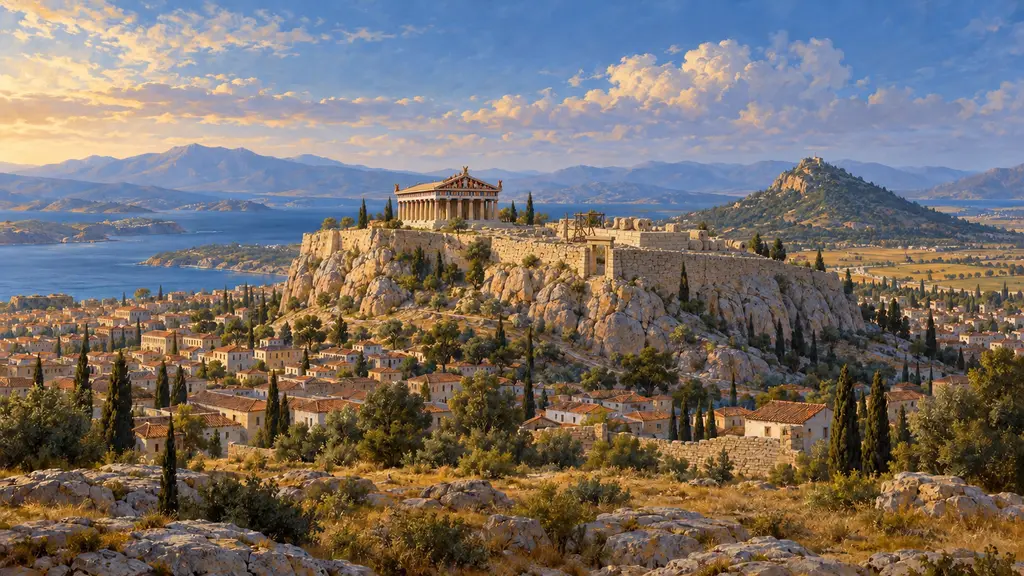
The Wooden Barricade
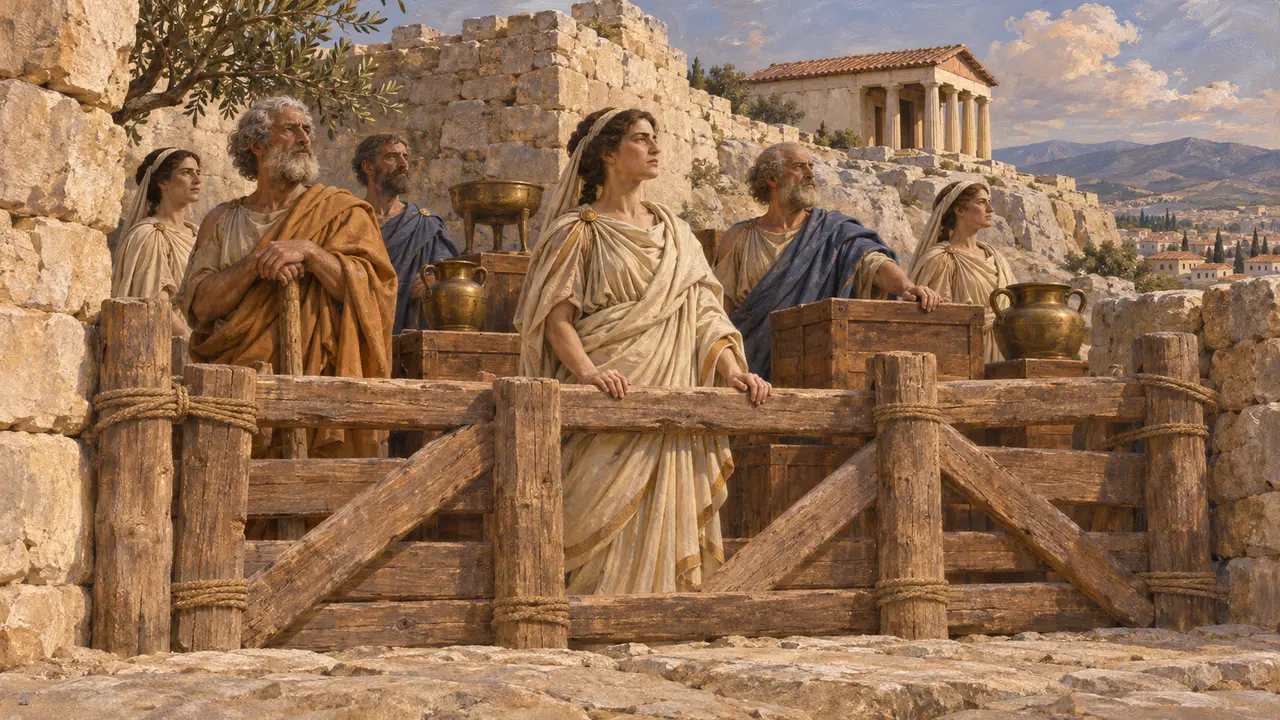
Timber barricade at the entrance to the Acropolis of Athens, 480 BCE
When Xerxes' army reached Athens in 480, most Athenians had left for Salamis, Aegina and Troezen. A few who stayed, some too poor to leave, blocked the way up to the Acropolis with doors and timbers, believing this was the wooden wall of the oracle. Herodotus tells how the Persians burned it with fire arrows and then took and burned the citadel.
In the game: The Wooden Barricade stands on a level's map as a historic structure that the player does not build. The game's note follows Herodotus's account of the doors, timbers and burning arrows.
The oracle of the wooden wall
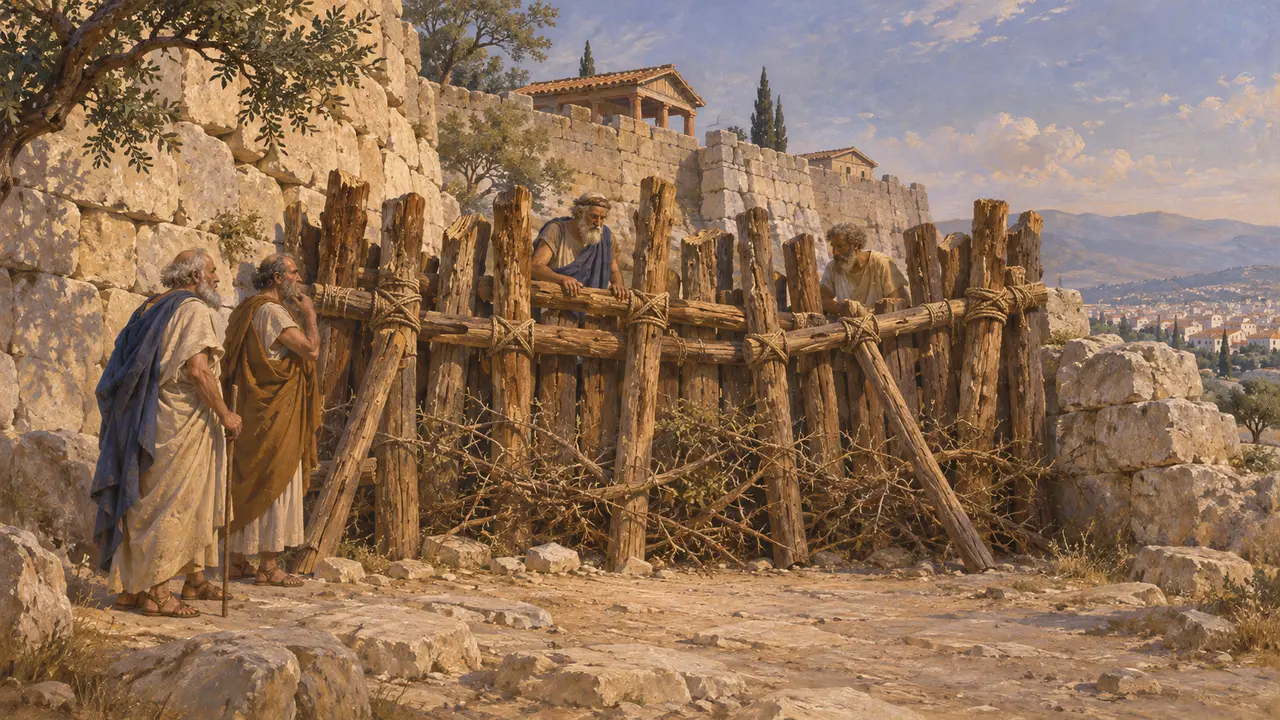
Ancient accountHerodotus says that before the invasion the Pythia at Delphi told the Athenians that only a wooden wall would stay unsacked. Some older Athenians thought this meant the Acropolis, which he says had once been fenced with a thorn hedge. Themistocles argued that it meant the fleet, and the Athenians decided to meet the invader with their ships.
Herodotus 7.140-144
Those who stayed behind
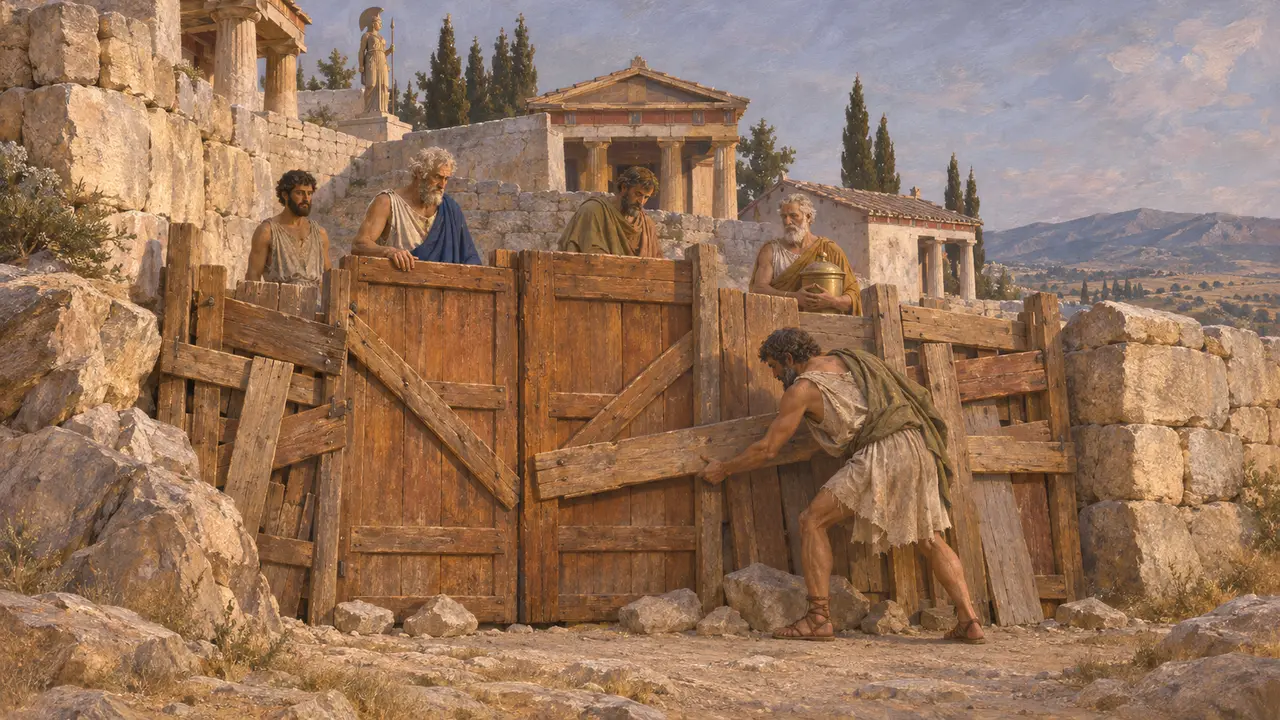
Ancient accountAccording to Herodotus, the Persians found the city empty except for a few people in the sanctuary: the temple treasurers and some poor men. They fenced the Acropolis with doors and planks, partly because they could not afford to go to Salamis and partly because they believed they had found the true meaning of the oracle. He dates the capture to the archonship of Calliades.
Herodotus 8.51
Fire arrows and the fall of the citadel
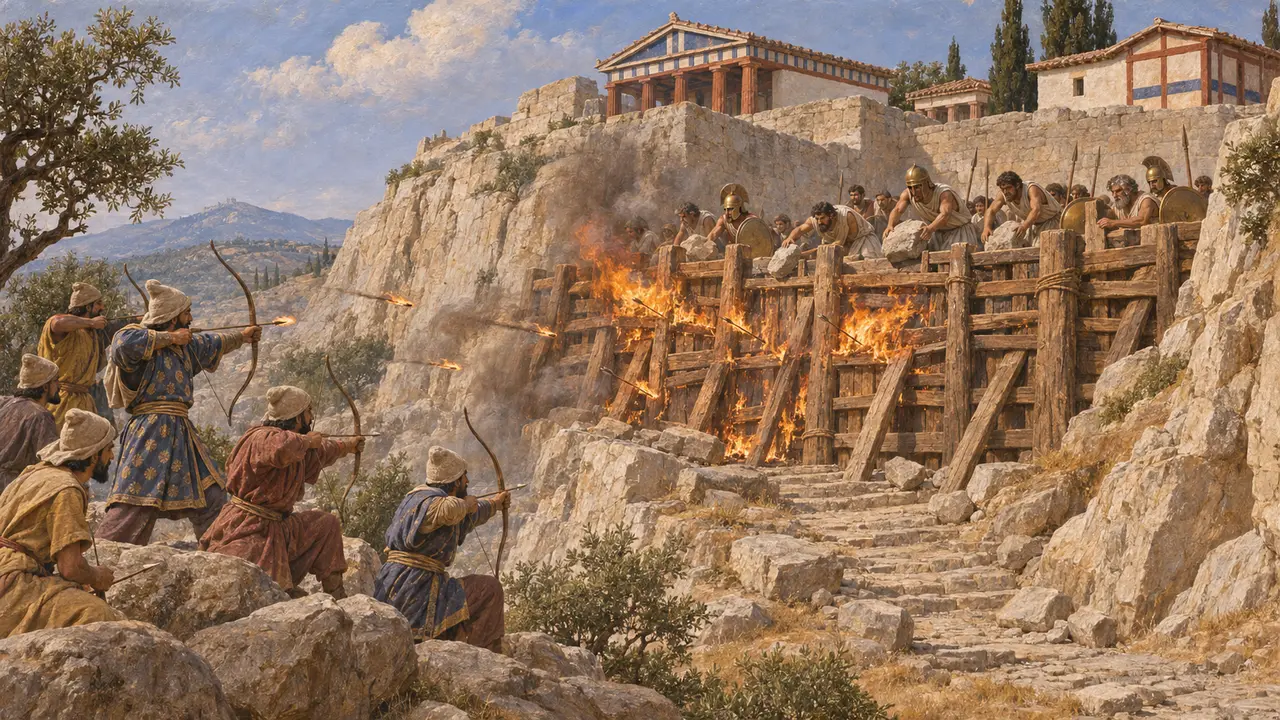
Ancient accountHerodotus says the Persians held the Areopagus hill opposite and shot arrows wrapped in burning tow at the barricade until it caught fire. The defenders still held out, rolling stones on the attackers and refusing terms offered through the exiled Pisistratids. Some Persians finally climbed an unguarded steep face near the shrine of Aglaurus, killed the defenders, and plundered and burned the sanctuary.
Herodotus 8.52-53
The Troezen decree
DisputedAn inscription found at Troezen and published in 1960 presents itself as Themistocles' decree for evacuating Athens. It says the treasurers and priestesses were to stay on the Acropolis to guard the gods' property. The stone was cut in the early third century, long after 480, and its timing of the evacuation does not match Herodotus. Historians still argue whether it preserves a genuine decree or a later reconstruction.
M. H. Jameson, Hesperia 29, 1960; R. Meiggs and D. Lewis, Greek Historical Inscriptions, 1969
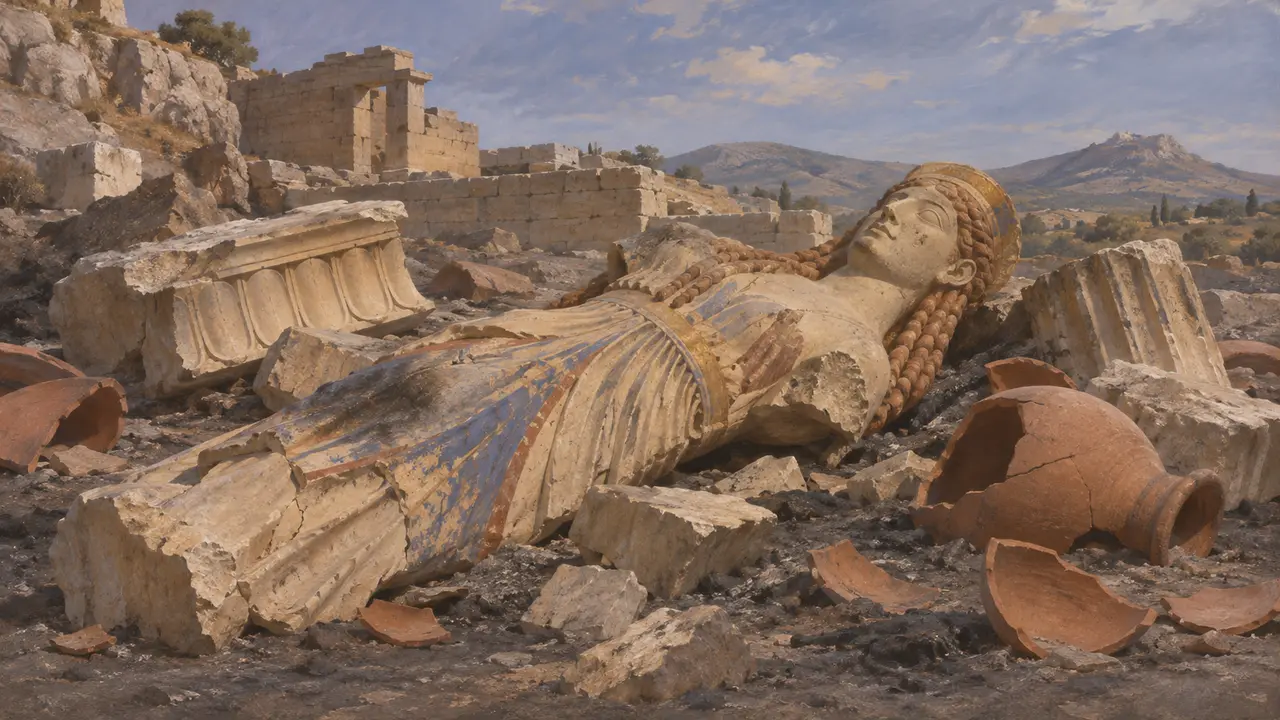
The burned remains
In the recordNothing of the timber barricade survives. Excavations on the Acropolis in the 1880s uncovered deep fills of burned and broken sculpture, pottery and building stone. These are traditionally linked to the Persian sack and the later clearing of the site, though archaeologists debate how much of the fill dates from 480. Damaged statues from these deposits are now displayed in the Acropolis Museum.
J. Hurwit, The Athenian Acropolis, 1999
Sources
- Herodotus 8.51-53
- Herodotus 7.140-144
- M. H. Jameson, A Decree of Themistokles from Troizen, Hesperia 29, 1960
- R. Meiggs and D. Lewis, A Selection of Greek Historical Inscriptions to the End of the Fifth Century BC, 1969
- J. Hurwit, The Athenian Acropolis, 1999
- P. Green, The Greco-Persian Wars, 1996