Salamis
Island and strait off Athens, scene of the sea battle of September 480 BCE
In the game: Level 10: The Hot Gates, Level 11: The Finale
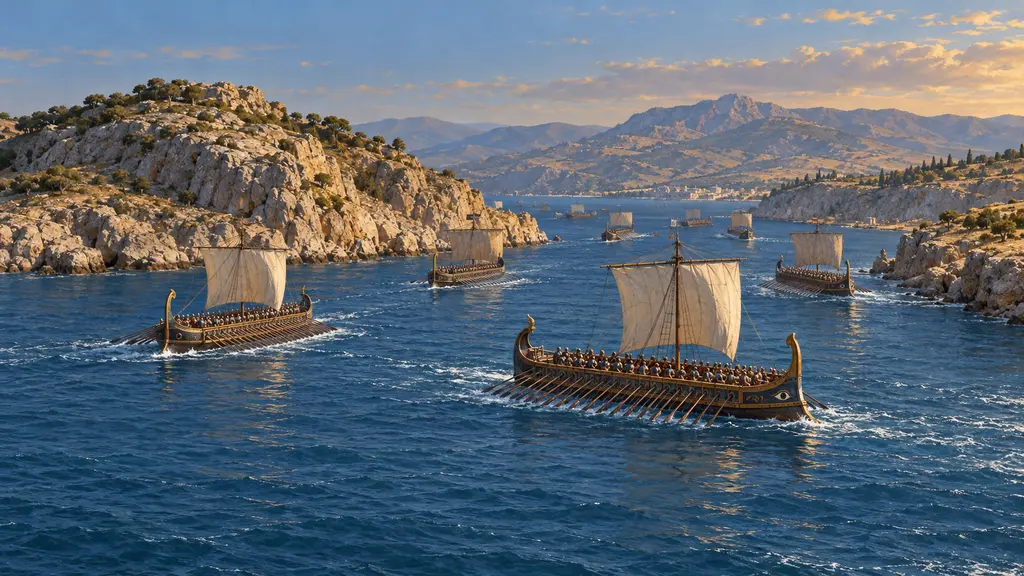
Salamis is an island in the Saronic Gulf just west of Athens, divided from the Attic coast by a narrow strait. In September 480 BCE the allied Greek fleet, with Athens supplying the largest share of ships, defeated the King's navy there. The defeat ended Xerxes' hope of a quick conquest; he returned to Asia and left Mardonius to carry on the war on land.
In the game: Salamis is not one of the game's levels. It appears only as a chronicle note recording the Greek victory of September 480 BCE with Xerxes watching from the shore, which agrees with Herodotus.
Athens empties onto the island
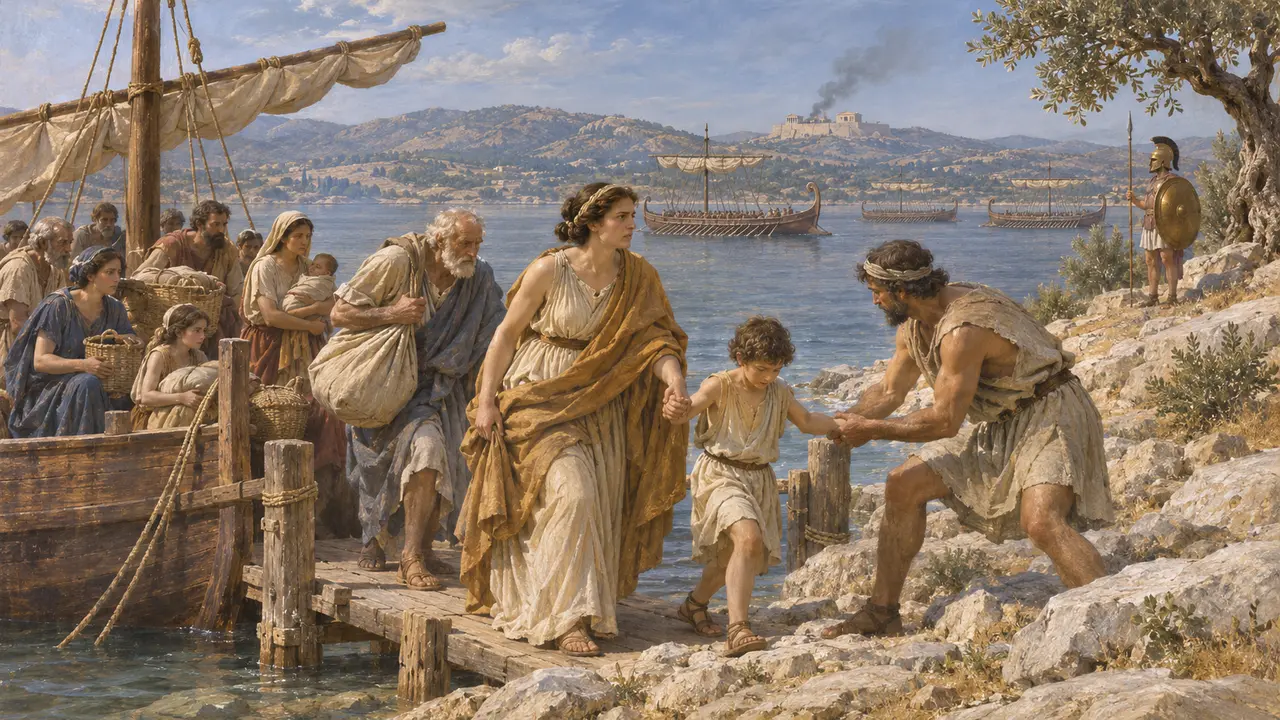
Ancient accountHerodotus says that after Thermopylae the allied fleet drew back from Artemisium to Salamis, and the Athenians shipped their families to Troezen, Aegina and Salamis itself. Persian troops then took the abandoned city and burned the Acropolis, where a few defenders had held out behind a wooden barricade. The allied commanders argued over whether to fight at Salamis or fall back to the Isthmus of Corinth.
Herodotus 8.40-41, 8.51-53, 8.56-63
A message in the night
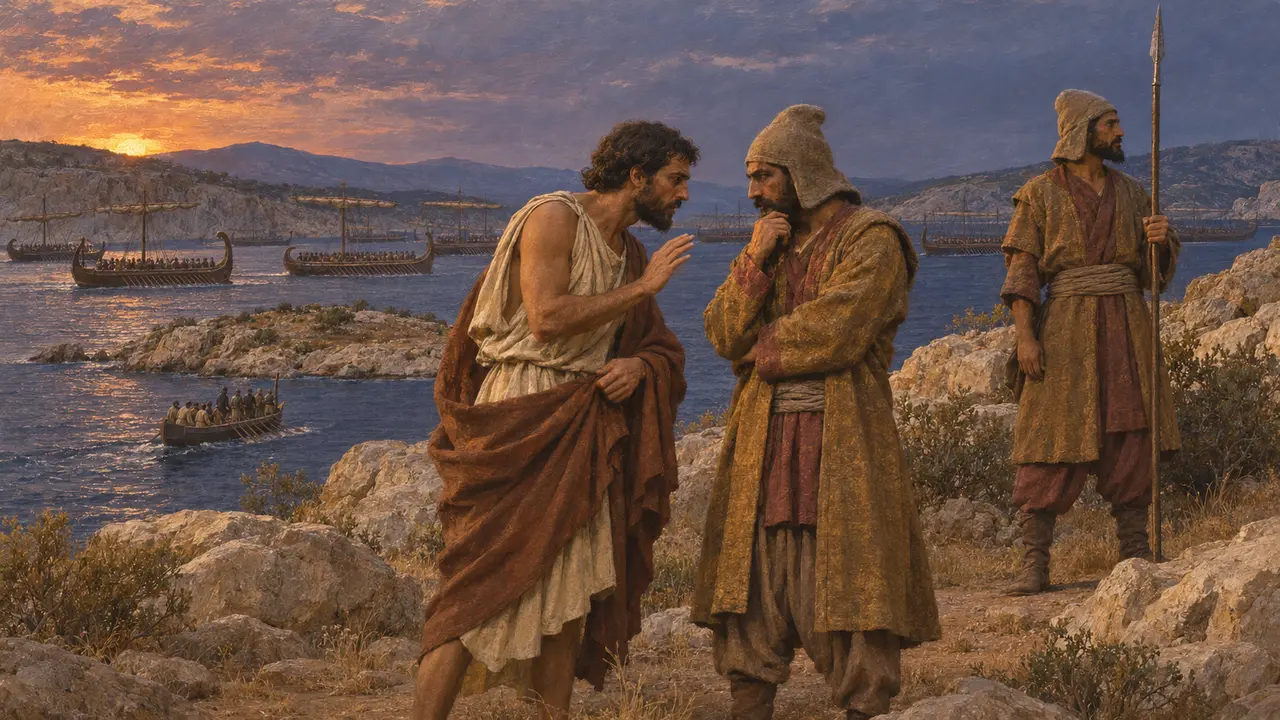
Ancient accountHerodotus reports that Themistocles, afraid the allies would scatter, sent his slave Sicinnus to tell the Persians that the Greeks meant to slip away. Xerxes' ships spent the night closing the exits of the strait, and troops were landed on the islet of Psyttaleia. Aeschylus, who by later tradition fought in the battle, tells a similar story in his play Persians, staged in 472 BCE.
Herodotus 8.75-76; Aeschylus, Persians
Battle in the narrows
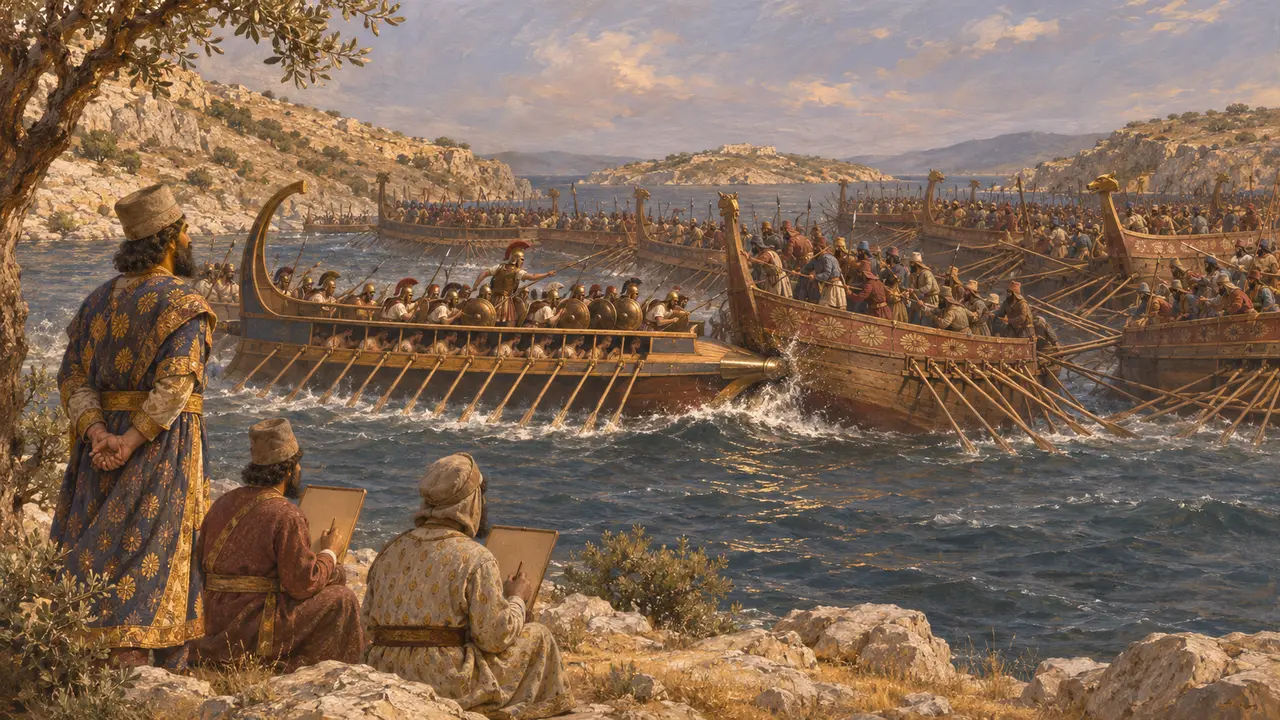
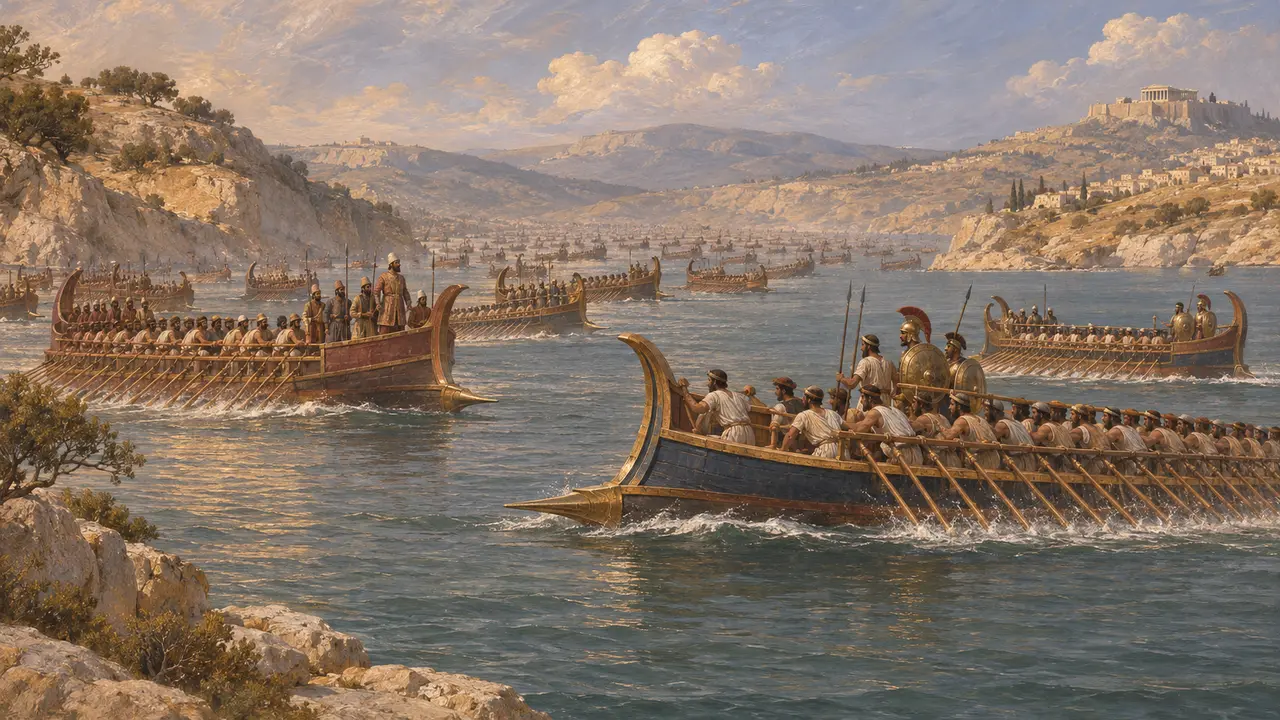
Ancient accountIn the cramped water the larger Persian fleet could not use its numbers, and its ships fouled one another while the Greeks rammed them. Xerxes watched from the foot of Mount Aegaleos, with scribes noting which captains fought well. His brother Ariabignes, an admiral, was killed, Artemisia escaped by ramming a ship of her own side, and Aristides led hoplites who killed the Persians on Psyttaleia.
Herodotus 8.86-90, 8.95
How many ships, and whose story
DisputedHerodotus gives the King 1,207 triremes at the start of the campaign and says that losses were replaced. He counts about 380 Greek ships at Salamis. Aeschylus gives the Greeks 310 and Xerxes 1,000, with 207 fast ships either among them or extra. Most historians think the Persian totals exaggerated and cut down by storms and the fighting at Artemisium, so the real odds are still argued. No Persian text mentions the battle; every surviving account is Greek.
Herodotus 7.89, 8.48, 8.66, 8.82; Aeschylus, Persians; P. Briant, From Cyrus to Alexander, 2002
Omens and later tales
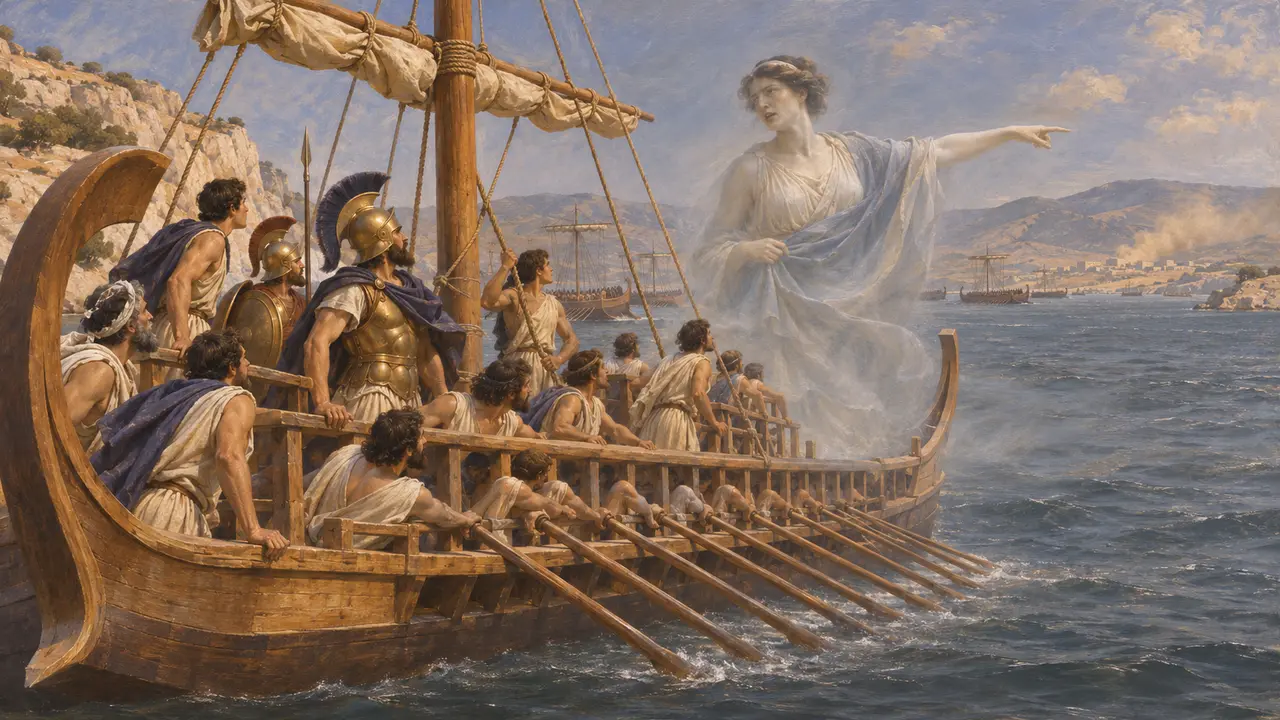
Later legendHerodotus records stories of the supernatural: a cloud of dust and a ritual cry rising from Eleusis before the battle, and a phantom woman who shamed the Greeks into attacking. Plutarch, writing some six centuries later, repeats a claim by Phanias of Lesbos that Themistocles sacrificed three Persian captives before the fight. Many historians doubt this tale.
Herodotus 8.65, 8.84; Plutarch, Themistocles 13
Sources
- Herodotus, Histories 8.40-96
- Aeschylus, Persians
- Plutarch, Themistocles
- P. Briant, From Cyrus to Alexander, 2002
- B. Strauss, The Battle of Salamis, 2004