Artemisium
Cape of northern Euboea, scene of three days of sea fighting in 480 BCE
In the game: Level 10: The Hot Gates
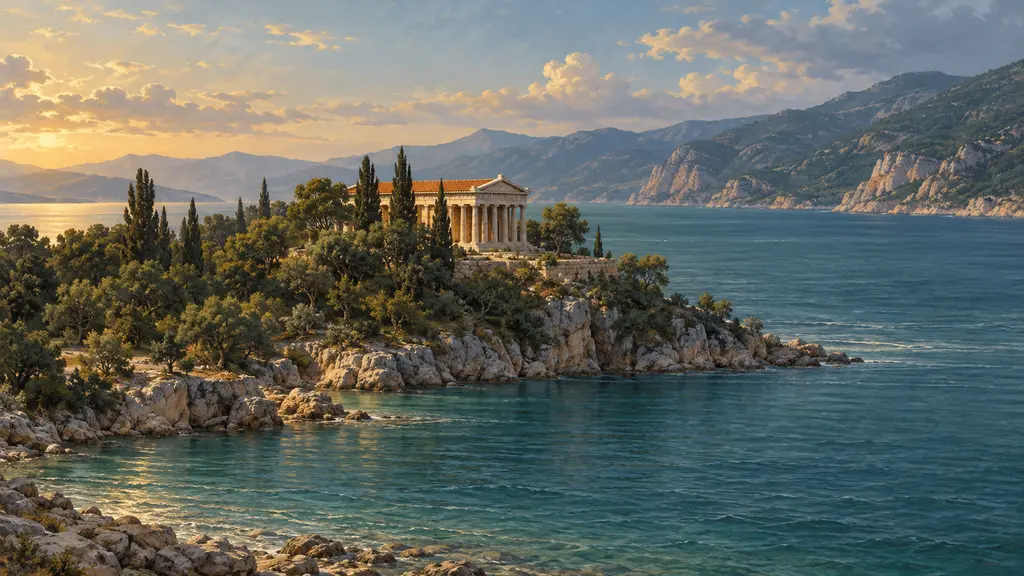
Artemisium was the cape at the northern tip of Euboea where the Greek fleet blocked the King's ships in the summer of 480, while Leonidas held Thermopylae on the mainland opposite. After three days of fighting and heavy losses on both sides, the Greeks sailed south when the pass fell, and later gathered at Salamis. The battle is known almost entirely from Greek writers, above all Herodotus, and no Persian record mentions it.
In the game: The game mentions Artemisium only in a chronicle note: the Greek fleet fought the King's for three days while the pass was held. The note agrees with Herodotus.
The cape and the Greek plan
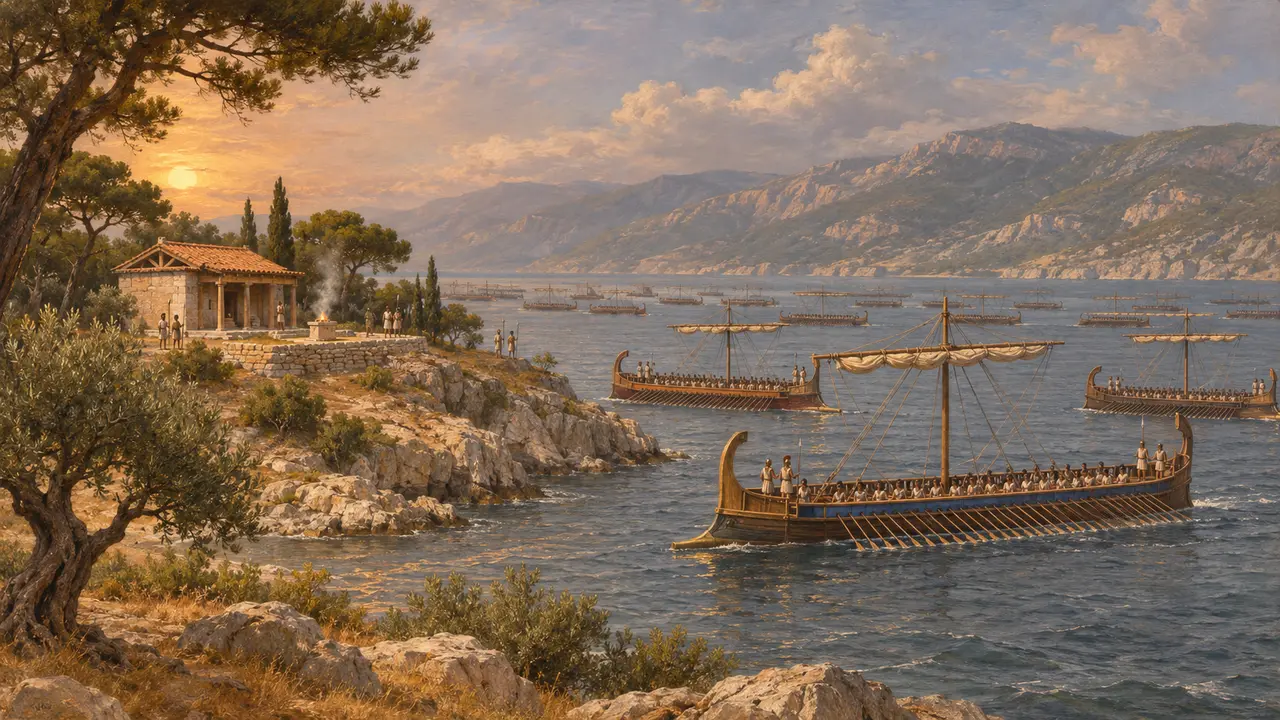
Ancient accountHerodotus says the Greeks chose to hold the pass at Thermopylae and the narrow waters off Artemisium together, so that the King's army and fleet could not advance side by side. The cape took its name from a sanctuary of Artemis. The fleet was led by the Spartan Eurybiades, although Athens supplied the largest share. Herodotus counts 271 warships besides penteconters, 127 of them Athenian, with 53 more Athenian ships arriving later.
Herodotus 7.175-177; 8.1-2; 8.14
Storms and three days of fighting
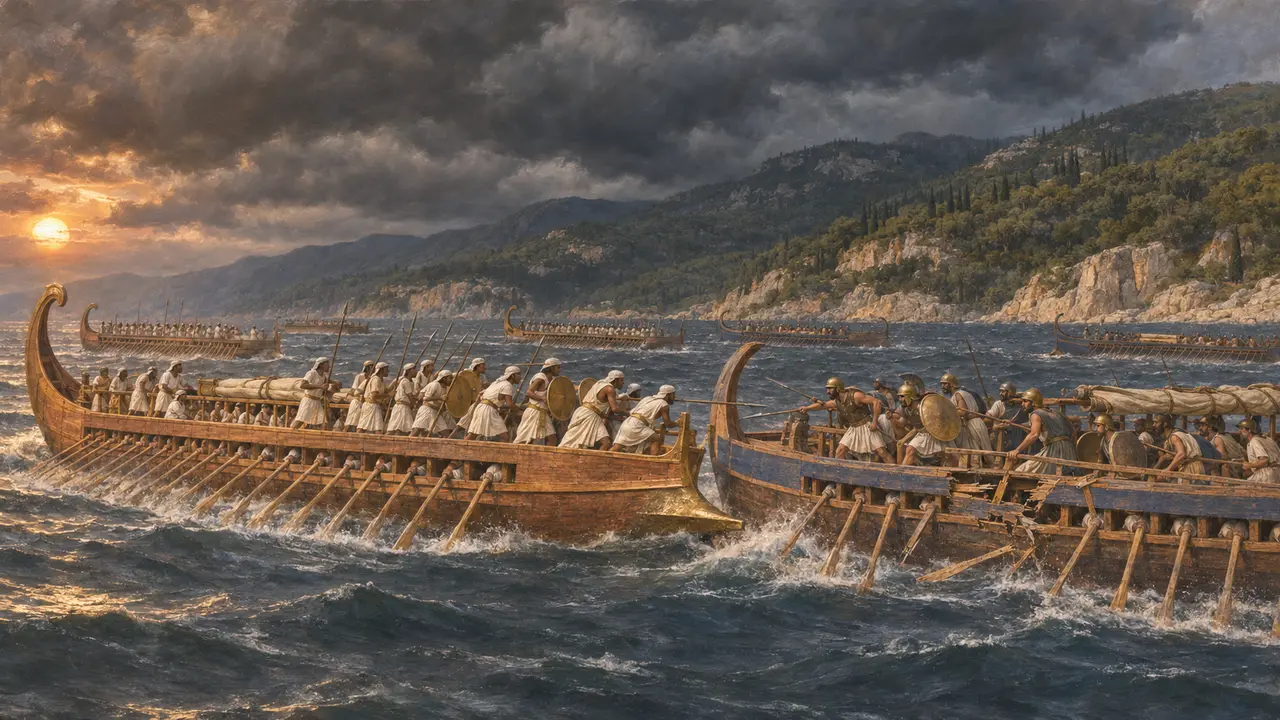
Ancient accountHerodotus says a storm off the Magnesian coast wrecked at least 400 of the King's ships, and that a squadron of 200 sent round Euboea to cut off the Greeks was lost in a second storm. On the first evening the Greeks took 30 ships, and on the second they struck Cilician vessels. On the third day the King's fleet attacked in force. Herodotus praises the Egyptians on the Persian side and says half the Athenian ships were damaged.
Herodotus 7.190; 8.7-18
The withdrawal south
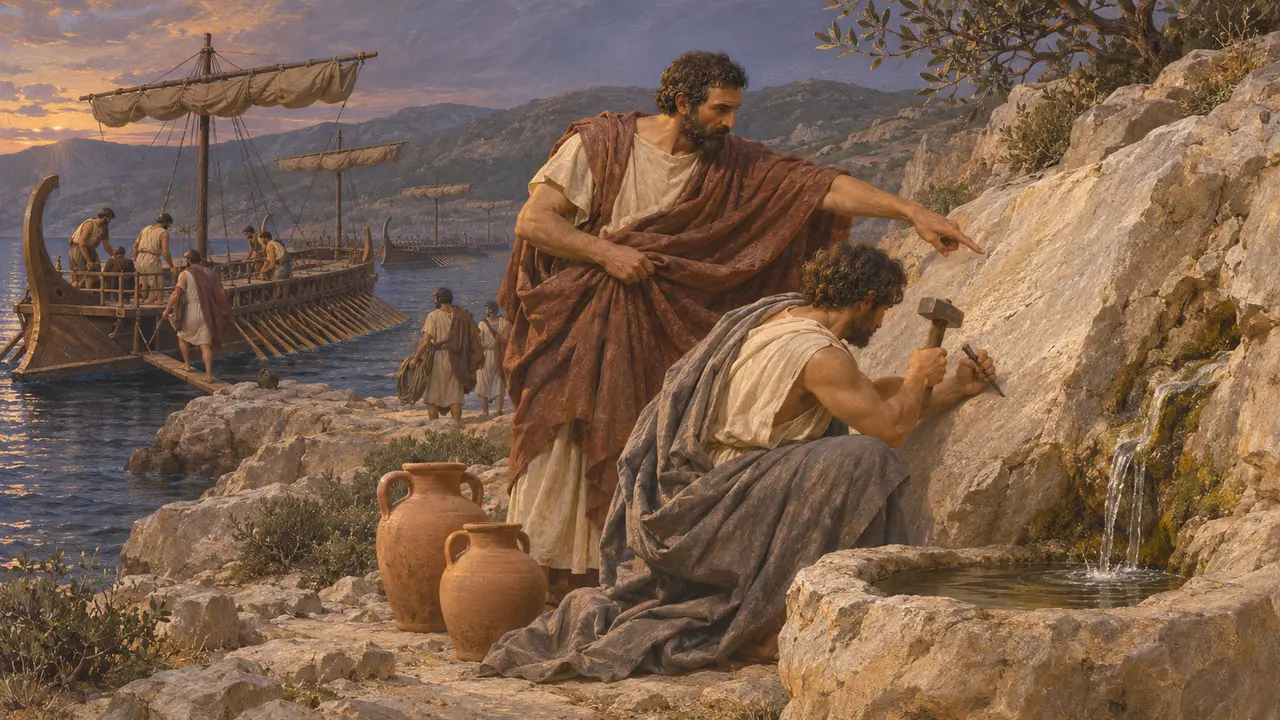
Ancient accountHerodotus says the sea fights and the battles at the pass fell on the same days. When a messenger, Abronichus, brought word that Thermopylae was lost, the Greeks sailed south that night. Themistocles had messages cut on rocks at the watering places. They urged the Ionians in the King's fleet to change sides or hold back in battle.
Herodotus 8.15; 8.21-22
Numbers and the Troezen decree
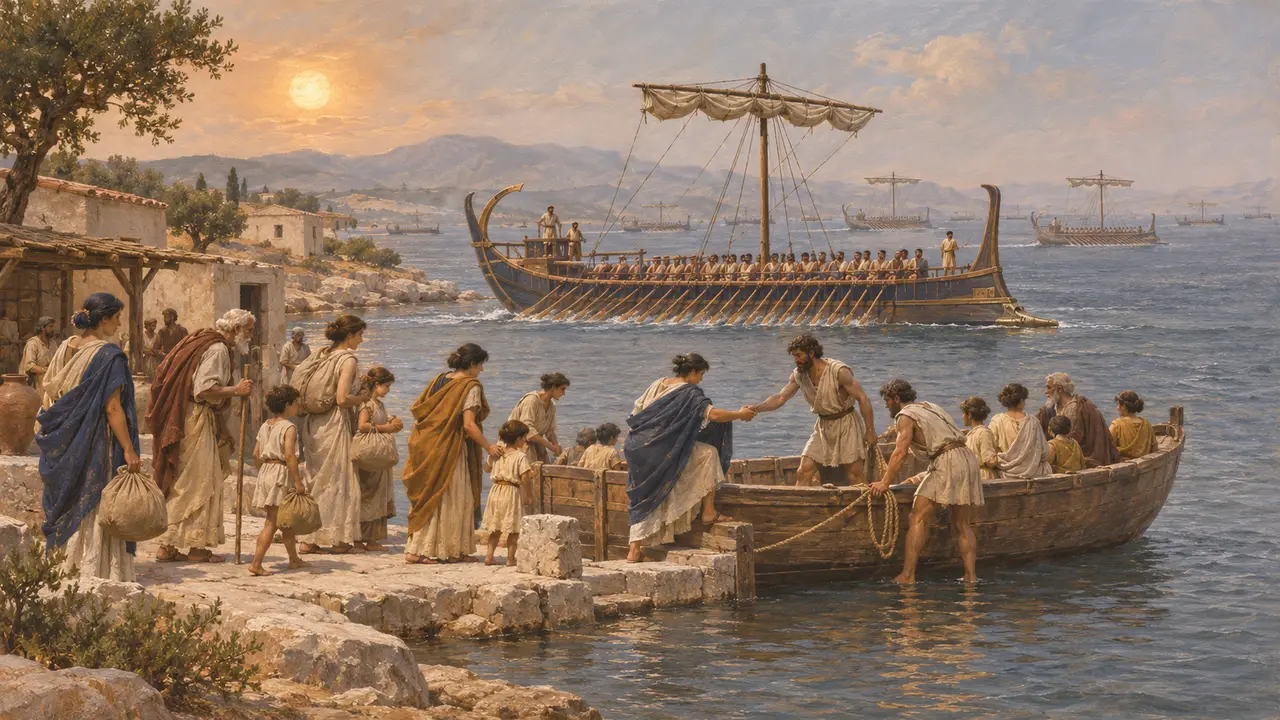
DisputedHerodotus puts the King's fleet at 1,207 triremes before the storms. Most historians think this too high, and some doubt the story of the 200-ship squadron. An inscription found at Troezen in 1959, probably cut in the early third century, claims to be Themistocles' decree sending ships to Artemisium and emptying Athens beforehand. Scholars still argue whether it preserves a genuine order, since it disagrees with Herodotus on when Athens was evacuated.
Herodotus 7.89; M. Jameson, Hesperia 29, 1960; J. F. Lazenby, The Defence of Greece, 1993
Boreas, the diver and Pindar
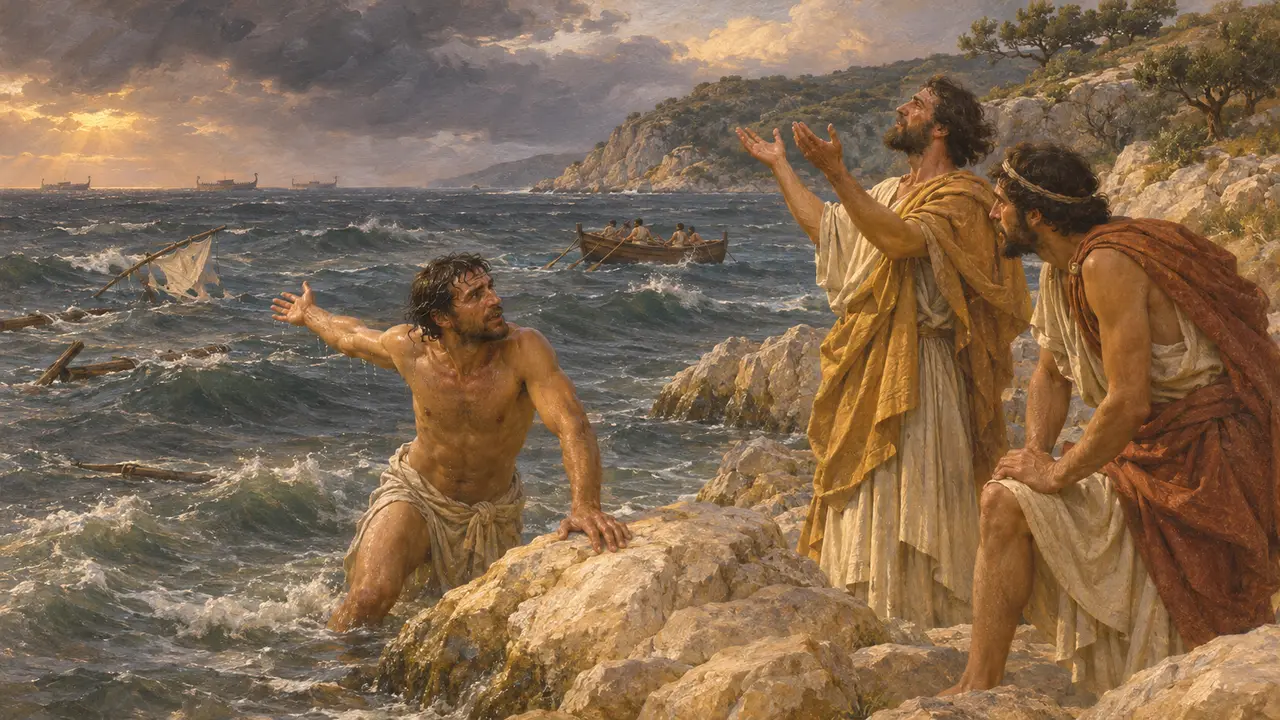
Later legendHerodotus says the Athenians, prompted by an oracle, prayed to Boreas, the north wind, whom myth made their kinsman by marriage, and credited him with the storm. He also tells of Scyllias of Scione, said to have swum about 80 stades underwater to bring news of the wrecks, though Herodotus thought he came by boat. Plutarch cites a verse of Pindar that calls Artemisium the place where Athens laid the foundation of freedom.
Herodotus 7.189; 8.8; Plutarch, Themistocles 8
Sources
- Herodotus, Histories 7.175-196; 8.1-23
- Plutarch, Themistocles 7-9
- Diodorus 11.12-13
- M. Jameson, A Decree of Themistokles from Troizen, Hesperia 29, 1960
- J. F. Lazenby, The Defence of Greece 490-479 BC, 1993
- P. Green, The Greco-Persian Wars, 1996