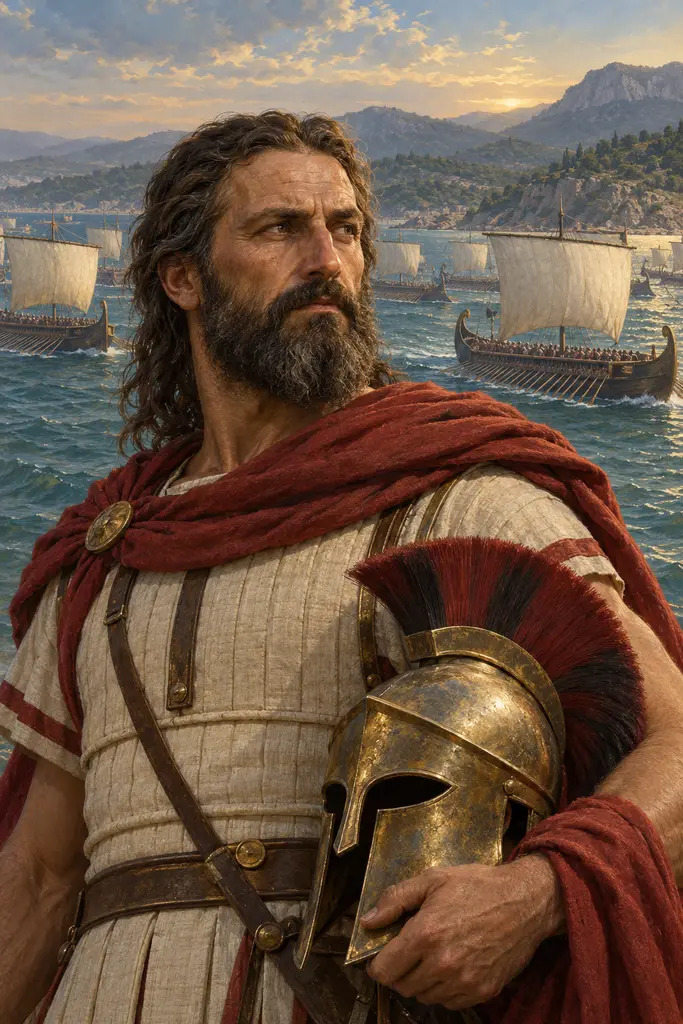
Eurybiades
Spartan commander of the Greek allied fleet at Artemisium and Salamis, 480 BCE
Eurybiades, son of Eurycleides, was the Spartan who held supreme command of the Greek fleet that fought Xerxes' navy in 480. Sparta sent only a few ships, but the allies refused to serve under an Athenian, so the command went to him. Herodotus shows him as a cautious leader pushed by Themistocles, and historians still argue over how far that picture is fair.
In the game: The game's chronicle names Eurybiades as the Spartan who commanded the Greek fleet at Artemisium and Salamis because the allies would follow no Athenian. This matches Herodotus.
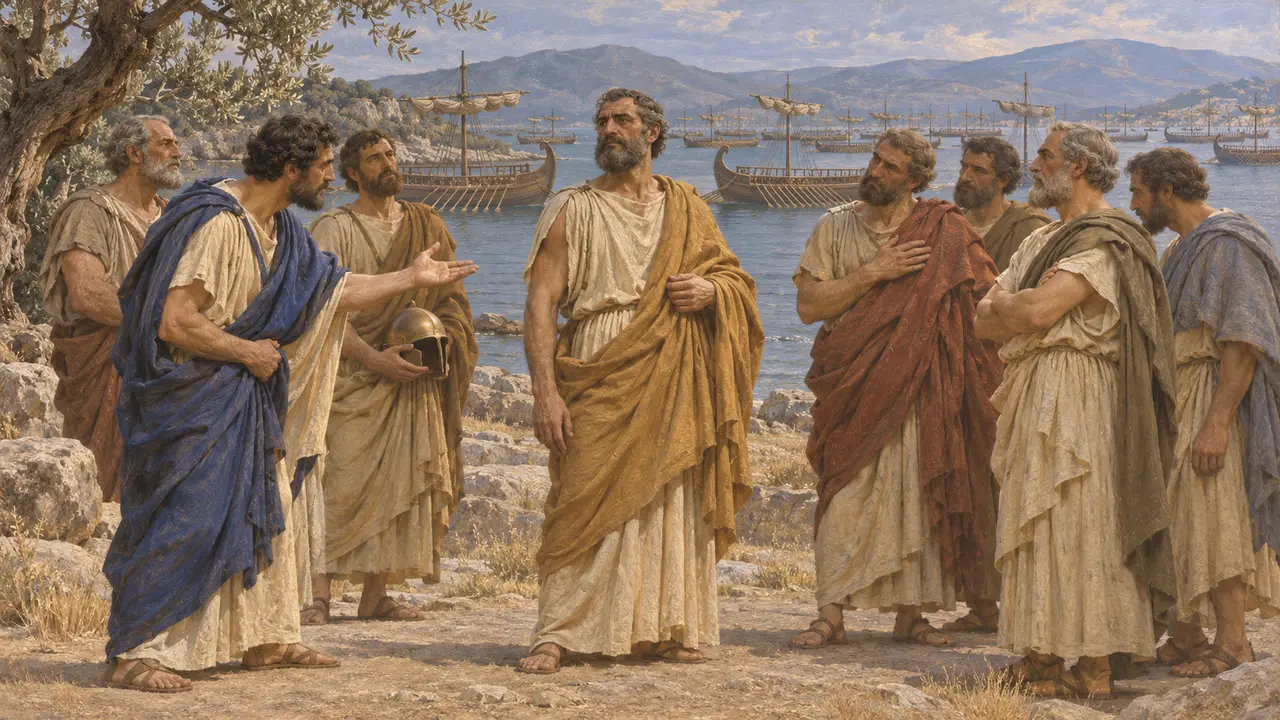
Chosen because the allies refused Athens
Ancient accountHerodotus says the allies would not follow an Athenian and threatened to break up the fleet, so the Athenians gave way. In his figures Sparta supplied only ten ships at Artemisium against 127 Athenian ones, and sixteen at Salamis against 180. He adds that Eurybiades was not of royal blood, so he was not one of Sparta's two kings. His post rested on Sparta's standing as leader of the alliance, not on its naval strength.
Herodotus 8.1-3, 8.42-44
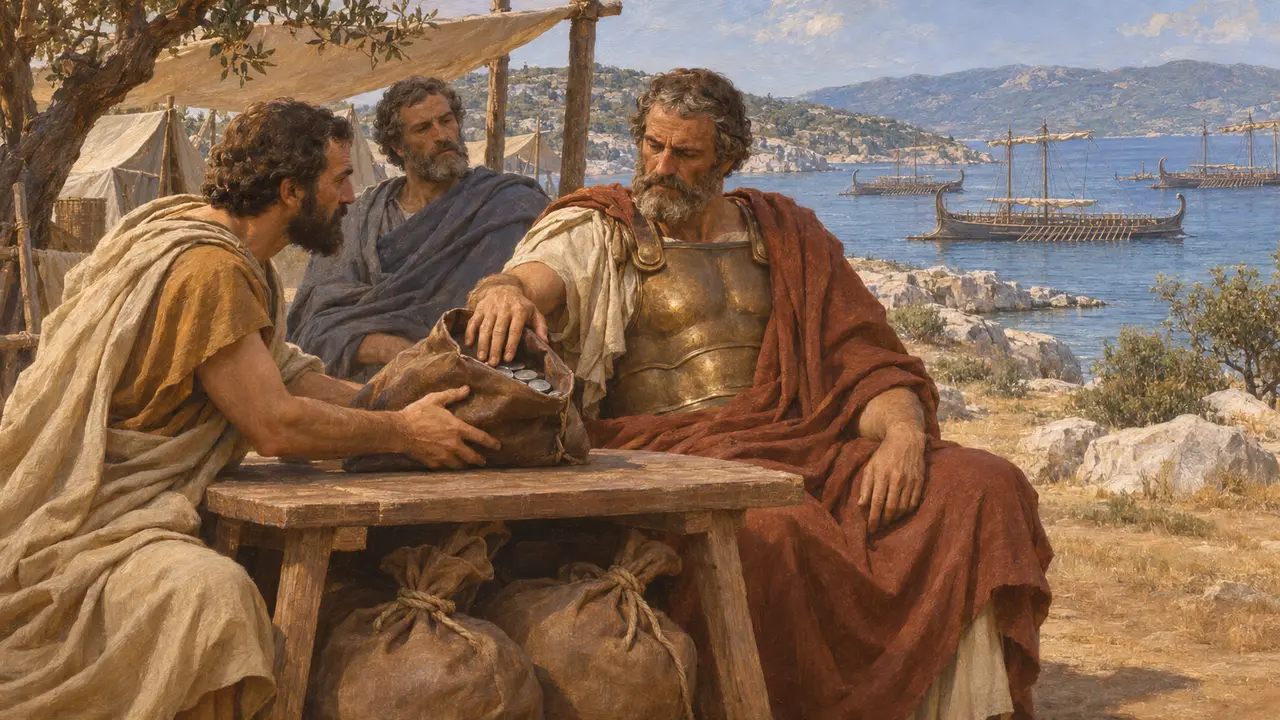
Artemisium and the Euboean money
Ancient accountHerodotus tells how the Euboeans, afraid of being abandoned, paid Themistocles thirty talents to keep the fleet at Artemisium. Themistocles passed five to Eurybiades and three to Adeimantus of Corinth and kept the rest himself. The fleet stayed, fought for three days, and withdrew south only after news came that the pass at Thermopylae had fallen. Some historians think the bribe story came from a tradition hostile to Themistocles.
Herodotus 8.4-5, 8.15-18, 8.21
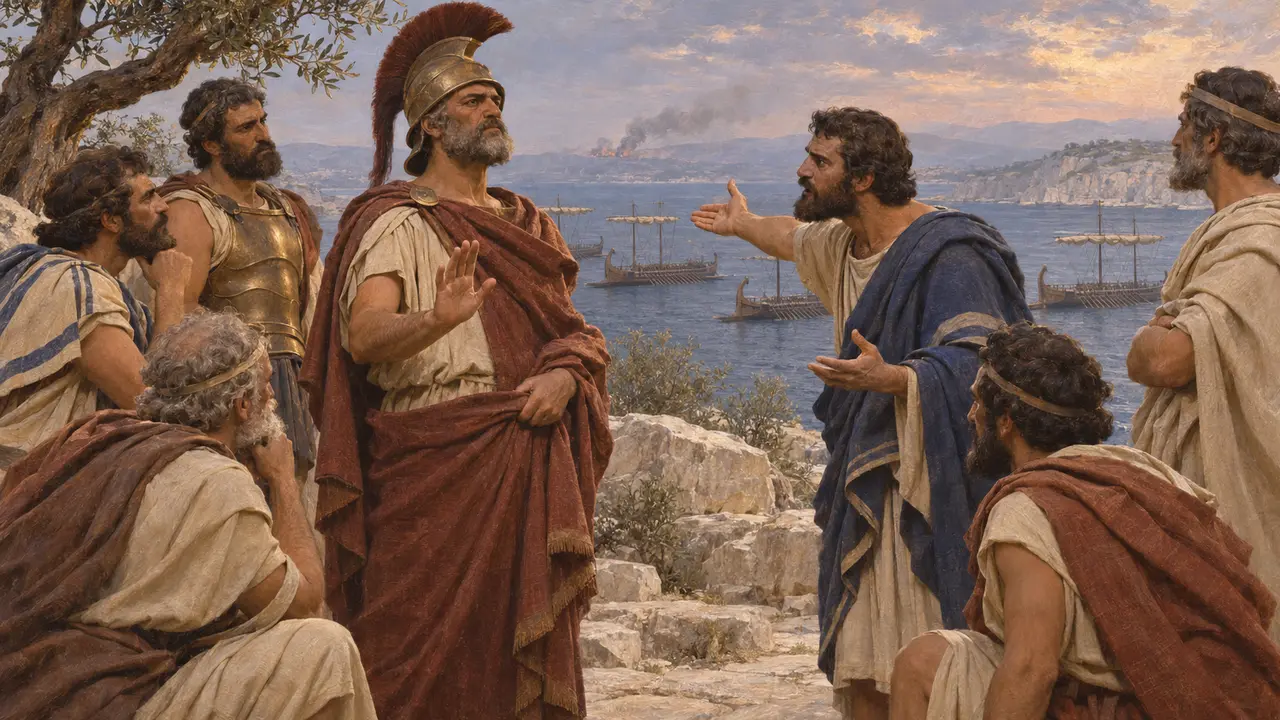
The councils at Salamis
Ancient accountWhen news came that the Persians had taken the Acropolis of Athens, the allied commanders voted to fall back to the Isthmus of Corinth. Herodotus says Themistocles persuaded Eurybiades to call the council again. There he argued that fighting in the narrow strait favoured the Greeks, and he threatened that the Athenians would sail off to Siris in Italy. Eurybiades then decided to stay and fight at Salamis.
Herodotus 8.49, 8.56-64
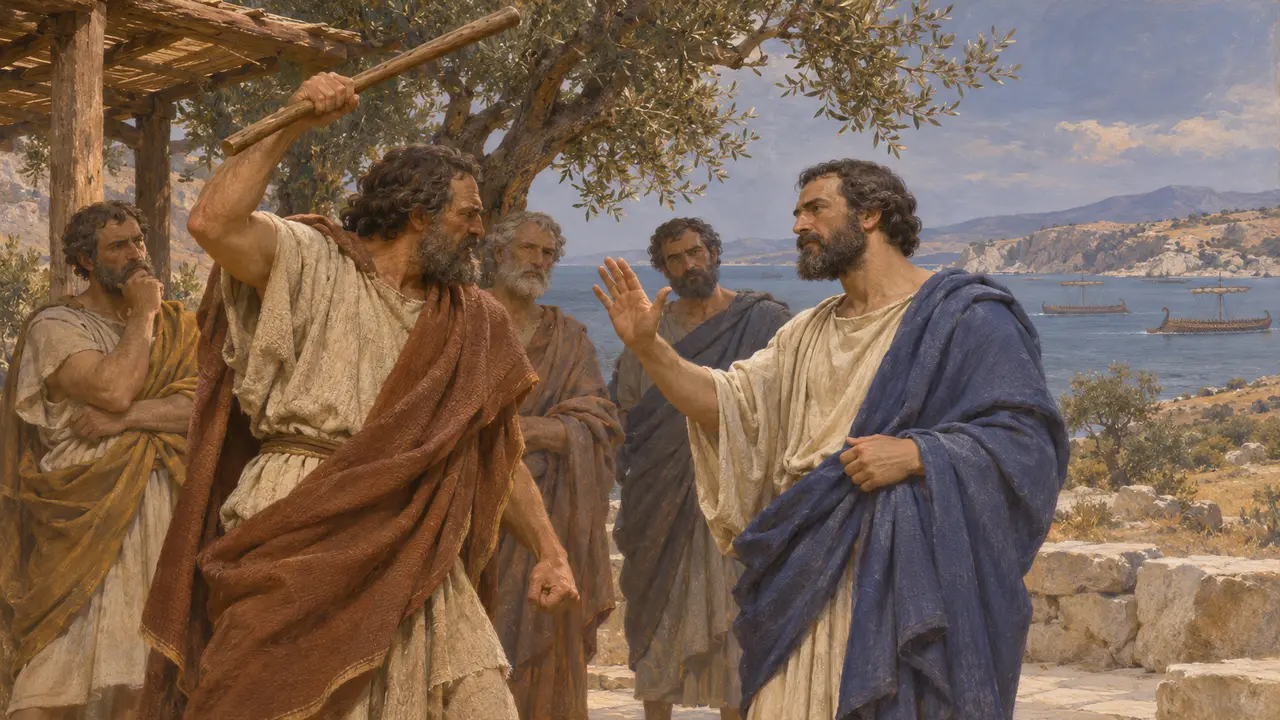
Strike, but listen
Later legendPlutarch, writing nearly six centuries later, says Eurybiades raised his staff to strike Themistocles during the argument. Themistocles is supposed to have answered that he could strike if he would also listen. Herodotus does not tell this story. It reads as a moral tale about patience and good counsel, and it is probably not a record of what happened.
Plutarch, Themistocles 11
How to judge his command
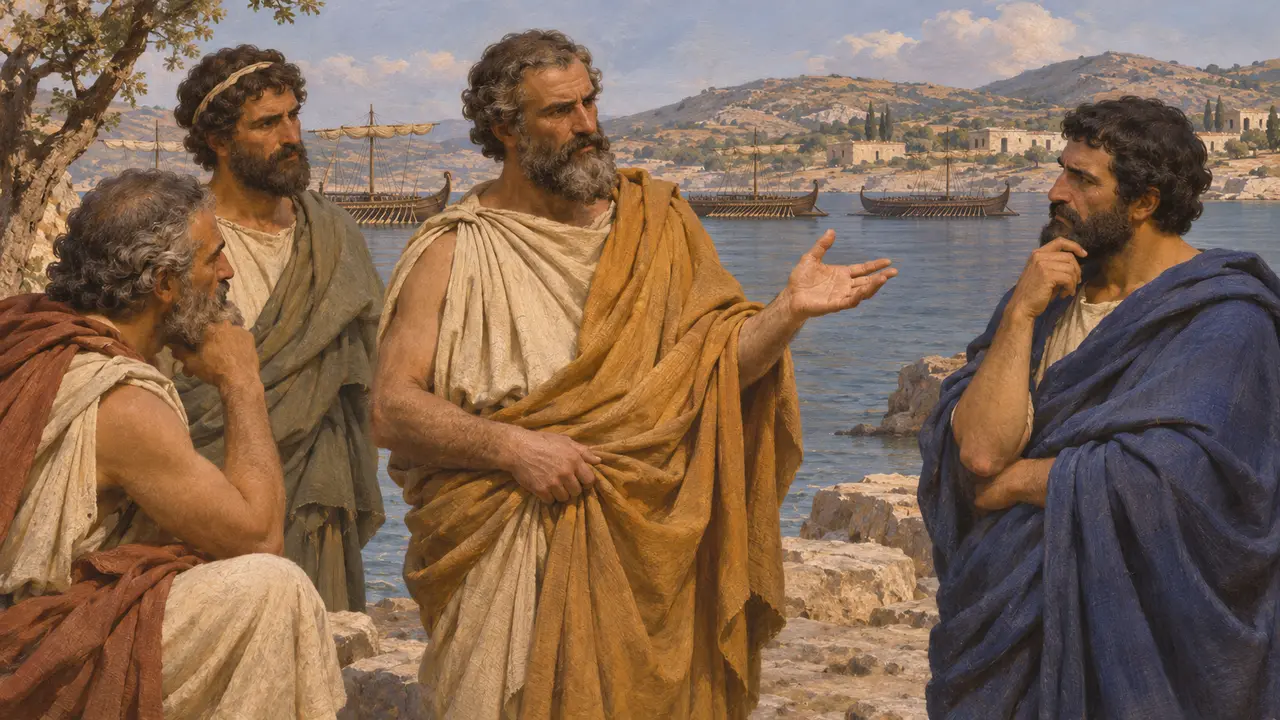
DisputedHerodotus says that after Salamis Eurybiades argued against sailing to break Xerxes' bridges, because a trapped king would fight harder in Greece. The Spartans later gave him an olive crown for valour and Themistocles one for wisdom. Herodotus probably drew heavily on Athenian informants, and some historians think they made Eurybiades look weaker than he was. Persian sources are silent: no royal inscription or tablet mentions him or the defeat at Salamis.
Herodotus 8.108, 8.124; J. F. Lazenby, The Defence of Greece 490-479 BC, 1993
Sources
- Herodotus, Histories, book 8
- Plutarch, Themistocles
- J. F. Lazenby, The Defence of Greece 490-479 BC, 1993
- C. Hignett, Xerxes' Invasion of Greece, 1963
- P. Green, The Greco-Persian Wars, 1996