Encyclopedia › Soldiers and ships
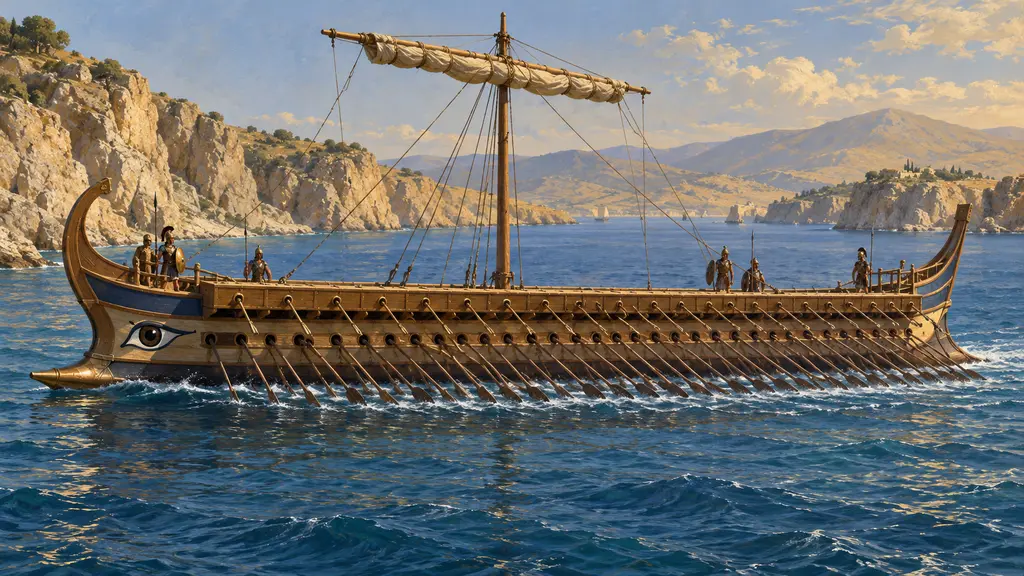
The trireme
Three-banked oared warship of the Persian and Greek fleets, about 525-479 BCE
In the game: Level 2: The Spear-bearer
The trireme was a fast oared warship with three banks of rowers and a bronze ram at the bow. By the late sixth century it had become the main warship of the eastern Mediterranean. Phoenician, Egyptian, Cypriot and Cilician squadrons crushed the Ionian rebels at Lade in 494. With Ionian and Carian ships added, the King's fleet fought the Greeks at Artemisium and Salamis in 480.
In the game: The game fields trireme squadrons at Lade, Artemisium, Salamis and Mycale, each with its own pace, marines and skill. At Mycale the real Persian fleet was beached and the fight was on land, so the game departs from history.
Origins of the three-banked ship
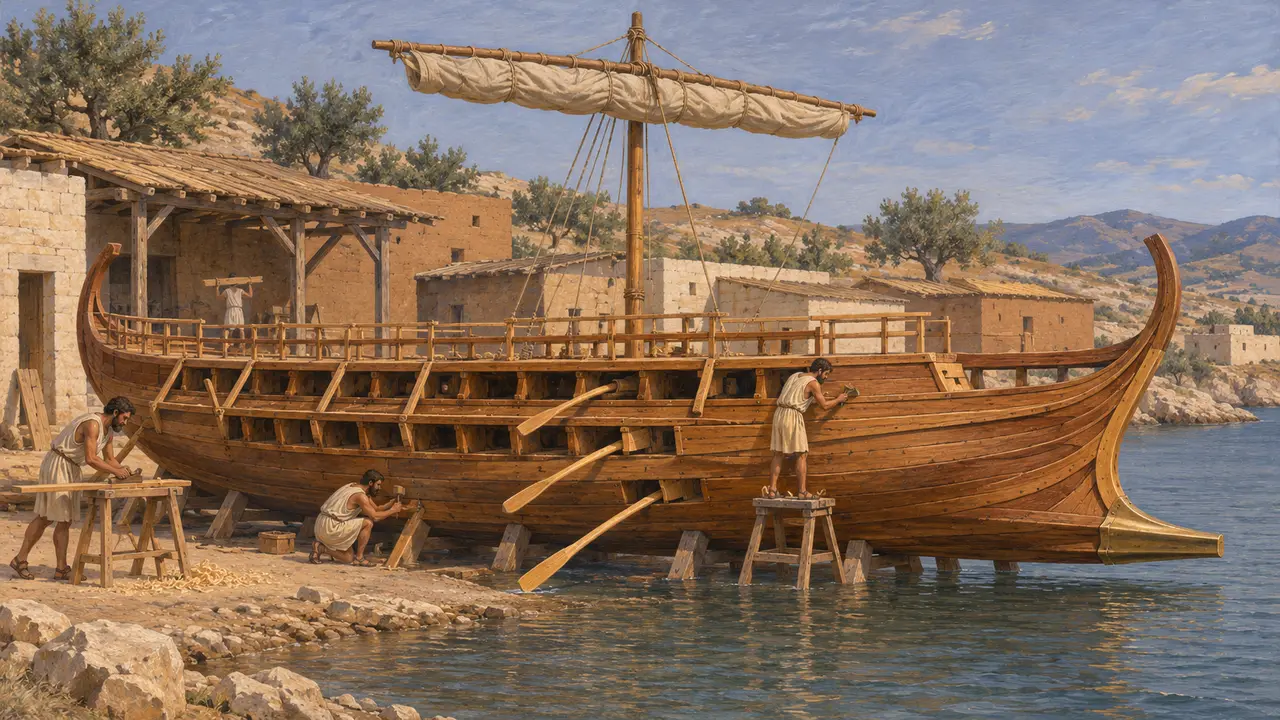
DisputedThucydides says the Corinthians were the first Greeks to build triremes, and that the Corinthian Ameinocles built four ships for Samos about three centuries before 404 (Thucydides 1.13). Herodotus says the pharaoh Necho II had triremes built in Egypt about 600 (Herodotus 2.159). Some later writers credited the Phoenicians. Historians still argue whether the type began in Greece or the Levant, and how early large fleets of it existed.
Thucydides 1.13; Herodotus 2.159; H. T. Wallinga, Ships and Sea-Power before the Great Persian War, 1993
Building and rowing the ship
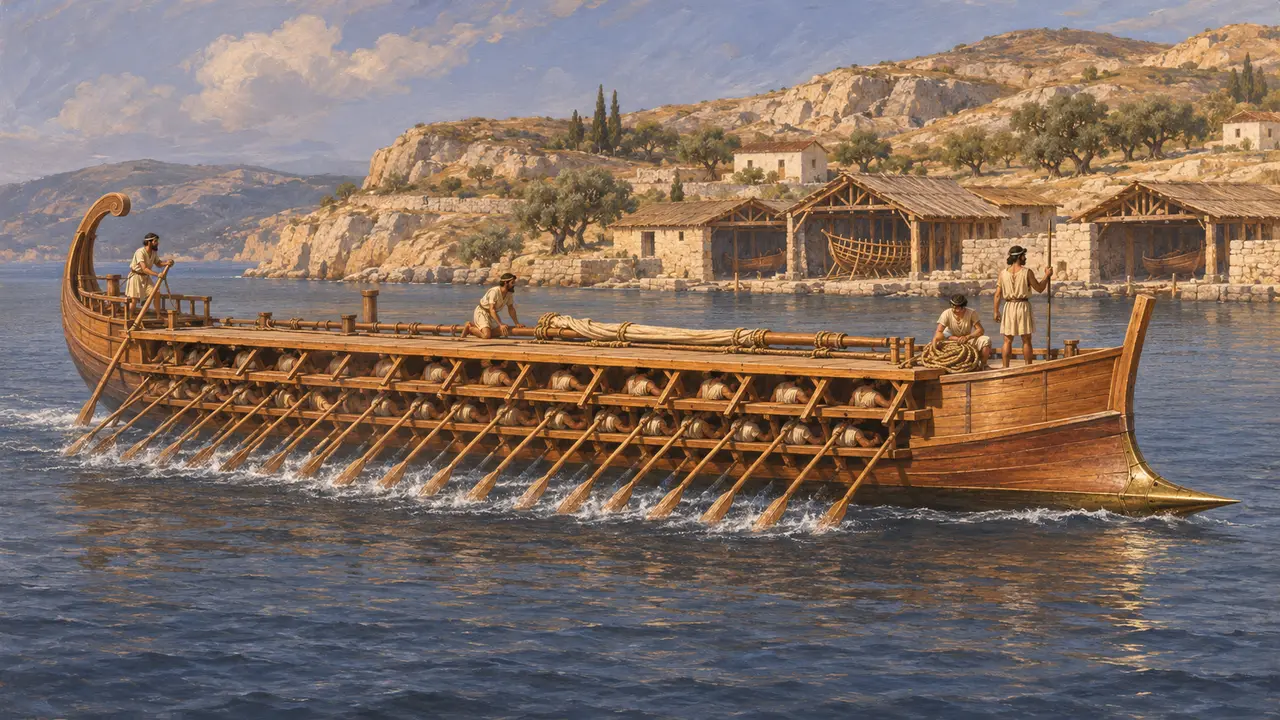
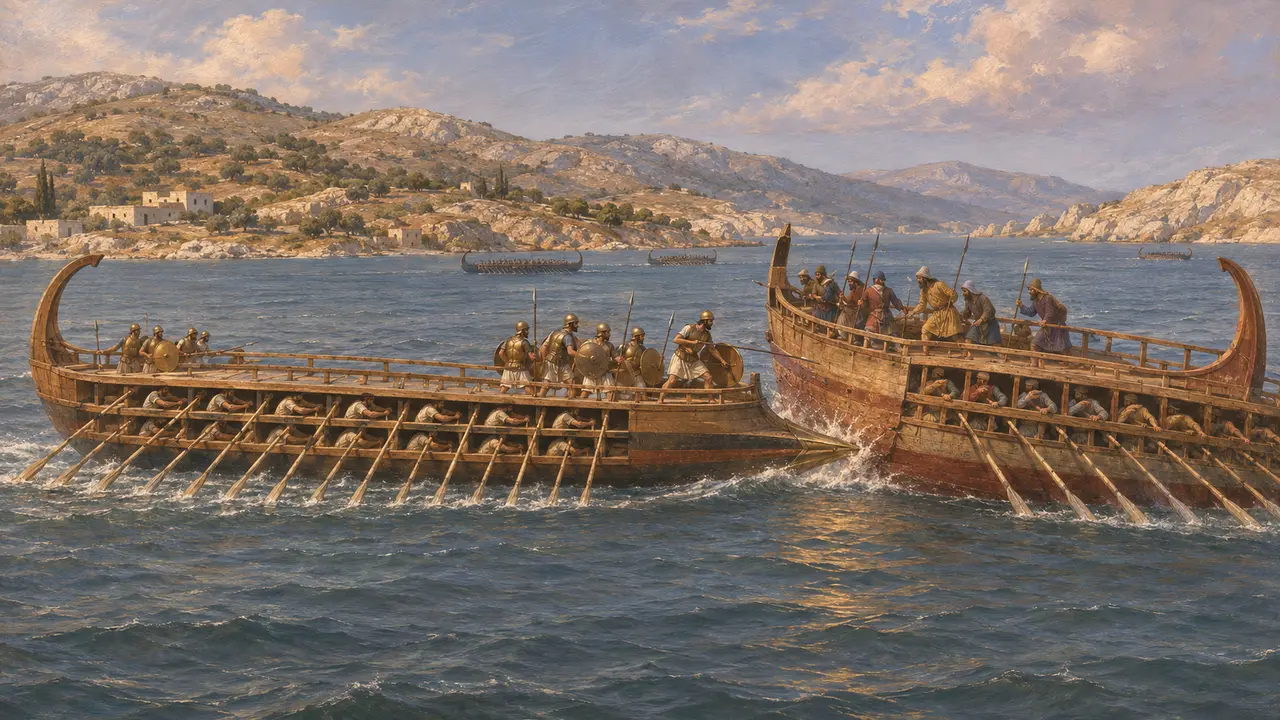
DisputedNo trireme wreck has been found, so the design is rebuilt from Athenian ship-sheds, a few reliefs and fourth-century naval inventories. Most scholars accept a hull of about 35 metres carrying some 170 oarsmen in three tiers. The Greek navy's reconstruction Olympias, launched in 1987, showed that such a ship could be rowed fast. Details of the oar system are still debated, and Phoenician ships may have been built differently.
J. S. Morrison, J. F. Coates and N. B. Rankov, The Athenian Trireme, 2000
The King's squadrons
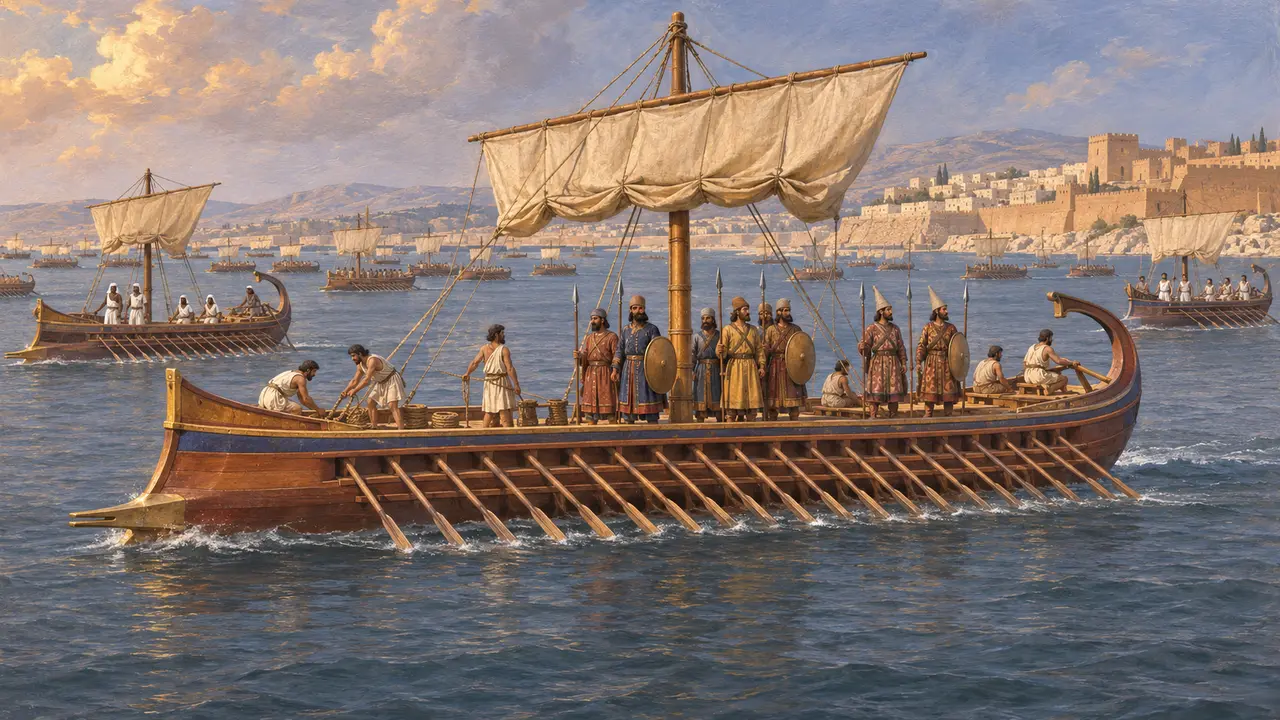
Ancient accountHerodotus gives Xerxes 1,207 triremes in 480. Among them were 300 Phoenician, 200 Egyptian, 150 Cypriot, 100 Cilician, 100 Ionian and 70 Carian ships, all carrying Persian, Median and Saka marines, and he rates the Sidonian ships the best sailers (Herodotus 7.89-96). Aeschylus gives the same total, but many historians think it too high. Herodotus says the navy of Cambyses already depended on the Phoenicians (Herodotus 3.19).
Herodotus 7.89-96; Herodotus 3.19; Aeschylus, Persians
Fighting with the ram
Ancient accountA trireme fought by ramming, or by laying its marines alongside to board. Herodotus names the diekplous at Lade in 494 and Artemisium in 480 (Herodotus 6.12, 8.9). It was probably a breakthrough of the enemy line to ram from the side. He has Themistocles argue that the narrows at Salamis would favour the Greeks' fewer, heavier ships (Herodotus 8.60). At Mycale in 479 the Persians beached their ships and fought on land (Herodotus 9.96-106).
Herodotus 6.12; Herodotus 8.9; Herodotus 8.60; Herodotus 9.96-106
Artemisia rams a friend
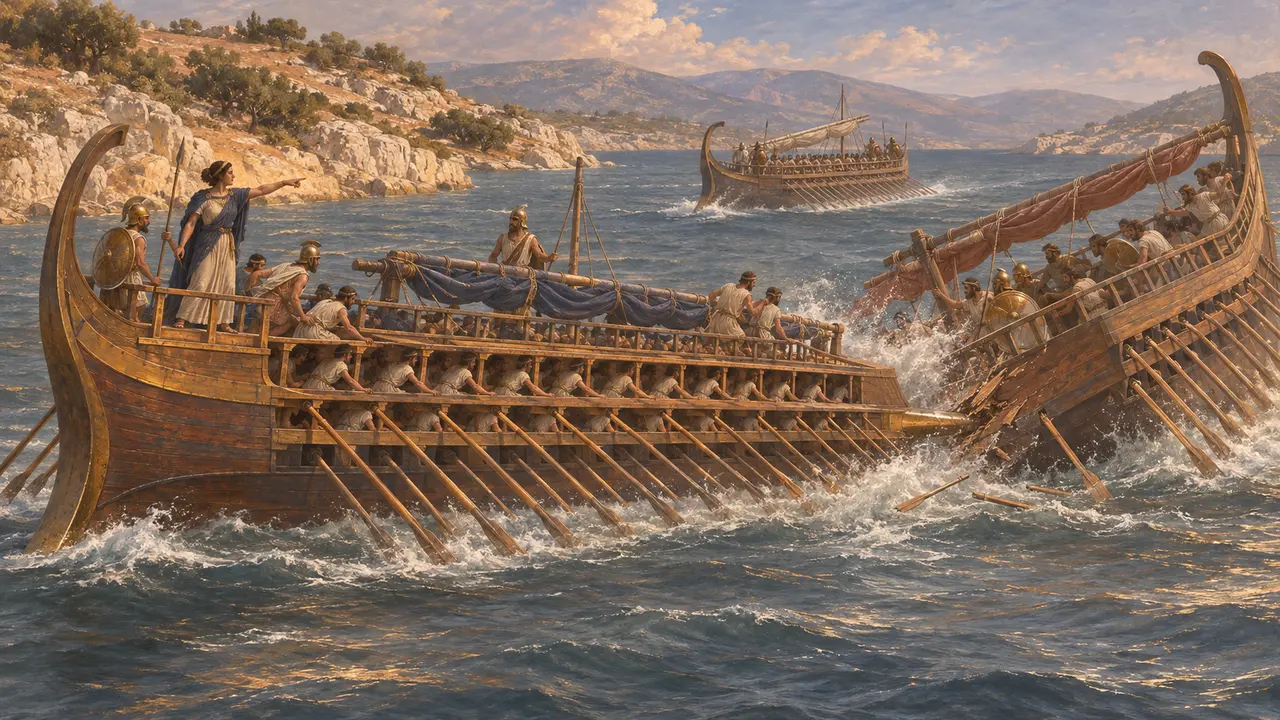
Later legendHerodotus was himself from Halicarnassus. He says that at Salamis its queen Artemisia was chased by an Athenian ship and escaped by ramming and sinking a friendly ship from Calynda. Xerxes was watching from the shore, thought she had sunk an enemy, and is said to have remarked that his men had become women and his women men (Herodotus 8.87-88). The story is shaped as a tale of luck and wit and cannot be checked.
Herodotus 8.87-88
Sources
- Herodotus, Histories 2.159, 3.19, 6.6-17, 7.89-96, 8.1-96, 9.96-106
- Thucydides 1.13-14
- Aeschylus, Persians
- J. S. Morrison, J. F. Coates and N. B. Rankov, The Athenian Trireme, 2000
- H. T. Wallinga, Ships and Sea-Power before the Great Persian War, 1993
- P. Briant, From Cyrus to Alexander, 2002