The Corinthians
Greeks of the isthmus city of Corinth who fought the Persians, 480-479 BCE
In the game: Level 11: The Finale
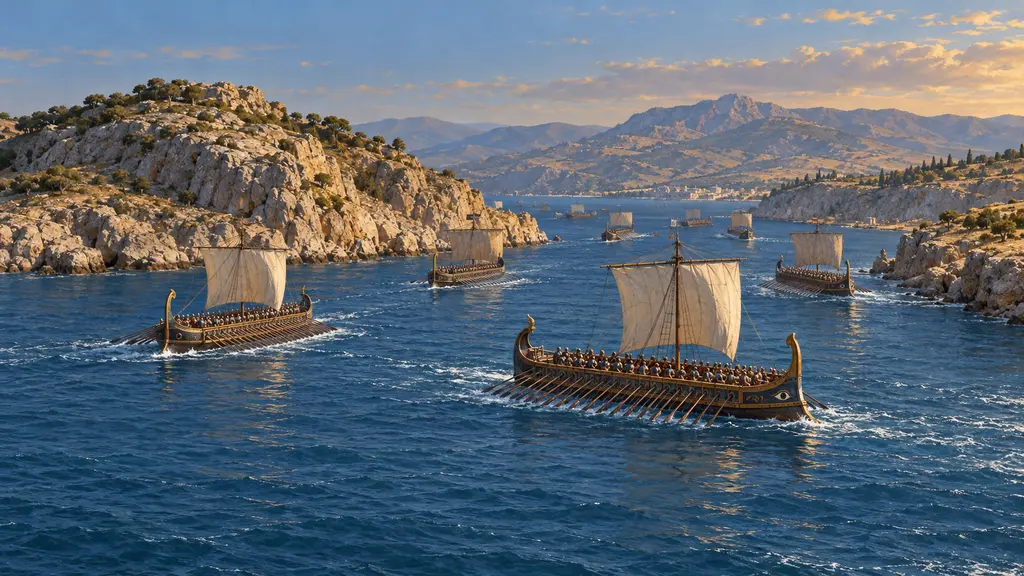
Corinth was a trading city on the isthmus joining central Greece to the Peloponnese, and it sent men and ships to the Greek alliance against Xerxes. Its hoplites stood at Thermopylae and at Plataea. Its record is also a case of Greeks disagreeing with each other about who had done their share.
In the game: The game names the Corinthians in the Chronicle, the decrees and the field briefings, mainly at Plataea, among the cities in Pausanias's army. They have no mechanic of their own beyond what those texts show.
Corinth in the Greek alliance
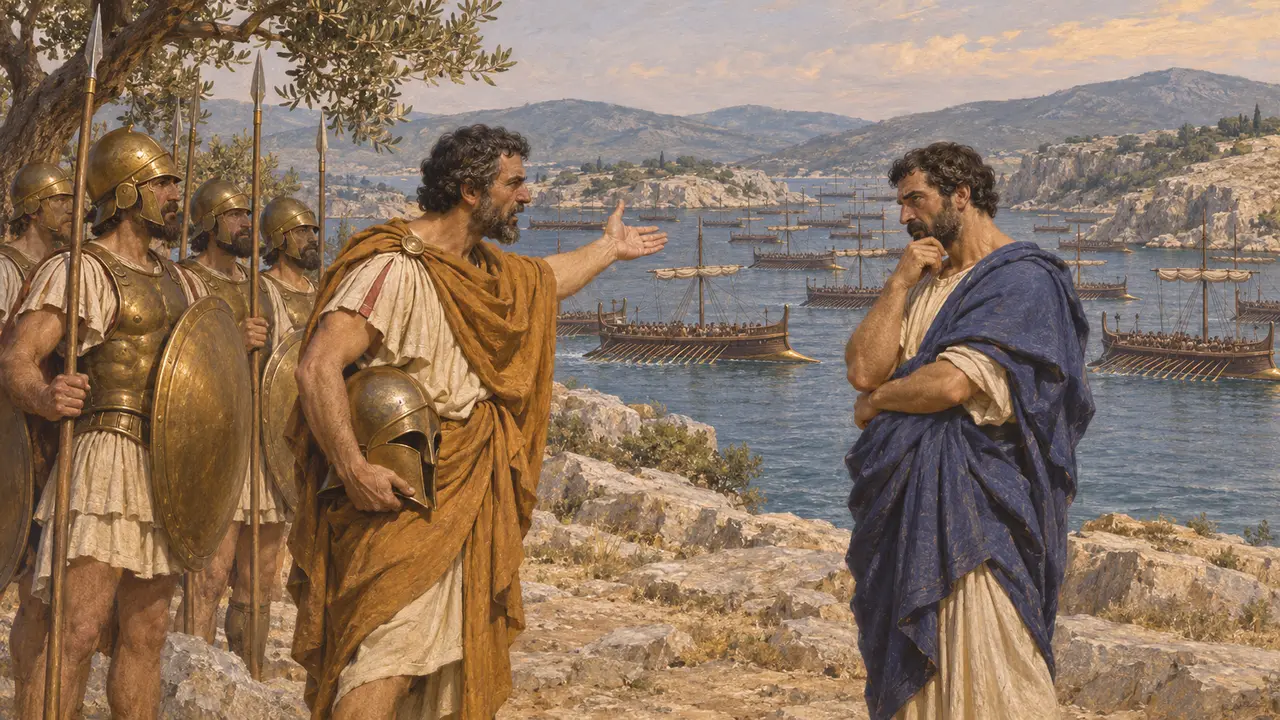
Ancient accountHerodotus lists Corinth among the cities that sent men to the stand at Thermopylae, giving 400 Corinthian hoplites. He also says Corinth supplied 40 ships at Artemisium and again at Salamis. He names Adeimantus as the Corinthian commander at Salamis and shows him arguing with Themistocles over where to fight.
Herodotus 7.202, 8.1, 8.43, 8.59
The army at Plataea
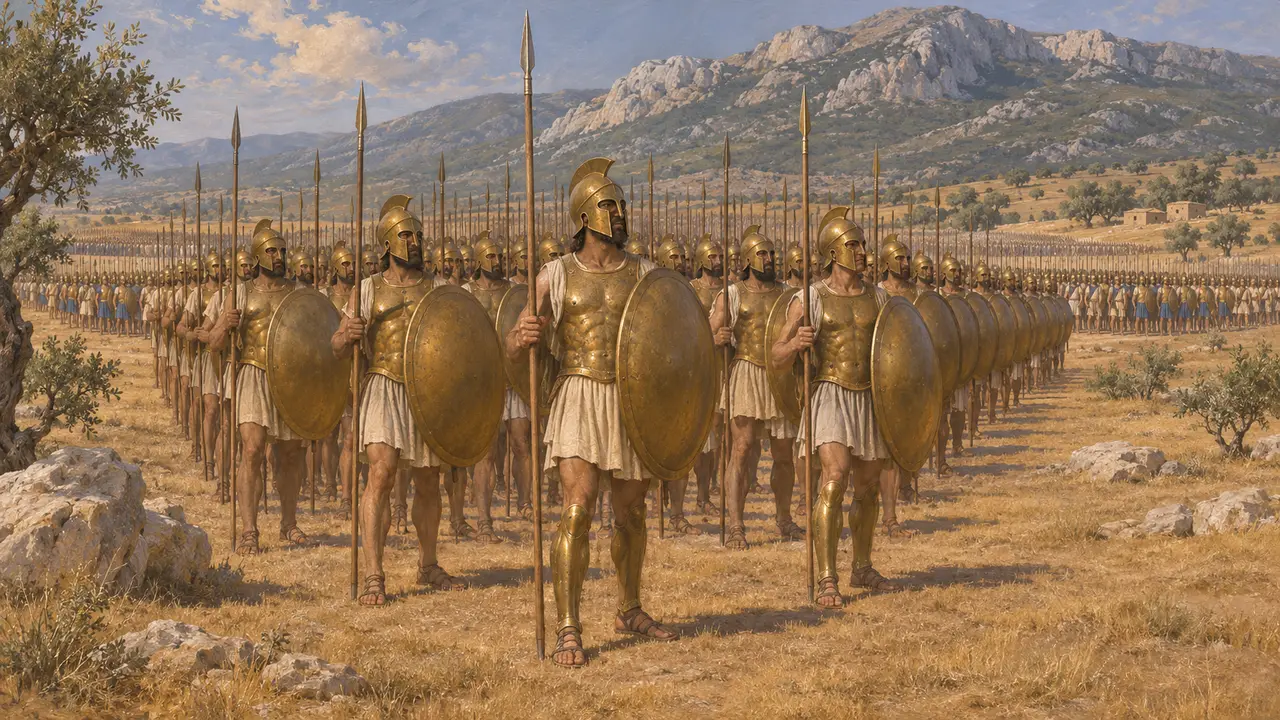
DisputedHerodotus gives an order of battle for the Greek army under Pausanias in 479. He puts the Corinthians at 5,000 hoplites, behind the Lacedaemonians at 10,000 and the Athenians at 8,000 in his count. His is the only detailed list, and modern historians accept the general picture of a very large Greek army but doubt that his totals are exact.
Herodotus 9.28-30
Their part in the fighting
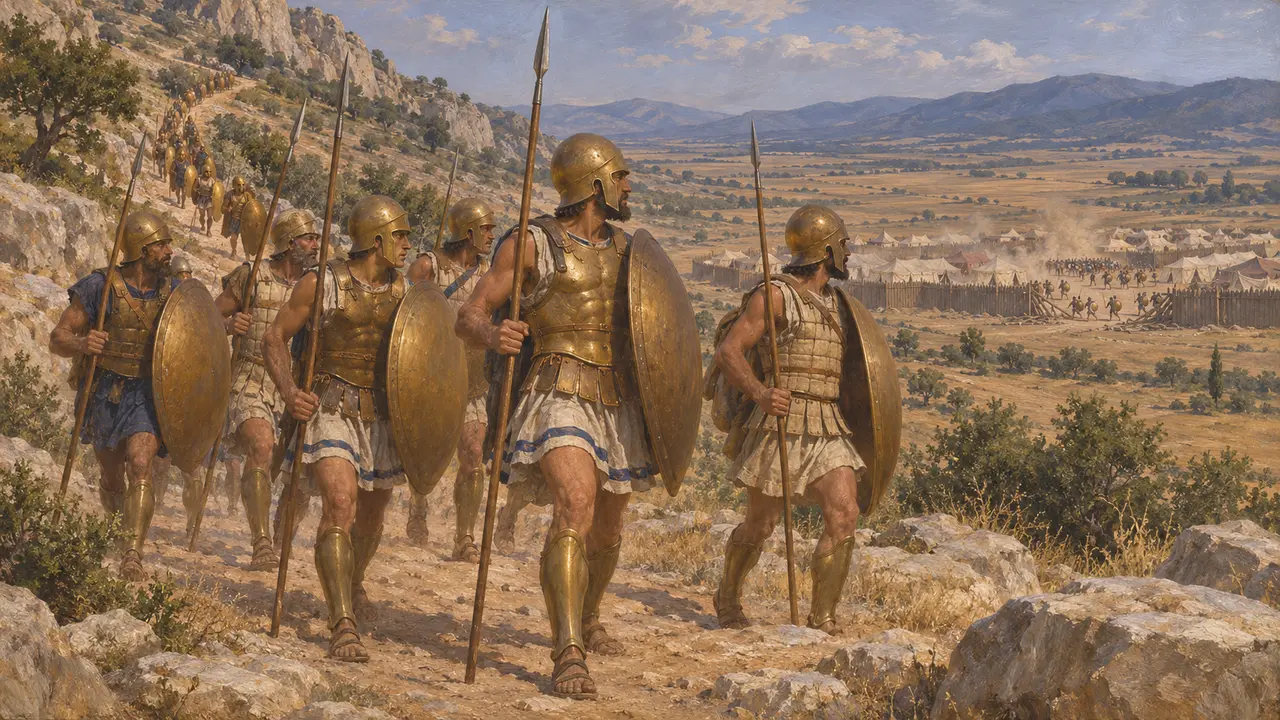
Ancient accountHerodotus says the Corinthians arrived late to the main fighting at Plataea. They took the route over the foothills of Cithaeron and came up only after the Spartans and Tegeans had broken into the Persian camp. This is Herodotus's version, and he does not call it a shameful absence.
Herodotus 9.69
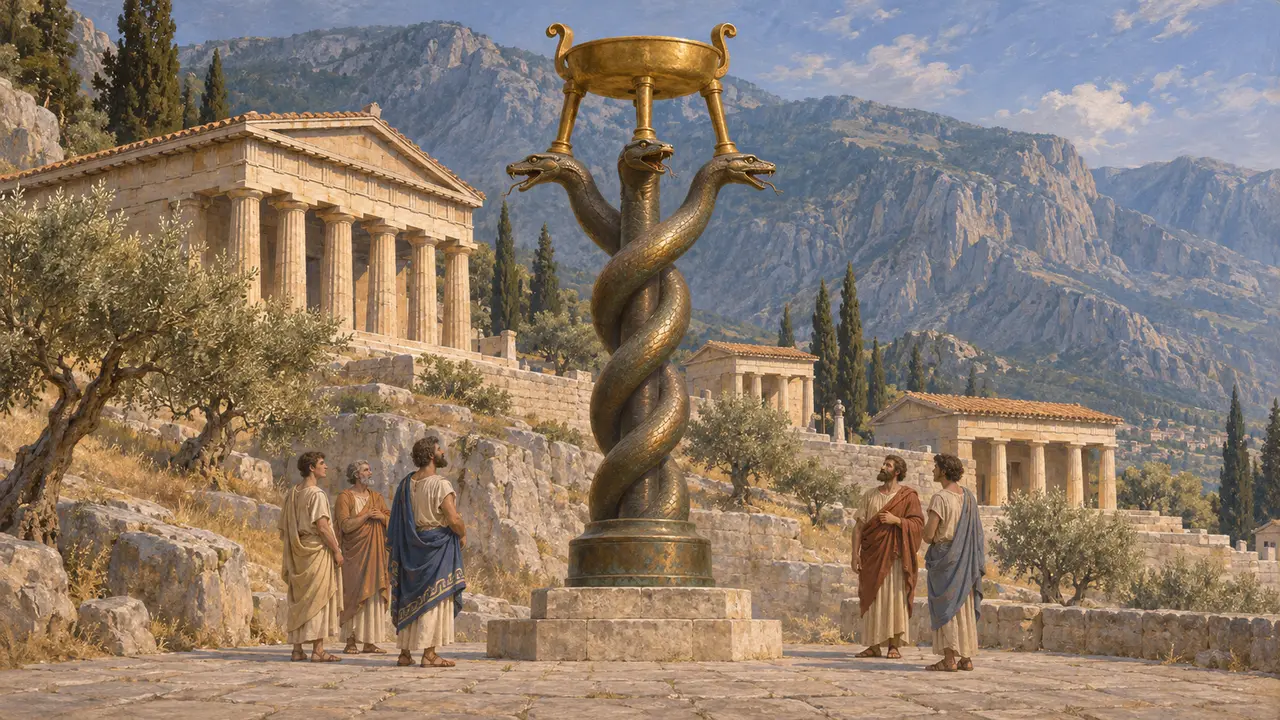
The name on the Serpent Column
In the recordAfter Plataea the Greeks dedicated a bronze tripod on a column of three intertwined serpents at Delphi. Its inscription lists the cities that fought, and the Corinthians are among them. The bronze coils survive today in Istanbul with the names still legible. Herodotus also mentions the dedication.
Meiggs and Lewis, Greek Historical Inscriptions, no. 27; Herodotus 9.81
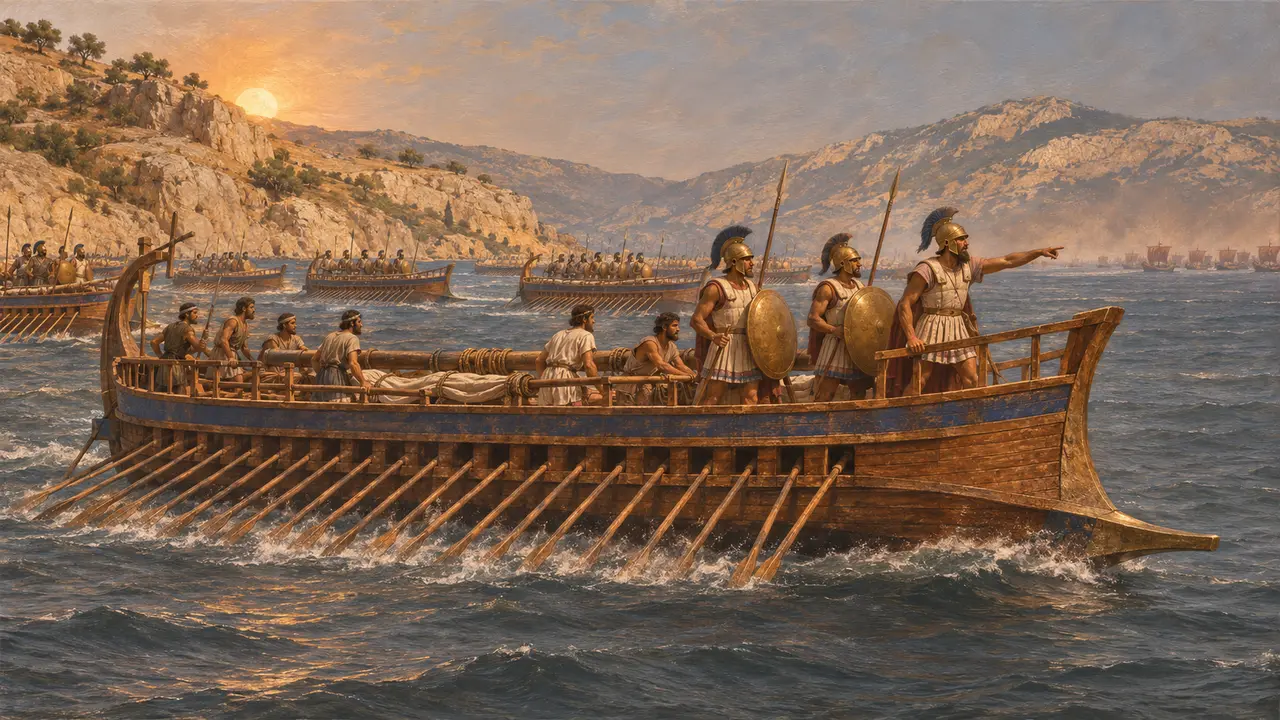
Did the Corinthians flee at Salamis?
DisputedHerodotus reports an Athenian story that Adeimantus and the Corinthians sailed away when the battle began. He adds that the Corinthians denied it and that the rest of Greece spoke in their favour. Plutarch later called the tale malicious. Modern historians generally doubt it and see it as shaped by Athenian rivalry with Corinth.
Herodotus 8.94; Plutarch, On the Malice of Herodotus
Sources
- Herodotus 9.28-30
- Herodotus 7.202
- Herodotus 8.94
- Herodotus 9.69
- Meiggs and Lewis, Greek Historical Inscriptions, no. 27
- Plutarch, On the Malice of Herodotus