Encyclopedia › Battles and events
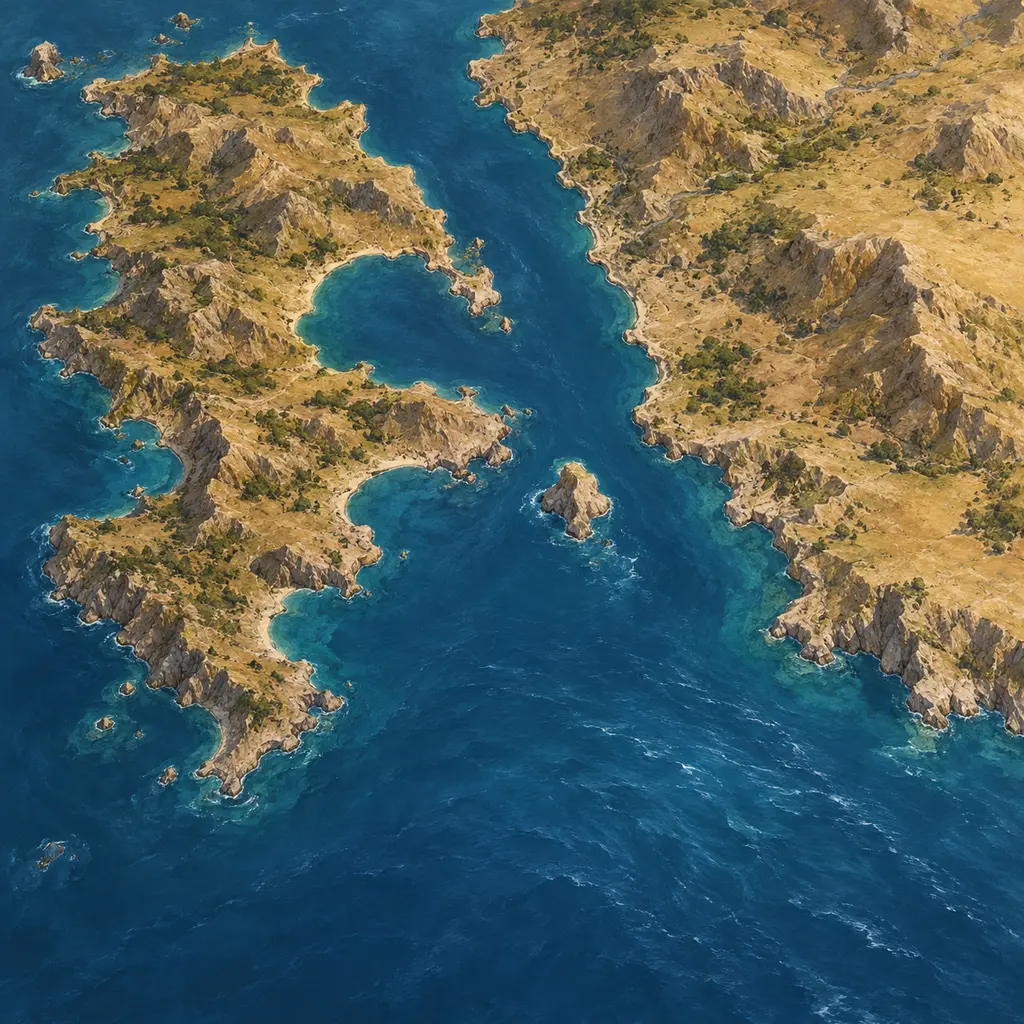
The battle of Salamis
Sea battle in the strait between Salamis and Attica, 480 BCE
In the game: Level 11: The Finale
Salamis was the sea battle fought in the narrow strait between the island of Salamis and the coast of Attica in late summer or early autumn of 480. The Greek fleet, commanded by the Spartan Eurybiades and guided in practice by Themistocles of Athens, defeated the King's fleet soon after Xerxes had taken Athens. The defeat ended Persian hopes of a quick victory at sea and led Xerxes to return to Asia, leaving Mardonius with an army in Greece.
In the game: The game's Chronicle follows Herodotus: Sicinnus's message, the closed strait, Xerxes watching, Artemisia, Ariabignes and Psyttaleia. The King's remark is Herodotus's report, and whether both channels were blocked is debated.
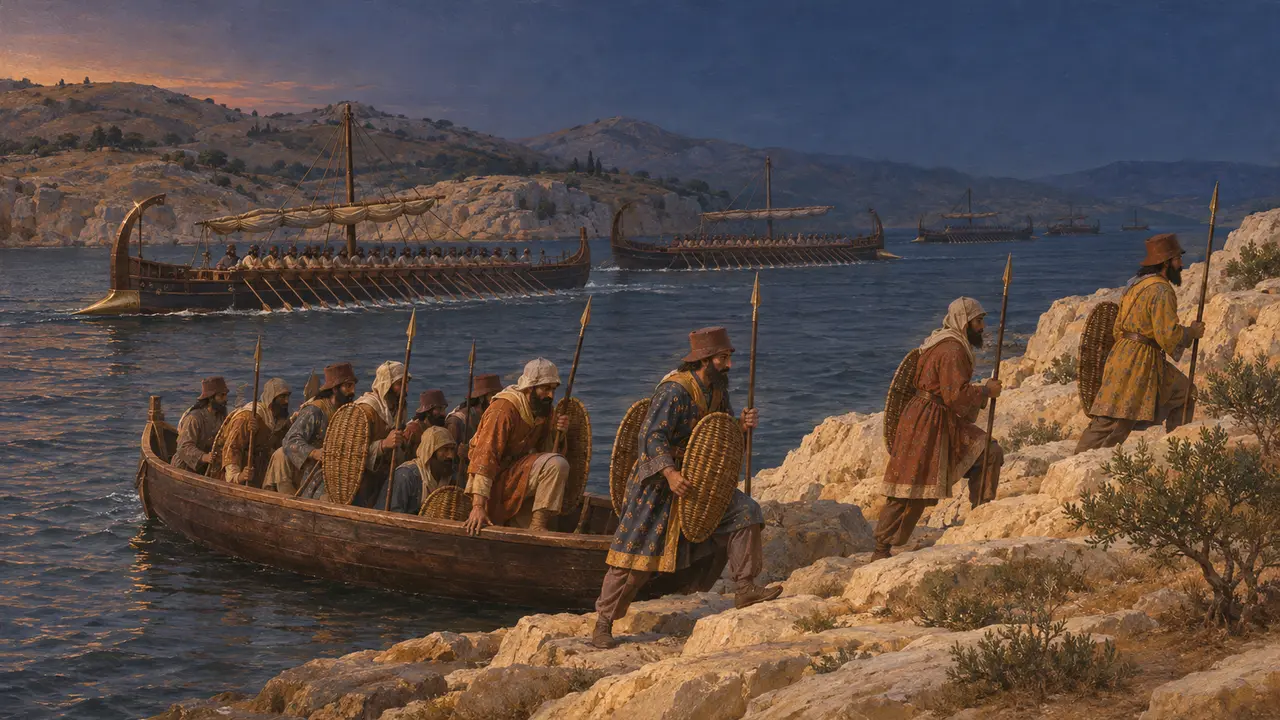
Themistocles' message and the night moves
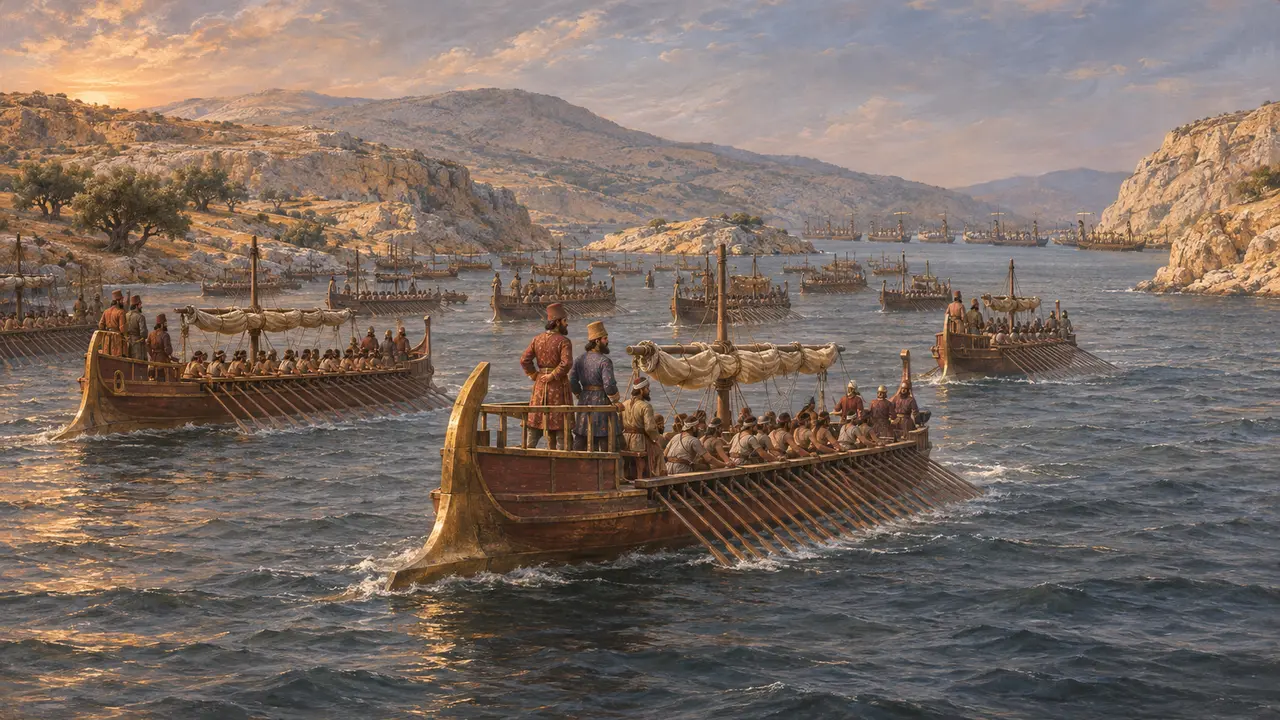
Ancient accountHerodotus says that Themistocles, afraid the allied fleet would break up and sail for the Isthmus, sent his household slave Sicinnus to tell the Persian commanders that the Greeks meant to flee. That night, he says, the King's ships moved to close the strait, and troops were landed on the islet of Psyttaleia to deal with men washed ashore. Aeschylus also has a Greek bring a false report to Xerxes, and the crews row on watch all night.
Herodotus 8.75-76; Aeschylus, Persians
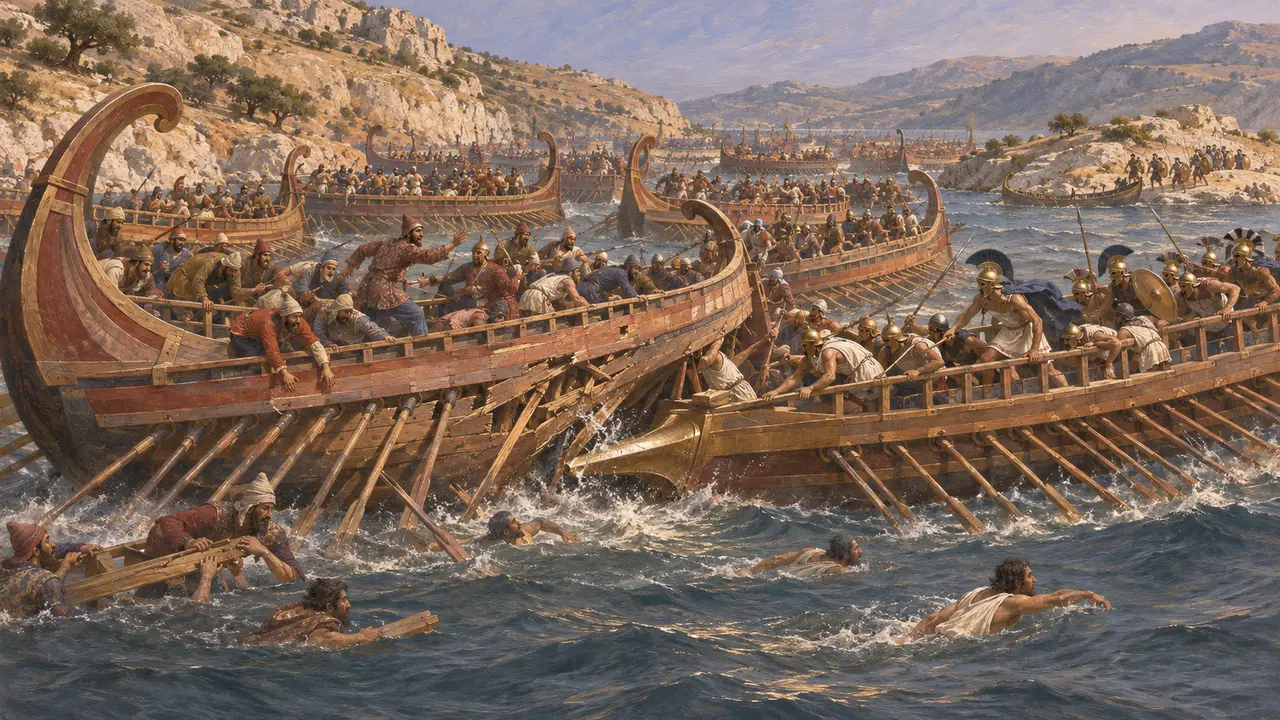
The fighting in the strait
Ancient accountHerodotus says he cannot tell exactly how each man fought, but in the narrows the King's ships lost order, and many were wrecked when the front ships turned back into those pressing on behind. Ariabignes, son of Darius and admiral of the Ionian and Carian ships, was killed. Many Greeks whose ships sank swam to Salamis, while most of the King's men could not swim and drowned. Aristides then took hoplites onto Psyttaleia and killed the Persians there.
Herodotus 7.97, 8.86-89, 8.95
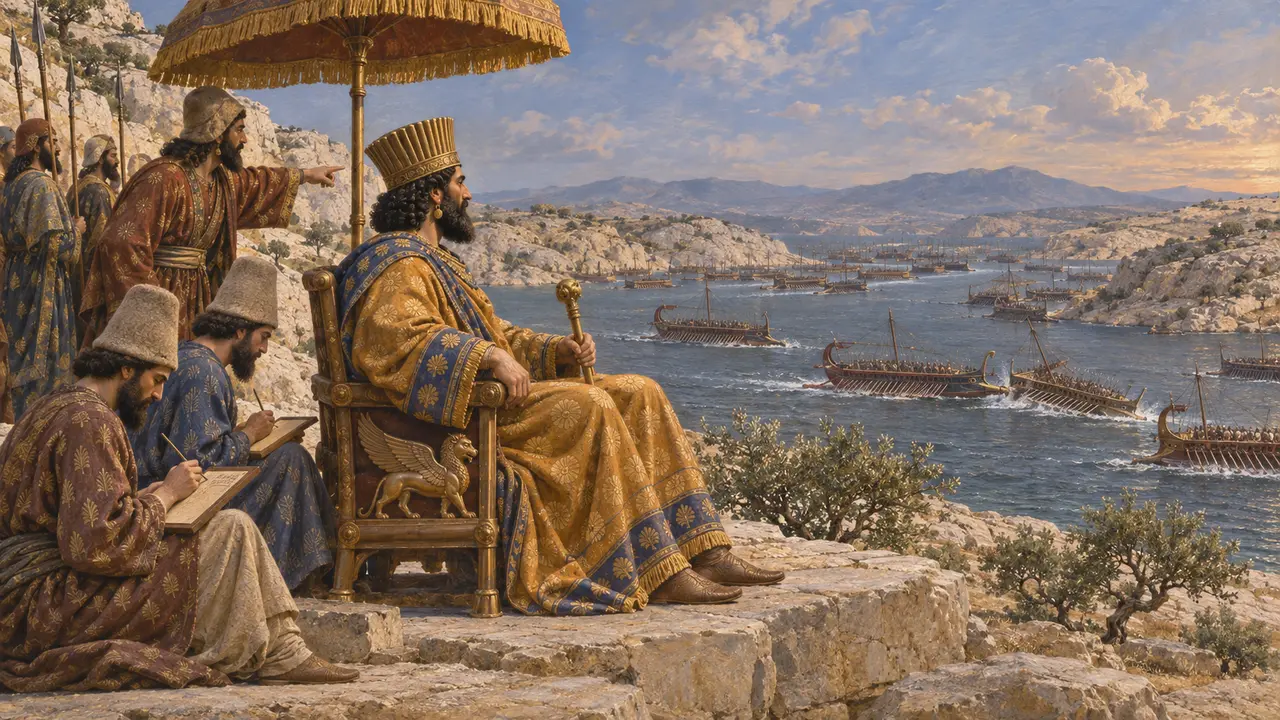
Xerxes watching from Aegaleos
Ancient accountHerodotus says Xerxes sat at the foot of Mount Aegaleos with scribes who wrote down the names of captains who fought well. He tells how Artemisia of Halicarnassus, chased by an Athenian ship, rammed a ship of her own side, and how Xerxes, thinking she had sunk an enemy, remarked that his men had turned into women and his women into men. When Phoenician captains blamed the Ionians for their losses, he had them beheaded.
Herodotus 8.87-90
Numbers, positions and the night manoeuvre
DisputedNo Persian document mentions Salamis. Herodotus gives the Greeks about 380 ships and implies the King still had over a thousand; Aeschylus, who may have fought there, gives 310 against 1,207, and historians think the Persian figures much exaggerated. They also argue over where the lines stood, which islet was Psyttaleia, whether Egyptian ships really sealed the western channel as Diodorus says, and whether the Persians were tricked or meant to attack anyway.
Herodotus 8.48, 8.66, 8.82; Aeschylus, Persians; Diodorus 11.17; J. F. Lazenby, The Defence of Greece 490-479 BC, 1993
Stories told after the battle
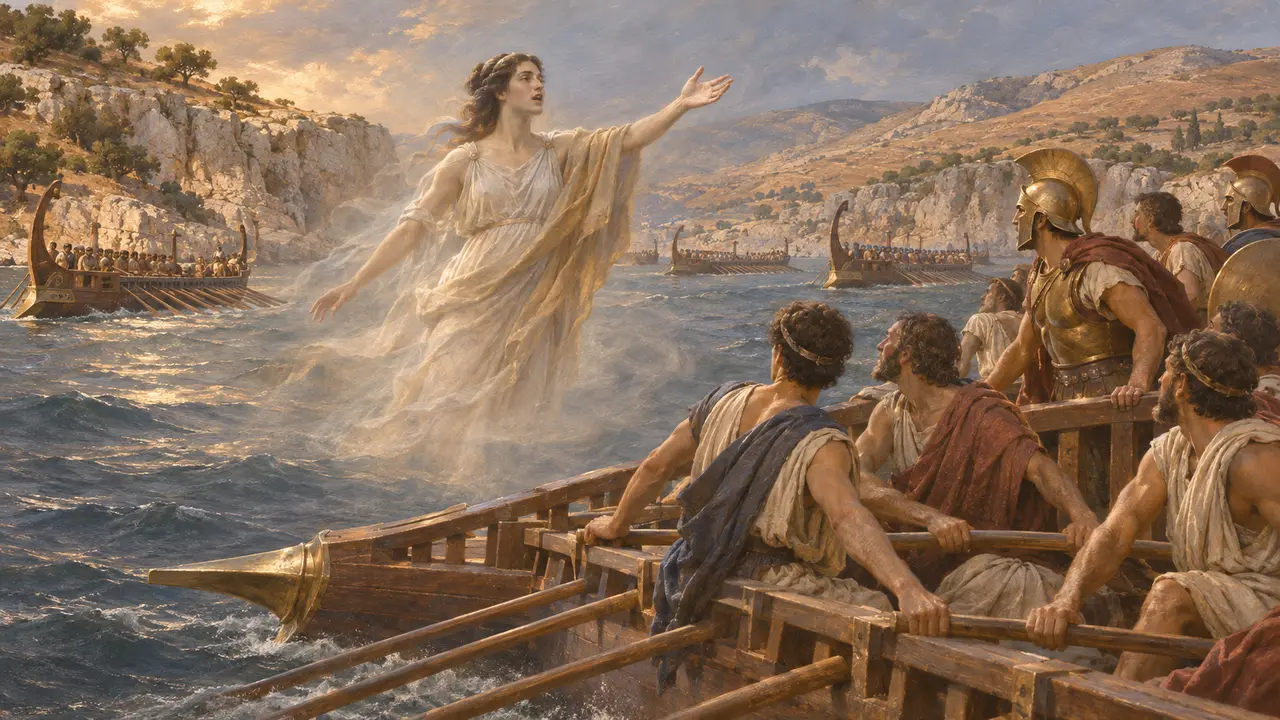
Later legendHerodotus reports the Athenian claim that the Corinthian admiral Adeimantus fled at the start and turned back only when a mysterious boat told him the Greeks were winning; he adds that the Corinthians and the rest of Greece denied it. He also records a tale that a phantom woman appeared and called to the Greek fleet, asking how long they would keep backing water. Such stories reflect rivalries among the Greek cities after the war.
Herodotus 8.84, 8.94
Sources
- Herodotus 8.40-97
- Aeschylus, Persians
- Diodorus 11.15-19
- Plutarch, Themistocles
- J. F. Lazenby, The Defence of Greece 490-479 BC, 1993
- B. Strauss, The Battle of Salamis, 2004