Encyclopedia › Battles and events
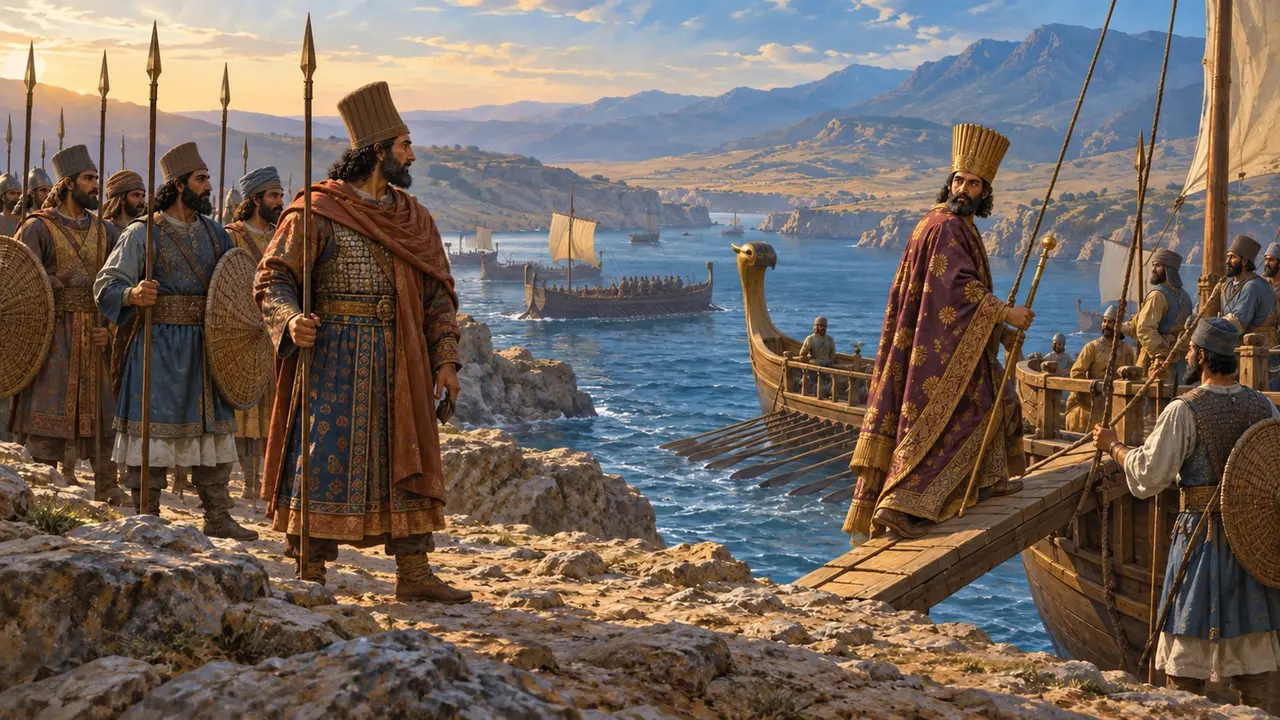
Xerxes' return to Asia
The King's withdrawal from Greece to Sardis after the defeat at Salamis, autumn 480 BCE
In the game: Level 11: The Finale
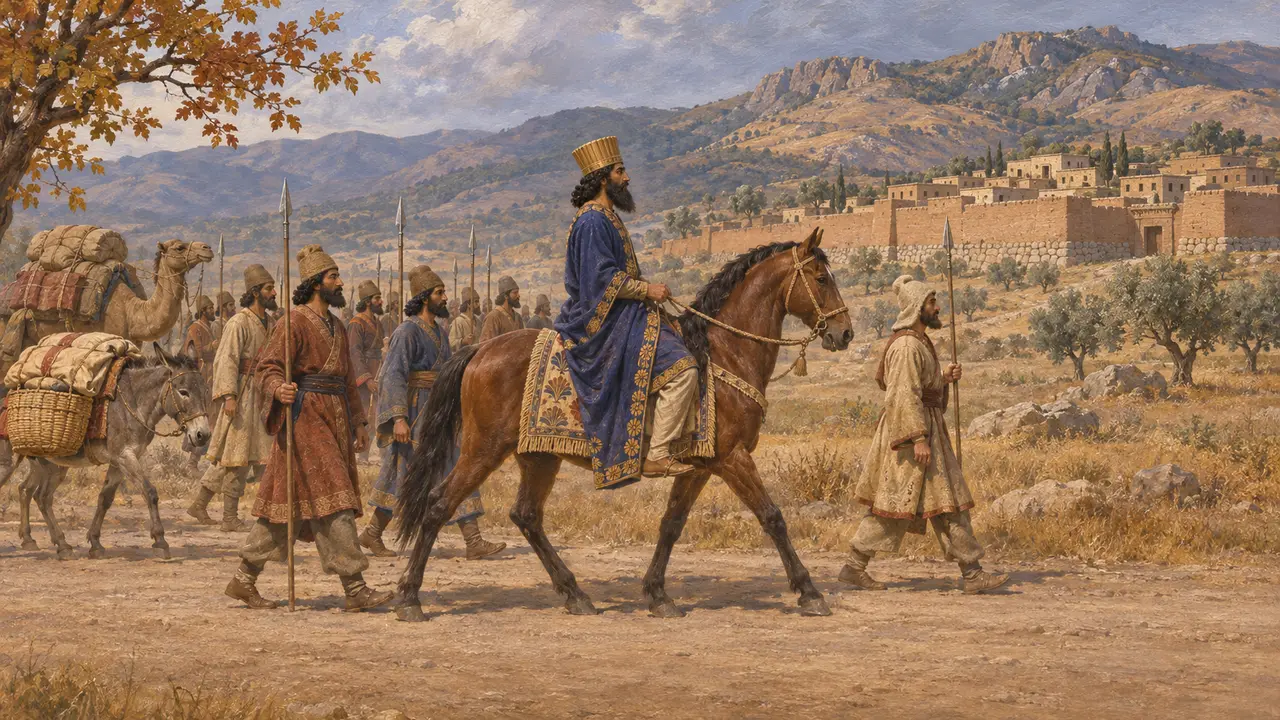
After his fleet was defeated at Salamis in September 480, Xerxes led part of his army back to the Hellespont, crossed to Asia and stayed at Sardis into 479. He left Mardonius in Greece with a chosen force to finish the war. Greek writers told the journey as a disgraced flight, and no Persian text describes it.
In the game: The Chronicle notes that the King went home in 480 and that Mardonius stayed to winter in Thessaly with picked troops. Herodotus says the army wintered in Thessaly and Macedonia.
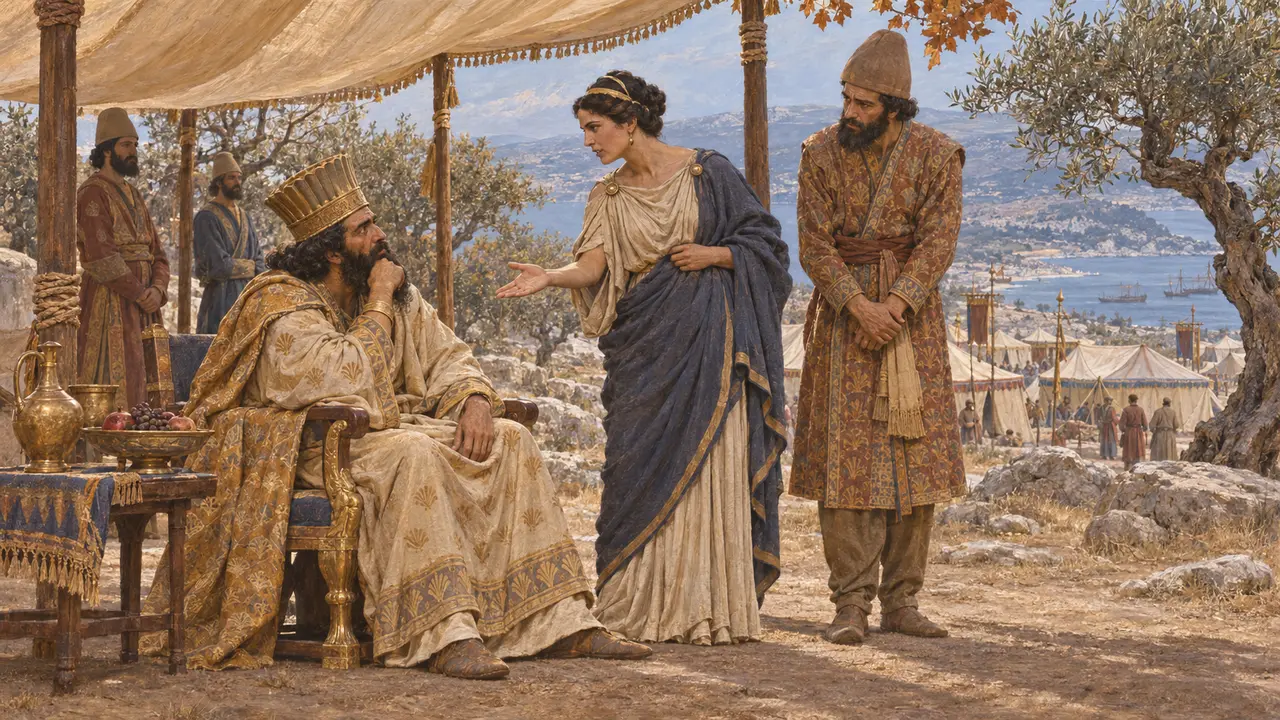
Mardonius's offer and Artemisia's advice
Ancient accountHerodotus says that Mardonius, fearing he would be blamed for the war, urged Xerxes to go home and leave him 300,000 picked men to conquer Greece. The King asked Artemisia of Halicarnassus for her view, and she told him to accept. If Mardonius won, the King would take the credit; if he failed, little would be lost while Xerxes and his house were safe. Herodotus adds that Xerxes was glad of advice that matched his own fear.
Herodotus 8.100-103
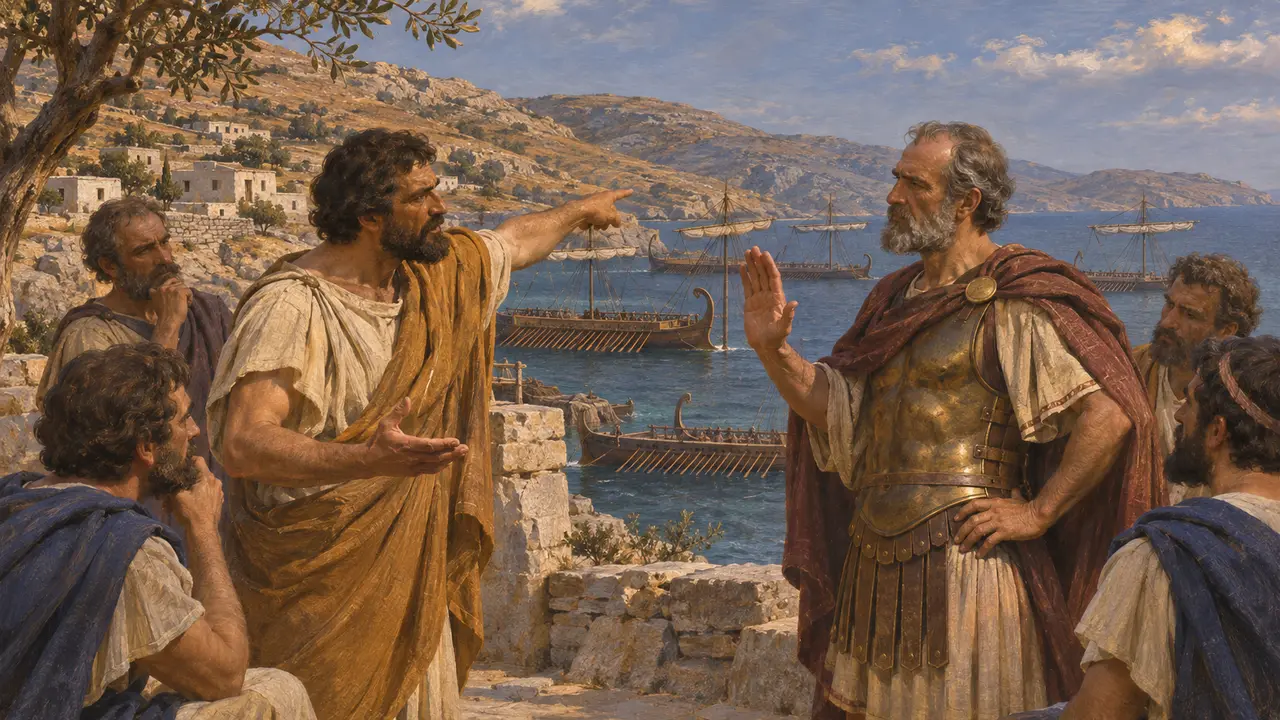
Themistocles and the bridges
DisputedHerodotus says the Greek fleet chased the Persians as far as Andros. There Themistocles proposed sailing to the Hellespont to break the bridges, but Eurybiades of Sparta refused, saying a trapped King was more dangerous than a fleeing one. Themistocles then sent Xerxes a secret message taking credit for holding the Greeks back. Plutarch names Aristides as the objector and makes the message a threat meant to hurry Xerxes away; historians doubt it changed his plans.
Herodotus 8.108-110; Plutarch, Themistocles 16
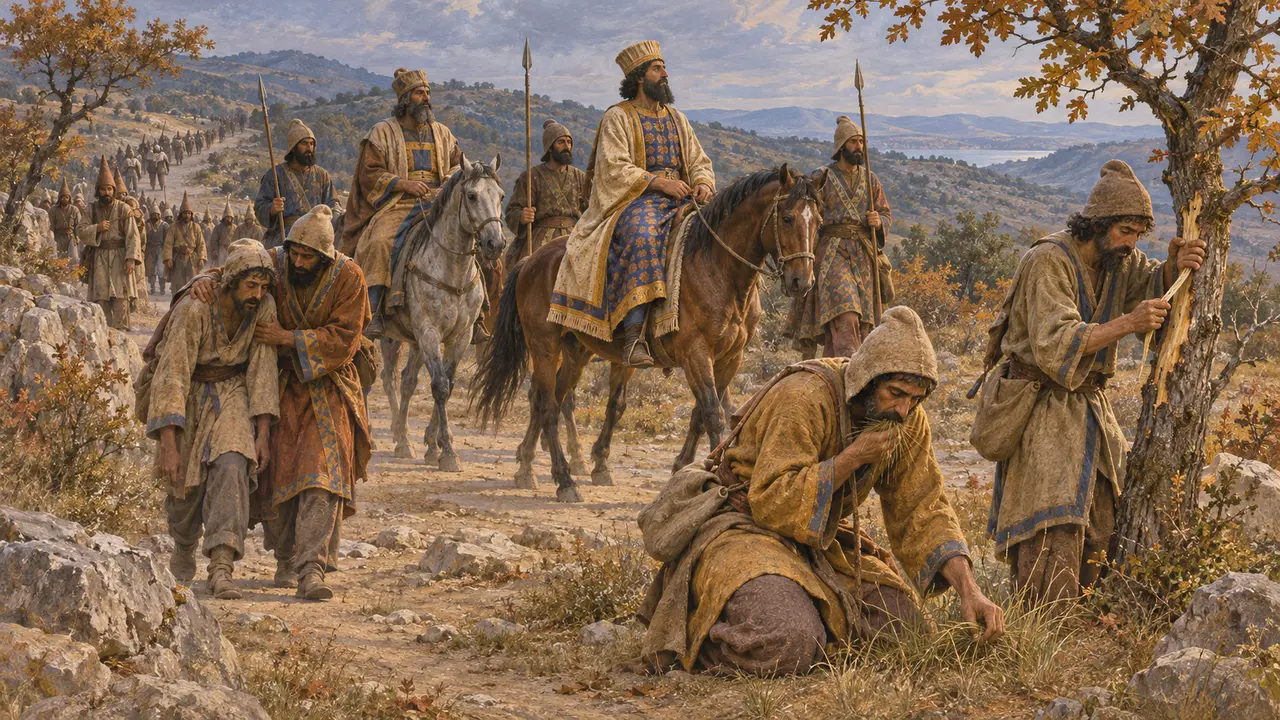
The march to the Hellespont
Ancient accountHerodotus says Mardonius chose his troops in Thessaly, among them the Immortals, Persian cavalry, Medes, Saka, Bactrians and Indians, and that Artabazus escorted the King. On the 45-day march to the Hellespont, hunger and dysentery struck, and men ate grass and bark. Storms had already broken the bridges, so the army crossed to Abydos by ship. Aeschylus's Persians, staged in 472, adds a disaster on the frozen Strymon.
Herodotus 8.113-117, 8.126; Aeschylus, Persians
The tale of the voyage from Eion
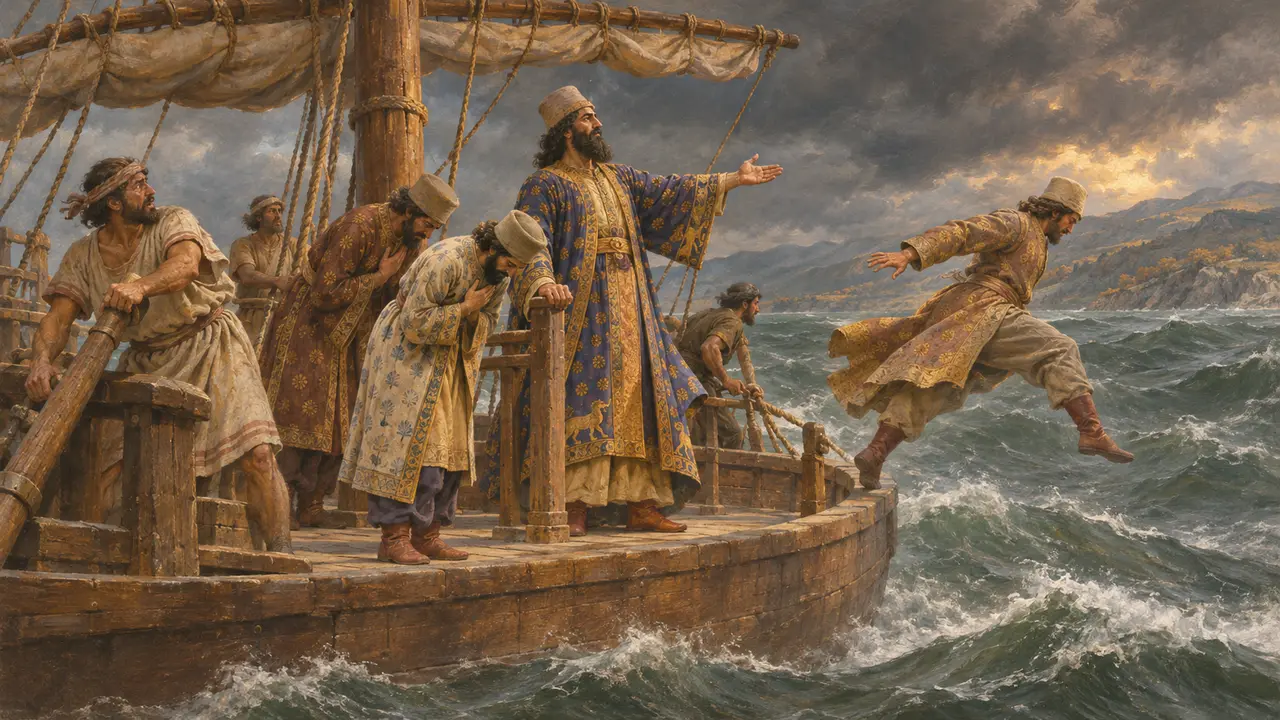
Later legendHerodotus also heard a story that Xerxes left the army at Eion on the Strymon and sailed home on a Phoenician ship. In a storm the helmsman said the ship must be lightened, so the Persian nobles on deck bowed to the King and leapt into the sea. Herodotus rejects the tale, arguing that Xerxes would have sent the Persians below and thrown Phoenician rowers overboard instead. He adds that the people of Abdera remembered the King passing through by land.
Herodotus 8.118-120
Flight or planned withdrawal
DisputedGreek sources present the return as panic. Many modern historians, Briant among them, see a reasoned choice: after Salamis the fleet could no longer supply a very large army, and the King's place was at the centre of his empire. A smaller force under Mardonius stayed to hold what had been won, while Herodotus places Xerxes at Sardis until after Mycale in 479. Most historians think Herodotus's figure of 300,000 for Mardonius's army is far too high.
P. Briant, From Cyrus to Alexander, 2002; Herodotus 9.108
Sources
- Herodotus 8.100-120, 8.126, 9.108
- Aeschylus, Persians
- Plutarch, Themistocles 16
- Diodorus 11.19
- P. Briant, From Cyrus to Alexander, 2002