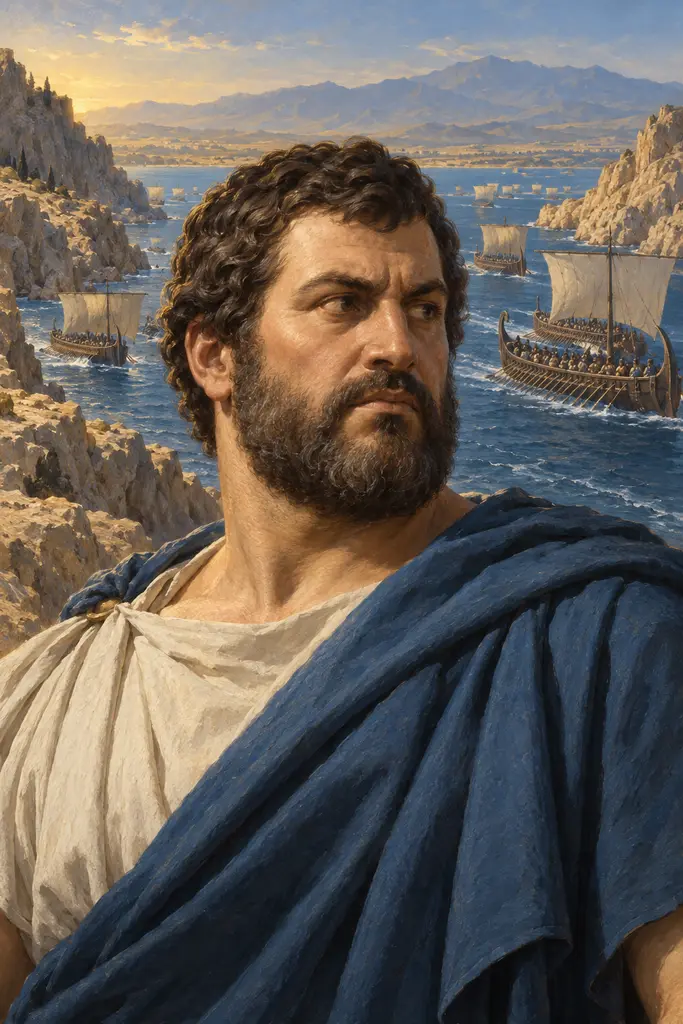
Themistocles
Athenian statesman who led the Athenian ships at Salamis, died about 459 BCE
In the game: Level 11: The Finale
Themistocles was an Athenian politician and general who persuaded his city to build the fleet that fought Xerxes in 480. Herodotus credits him with holding the Greek ships together at Artemisium and bringing on the battle of Salamis, where the Persian navy was defeated. He ended his life in Asia, an exile living on revenues granted by the Persian king.
In the game: The game's chronicle follows Herodotus: the Laurium ships, the gifts at Artemisium and the plan of Salamis. The figure of two hundred ships is Herodotus's; another ancient source gives a hundred.
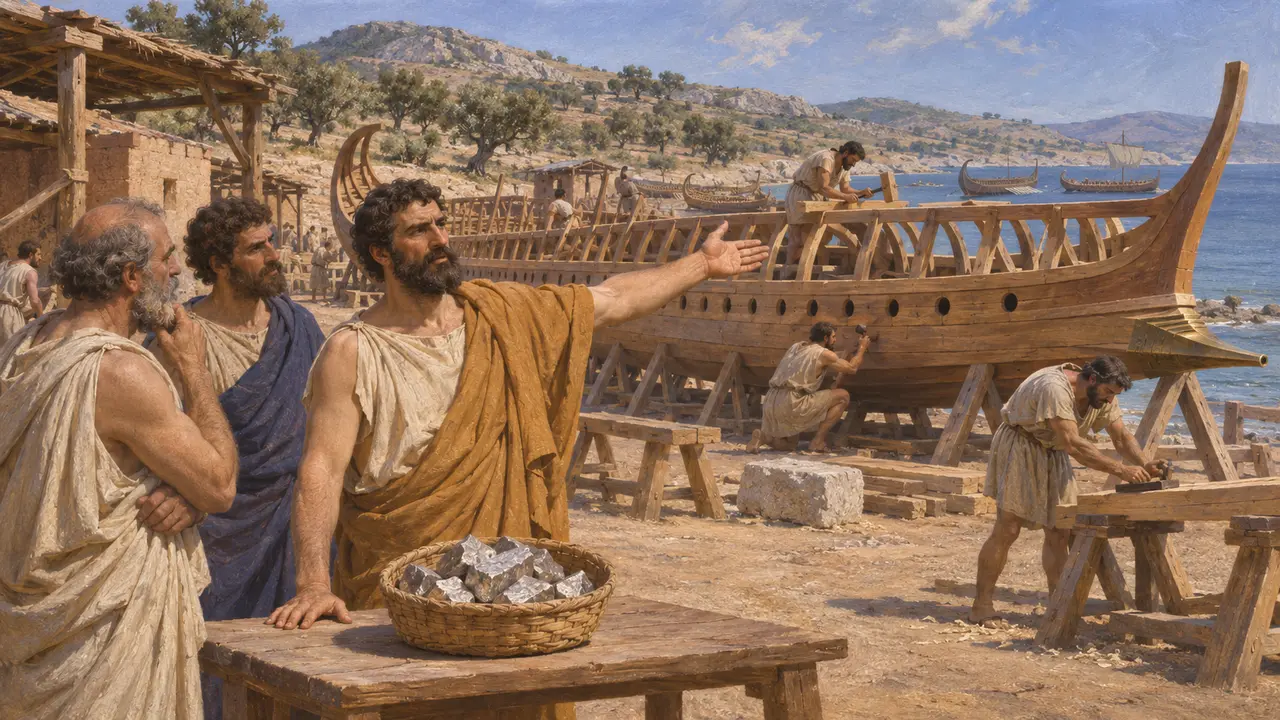
Silver from Laurium and the wooden wall
Ancient accountHerodotus says that when a rich new vein of silver came in at the Laurium mines, Themistocles talked the Athenians out of sharing the money among the citizens. Instead they built two hundred ships for their war with Aegina. Herodotus also says he read the Delphic oracle of the wooden wall as meaning ships. The Aristotelian Constitution of the Athenians gives a hundred ships, so the figure is uncertain.
Herodotus 7.143-144; Aristotle, Constitution of the Athenians 22.7
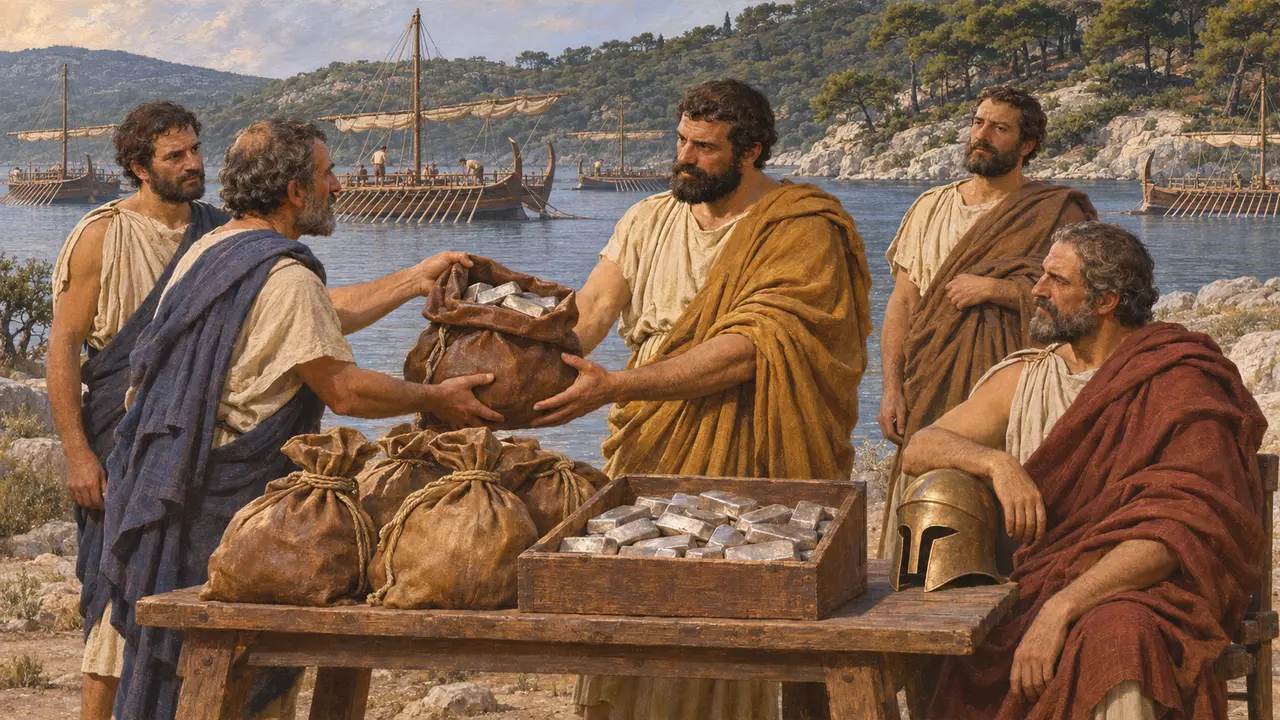
Gifts that kept the fleet at Artemisium
Ancient accountHerodotus tells that the Euboeans, afraid of being left undefended, paid Themistocles thirty talents to keep the Greek fleet at Artemisium. He passed five talents to the Spartan commander Eurybiades and three to Adeimantus of Corinth, and kept the rest himself. The fleet stayed and fought the Persian ships over three days, then withdrew south when news came that Thermopylae had fallen.
Herodotus 8.4-5
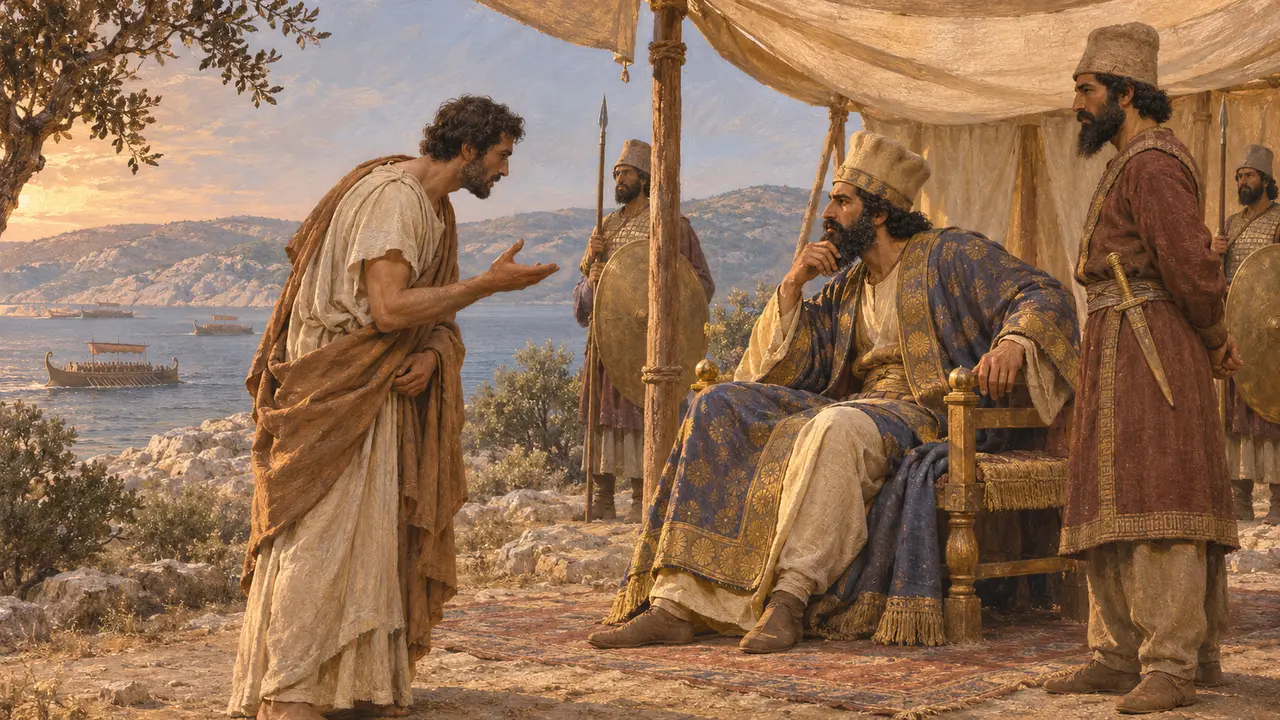
The message to Xerxes before Salamis
DisputedHerodotus says Themistocles sent his slave Sicinnus to Xerxes with word that the Greeks meant to slip away, so the Persian ships moved by night to close the straits. Aeschylus, who probably fought in the war, describes a similar message from a Greek in his Persians of 472. Historians still argue whether this trick caused the battle or whether the Persian commanders had already decided to attack.
Herodotus 8.75-76; Aeschylus, Persians
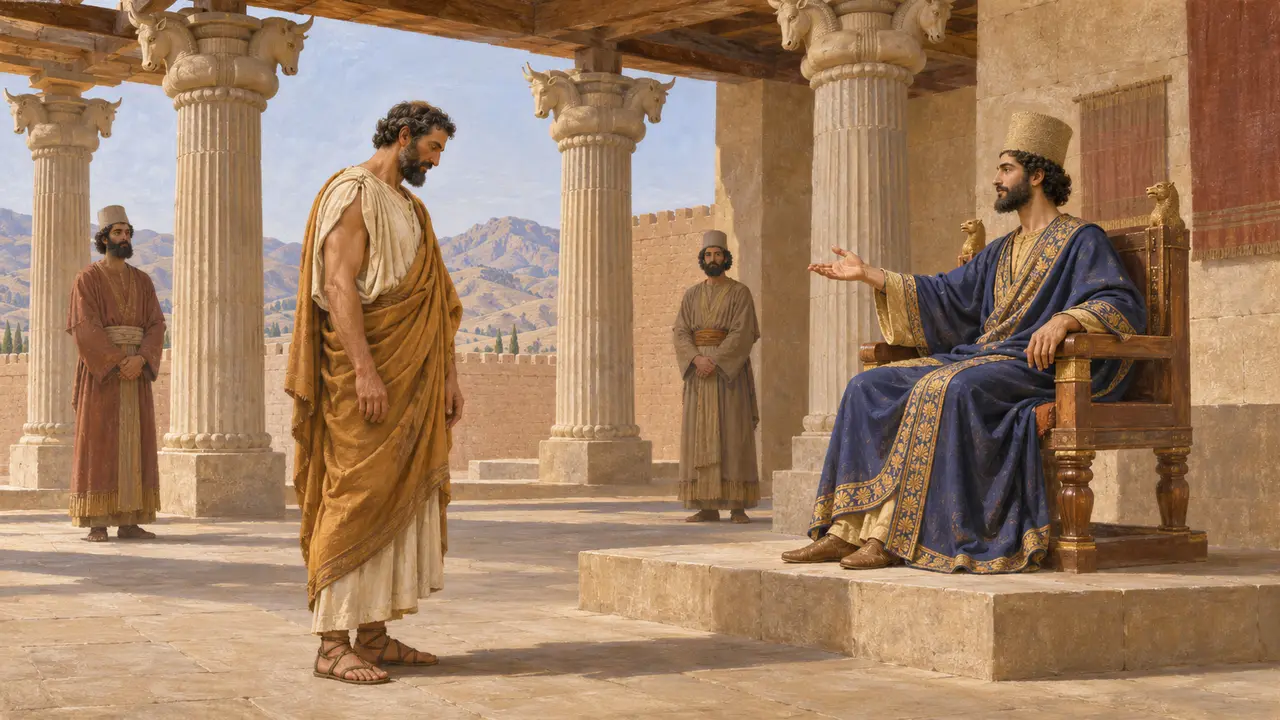
Exile at the court of the King
Ancient accountOstracised from Athens and later condemned for siding with Persia, Themistocles fled to Asia. Thucydides says he wrote to the new king Artaxerxes, spent a year learning the Persian language and customs, and was given Magnesia on the Maeander for his bread, Lampsacus for his wine and Myus for his other food. Some later writers named Xerxes instead, as Plutarch notes. He died at Magnesia, of illness according to Thucydides.
Thucydides 1.135-138; Plutarch, Themistocles 27
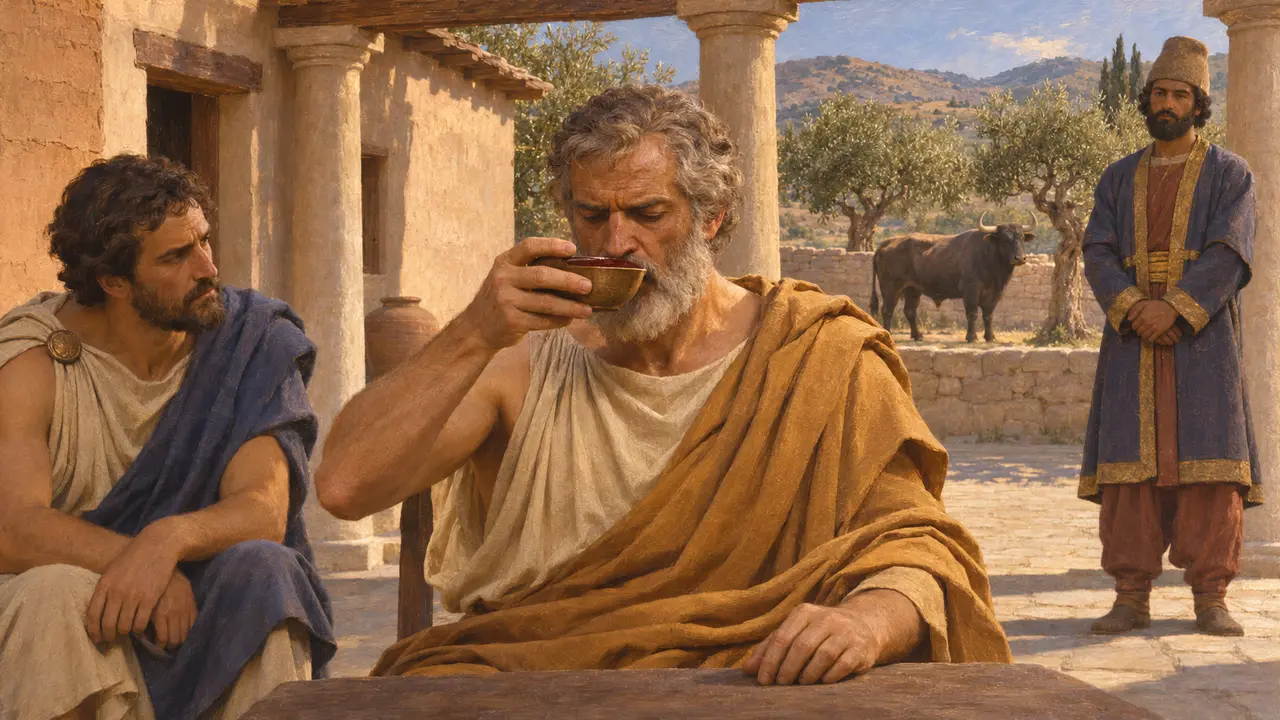
The story of the bull's blood
Later legendThucydides already reports a rumour that Themistocles poisoned himself because he could not deliver what he had promised the King. The tale that he drank bull's blood appears in Aristophanes' Knights of 424. Plutarch, writing more than five centuries after his death, shapes it into a moral story: asked to lead an army against Greece, he chose death over fighting his own people. No Persian document is known to name him.
Thucydides 1.138; Aristophanes, Knights; Plutarch, Themistocles 31
Sources
- Herodotus, Histories, books 7-8
- Thucydides 1.135-138
- Plutarch, Life of Themistocles
- Aeschylus, Persians
- Aristotle, Constitution of the Athenians 22.7
- R. J. Lenardon, The Saga of Themistocles, 1978