
Adeimantus of Corinth
Corinthian naval commander at Artemisium and Salamis, 480 BCE
Adeimantus, son of Ocytus, commanded the Corinthian ships in the Greek fleet in 480. Herodotus shows him as a sharp opponent of Themistocles in the debates before Salamis. Herodotus also reports an Athenian story that he fled in the battle, and says the Corinthians and the rest of Greece denied it.
In the game: Adeimantus is named only in the event articles on Artemisium and Salamis and has no mechanic of his own. The game mentions the Athenian charge that he fled; Herodotus says the Corinthians and other Greeks denied it.
Corinthian commander in the Greek fleet
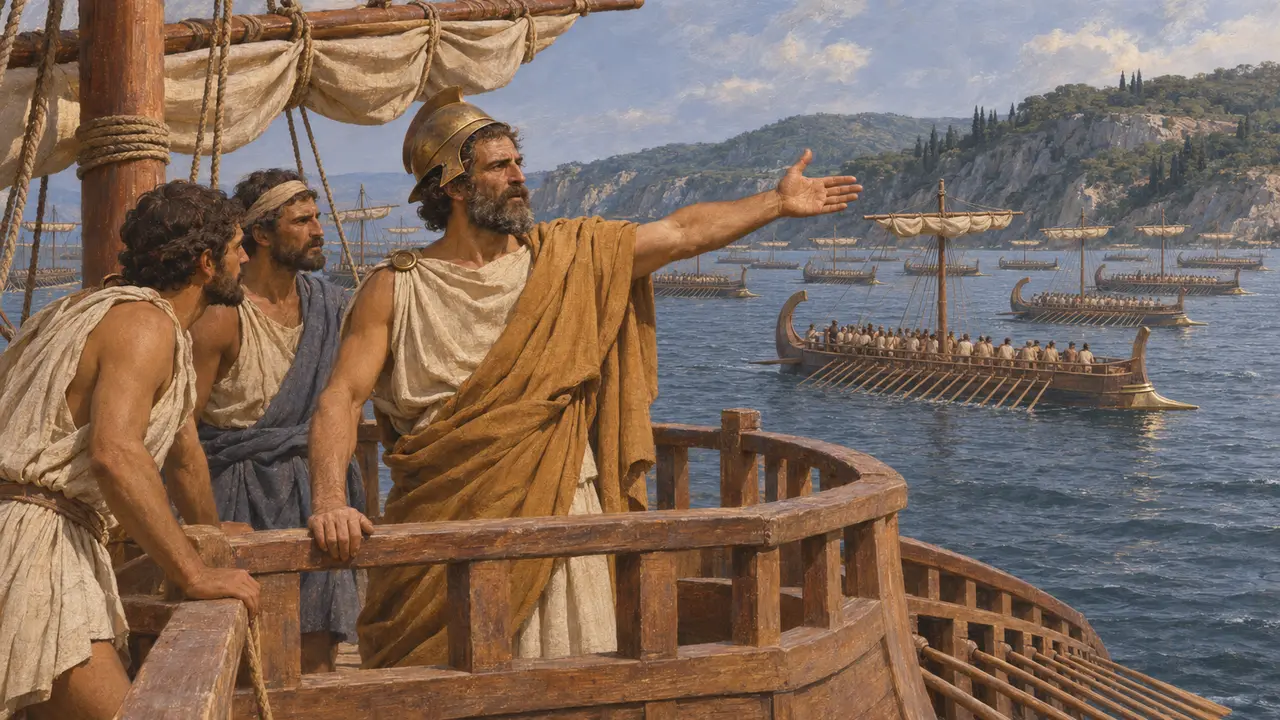
Ancient accountHerodotus names Adeimantus, son of Ocytus, as the Corinthian commander in the Greek fleet of 480. Corinth sent a sizeable squadron to the allied fleet under the Spartan Eurybiades, and Herodotus lists it in his catalogue of the fleet. At Artemisium he says Themistocles bribed Adeimantus, among others, to stay and fight, a tale that reflects Athenian sources.
Herodotus 8.5

Quarrel with Themistocles
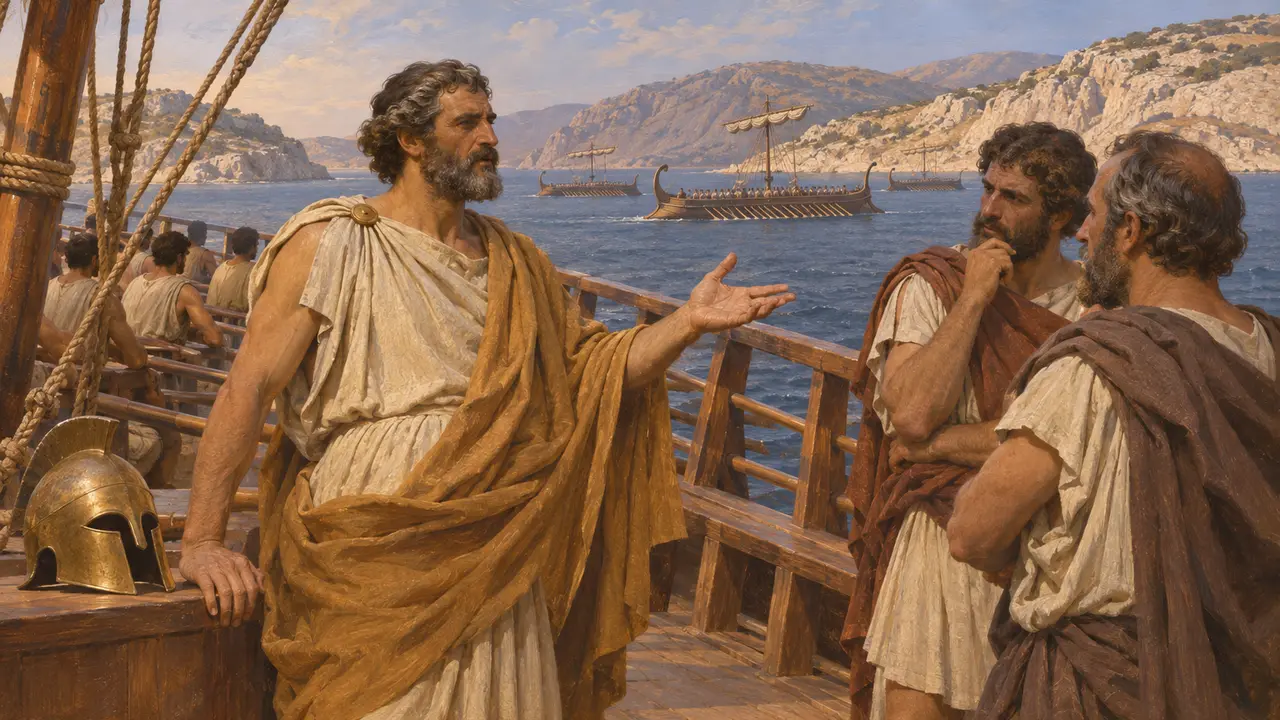
Ancient accountIn Herodotus's telling, Adeimantus clashed with Themistocles in the council before Salamis. He urged a withdrawal towards the Isthmus of Corinth, and told Themistocles that men who start a race too early are beaten with rods. Themistocles is said to have replied that those left behind are not crowned. The exchange is Herodotus's report, and its exact words cannot be checked.
Herodotus 8.59
The charge of flight
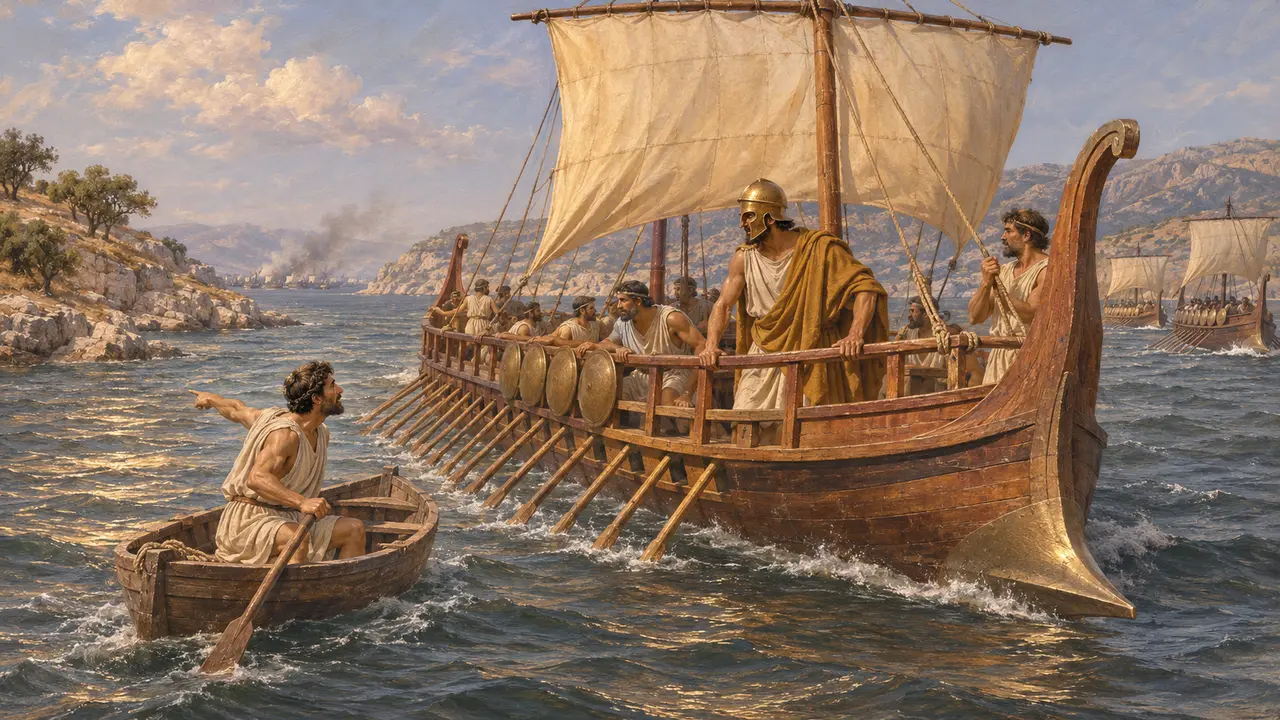
DisputedHerodotus says the Athenians told a story that Adeimantus hoisted sail in panic as the battle began and fled with the Corinthian ships. In the story a boat met them with news that the Greeks were winning, and they turned back too late to fight. Herodotus adds that the Corinthians denied this and that the rest of Greece spoke well of them. The sources therefore disagree, and the charge probably owes something to Athenian hostility towards Corinth.
Herodotus 8.94
Plutarch and the later argument
Ancient accountPlutarch, writing centuries later, accused Herodotus of unfairness towards Corinth in his treatment of Salamis and of the Corinthians generally. The quarrel over Adeimantus's conduct thus continued long after 480. No Persian source mentions Adeimantus.
Plutarch, On the Malice of Herodotus
Sources
- Herodotus 8.5
- Herodotus 8.59
- Herodotus 8.94
- Plutarch, On the Malice of Herodotus
- P. Green, The Greco-Persian Wars, 1996