Encyclopedia › Battles and events
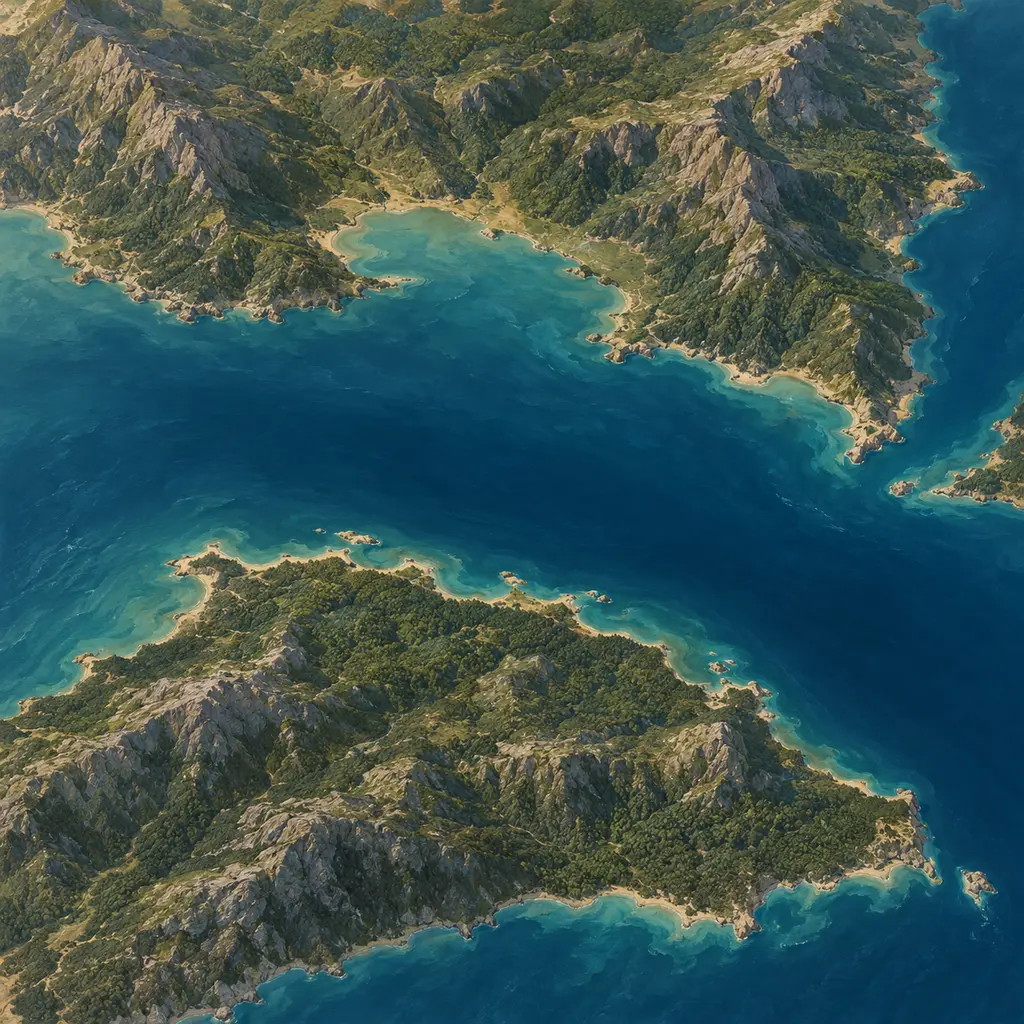
The battle of Artemisium
Sea battle off northern Euboea between Xerxes' fleet and the Greeks, 480 BCE
In the game: Level 10: The Hot Gates
Artemisium was a series of sea fights in late summer 480 off the northern tip of Euboea, fought on the same days as the land battle at Thermopylae. The Greek fleet held the strait against the larger fleet of Xerxes for three days, suffered heavy damage, and withdrew south when news came that the pass had fallen. Neither side won outright, though Plutarch later judged that the Greeks learned there that the King's ships could be faced.
In the game: The game follows Herodotus's account of the three days and the withdrawal. It shows the wreck of the two hundred ships sent round Euboea as fact, though many historians doubt that story.
Two fleets in the strait
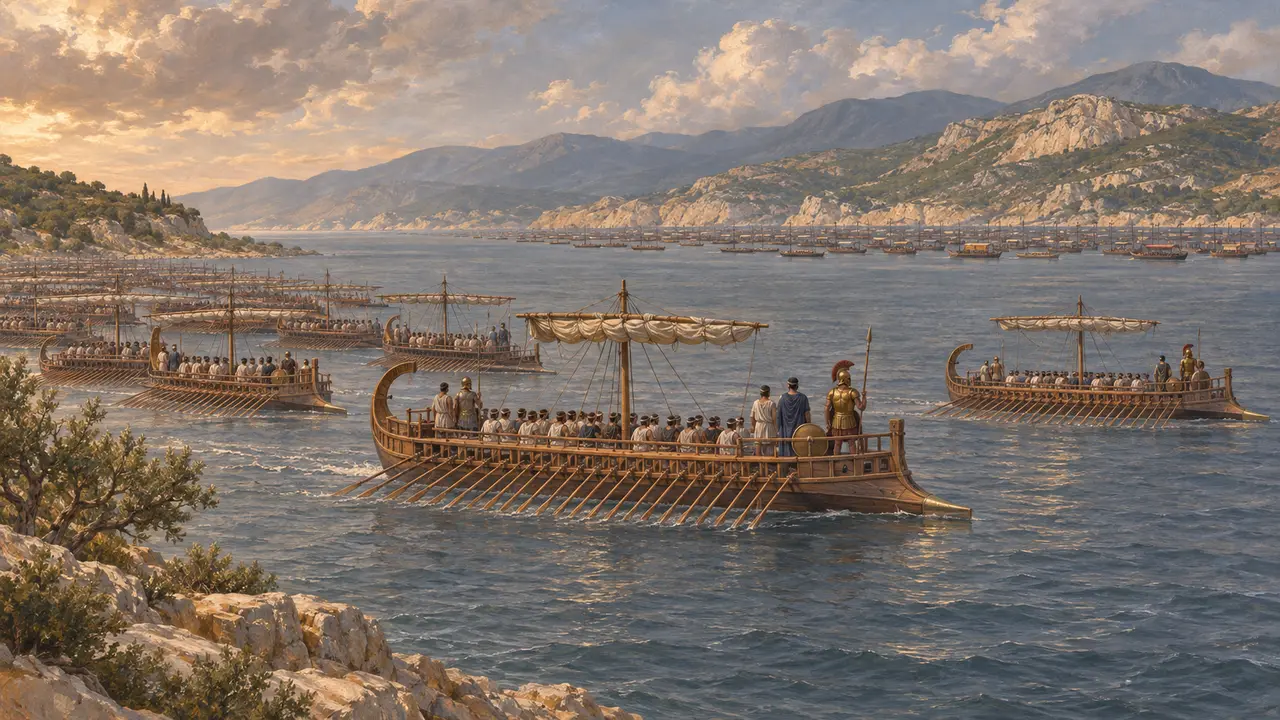
Ancient accountHerodotus says the Greeks gathered 271 triremes at Artemisium under the Spartan Eurybiades, with Athens providing the largest share; 53 more Athenian ships came later. The King's fleet, already battered by a storm off Magnesia, anchored opposite at Aphetae. The Greek position guarded the sea route that ran alongside the road through Thermopylae, so the fleet and the army in the pass covered each other.
Herodotus 7.188-192, 8.1-2, 8.4, 8.14
Three days of fighting
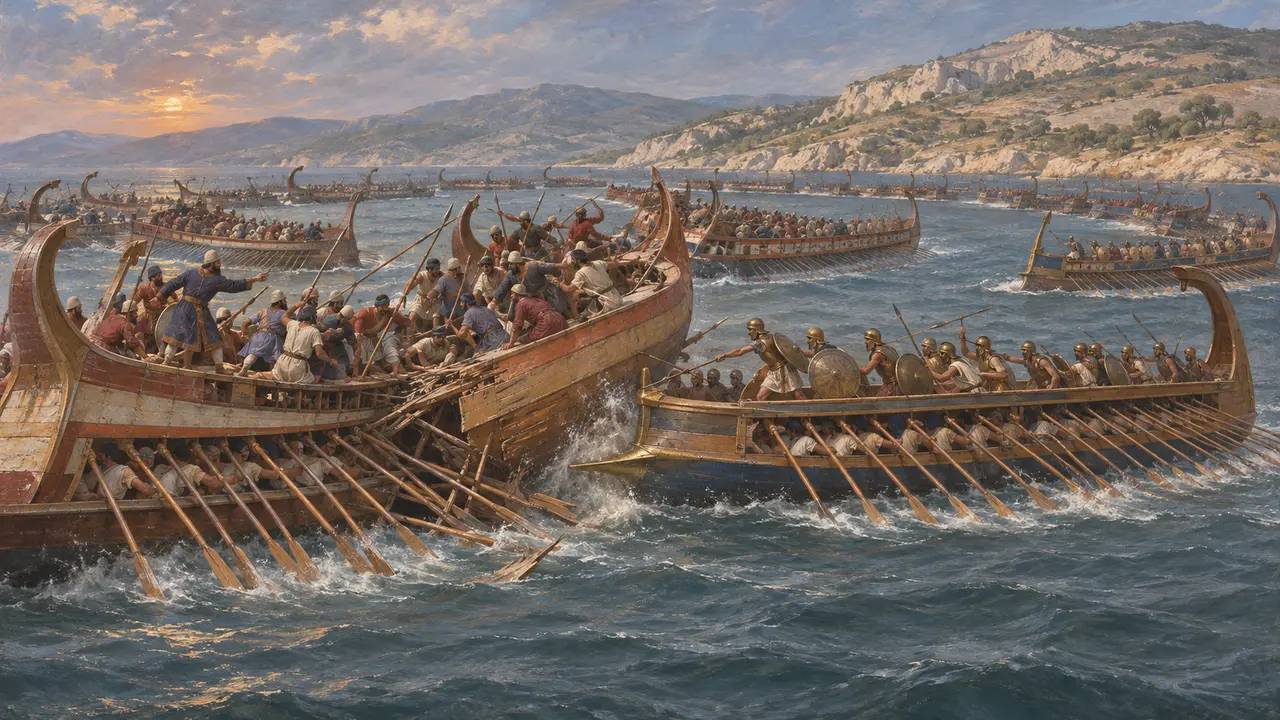
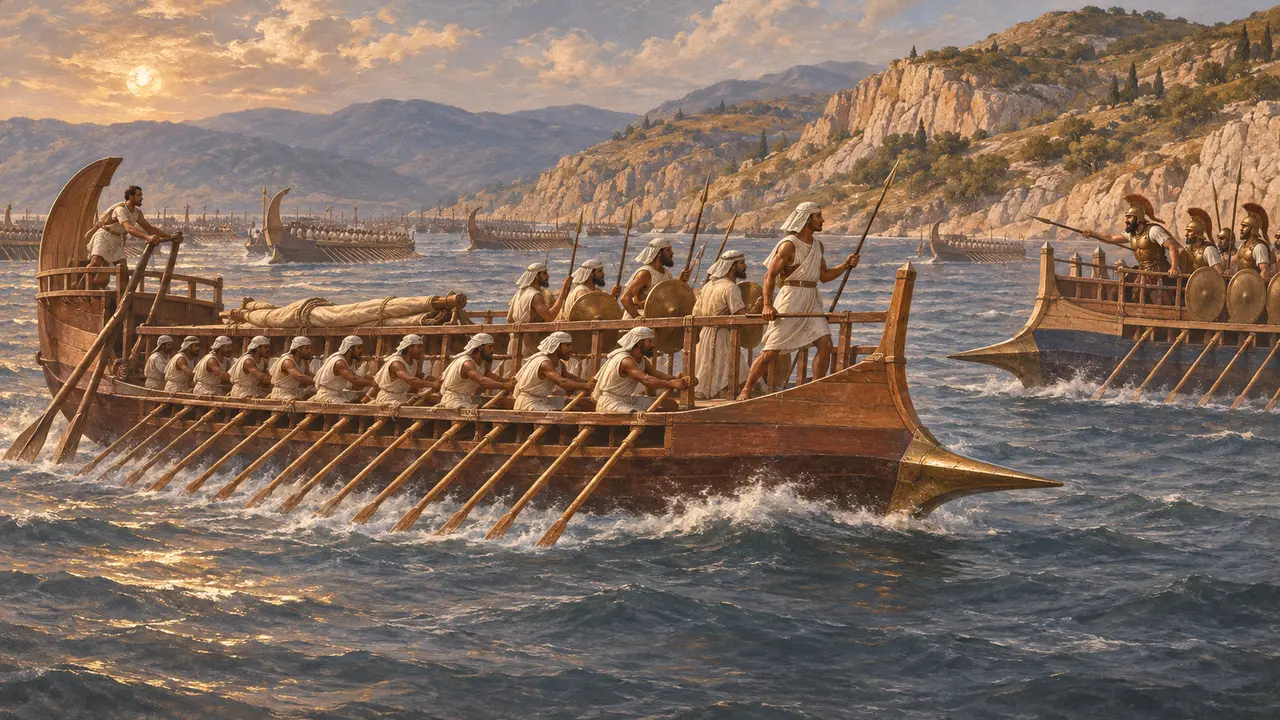
Ancient accountHerodotus tells that the Greeks attacked late on the first day. The Persians, with more ships that sailed better, tried to surround them, and the Greeks drew into a circle with prows outward and took thirty ships. On the second evening they struck at Cilician ships. On the third day the King's fleet came on in a crescent, crowded and fouled itself, and both sides lost many ships; half the Athenian ships were damaged.
Herodotus 8.9-18
The ships sent round Euboea
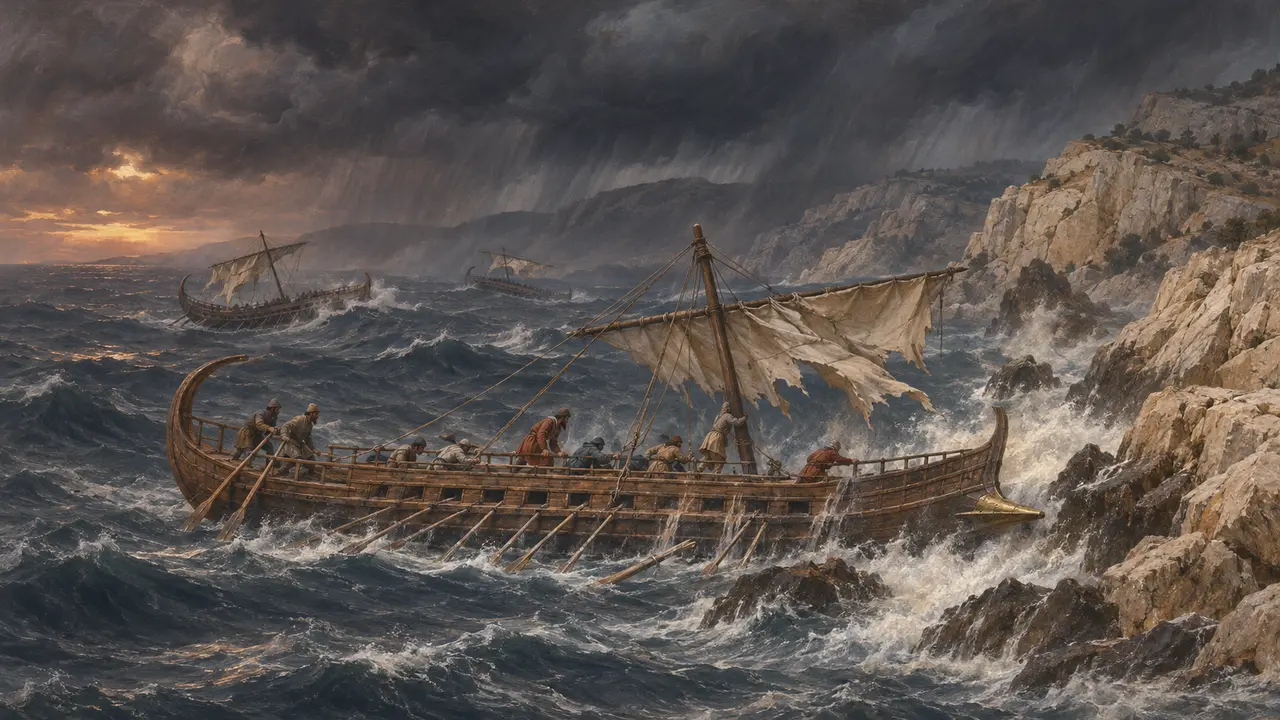
DisputedHerodotus says 200 ships were sent round Euboea to cut off the Greek retreat, and that a night storm wrecked them all on the coast called the Hollows; he saw this as the god's work to make the fleets more nearly equal. Many historians doubt the story: the detachment is hard to fit into the timetable. His total of 1,207 triremes for the King's fleet is also widely thought too high.
Herodotus 7.89, 8.7, 8.13; C. Hignett, Xerxes' Invasion of Greece, 1963
One defence or two battles
DisputedHerodotus notes that the sea fights and the assaults at Thermopylae fell on the same days. Modern scholars argue over whether the Greeks planned pass and strait as a single defence, and how long the fleet meant to stay. No Persian inscription or tablet mentions Artemisium, so the Persian side is known only through Greek writers; Herodotus names the Egyptian ships as the best in the King's fleet.
Herodotus 8.15, 8.17; J. F. Lazenby, The Defence of Greece 490-479 BC, 1993
Withdrawal and remembrance
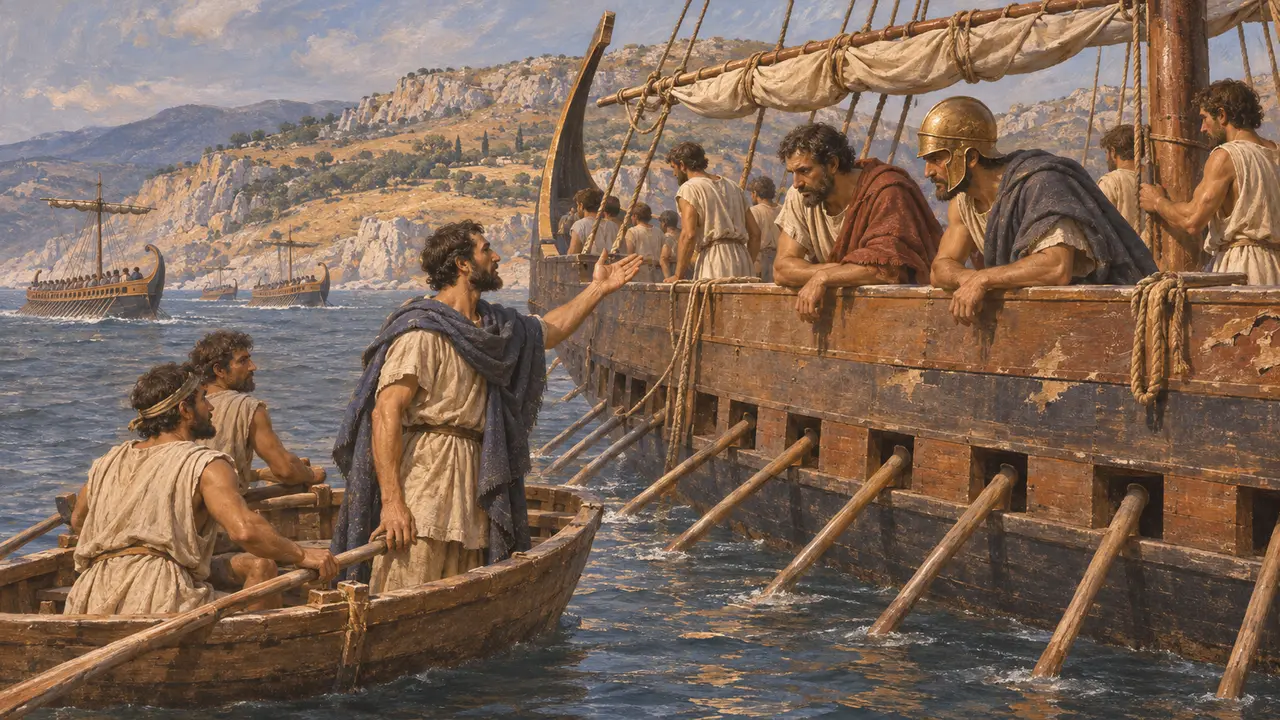
Ancient accountHerodotus says the battered Greeks were already planning to withdraw when Abronichus brought word by boat that Leonidas had fallen; they then sailed south, and the fleet later gathered at Salamis. Themistocles cut messages on rocks at watering places urging the Ionians in the King's fleet to desert or fight badly. Plutarch, writing centuries later, cited Pindar's verse that at Artemisium the Athenians laid the foundation of their freedom.
Herodotus 8.18, 8.21-22; Plutarch, Themistocles 8
Sources
- Herodotus 8.1-23
- Herodotus 7.188-195
- Plutarch, Themistocles 7-9
- Diodorus 11.12-13
- J. F. Lazenby, The Defence of Greece 490-479 BC, 1993
- C. Hignett, Xerxes' Invasion of Greece, 1963