Encyclopedia › Battles and events
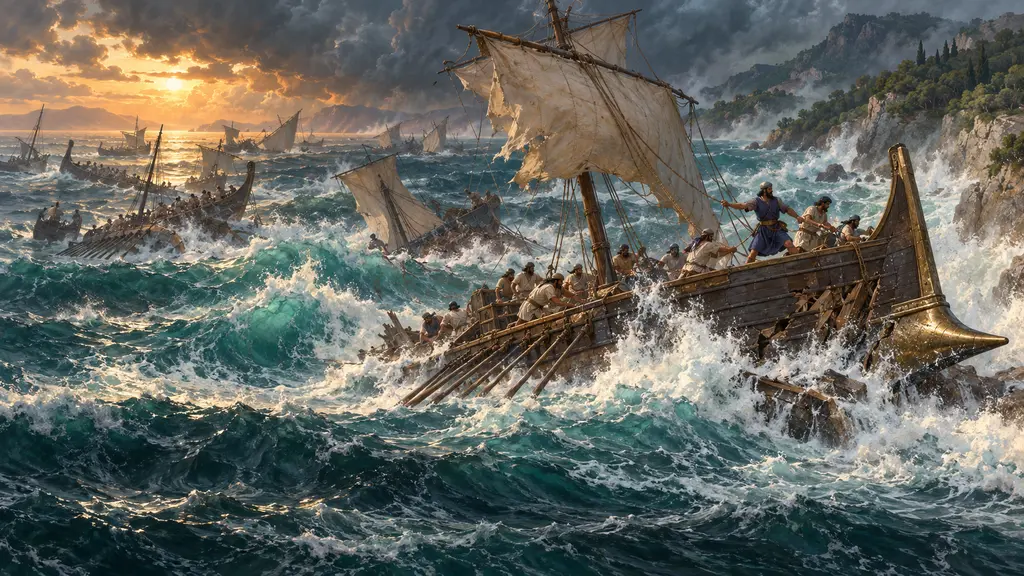
The storm off Magnesia
Storm that wrecked part of Xerxes' fleet on the Magnesian coast, Thessaly, 480 BCE
In the game: Level 10: The Hot Gates
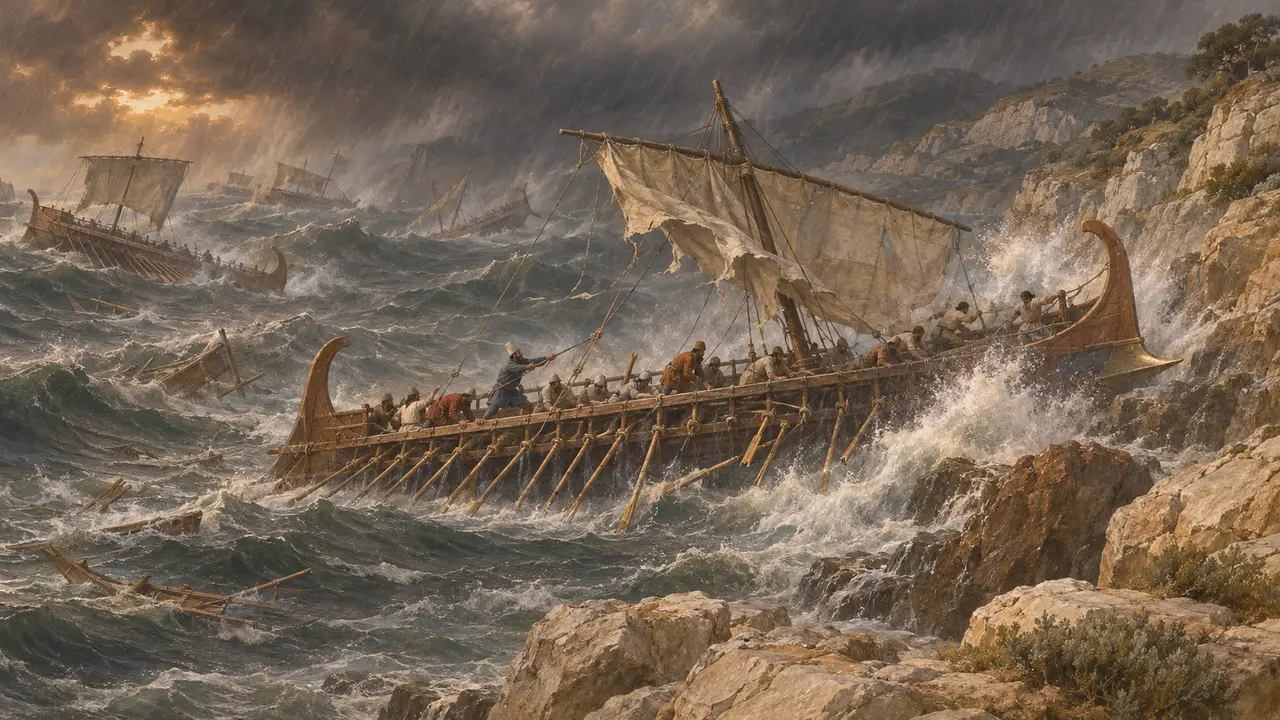
Probably in late summer 480, as Xerxes' fleet moved south towards Artemisium, an easterly gale caught it at anchor on the exposed coast of Magnesia and blew for three days. Herodotus says at least four hundred warships were lost, along with crews, supply vessels and treasure. The storm reduced the King's fleet just before the fighting at Artemisium and Thermopylae began.
In the game: The game shows the storm as a 480 event and repeats Herodotus's figure of at least four hundred ships. That number is his alone; historians doubt it, and no Persian record of the losses survives.
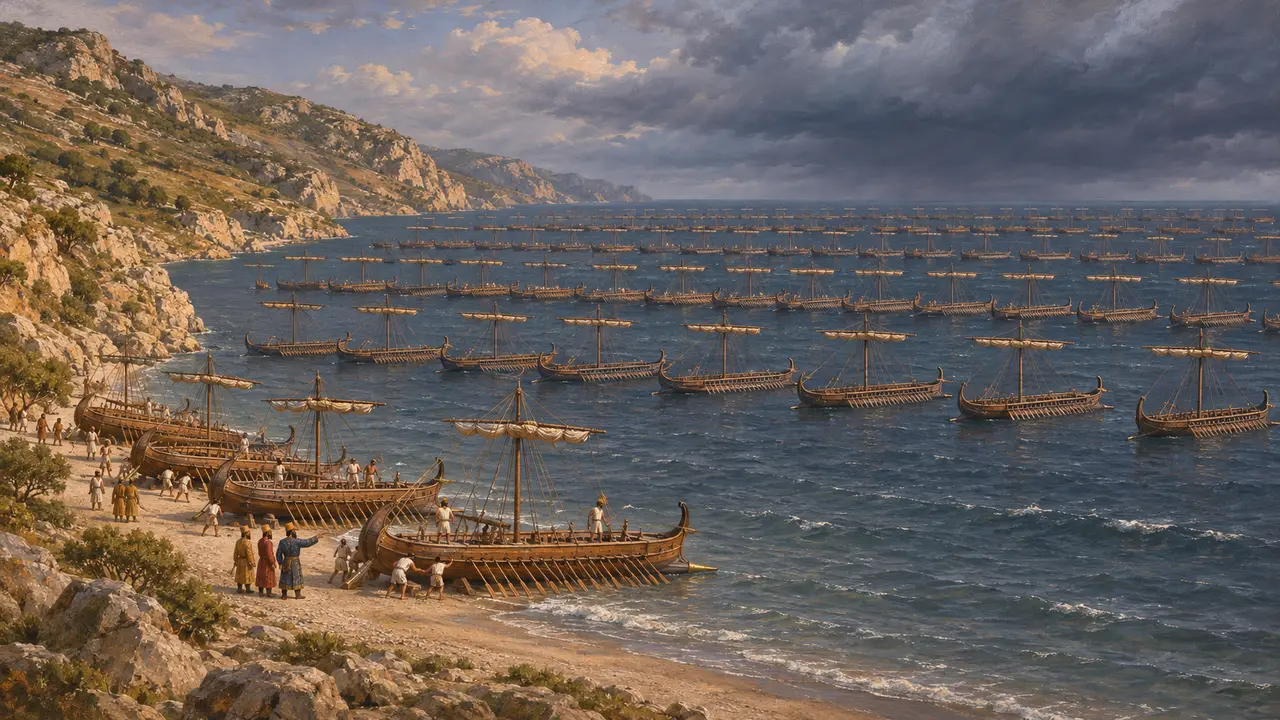
A fleet too large for its beach
Ancient accountHerodotus says the fleet reached the coast of Magnesia between Casthanaea and Cape Sepias. The beach was short, so only the first line of ships could be drawn up on shore, and the rest rode at anchor offshore, by his account eight rows deep. His description implies that the fleet had no sheltered harbour on that stretch of coast.
Herodotus 7.188
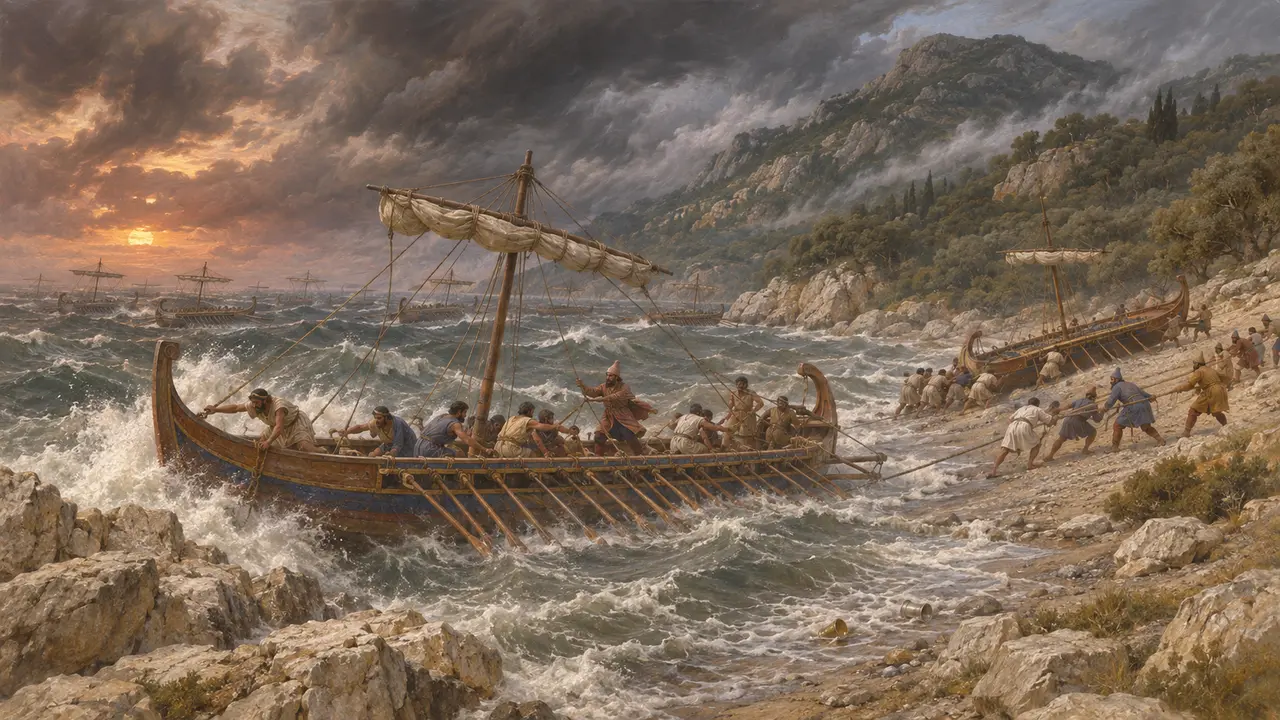
Three days of the Hellespontias
Ancient accountHerodotus says that at dawn, after calm weather, the sea began to boil and a strong east wind, which the locals called the Hellespontias, struck the anchored ships. Crews who saw it coming hauled their ships ashore, but many were driven onto the rocks called the Ovens of Pelion and the beaches. A local landowner, Ameinocles, later grew rich from gold and silver cups that washed up on his land.
Herodotus 7.188, 7.190-191
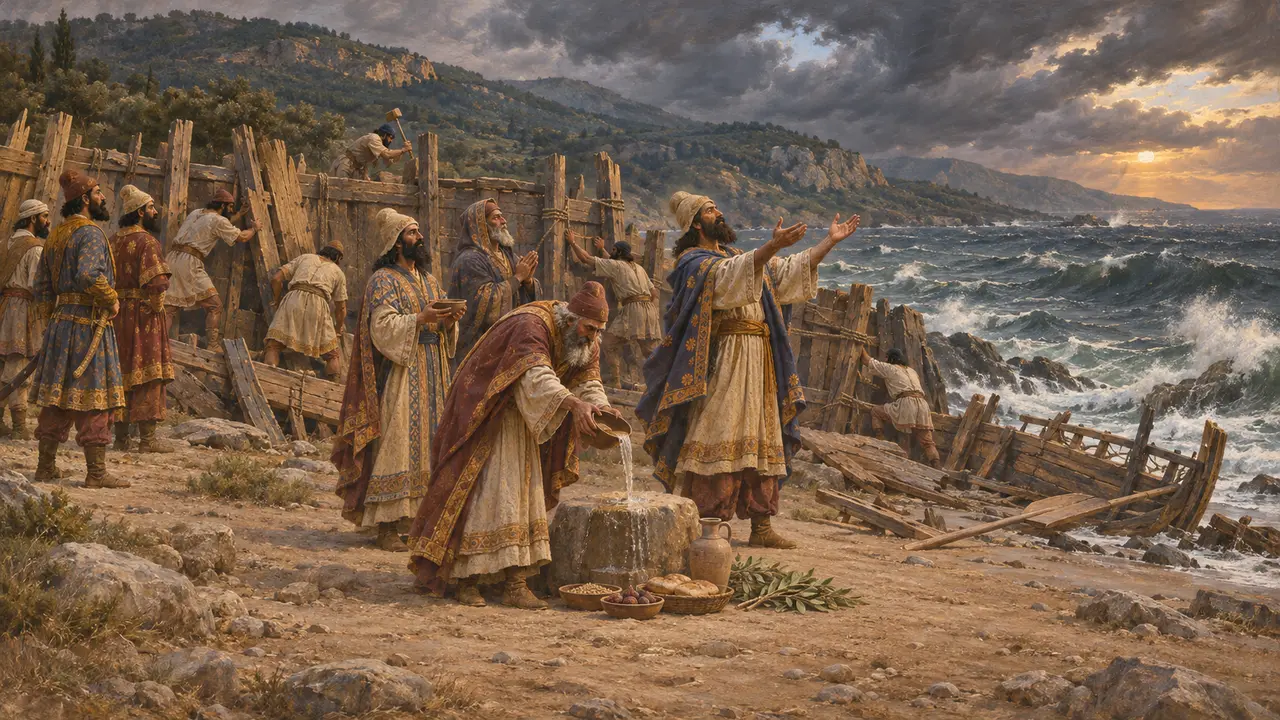
The magi and the wind
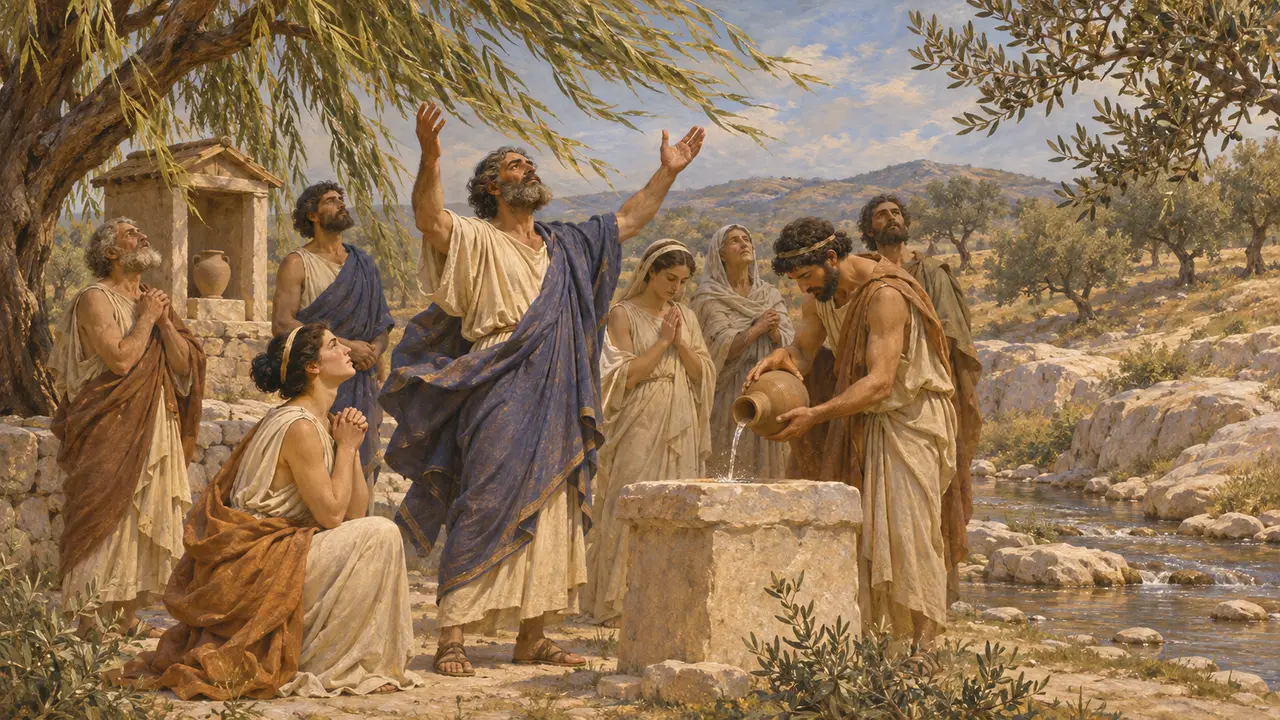
Ancient accountHerodotus reports that the commanders built a palisade from the wreckage and that the magi made offerings and chanted spells to the wind. They also sacrificed to Thetis and the sea nymphs, because the coast was said to be sacred to Thetis. On the fourth day the storm stopped. Herodotus adds, with some doubt, that it may simply have died down of its own accord.
Herodotus 7.191
Boreas, kinsman of the Athenians
Later legendThe Athenians said that an oracle had told them to call on their son-in-law for help. They took this to mean Boreas the north wind, who in myth had married the Athenian princess Oreithyia. They prayed to him, afterwards credited him with the storm and built him a shrine beside the Ilissus. Herodotus does not decide whether Boreas was the cause, and the tale reflects Athenian pride more than the weather of 480.
Herodotus 7.189
How many ships were really lost
DisputedHerodotus gives the King's fleet 1,207 triremes and says no fewer than four hundred were wrecked here, with a further two hundred lost in a second storm off Euboea. Many historians think the starting figure was inflated and that the storm losses help bring Herodotus's total down to a size that fits the later fighting. Others accept heavy losses but not his exact numbers.
J. F. Lazenby, The Defence of Greece 490-479 BC, 1993
Sources
- Herodotus 7.183-192
- Herodotus 8.13
- Herodotus 7.89
- J. F. Lazenby, The Defence of Greece 490-479 BC, 1993
- P. Green, The Greco-Persian Wars, 1996
- P. Briant, From Cyrus to Alexander, 2002