Euboea
Long Aegean island off Attica and Boeotia, site of Eretria and Artemisium, 490 and 480 BCE
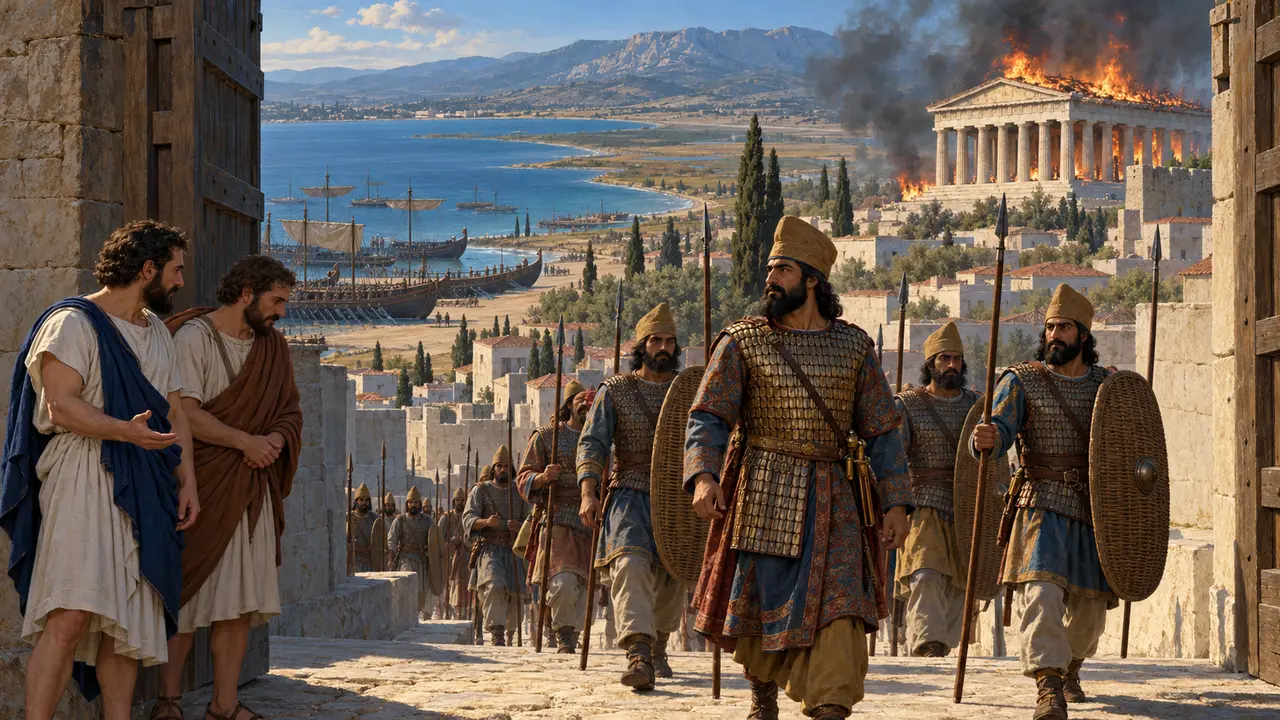
Euboea is the long island that lies along the east coast of mainland Greece, separated from it by a narrow strait. The Persians destroyed its city Eretria in 490, and off its northern shore the Greek fleet fought Xerxes' ships at Artemisium in 480. The island therefore figures in both Persian invasions.
In the game: The game names Euboea only in the event articles on the fall of Eretria and the battle of Artemisium. It has no mechanic of its own.
An island beside the mainland
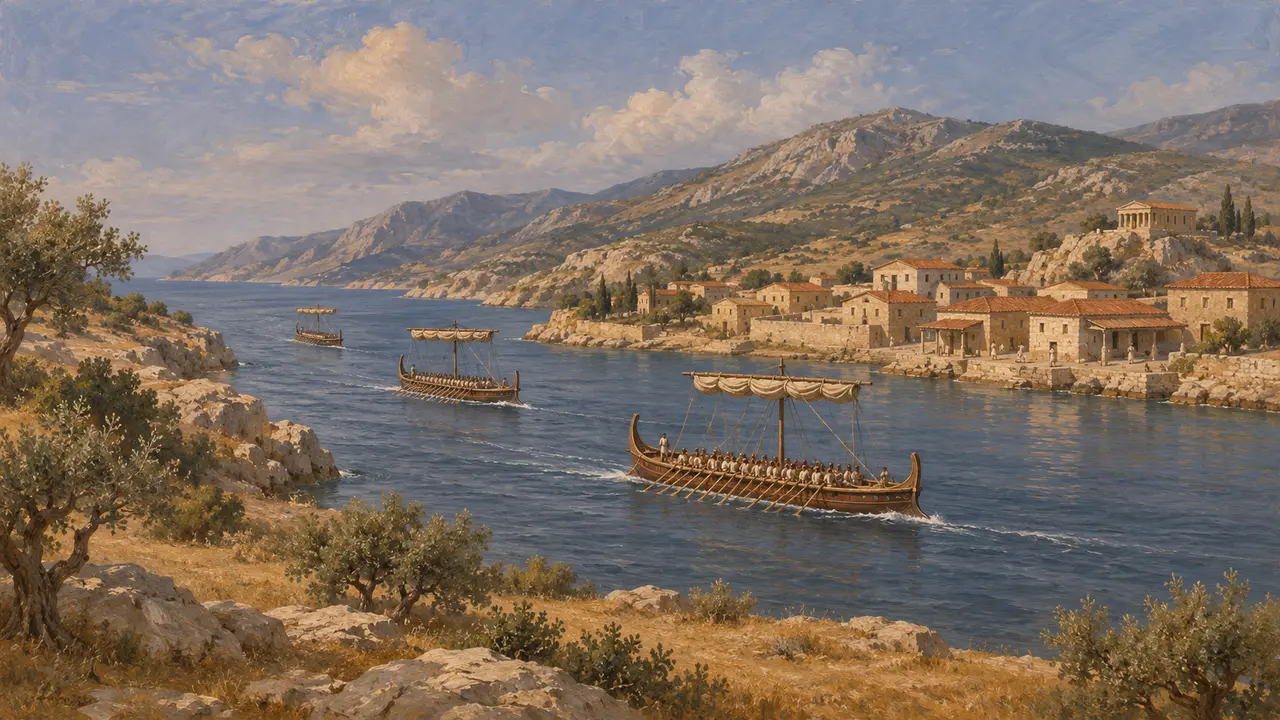
Ancient accountHerodotus describes Euboea as an island lying close to the mainland, and his narrative of 480 has fleets moving along its coast. Eretria and Chalcis are its best-known cities in his account. The narrow channel between island and mainland is the one later called the Euripus.
Herodotus 8.1-21
Eretria in 490
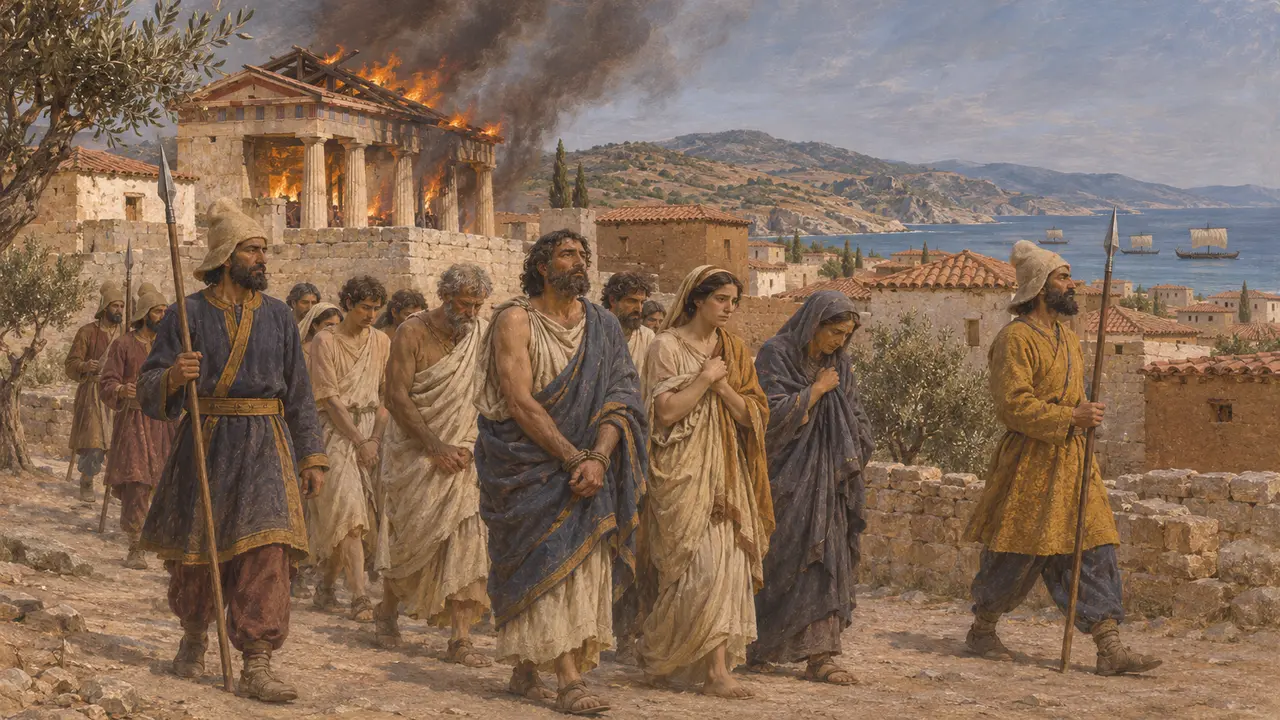
Ancient accountHerodotus says the force of Datis and Artaphernes sailed to Euboea after Naxos and the islands, and that Eretria resisted for six days. He reports that on the seventh two prominent Eretrians betrayed the city, that the temples were burned and that the people were enslaved. He gives the cause as Eretria's help to Sardis in 498, when it sent five ships to the Ionians.
Herodotus 6.98-101
Artemisium in 480
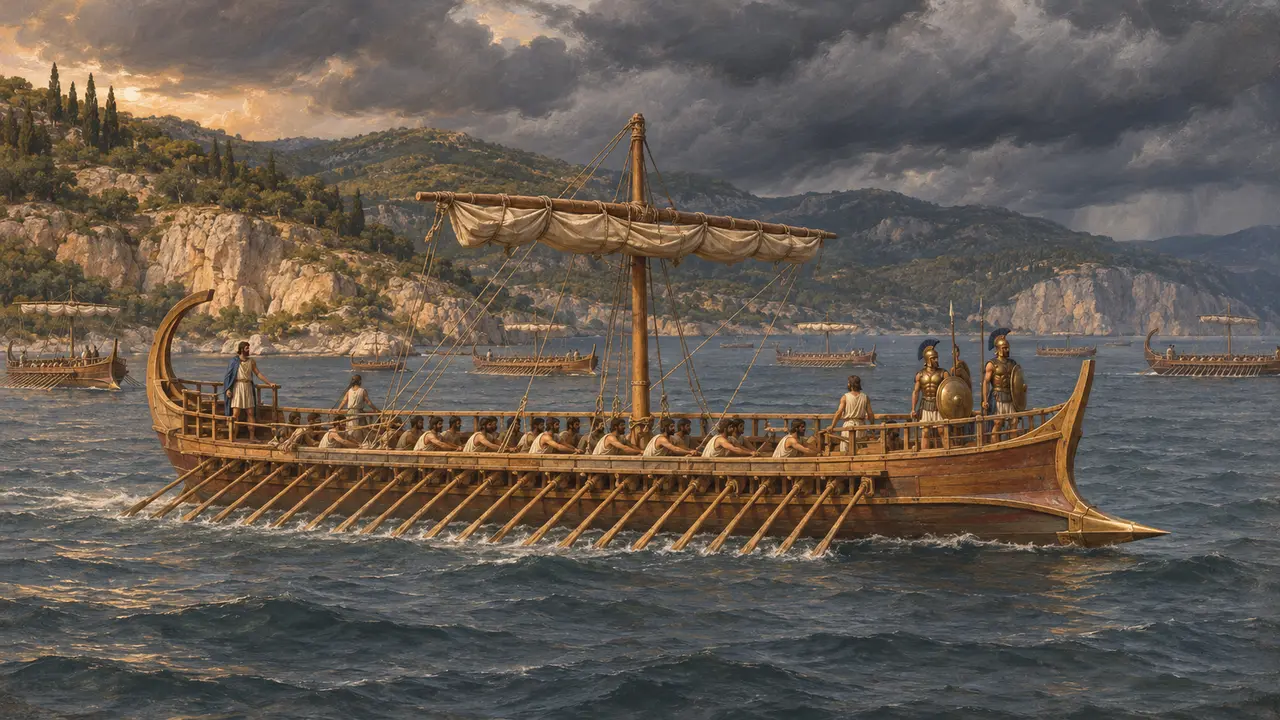
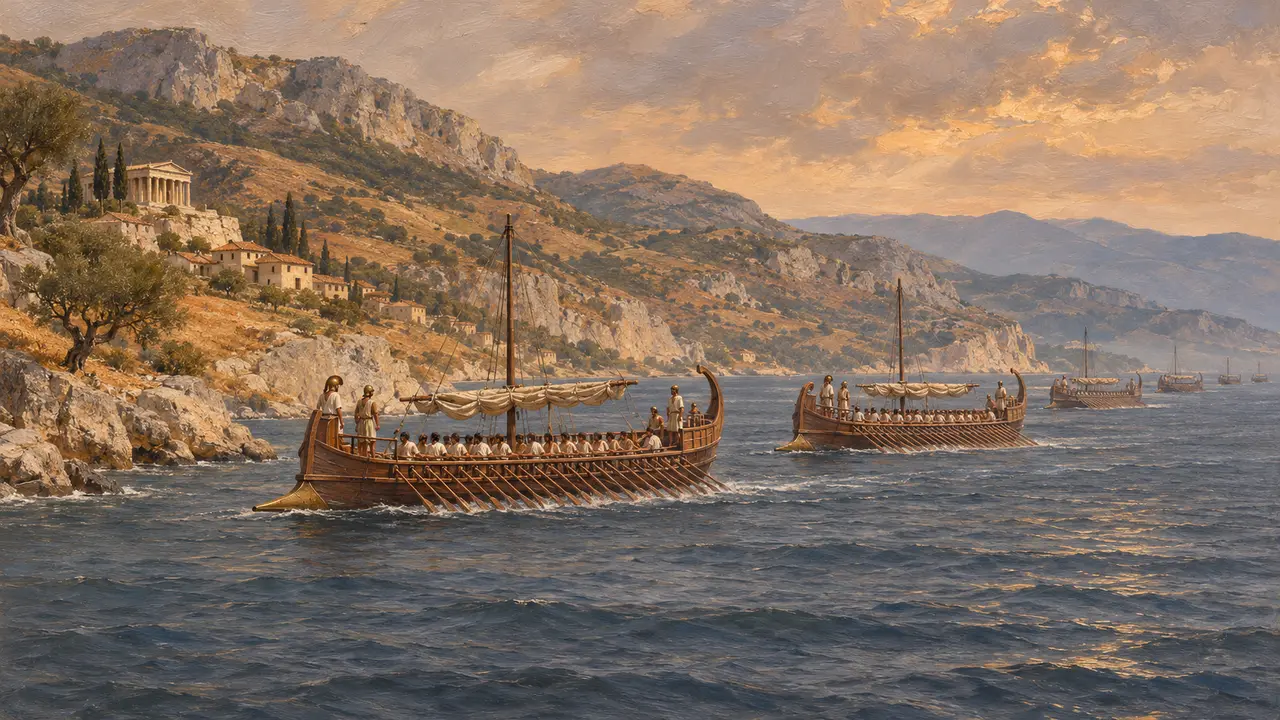
Ancient accountHerodotus places the Greek fleet at Artemisium, on the north coast of Euboea, while Leonidas held Thermopylae. He tells of a Persian squadron sent round the south of the island that was wrecked by a storm, and of fighting on several days that ended without a clear result. The Greeks then withdrew when the pass fell.
Herodotus 7.175-195
Numbers and motives
DisputedThe sizes Herodotus gives for the Persian and Greek fleets are hard to check, and historians generally think his totals for the Persian fleet are inflated. The plan to trap the Greeks by sending ships around Euboea is known only from his account. Modern writers also differ on how to judge Artemisium, since the Greek retreat followed the loss of Thermopylae rather than a defeat at sea.
P. Briant, From Cyrus to Alexander, 2002
Sources
- Herodotus 6.98-101
- Herodotus 6.119
- Herodotus 7.175-195
- Herodotus 8.1-21
- P. Briant, From Cyrus to Alexander, 2002