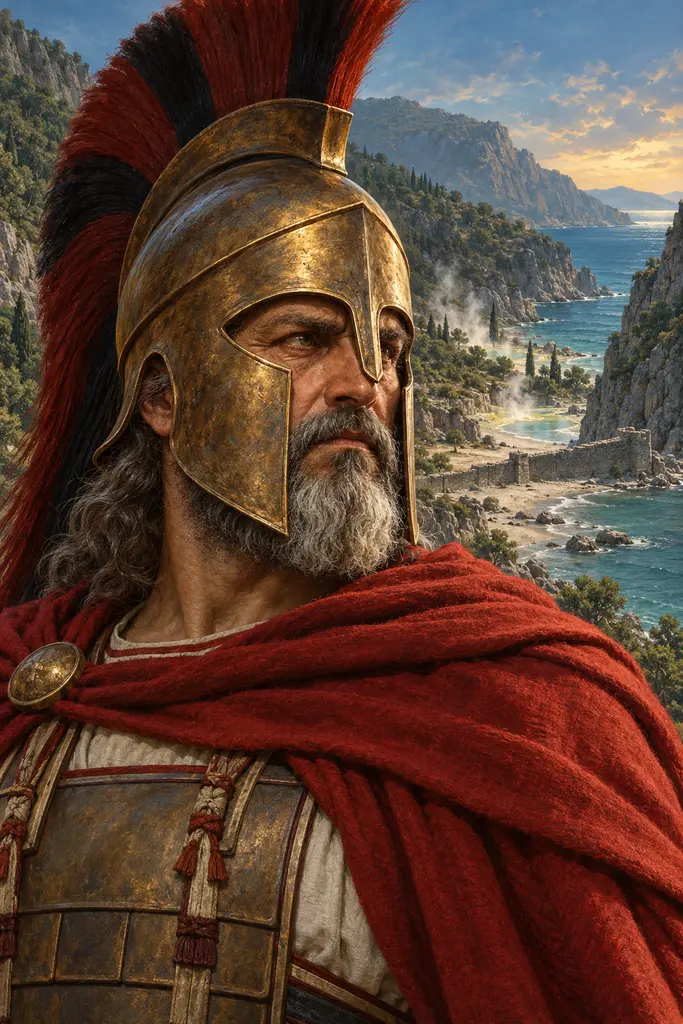
Leonidas
Agiad king of Sparta and commander at Thermopylae, died 480 BCE
In the game: Level 10: The Hot Gates
Leonidas was a king of Sparta from the Agiad house. He commanded the Greek force that held the pass of Thermopylae against Xerxes in 480, and he died there after the Persians found a way round. Almost everything known of him comes from Herodotus, and later Greek writers made his death the model of Spartan courage.
In the game: The chronicle names Leonidas as the Spartan king at Thermopylae. Its note leaves out the Thebans, who Herodotus says also stayed, though they later surrendered to the Persians.
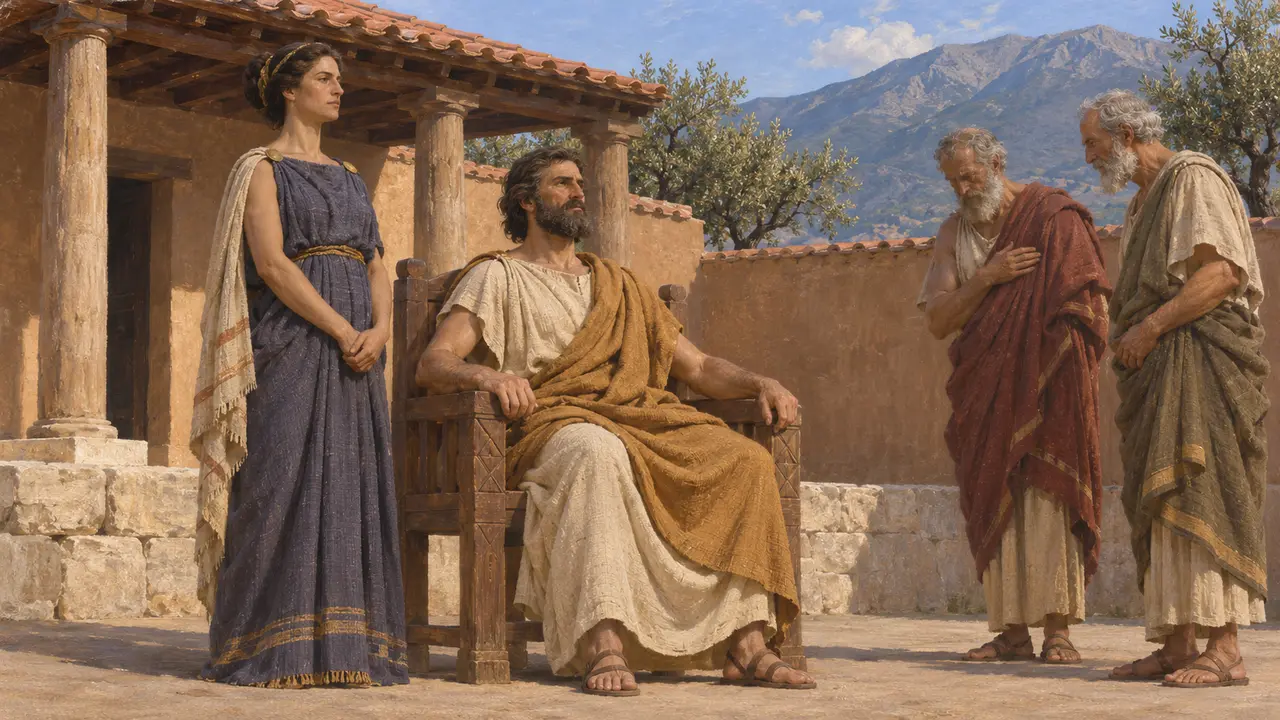
A younger son of the Agiad house
Ancient accountHerodotus says Leonidas was a son of King Anaxandridas by his first wife, while his half-brother Cleomenes, son of a second wife, was born earlier and became king first. Leonidas was not expected to rule, but his elder full brother Dorieus died in Sicily. When Cleomenes died, about 490, Leonidas took the throne, and he was married to Gorgo, the daughter of Cleomenes.
Herodotus 5.39-41, 7.204-205, 7.239
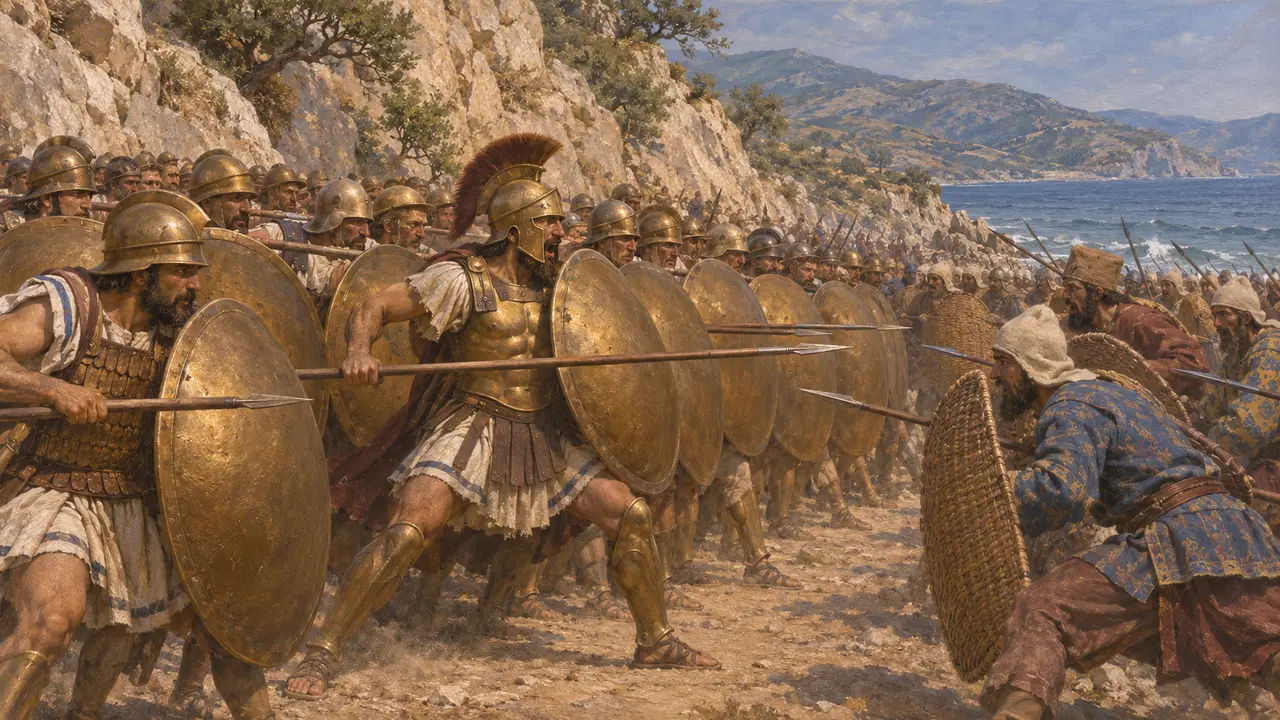
Holding the pass
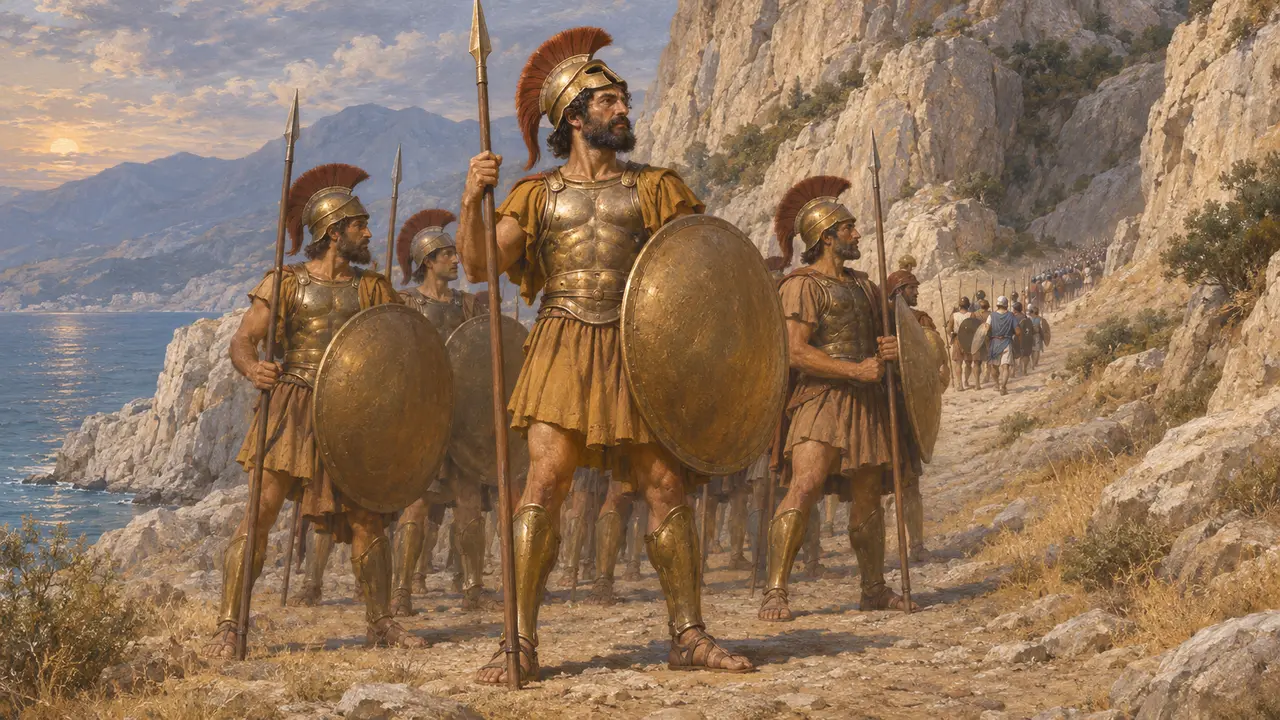
Ancient accountIn summer 480 Leonidas led a force that Herodotus lists contingent by contingent: three hundred Spartans, chosen from men who had living sons, with other Peloponnesians, Thespians, Thebans, Phocians and Locrians. Modern totals come to roughly six or seven thousand. Herodotus says the main Spartan army stayed at home for the Carneia festival. For two days the Greeks threw back attacks in the narrow pass, including attacks by the Immortals.
Herodotus 7.202-212
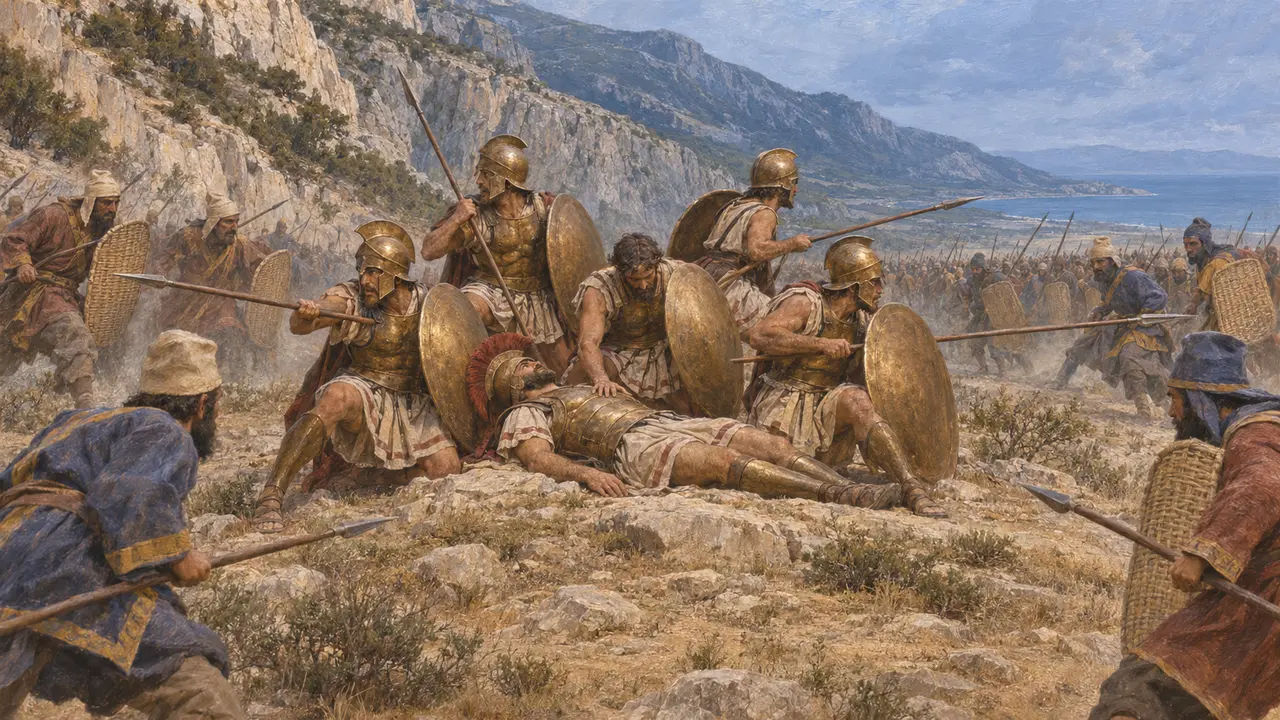
The path and the last stand
Ancient accountEphialtes of Malis guided Hydarnes and his troops over the Anopaea path by night, and the Phocians guarding it fell back. Herodotus gives two versions of what followed: Leonidas sent most of the allies away, or they left of their own accord. He says Leonidas fell fighting, the Greeks fought over his body, and the last of them died on a low hill. He adds that Xerxes had the dead king's head cut off and set on a stake.
Herodotus 7.213-225, 7.238
Why he stayed
DisputedHerodotus says an oracle had warned that either Sparta or a Spartan king must fall, and that Leonidas wanted glory for Sparta. He also claims the Thebans were held as hostages, a charge Plutarch later called malice against Thebes. Modern historians debate whether Leonidas was covering the allies' retreat or obeying Spartan custom. No Persian source mentions the battle, and Herodotus's figures for Xerxes' army and losses are thought far too high.
Herodotus 7.220-222; Plutarch, On the Malice of Herodotus; P. Cartledge, Thermopylae, 2006
Sayings and bones
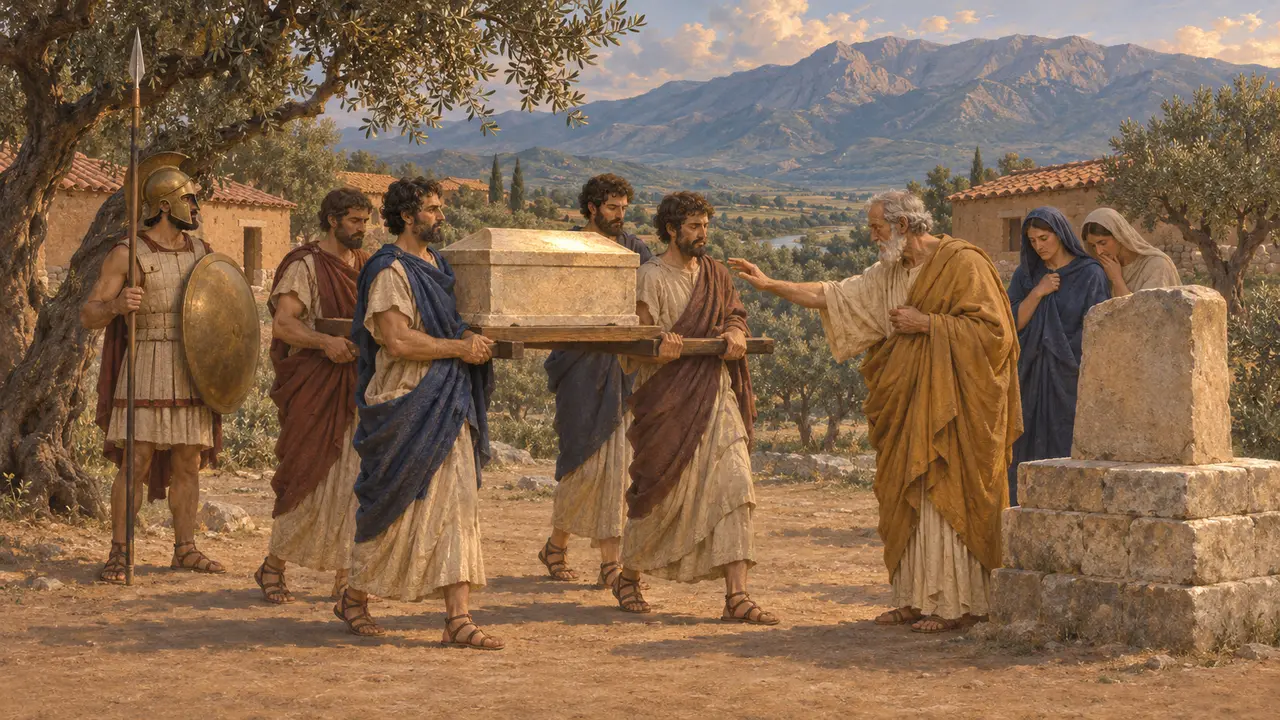
Later legendLater writers added sayings and scenes. Plutarch, writing some six centuries on, has Leonidas tell the Persians to come and take the Greek arms themselves, and Diodorus describes a night raid on Xerxes' tent. The travel writer Pausanias says the king's bones were brought home to Sparta forty years after the battle. None of these stories can be checked against earlier sources.
Plutarch, Sayings of Spartans; Diodorus 11.9-10; Pausanias 3.14.1
Sources
- Herodotus, Histories, books 5 and 7
- Diodorus 11.4-11
- Plutarch, Sayings of Spartans; On the Malice of Herodotus
- Pausanias, Description of Greece 3.14.1
- P. Cartledge, Thermopylae: The Battle That Changed the World, 2006
- J. F. Lazenby, The Defence of Greece 490-479 BC, 1993