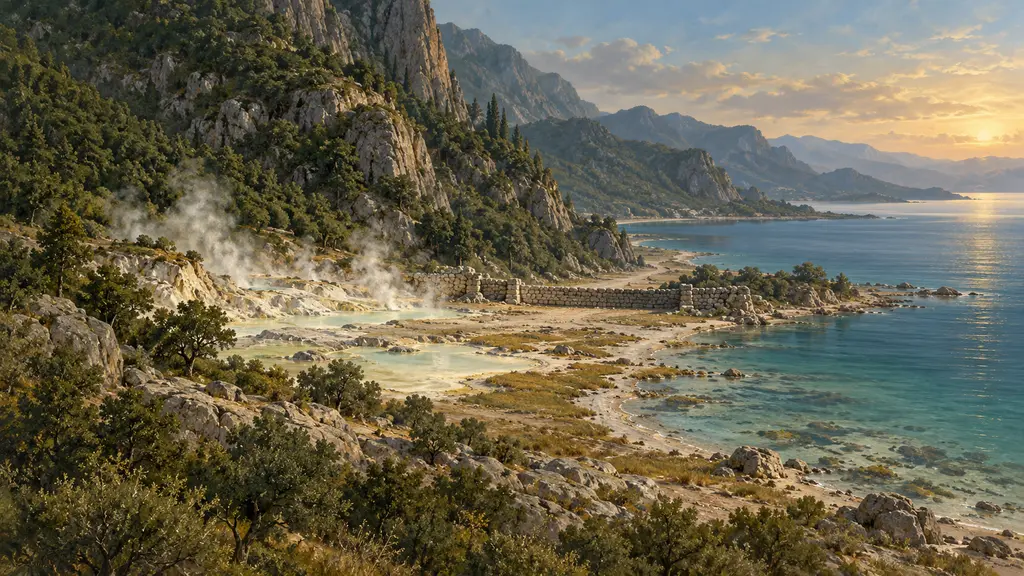
The Anopaea path
Mountain track behind the pass of Thermopylae, central Greece, used in 480 BCE
In the game: Level 10: The Hot Gates
The Anopaea was a track over the mountains above Thermopylae that let an army leave the coastal pass and come down behind it. In 480, after two days of failed attacks, Xerxes sent Hydarnes and his picked troops along it by night. Their descent behind the Greek line ended the defence of the pass and opened central Greece to the Persian army.
In the game: The game presents the Anopaea as the path round Thermopylae shown by Ephialtes. This follows Herodotus, who also records other claimed guides and reports that locals already knew the route.
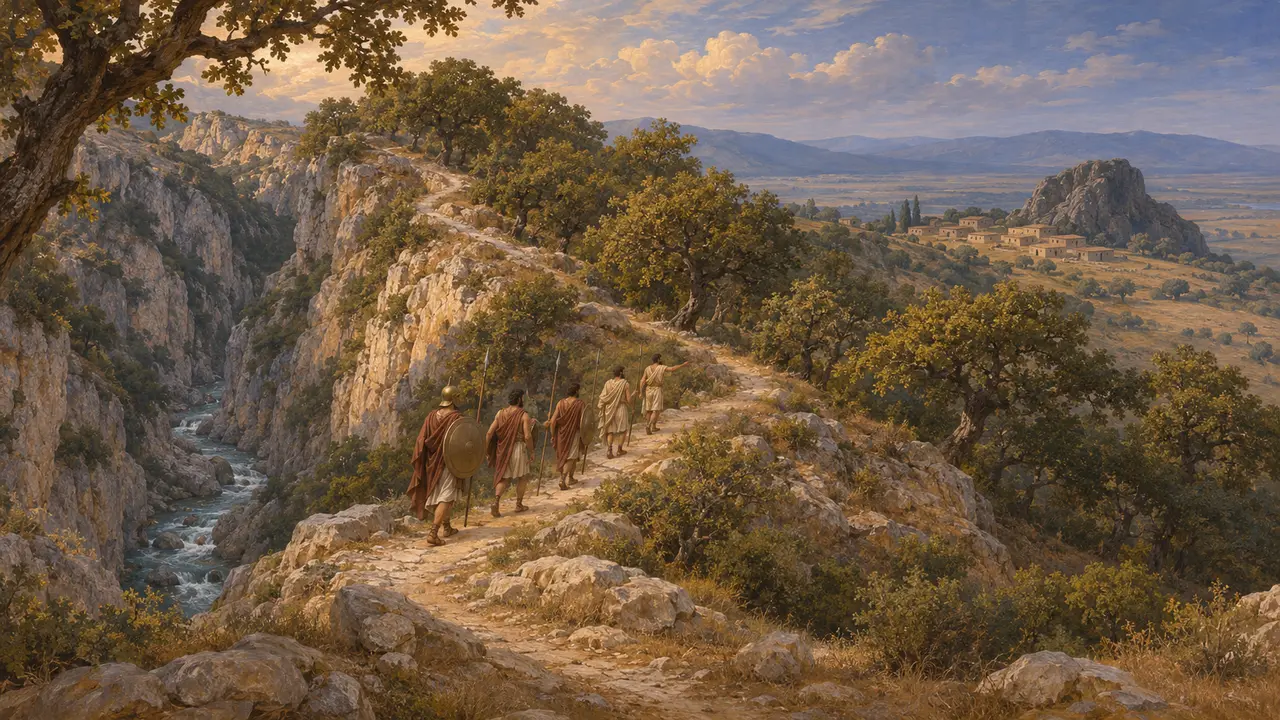
The path as Herodotus describes it
Ancient accountHerodotus says the path began at the gorge of the Asopus river and shared its name, Anopaea, with the mountain it crossed. It ran along the ridge and came down at Alpenus, the first Locrian town, near a rock called Melampygus. He adds that the Malians had found it long before and led the Thessalians along it to attack the Phocians.
Herodotus 7.215-216
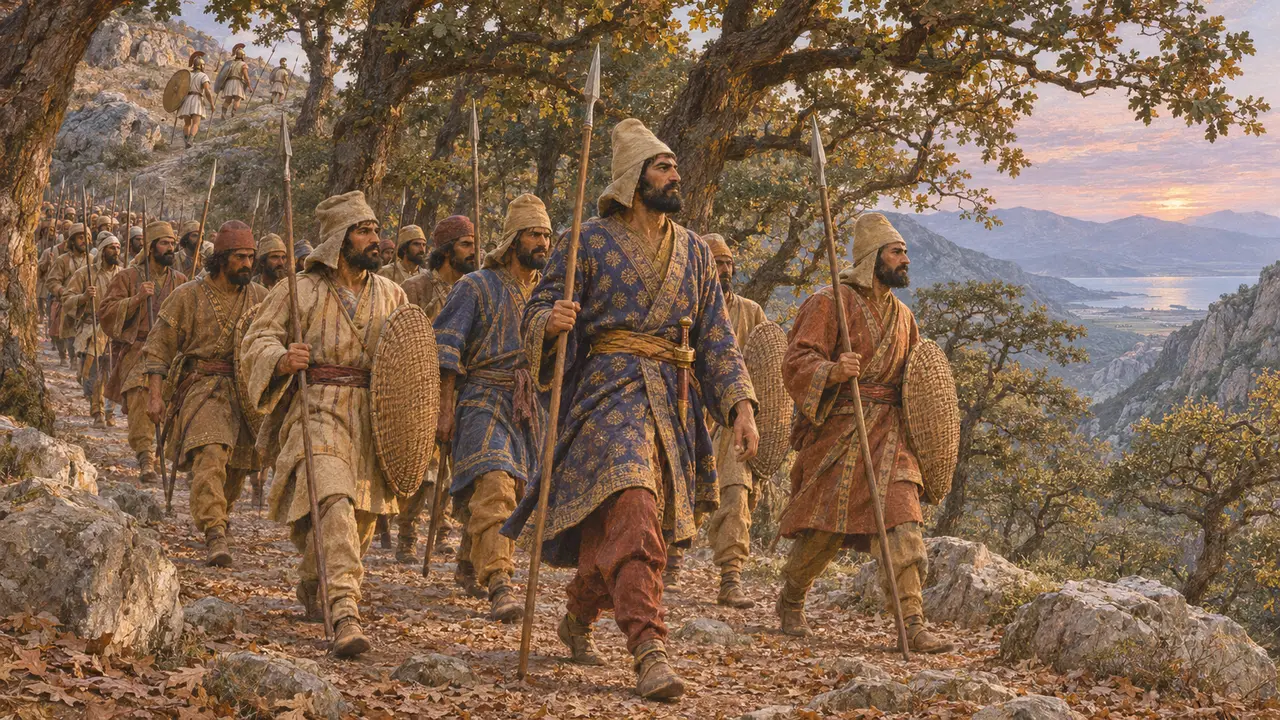
The night march of Hydarnes
Ancient accountAccording to Herodotus, Hydarnes set out at the hour when lamps were lit, crossed the Asopus and climbed through the night. At dawn his men reached the top. A thousand Phocians on guard there heard them tramping through the fallen leaves of the oak woods in the still air. The Phocians withdrew to the summit to make a stand, but Hydarnes ignored them and went on down towards the pass.
Herodotus 7.215-218
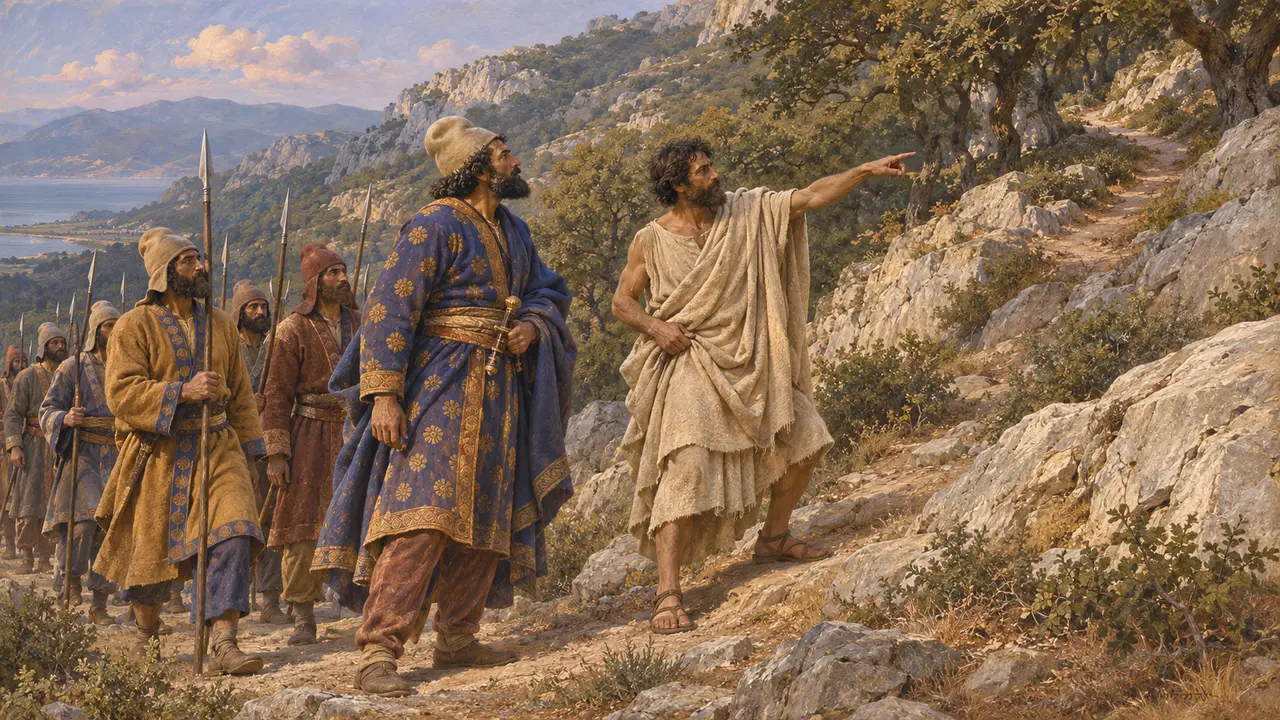
Who showed the way
DisputedHerodotus names Ephialtes, son of Eurydemus, a Malian who hoped for a reward from Xerxes. He also reports a rival story naming Onetes of Carystus and Corydallus of Anticyra, which he rejects. No Persian text mentions Thermopylae, so the Persian side of the story is unknown. Since the Malians already knew the track, historians think the Persians could have found guides among several local people.
Herodotus 7.213-214
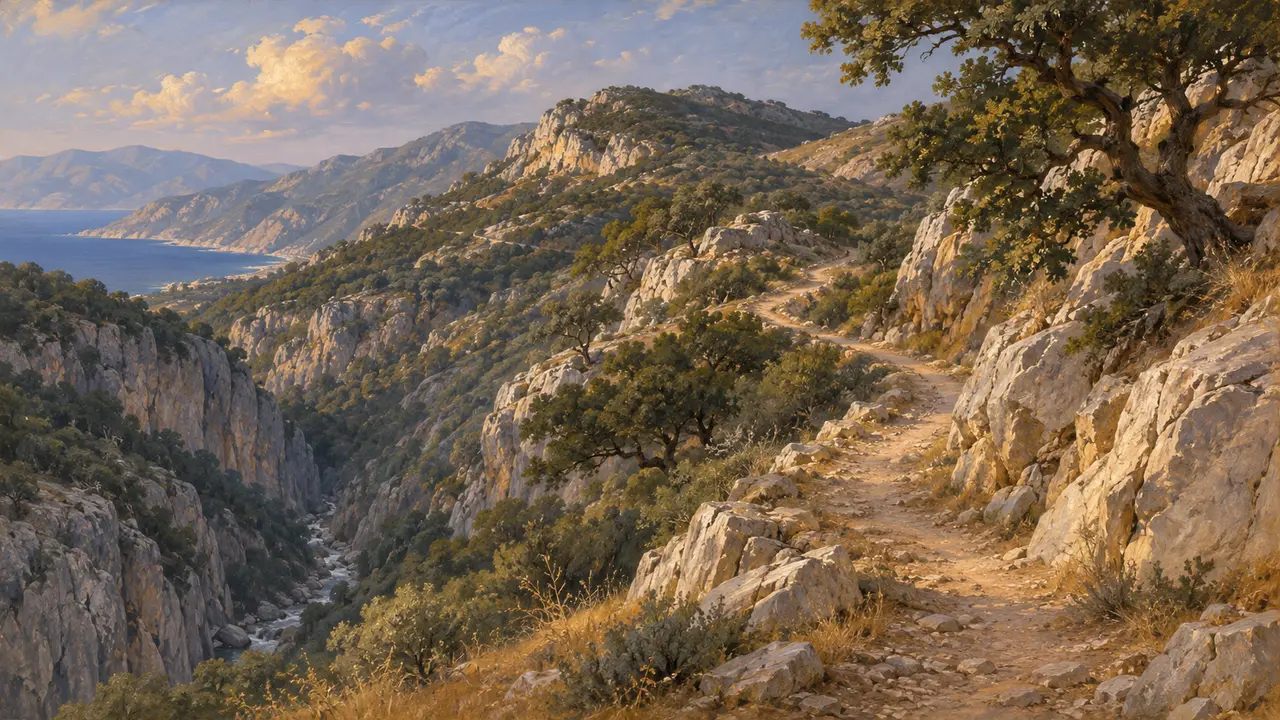
Where the route ran
DisputedModern topographers have walked the hills above Thermopylae and do not agree on the exact line. They differ over how far the route followed the Asopus gorge and which ridge it crossed before coming down near Alpenus. River silt has since pushed the coastline far out, so the ancient narrows are now a broad plain. This makes the ground hard to match with Herodotus.
P. W. Wallace, The Anopaia Path at Thermopylai, 1980
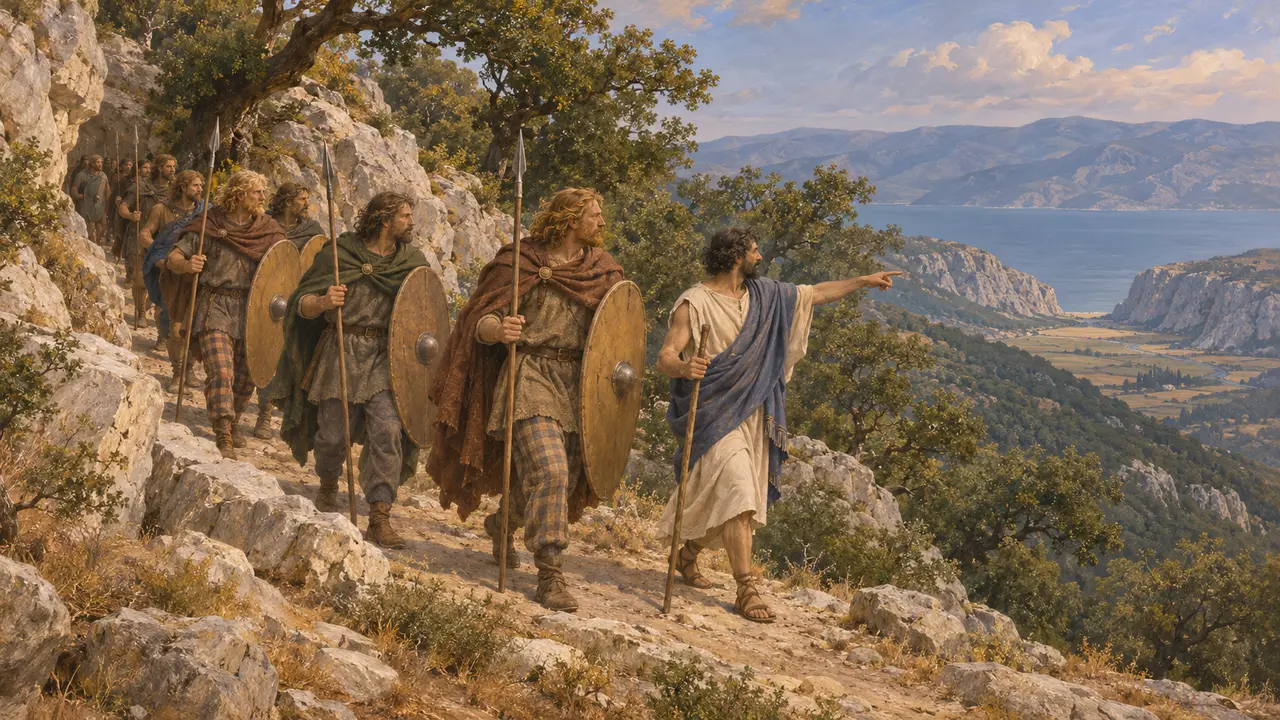
Later armies on the same heights
Ancient accountLater writers describe the defence at Thermopylae being turned in the same way again. Pausanias says the Gauls who invaded Greece in 279 were led round over the mountain, as the Persians had been. Plutarch tells how Cato climbed the heights in 191 to outflank Antiochus III for Rome. These later cases show that the pass could not be held without guarding the hills above it.
Pausanias 10.22; Plutarch, Cato the Elder 13
Sources
- Herodotus 7.212-219
- Pausanias 10.22
- Plutarch, Cato the Elder 13
- P. W. Wallace, The Anopaia Path at Thermopylai, 1980
- J. F. Lazenby, The Defence of Greece 490-479 BC, 1993
- P. Cartledge, Thermopylae, 2006