Encyclopedia › Soldiers and ships
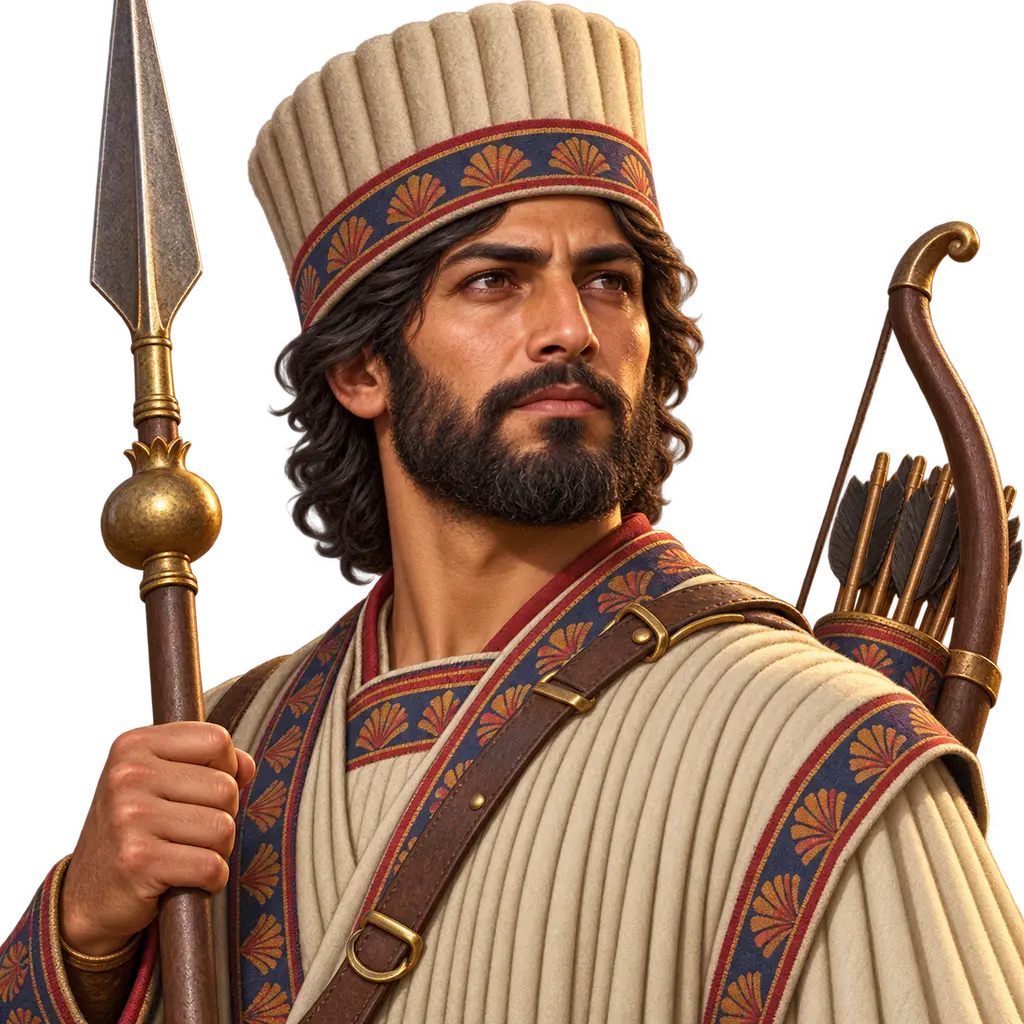
Immortal
Picked Persian infantry of ten thousand men, as Herodotus describes them, in 480 BCE
In the game: Level 10: The Hot Gates
The Immortals were a body of ten thousand chosen Persian foot soldiers. Herodotus describes them in Xerxes' army of 480, commanded by Hydarnes. They are the best-known unit of the King's army, but nearly everything about them, including their name, comes from Greek writers rather than from Persian documents.
In the game: When an Immortal falls, the barracks queues and pays for his replacement, following Herodotus's account of the name. Making them a heavy shield unit simplifies him: he arms them with spear, bow and wicker shield.
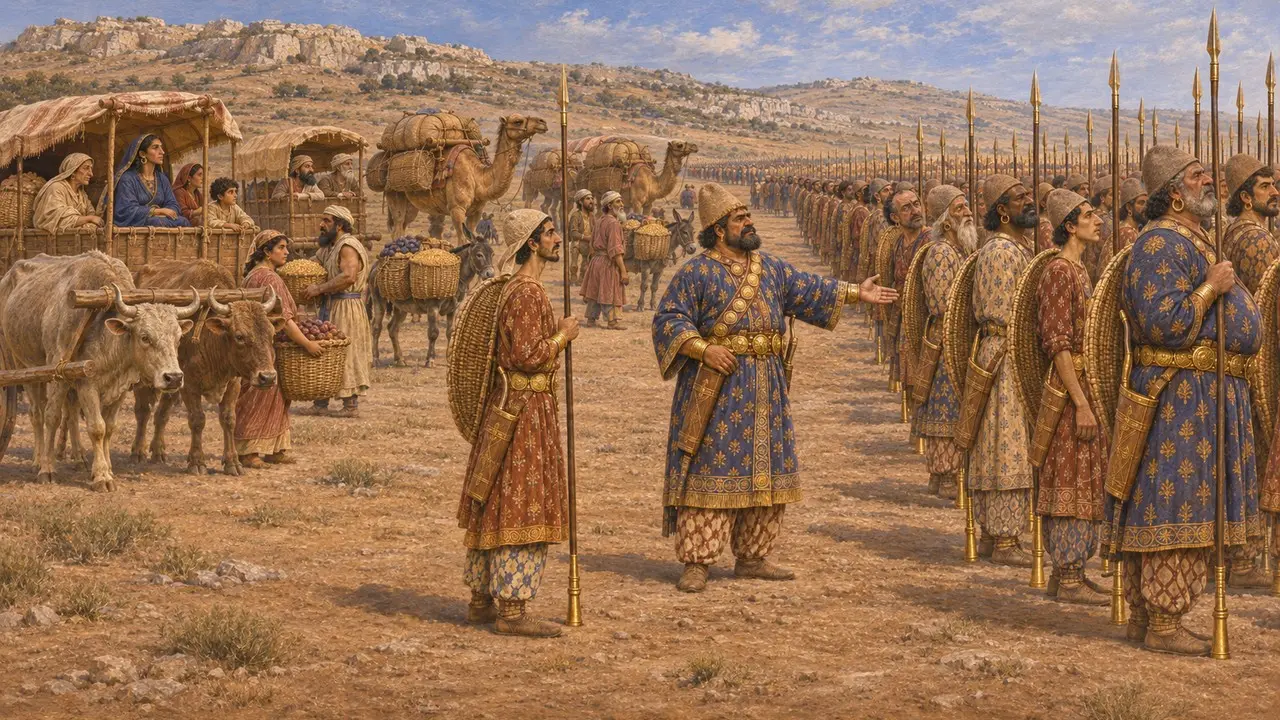
Herodotus's ten thousand
Ancient accountHerodotus says the Immortals were picked Persians led by Hydarnes son of Hydarnes. He explains the name by their number, which never changed: when a man died or fell sick, another was chosen in his place, so the unit always stood at ten thousand. He adds that they outshone the rest of the army in their gold ornaments, and that wagons carried their women and servants while camels and pack animals brought their own food.
Herodotus 7.83
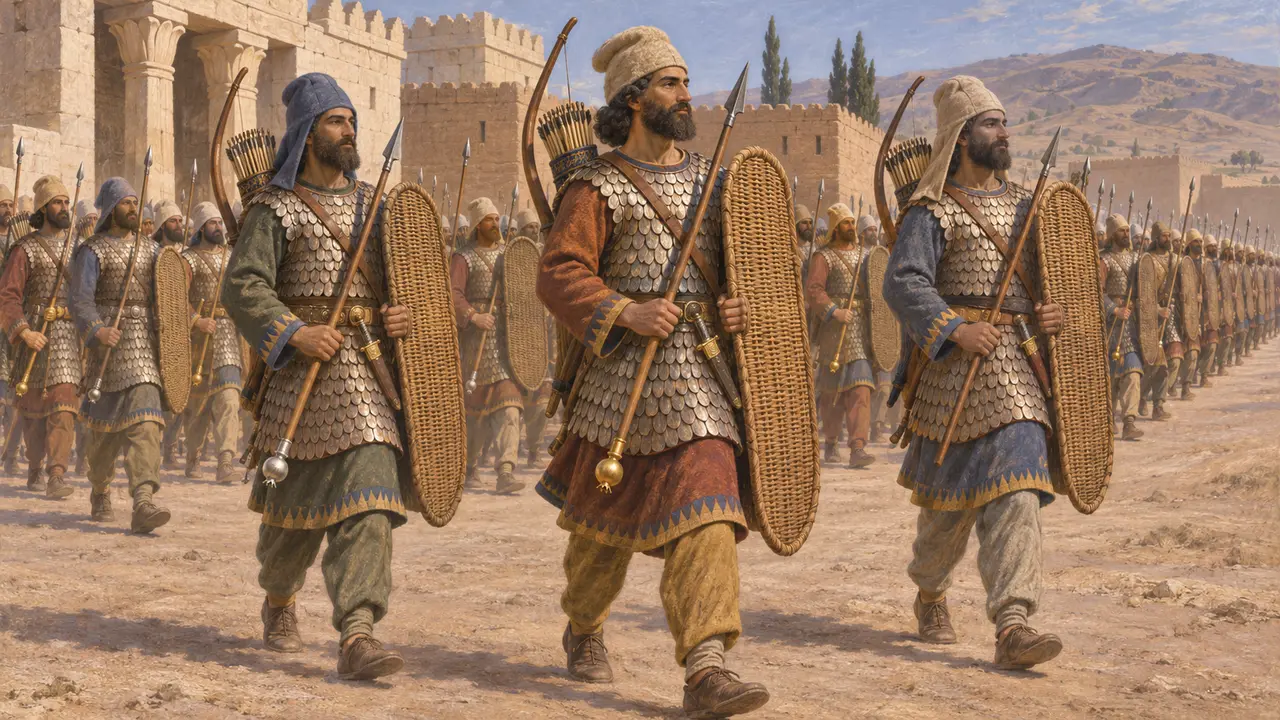
Arms and dress
Ancient accountHerodotus gives the Immortals the same gear as the other Persian foot. They wore soft felt caps, sleeved tunics and scale armour like fish scales, and carried wicker shields, short spears, large bows with reed arrows and daggers. In Xerxes' procession a thousand spearmen near the King had golden apples on their spear butts. Behind them came ten thousand foot: a thousand with golden pomegranates and nine thousand with silver.
Herodotus 7.61; Herodotus 7.83; Herodotus 7.41
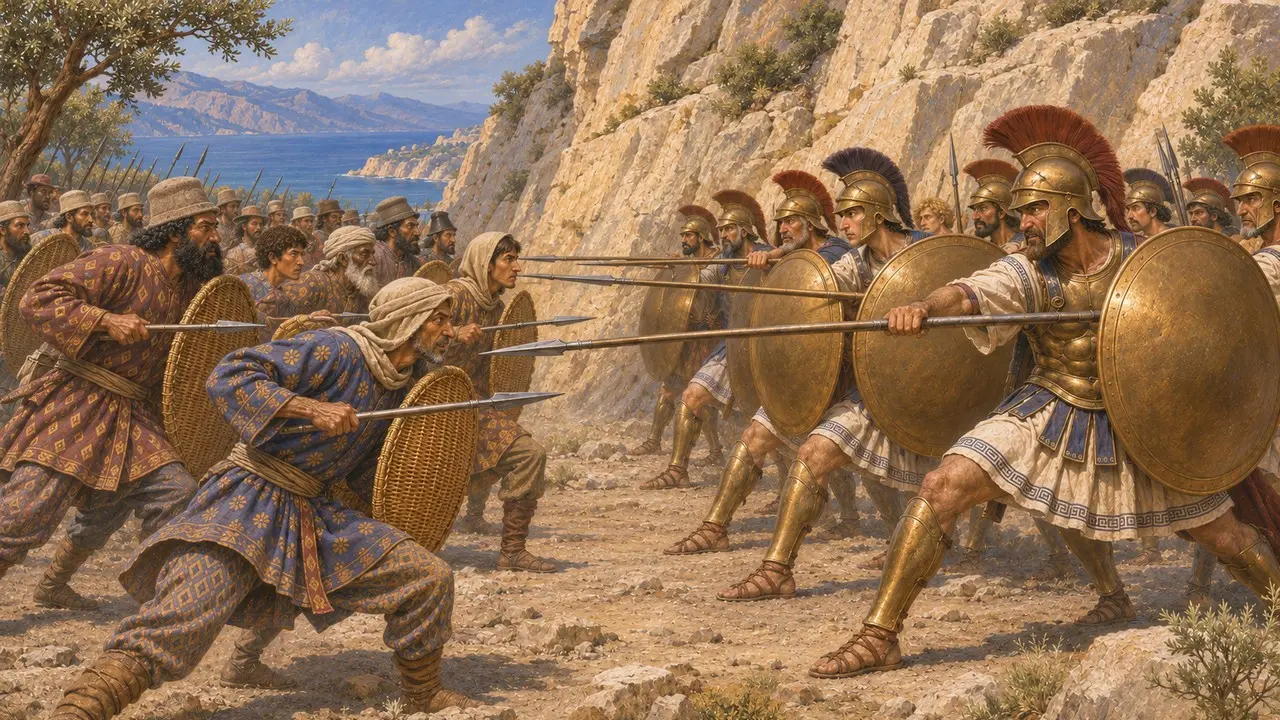
Thermopylae and after
Ancient accountHerodotus says Xerxes sent the Immortals against the pass at Thermopylae after the Medes and Cissians failed, and that they did no better, because their spears were shorter than those of the Greeks. Guided by Ephialtes, Hydarnes then led them over the mountain path at night and came behind the defenders. After Salamis, Herodotus says, Mardonius kept the Immortals in Greece, though Hydarnes chose to stay with the King.
Herodotus 7.210-211; Herodotus 7.213-218; Herodotus 8.113
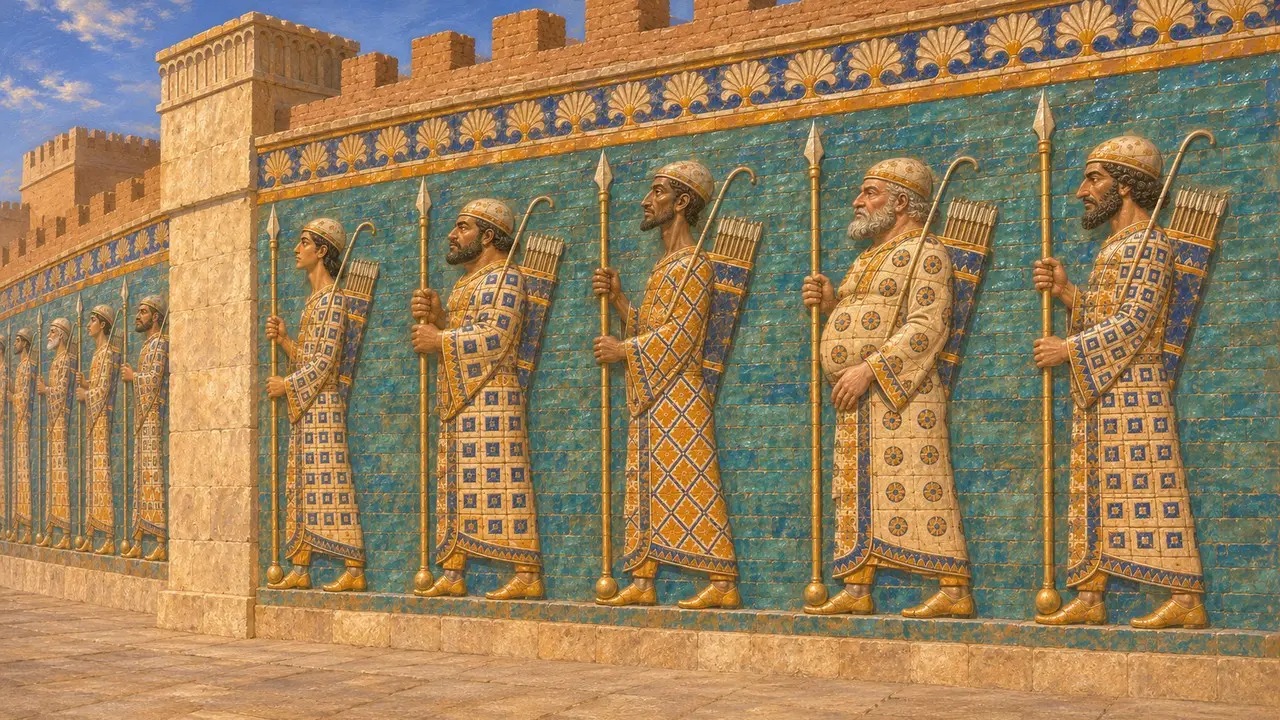
Guards in brick and stone
In the recordGlazed-brick panels from Darius's palace at Susa show long rows of guards in robes, holding spears with round butts and carrying bows and quivers. Reliefs at Persepolis show similar spearmen. These images are often linked to the Immortals or to the King's spear-bearers, but no Persian text labels them, so the identification is a modern reading.
Susa glazed-brick friezes, Louvre; E. Schmidt, Persepolis I, 1953
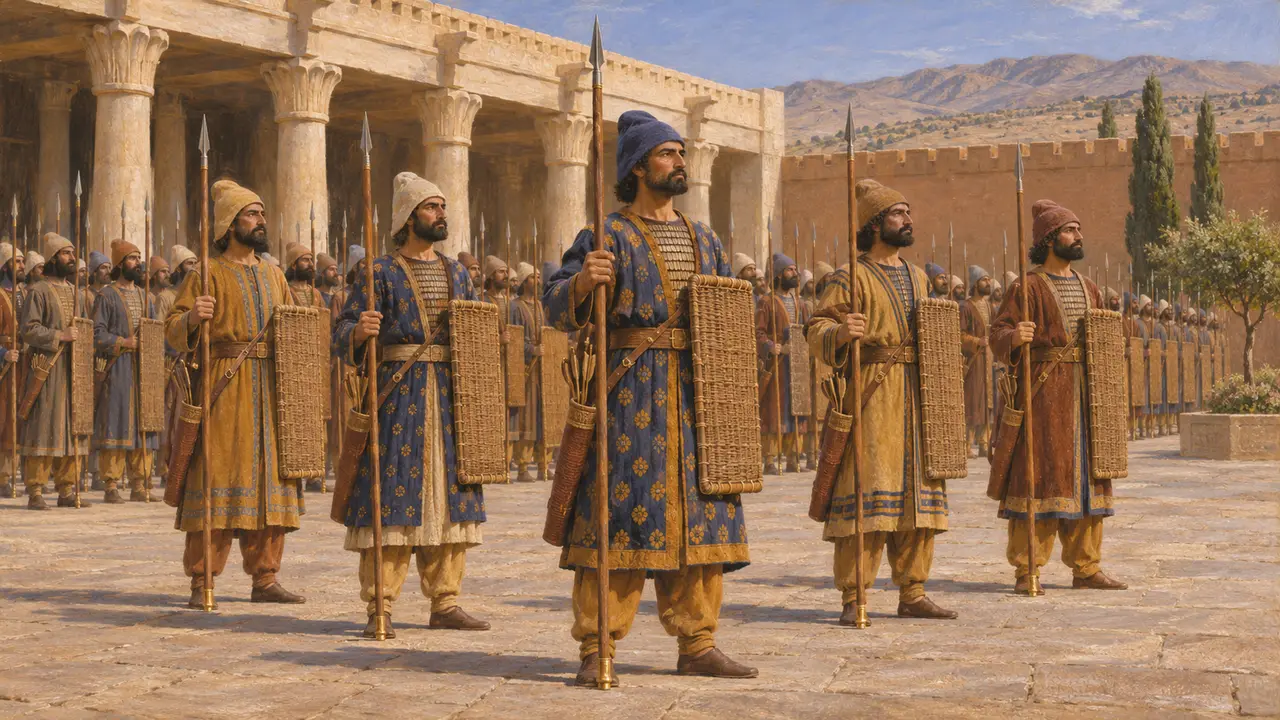
What the name meant
DisputedNo Persian source uses the name Immortals. Some historians suggest the Greeks confused an Old Persian word meaning followers or companions with a similar word meaning deathless; others reject this. Scholars also disagree on how the ten thousand related to the thousand royal spear-bearers, and on whether the unit was a fixed guard or a figure Herodotus used for the King's best troops.
M. Charles, Immortals and Apple Bearers, Classical Quarterly, 2011; P. Briant, From Cyrus to Alexander, 2002
Sources
- Herodotus 7.83
- Herodotus 7.41; 7.61
- Herodotus 7.210-218; 8.113
- P. Briant, From Cyrus to Alexander, 2002
- M. Charles, Immortals and Apple Bearers, Classical Quarterly, 2011
- E. Schmidt, Persepolis I, 1953