Encyclopedia › Soldiers and ships
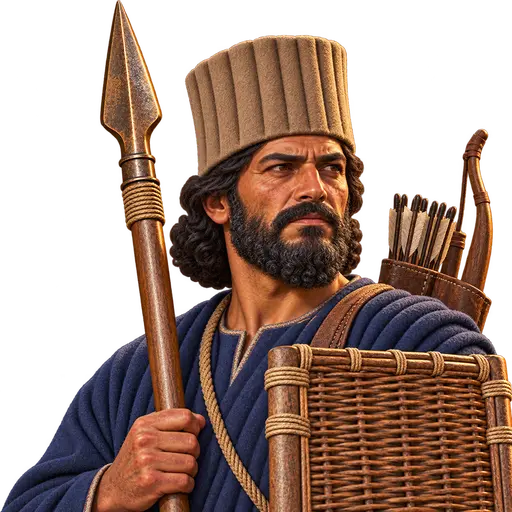
King's Spearman
Persian foot soldier of the royal army and guard, about 530-479 BCE
In the game: Level 1: The Founder's Tomb
The King's spearmen were Persian foot soldiers who marched closest to the ruler and stood guard at his palaces. Persian reliefs and glazed bricks show them in rows, holding spears with round counterweights, while Herodotus describes Persian infantry fighting from behind walls of wicker shields. Together these sources give a picture of the core infantry on which Achaemenid kings relied.
In the game: The game shows the King's Spearman as a trained shield unit with a wicker shield. This merges two things the sources keep apart: the palace guards of the reliefs, often with bows, and Herodotus's shield-wall infantry.
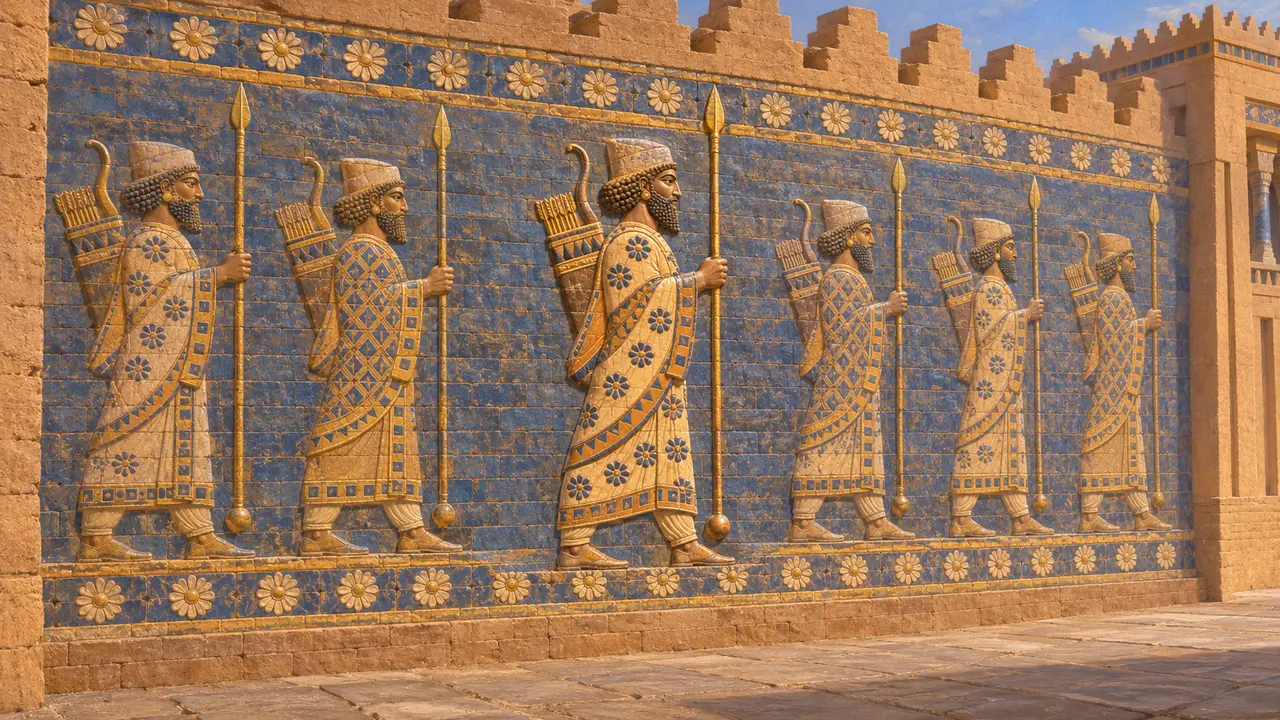
Guards in stone and glazed brick
In the recordThe staircases of the Apadana at Persepolis show long files of guards in Persian and Median dress, holding upright spears with a ball at the butt end. Some carry a bow and quiver as well, and some hold large shields. At Susa, glazed-brick panels from Darius's palace show similar spearmen in richly patterned robes, each with a spear and a bow on his shoulder.
E. F. Schmidt, Persepolis I, 1953; P. O. Harper, J. Aruz and F. Tallon (eds), The Royal City of Susa, 1992
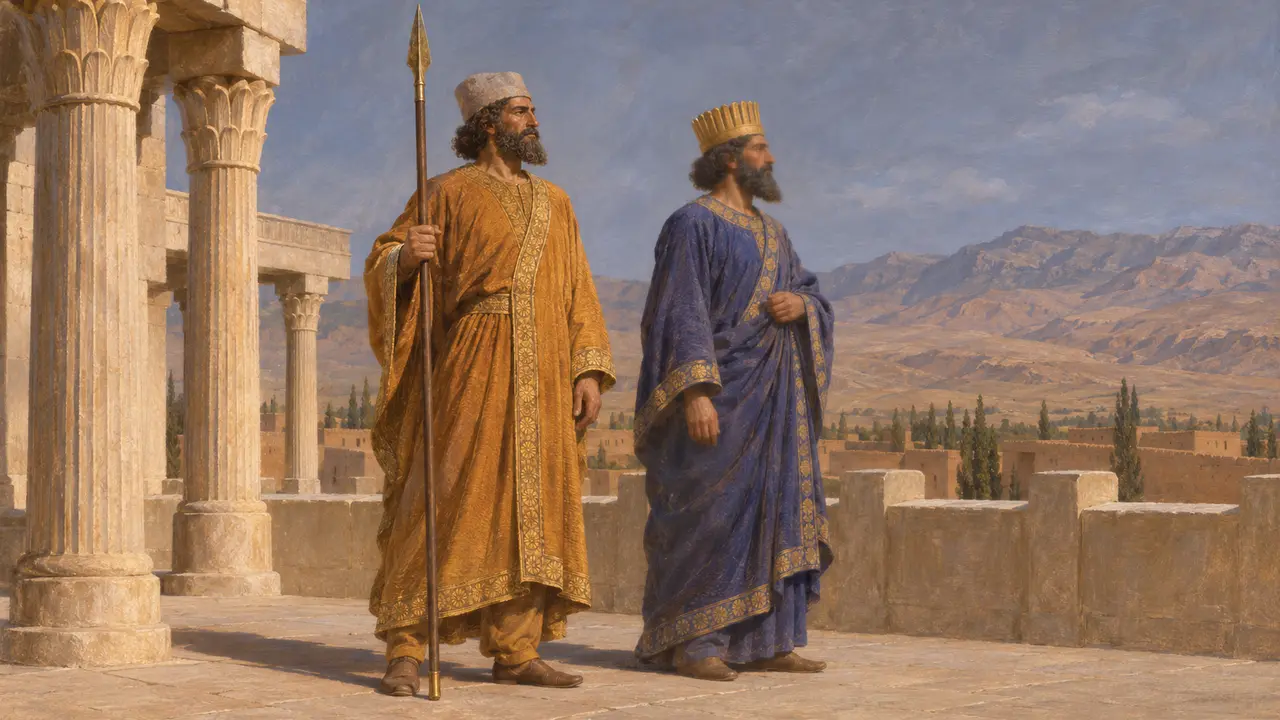
The title of spear-bearer
In the recordBearing the King's spear was an honour of high rank. At Naqsh-e Rostam, a label beside a figure on the tomb of Darius names Gobryas, a Patischorian, as the King's spear-bearer. This shows that the spear stood for close service to the ruler, not only for a soldier's weapon.
DNc
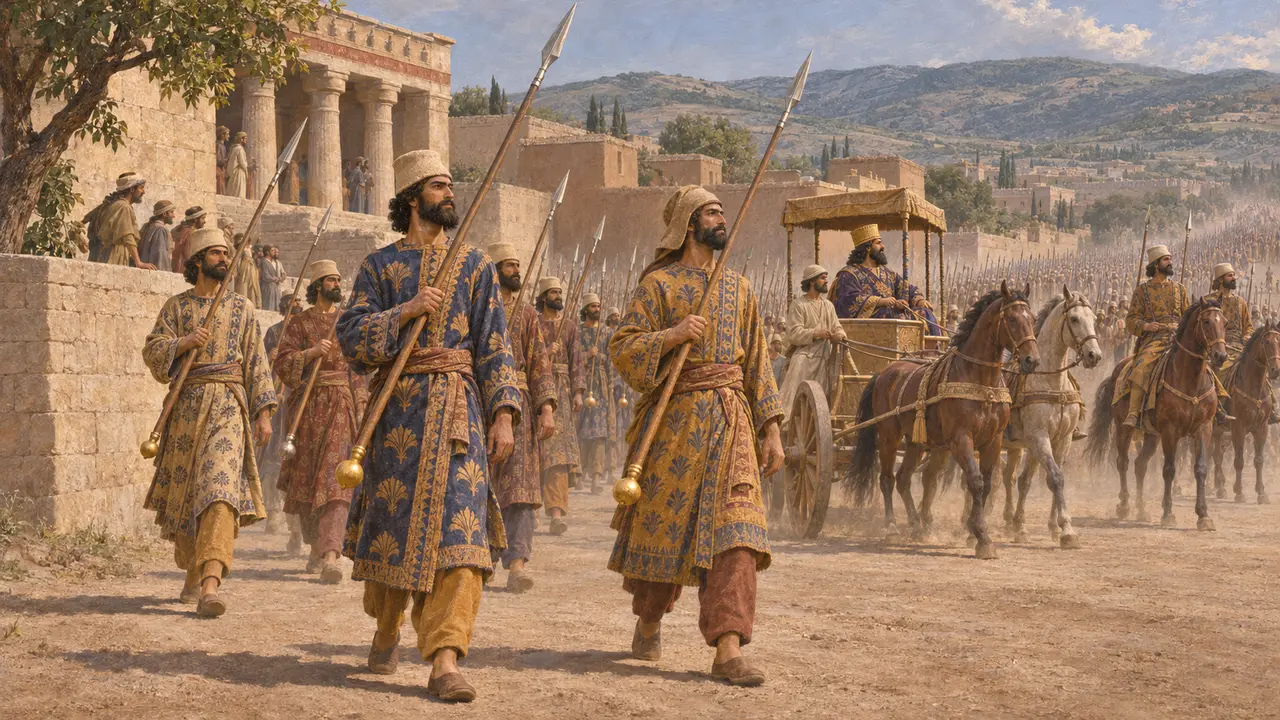
The spearmen around Xerxes
Ancient accountHerodotus describes the order of Xerxes' army as it left Sardis in 480. Near the King's chariot marched a thousand spearmen chosen from the best and noblest Persians, their spears ending at the butt in golden apples. Behind them came picked horsemen and then ten thousand foot, whose spears ended in pomegranates instead of butt-spikes, gold for the outer thousand and silver for the rest. He says nothing about how they were trained or paid.
Herodotus 7.40-41
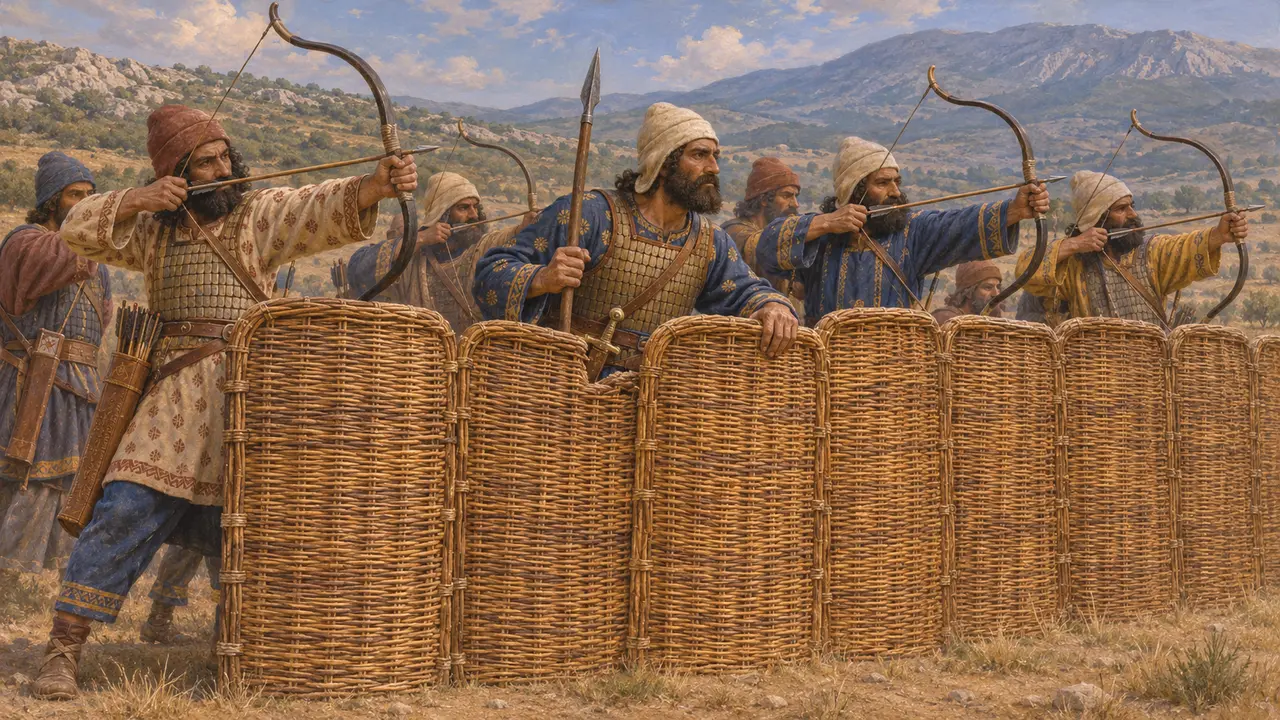
Wicker shields and the shield wall
Ancient accountHerodotus says Persian infantry wore soft felt caps, sleeved tunics and scale armour, and carried wicker shields, short spears, large bows and daggers. At Plataea in 479, he reports, the Persians set their shields together as a barrier and shot from behind it. When the Spartans broke through, the Persians fought bravely but had no heavy armour and lacked skill in close combat.
Herodotus 7.61; Herodotus 9.61-63
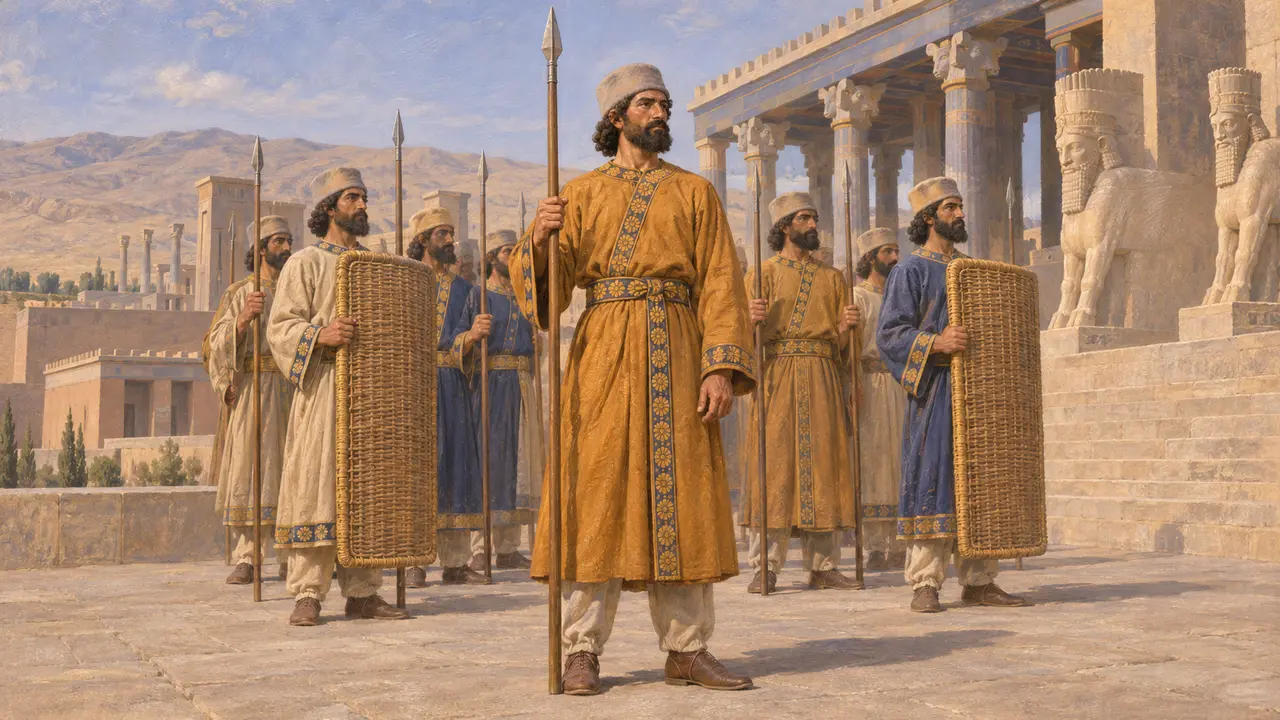
Guards, Immortals and line troops
DisputedHistorians still argue how these groups related. Some identify the relief guards with the ten thousand Immortals of Herodotus, while others see a separate royal guard or simply an ideal image of the Persian army. The word sparabara, often used today for shield-bearing infantry, is a modern term built on the Old Persian word for shield and is not attested as a unit name in surviving texts.
Herodotus 7.83; P. Briant, From Cyrus to Alexander, 2002
Sources
- Herodotus 7.40-41, 7.61, 7.83, 9.61-63
- E. F. Schmidt, Persepolis I, 1953
- DNc
- P. O. Harper, J. Aruz and F. Tallon (eds), The Royal City of Susa, 1992
- P. Briant, From Cyrus to Alexander, 2002
- J. Curtis and N. Tallis (eds), Forgotten Empire, 2005