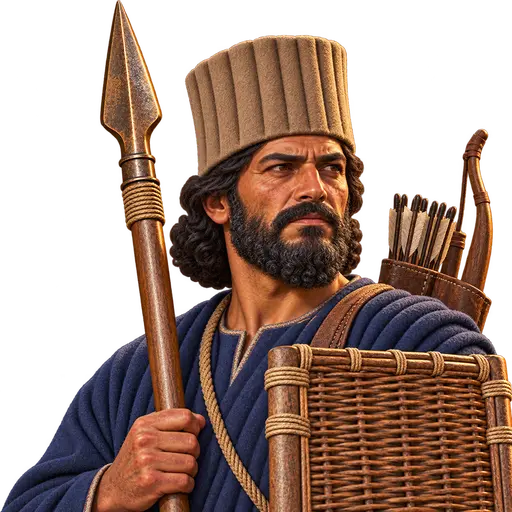
The King's spear-bearer
Court title and bodyguard post of the Achaemenid kings, about 530-479 BCE
The spear-bearer stood at the King's side carrying his spear, both as a guard and as a sign of royal trust. An Old Persian label on Darius's tomb gives the title to one of his closest nobles. Herodotus says Darius himself had served Cambyses as a spear-bearer in Egypt before he took the throne.
In the game: The game notes that Darius was Cambyses' spear-bearer, following Herodotus 3.139. This matches Herodotus, though historians debate how high or humble that post really was.
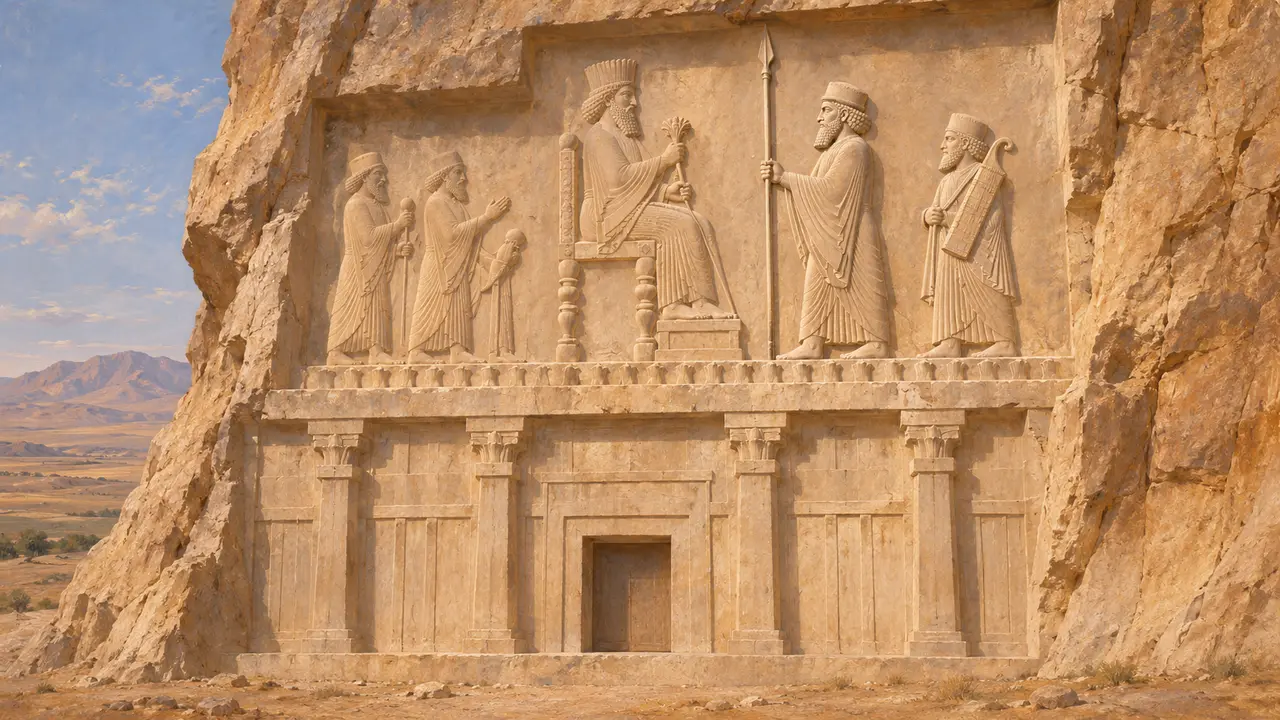
The title carved at Naqsh-e Rostam
In the recordOn the facade of Darius's tomb at Naqsh-e Rostam, a short label (DNc) names a figure as Gobryas, a Patishuvarish, spear-bearer (arshtibara) of Darius the King. A second label (DNd) names Aspathines as bearer of the King's bow-case or battle-axe; the exact wording is uncertain. Gobryas was one of the six nobles who stood with Darius against Gaumata (DB §68), so the title belonged to a man of the first rank.
DNc; DNd; DB §68
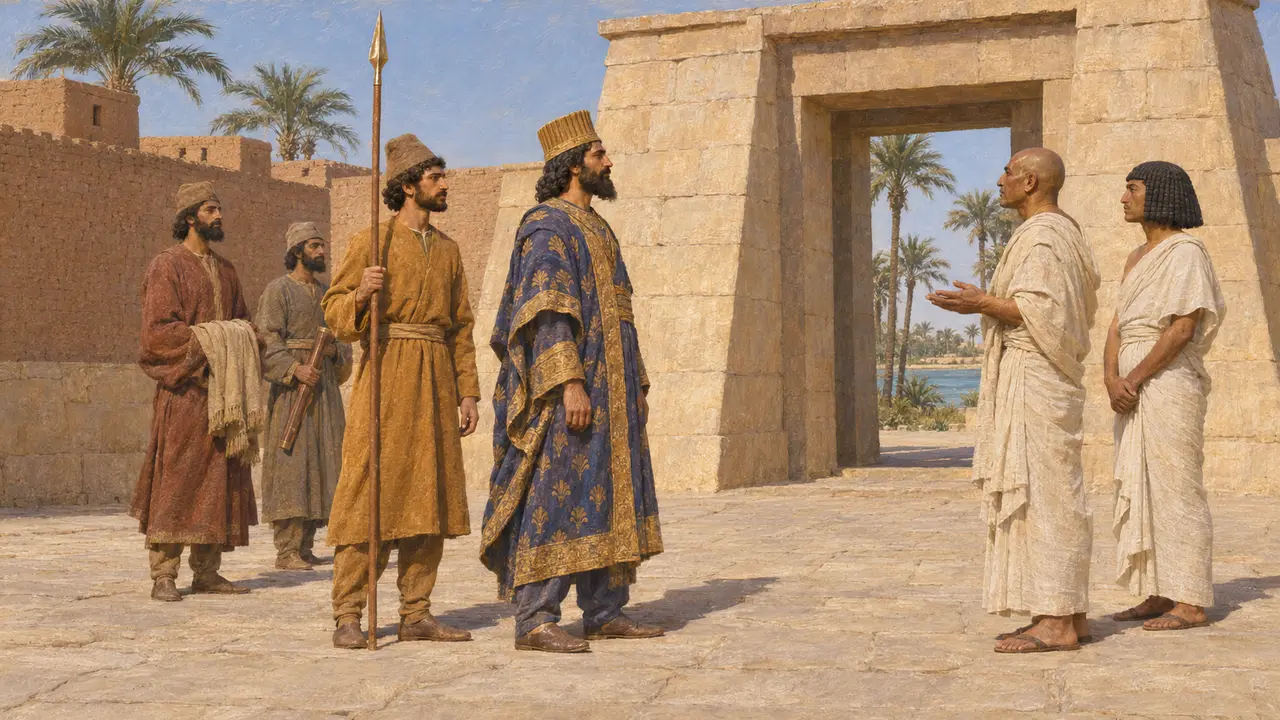
Darius at Cambyses' side in Egypt
Ancient accountHerodotus says that during Cambyses' conquest of Egypt, Darius son of Hystaspes followed the King as one of his spear-bearers. He adds that Darius was not yet a man of much standing at the time. This places the future king in Cambyses' personal following in Egypt in about 525.
Herodotus 3.139
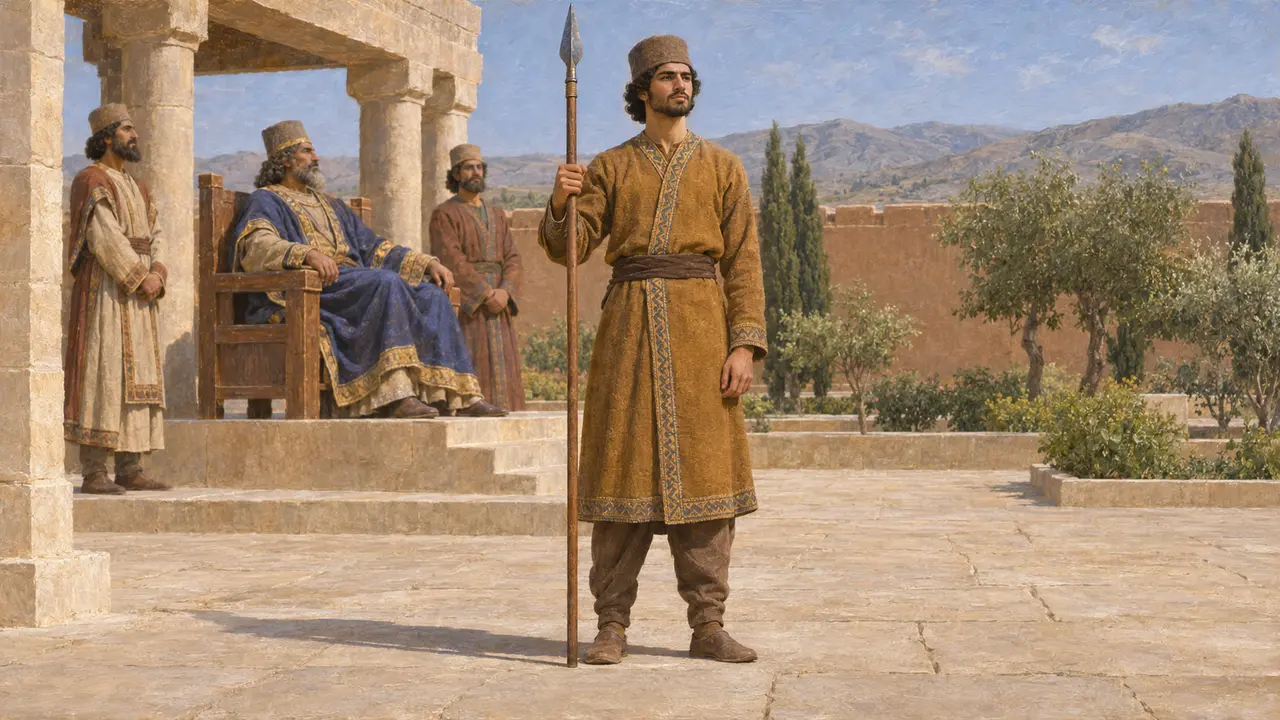
Humble guard or high officer
DisputedThe Greek word Herodotus uses, doryphoros, could mean any member of a bodyguard. Some historians link it to the Persian title arshtibara and argue that Darius already held a high court office. Others accept that he was a junior guardsman. Herodotus stresses his obscurity, while Darius's own Behistun text stresses his royal descent, and the two pictures sit uneasily together.
P. Briant, From Cyrus to Alexander, 2002
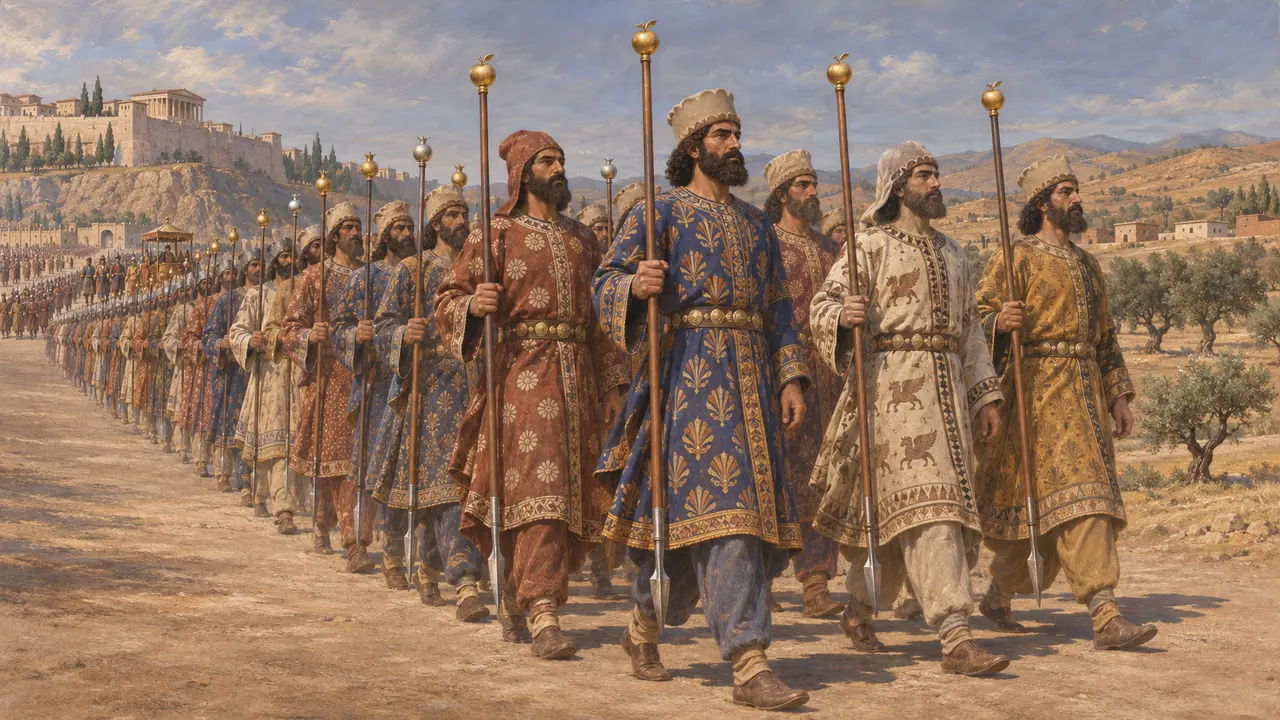
The spearmen of the royal guard
Ancient accountDescribing Xerxes' march from Sardis in 480, Herodotus says a thousand spearmen walked before the King with their spears pointing down. Close behind him came a thousand spearmen of the noblest Persians, with golden apples in place of the butt-spikes of their spears. A body of ten thousand picked foot followed: a thousand with golden pomegranates on their spears and nine thousand with silver ones.
Herodotus 7.40-41
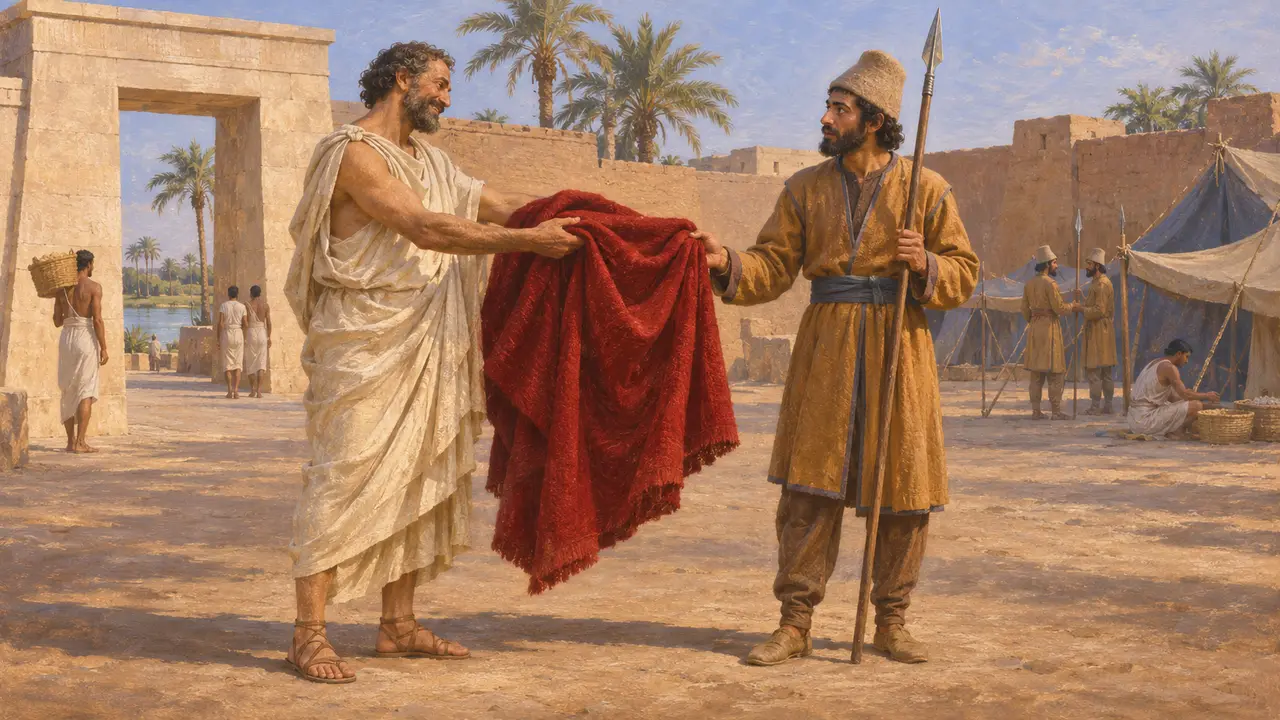
Syloson and the red cloak
Later legendHerodotus tells how Darius, still a spear-bearer in Egypt, admired a red cloak worn by Syloson of Samos. He offered to buy it and was given it freely. Years later, as king, Darius repaid the gift by having Syloson installed as ruler of Samos. The tale is shaped as a lesson about kindness to a man before his rise.
Herodotus 3.139-141
Sources
- Herodotus 3.139-141
- DNc
- DNd
- Herodotus 7.40-41
- DB §68
- P. Briant, From Cyrus to Alexander, 2002