Encyclopedia › Soldiers and ships
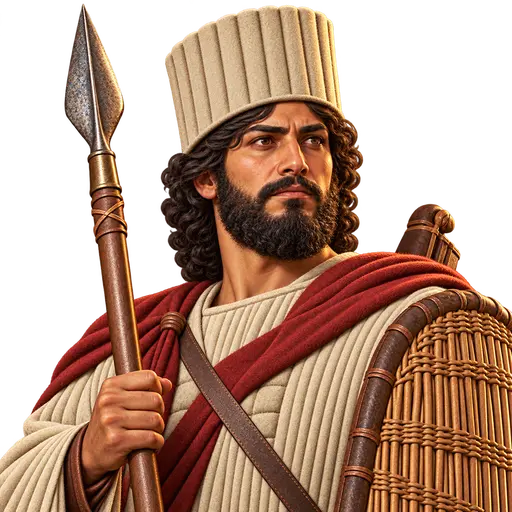
Persian Spearman
Infantryman of the Achaemenid King's army, about 550-479 BCE
The Persian foot soldier carried a spear, a wicker shield and often a bow, and he formed the core of the armies that won the empire for Cyrus, Cambyses and Darius. Persian art shows him as a guardsman of the King, while Greek writers describe how he fought and how he fared against heavy Greek infantry at Thermopylae and Plataea.
In the game: The game makes the Persian Spearman a shield unit that holds raiders and horsemen, stops most arrows and is too slow to chase. Historically many Persian foot soldiers also carried bows, so spear and bow often belonged to the same man.
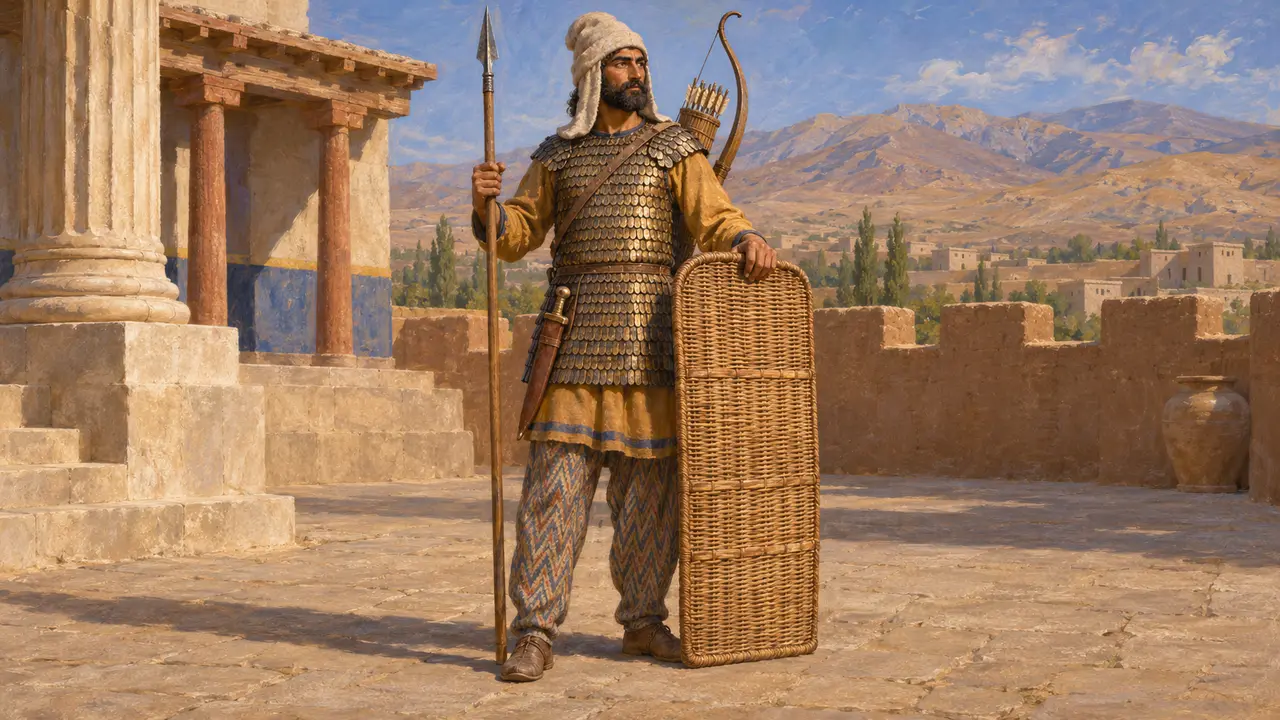
Arms and dress in Herodotus
Ancient accountHerodotus, listing Xerxes' army, says the Persians wore soft felt caps, sleeved tunics, scale armour and trousers. They carried wicker shields, short spears, large bows with reed arrows, and daggers hung at the right thigh. Elsewhere he has Aristagoras tell the Spartans that Persians fought with bows and short spears in trousers and turbans, as an argument that they would be easy to beat.
Herodotus 7.61; Herodotus 5.49
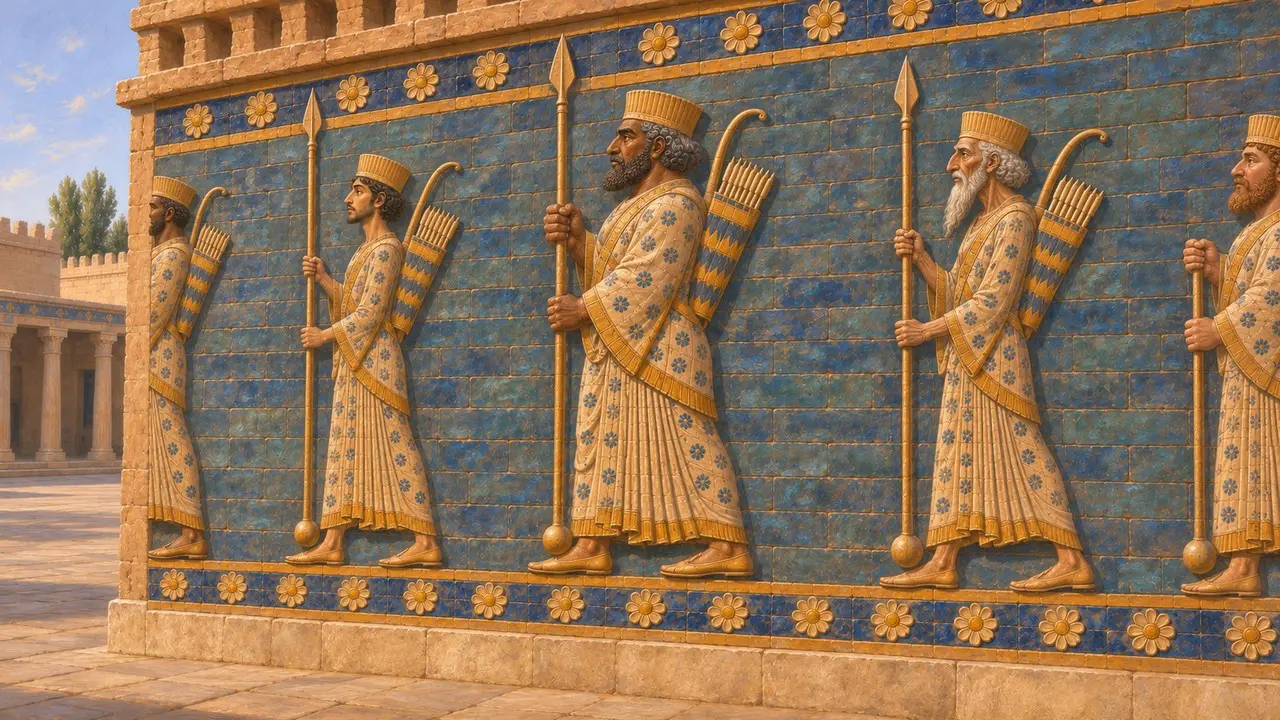
The spearman in Persian art and words
In the recordGlazed-brick panels from Darius's palace at Susa show rows of guards holding long spears with a round weight at the butt, with bows and quivers on their shoulders. Spear-bearers also line the stairways of the Persepolis reliefs. In his tomb inscription Darius boasts that the Persian man's spear had reached distant lands, and he counts skill with the spear and the bow among a ruler's virtues.
DNa §4; DNb; E. Schmidt, Persepolis I, 1953; P. O. Harper, J. Aruz and F. Tallon (eds), The Royal City of Susa, 1992
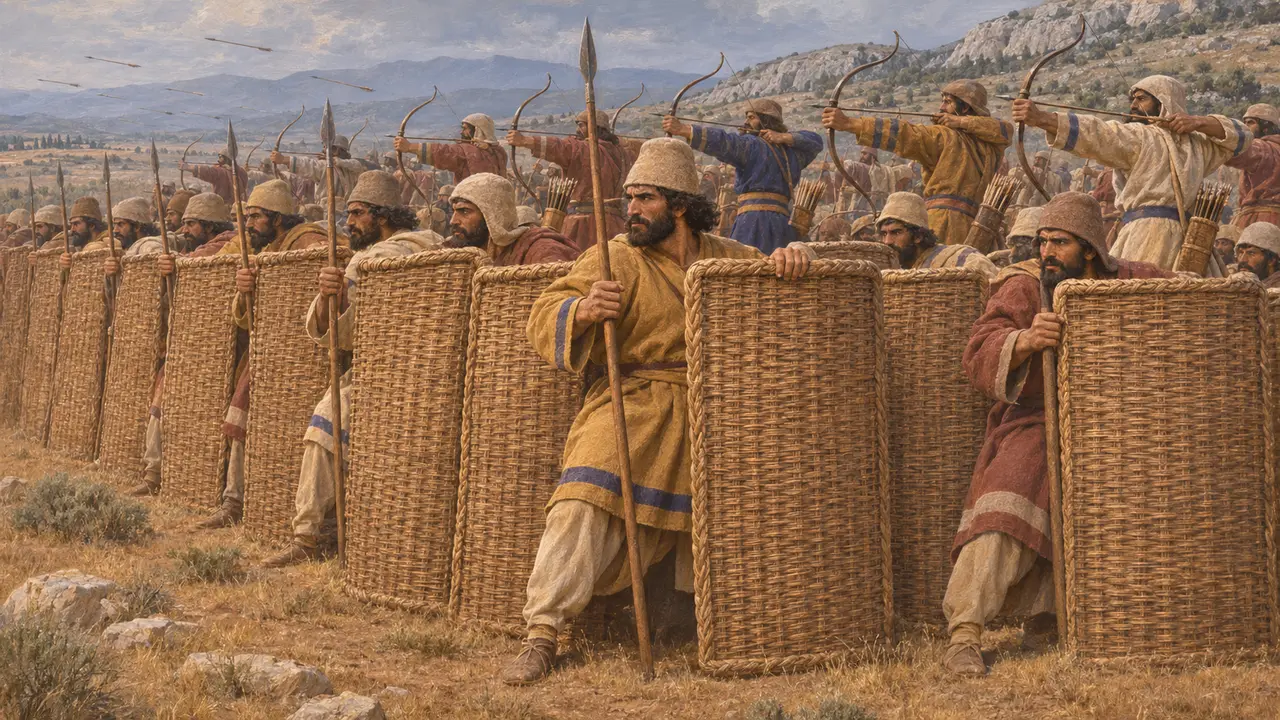
A wall of shields and a rain of arrows
DisputedHerodotus says that at Plataea and again at Mycale the Persians set up their wicker shields as a fence and shot from behind it. Modern historians often call such troops sparabara, shield-bearers, and reconstruct a file with a shield-and-spear man in front and archers behind. How fixed this formation was, and whether the term was used in the period, is still argued, since it rests on Greek descriptions and later analogy.
Herodotus 9.61; Herodotus 9.99; N. Sekunda, The Persian Army 560-330 BC, 1992
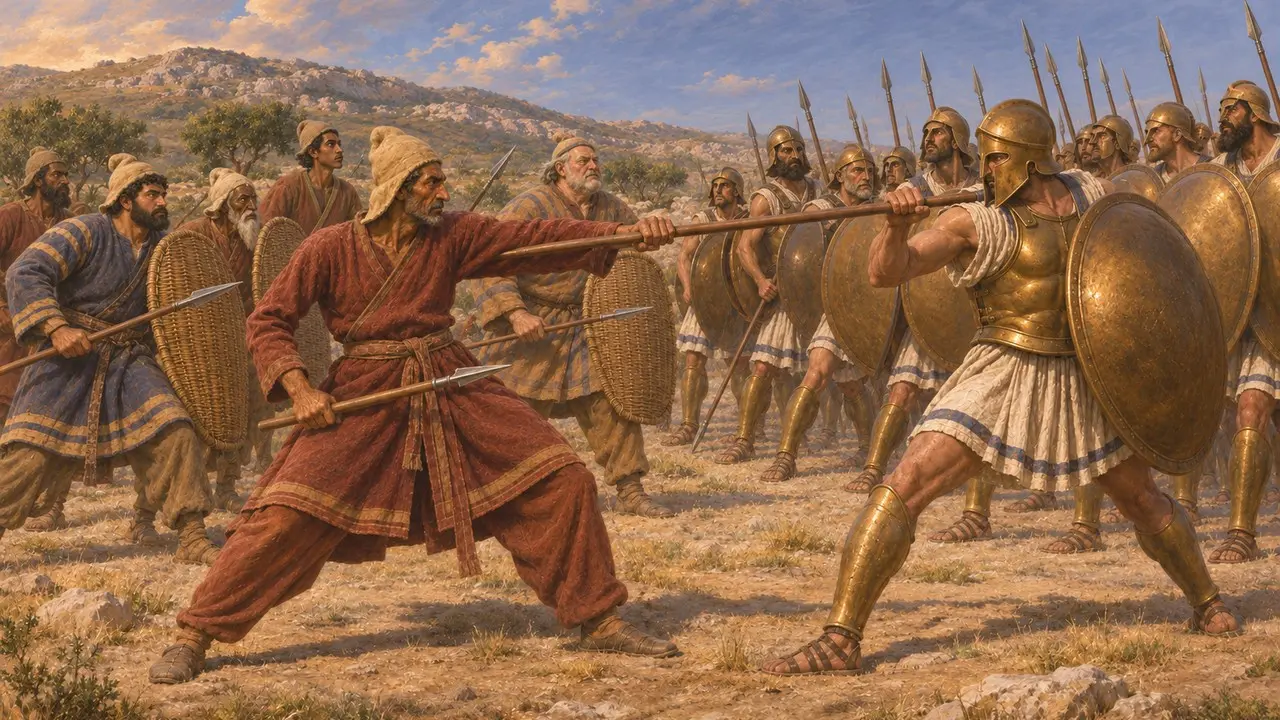
Against the Greek hoplite
Ancient accountHerodotus says that at Thermopylae the Persians fought in a narrow pass with spears shorter than those of the Greeks and could not use their numbers. At Plataea, he writes, they were not inferior in courage or strength, but lacked armour and the Greeks' skill, and some seized Greek spears with their bare hands. These judgements come from a Greek writer explaining Greek victories.
Herodotus 7.211; Herodotus 9.62-63
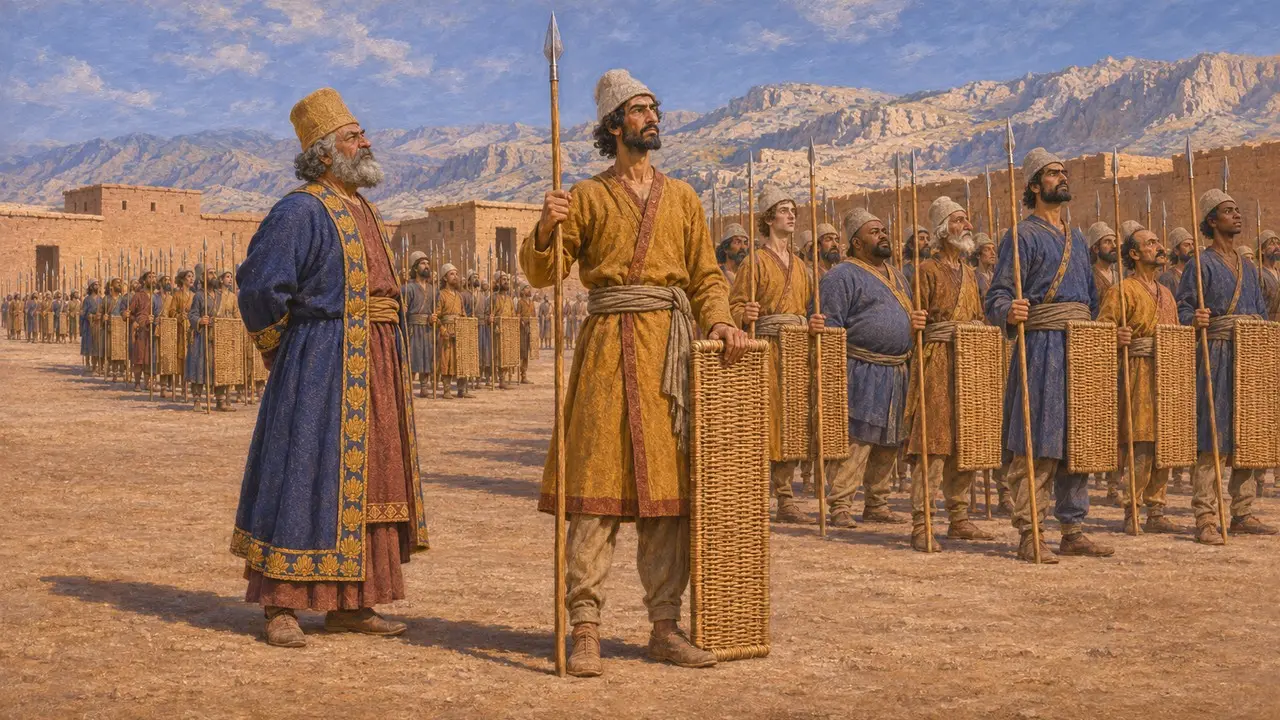
Soldiers of the King's army
DisputedHerodotus describes the army as organised in units of ten, a hundred, a thousand and ten thousand under Persian commanders. Historians accept a decimal structure but debate how many native Persians served as regular soldiers and how many were levied for single campaigns. His figure of 1,700,000 for Xerxes' land army is generally held to be a great exaggeration.
Herodotus 7.81; Herodotus 7.60; P. Briant, From Cyrus to Alexander, 2002
Sources
- Herodotus, Histories, books 5, 7 and 9
- Darius's tomb inscriptions at Naqsh-e Rostam (DNa, DNb)
- P. Briant, From Cyrus to Alexander, 2002
- N. Sekunda, The Persian Army 560-330 BC, 1992
- E. Schmidt, Persepolis I, 1953
- P. O. Harper, J. Aruz and F. Tallon (eds), The Royal City of Susa, 1992