Encyclopedia › Soldiers and ships
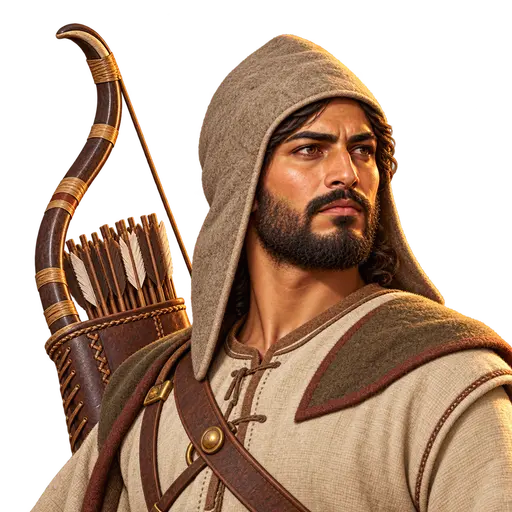
Persian Archer
Bow-armed foot soldier of the Achaemenid Persian army, about 550-479 BCE
The bow was the main weapon of Persian infantry, and Greek writers describe Persian armies opening battle with heavy volleys of arrows. Herodotus pictured Persian foot soldiers with large bows, cane arrows and wicker shields, and Persian kings presented themselves as archers in art and inscriptions. The bow served the empire well against many enemies, but in close combat with Greek hoplites it proved too little.
In the game: The game shows archers as a separate unit that shoots raiders from behind spearmen and dies quickly in melee. This is a simplification: many Persian foot soldiers carried both spear and bow, and the split into two units is the game's.
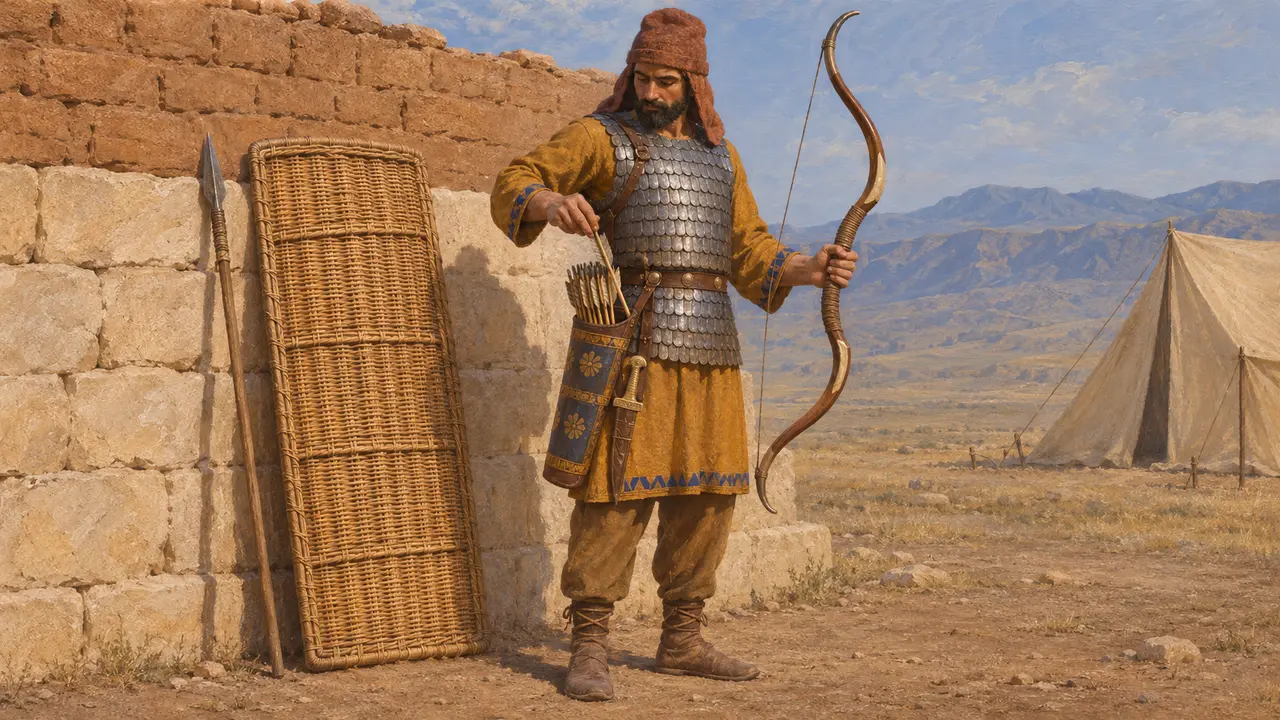
Bow, quiver and wicker shield
Ancient accountHerodotus describes the Persian contingent of Xerxes' army as wearing soft felt caps, sleeved tunics, trousers and iron scale armour. They carried wicker shields, short spears, large bows with arrows of cane, and a dagger hanging at the right thigh. He adds that this dress was Median in origin and that the Medes in the army were equipped the same way.
Herodotus 7.61-62
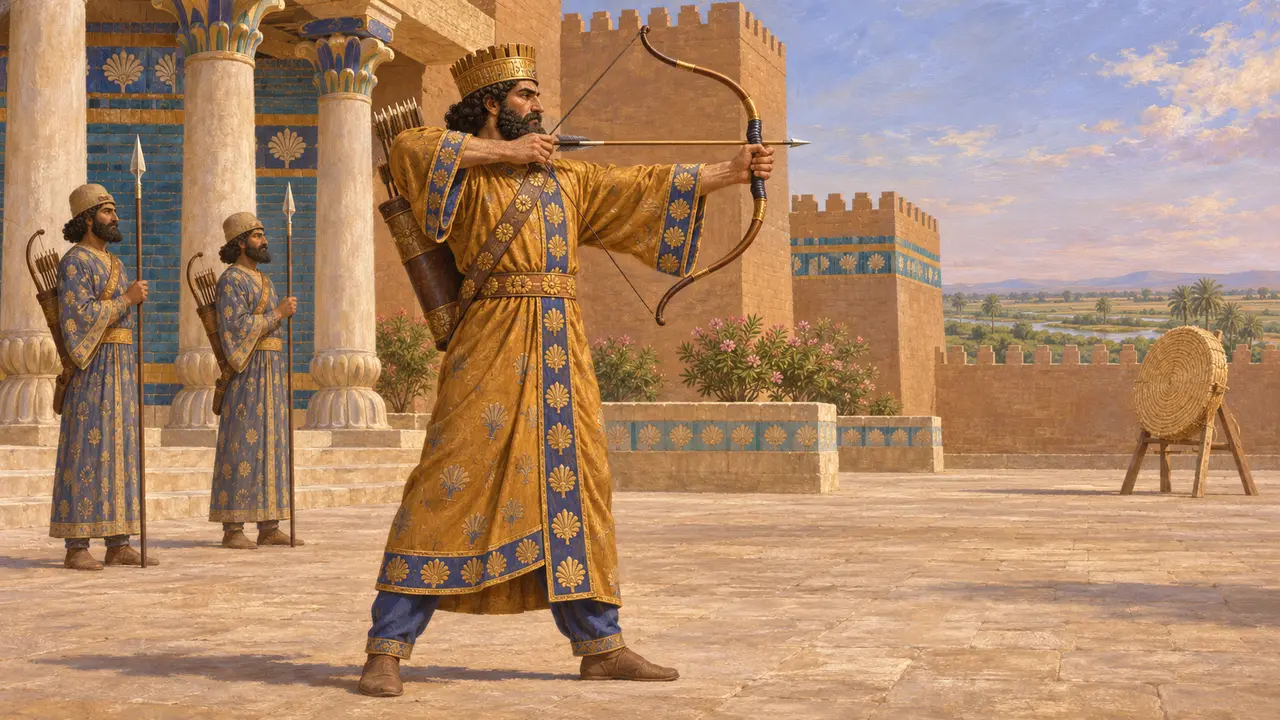
The king as bowman
In the recordIn the inscription on his tomb at Naqsh-e Rostam, Darius counts among his abilities that he was a good bowman both on foot and on horseback. The glazed-brick friezes from Susa show rows of guardsmen holding a spear, with a bow and quiver on the shoulder. From late in Darius's reign, royal gold and silver coins showed a crowned figure with a bow.
DNb; glazed-brick archer frieze from Susa; royal archer coinage
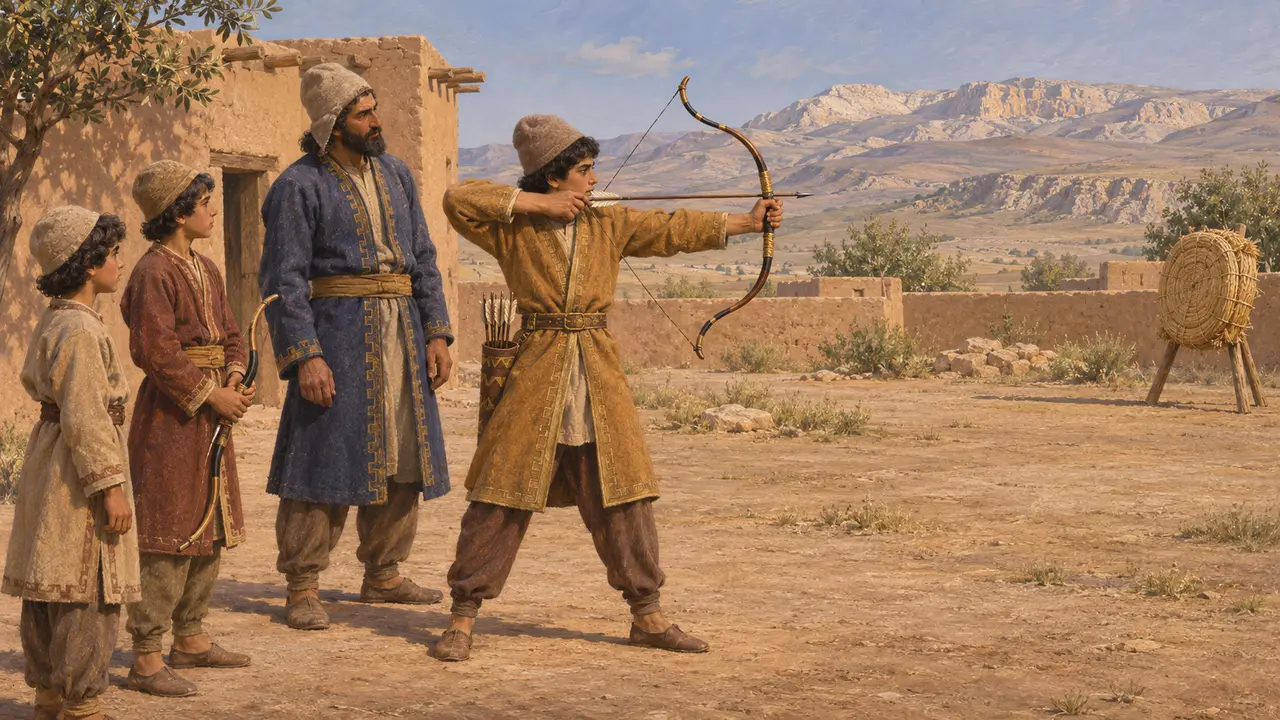
Taught to shoot from boyhood
Ancient accountHerodotus says Persian boys were taught three things from the age of five to twenty: to ride, to shoot the bow and to tell the truth. Strabo gives a similar, later picture of Persian education. Both are summaries by Greek outsiders, but they agree that archery was central to how Persians trained their young men.
Herodotus 1.136; Strabo 15.3.18
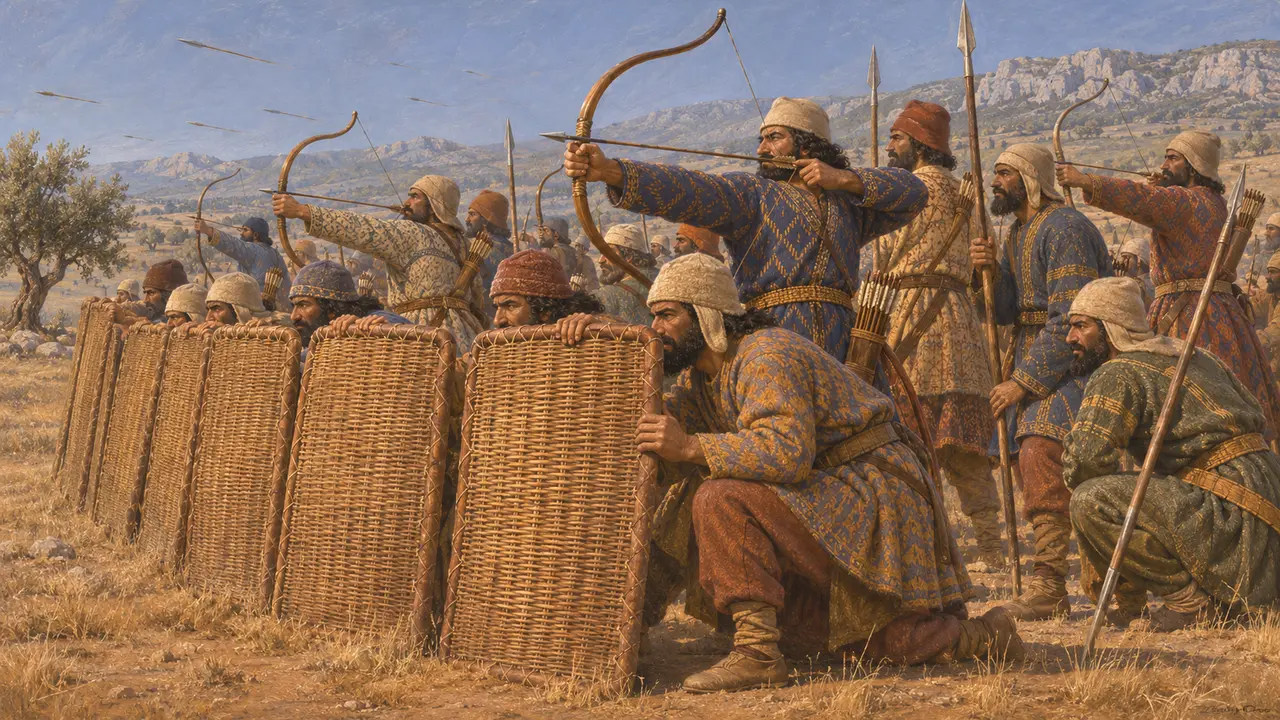
Shield wall and arrow storm
DisputedHerodotus describes Persians at Plataea setting up their wicker shields as a barrier and shooting from behind it. Many modern historians reconstruct a formation with shield-bearers in front and archers in the ranks behind, sometimes calling it the sparabara. Others warn that this term and the neat division of roles are modern reconstructions, and that most Persian infantry may have carried both spear and bow.
Herodotus 9.61-62; P. Briant, From Cyrus to Alexander, 2002
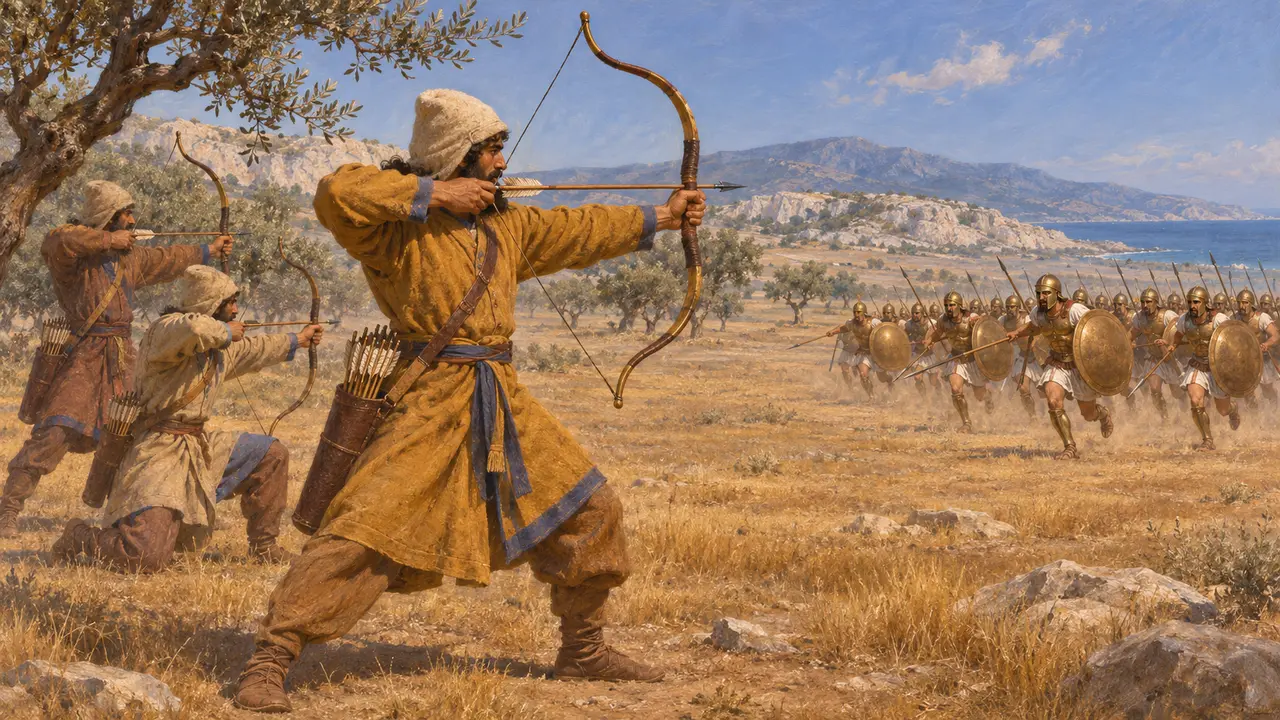
Against the hoplites
Ancient accountHerodotus says the Athenians at Marathon advanced at a run, and that the Persians thought them mad to attack without horsemen or archers. Modern historians often read the run as a way to cross the arrow zone quickly. At Plataea he judged the Persians equal in courage but lacking armour and skill against hoplites. At Thermopylae the Persians shot many arrows at the Phocians guarding the mountain path.
Herodotus 6.112; Herodotus 7.218; Herodotus 9.62-63
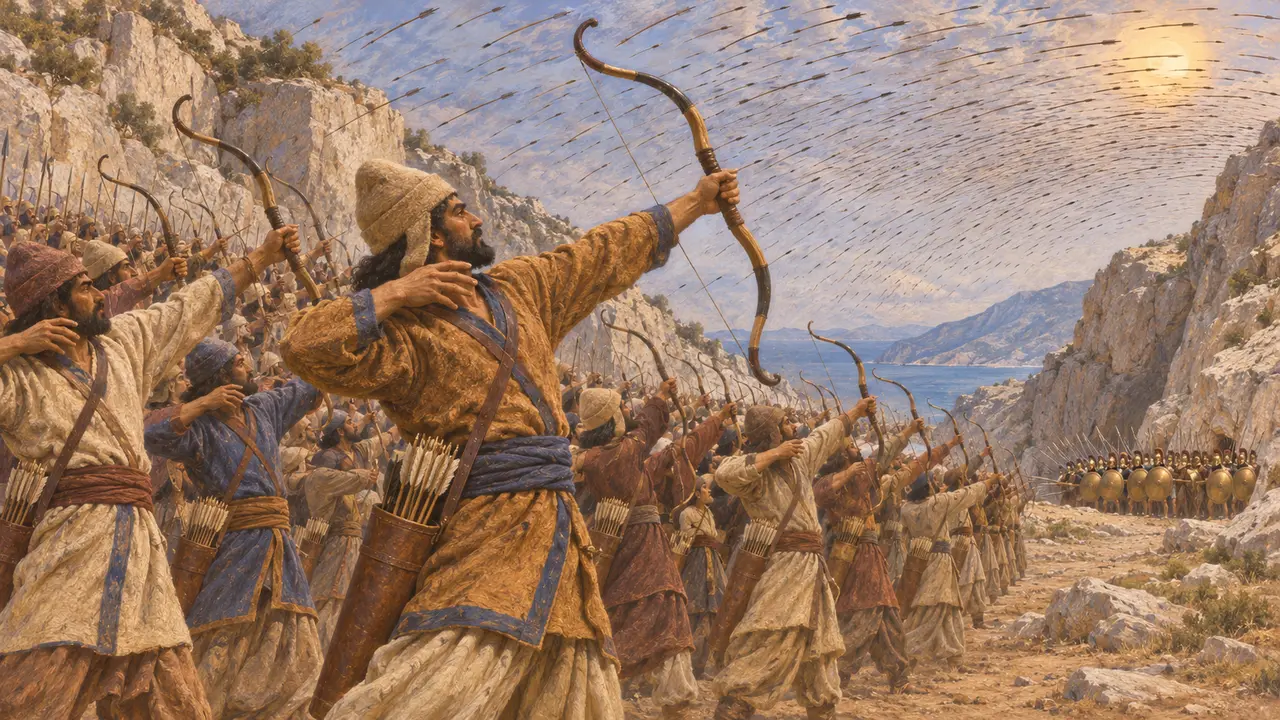
Arrows that hid the sun
Later legendHerodotus tells how a man from Trachis warned that Persian arrows would blot out the sun, and the Spartan Dieneces replied that they would then fight in the shade. The story is a Greek tale of courage, and its exact words cannot be checked, but it shows the reputation Persian archery held among the Greeks.
Herodotus 7.226
Sources
- Herodotus, Histories 7.61-62
- Herodotus, Histories 1.136
- Herodotus, Histories 9.61-63
- DNb (tomb inscription of Darius, Naqsh-e Rostam)
- P. Briant, From Cyrus to Alexander, 2002
- Strabo, Geography 15.3.18