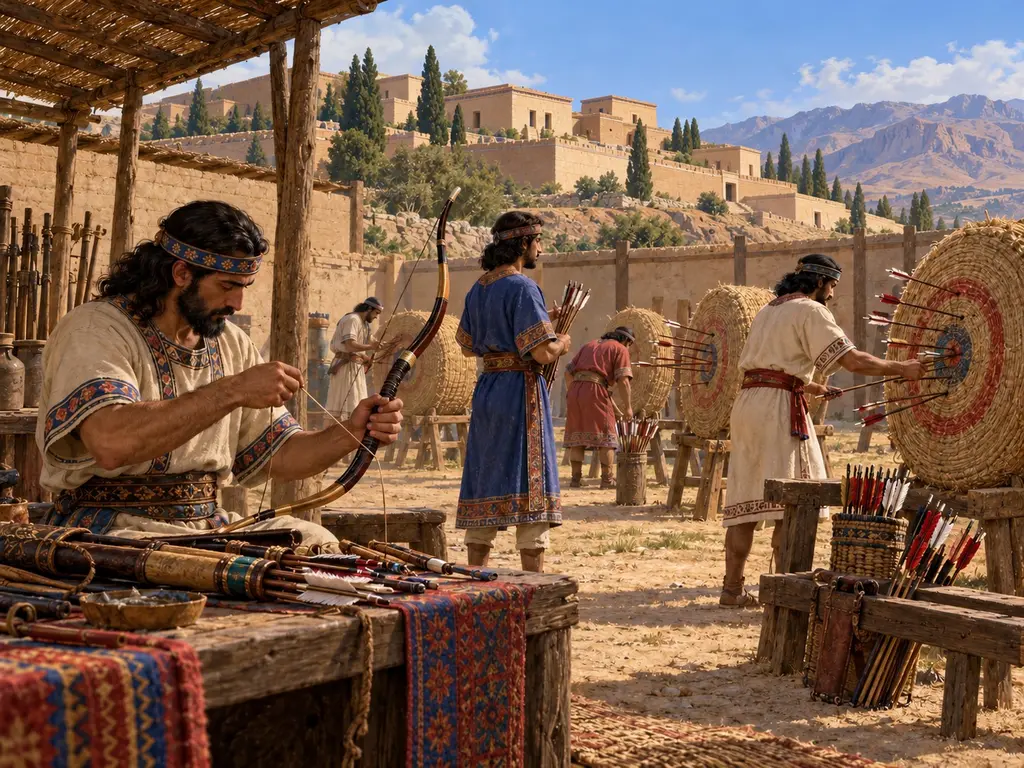
Archery Range
Training ground for the bow, chief weapon of Persian foot soldiers, 6th-5th century BCE
In the game: Level 1: The Founder's Tomb
The bow was the chief weapon of the Persian foot soldier. Greek writers say Persian boys learned to shoot from childhood, and Darius called himself a good bowman in his tomb inscription. No purpose-built Achaemenid range has been excavated, so practice probably took place on open ground near towns, estates and camps.
In the game: The Archery Range trains archers who outrange raiders but must stay behind spearmen. This simplifies history: many Persian infantrymen carried both bow and spear, and the game splits them into separate troop types.
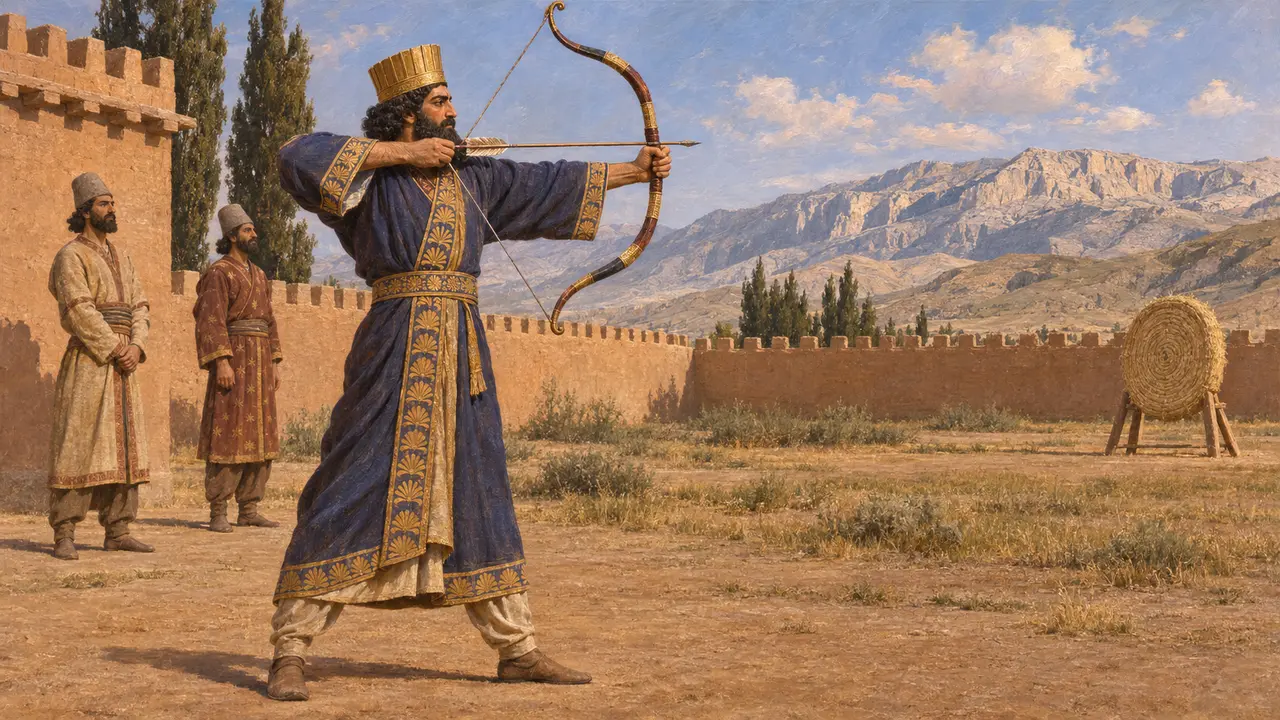
The king as bowman
In the recordIn his tomb inscription at Naqsh-e Rostam, Darius lists his own skills and says he was a good bowman both on foot and on horseback. On the Behistun relief he holds a bow as he faces the captive rebel kings. The royal gold and silver coins first struck under Darius show the king holding or drawing a bow, which suggests the bow stood for royal strength as well as for war.
DNb; Behistun relief (DB); P. Briant, From Cyrus to Alexander, 2002
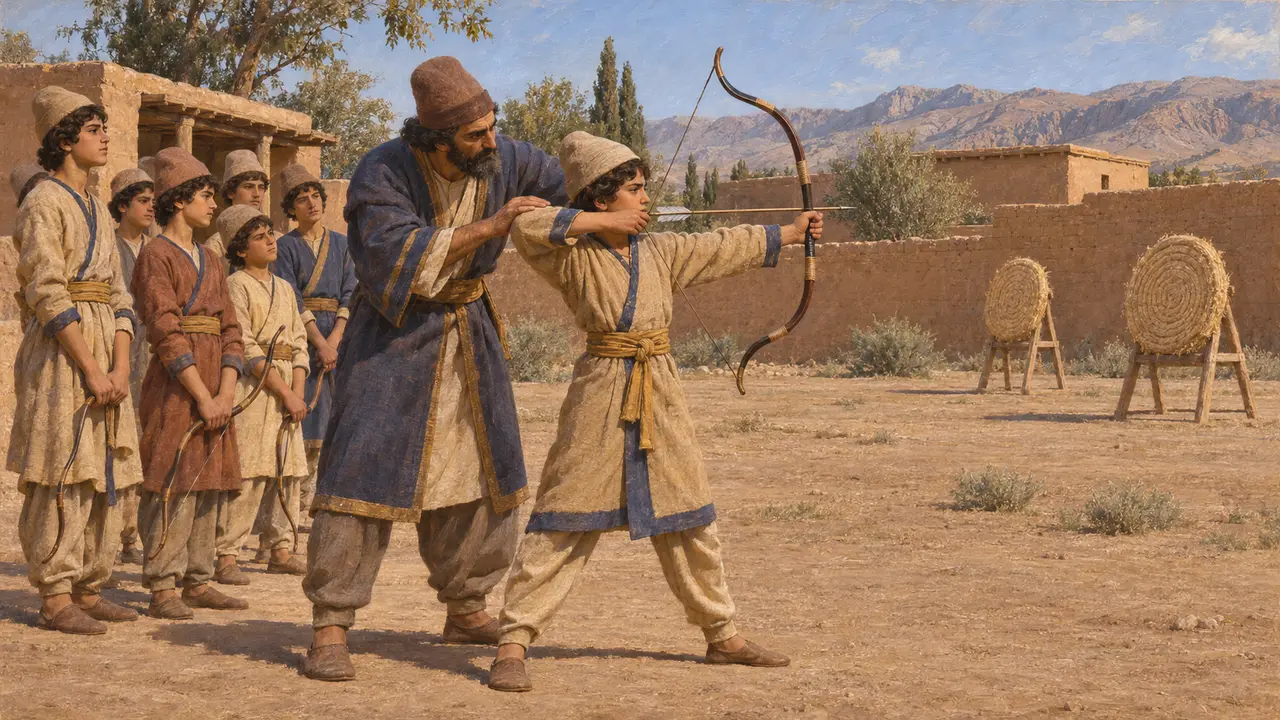
Teaching the boys
Ancient accountHerodotus says Persian boys were taught three things from the age of five to twenty: to ride, to shoot with the bow, and to speak the truth. Strabo gives a later and fuller picture of Persian youths trained in groups to shoot, throw the javelin and endure hardship. Xenophon's Cyropaedia describes a similar schooling, but it is an idealised work and cannot be taken as a plain description.
Herodotus 1.136; Strabo 15.3.18; Xenophon, Cyropaedia 1.2
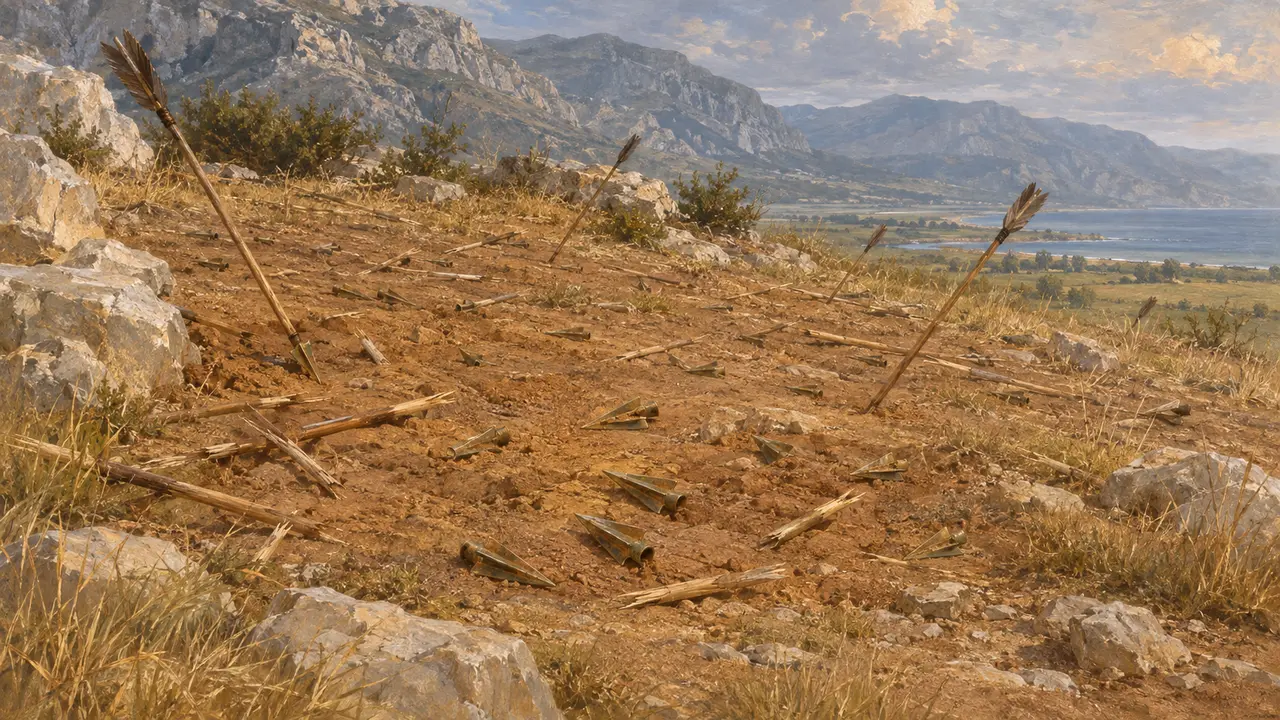
Arrowheads in the ground
In the recordExcavators of the Treasury at Persepolis found large numbers of arrowheads among the weapons stored there. At Thermopylae, Spyridon Marinatos's dig on the Kolonos hill in 1939 recovered many arrowheads, including three-bladed bronze types common in the Persian world. The finds fit Herodotus's account of the last defenders being overwhelmed by missiles on that hill.
E. Schmidt, Persepolis II, 1957; S. Marinatos, excavations at Thermopylae, 1939; Herodotus 7.225
Bow and shield wall
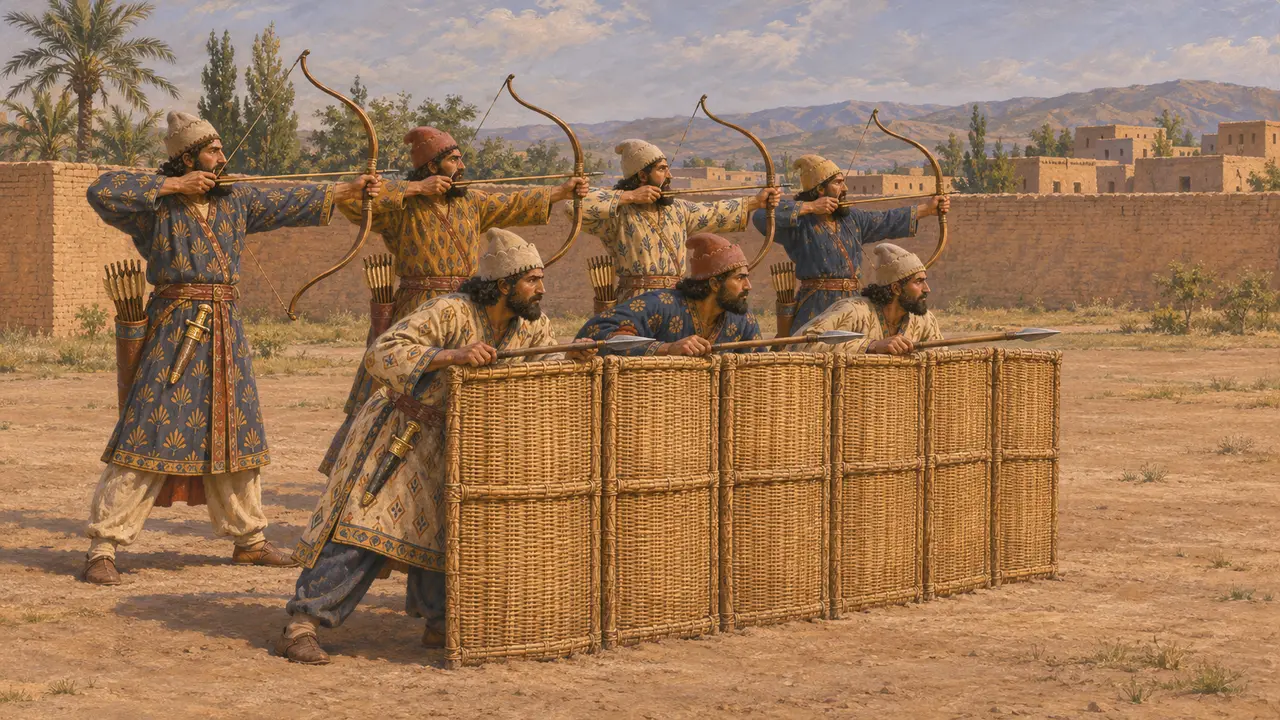
DisputedHerodotus says Xerxes' Persians carried wicker shields, short spears, large bows with reed arrows and daggers, and at Plataea they fought behind a wall of planted wicker shields. The glazed-brick guards from Susa hold both spear and bow. Historians still argue whether front ranks held shields and spears while rear ranks shot, or whether most men used both weapons in turn.
Herodotus 7.61; Herodotus 9.61-62
Fighting in the shade
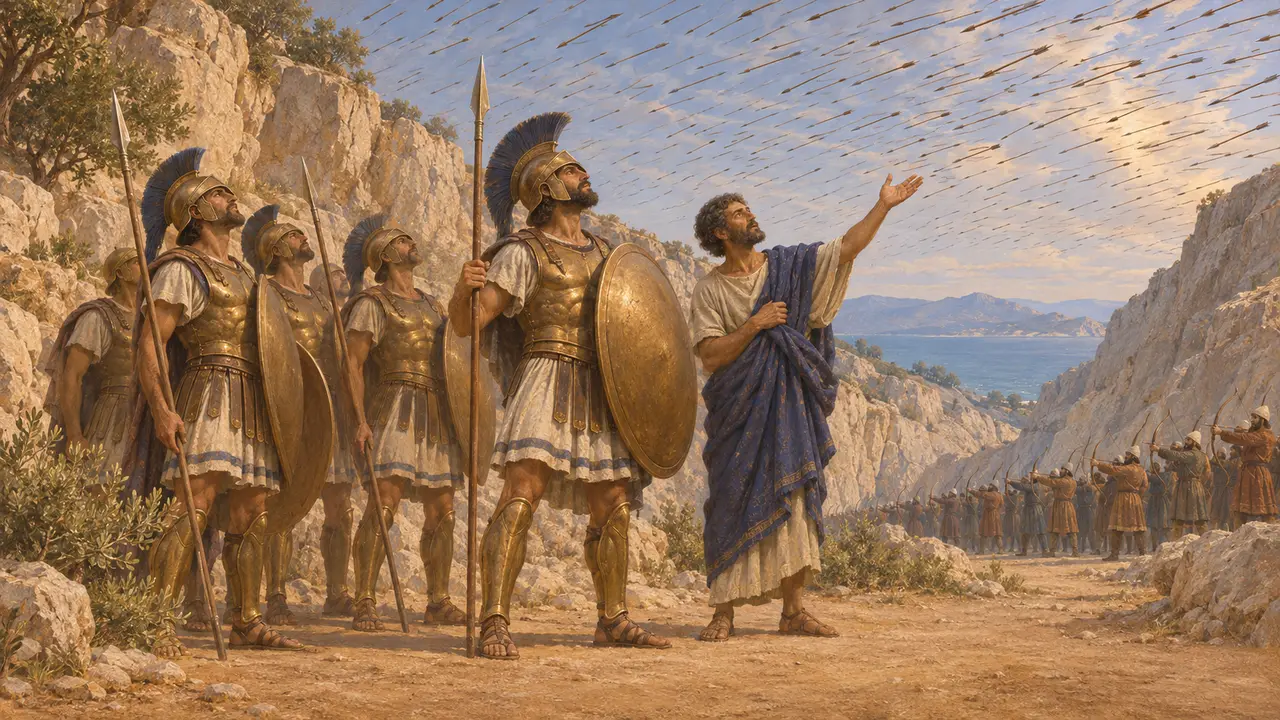
Later legendHerodotus tells that before Thermopylae a man from Trachis warned that the Persian archers would hide the sun with their arrows. The Spartan Dieneces replied that this was good news, since they would then fight in the shade. The story is a Greek saying about courage and shows how Greeks remembered Persian archery, not a measure of it.
Herodotus 7.226
Sources
- Herodotus 1.136
- Herodotus 7.61
- Herodotus 9.61-62
- DNb
- E. Schmidt, Persepolis II, 1957
- P. Briant, From Cyrus to Alexander, 2002