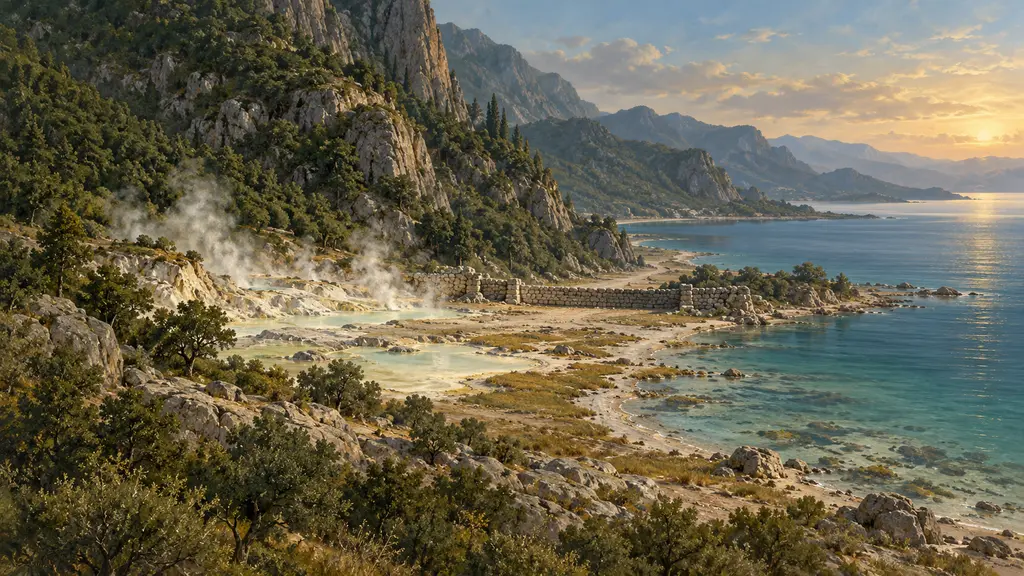
Trachis
Town and plain of Malis below the pass of Thermopylae, where Xerxes camped, 480 BCE
In the game: Level 10: The Hot Gates
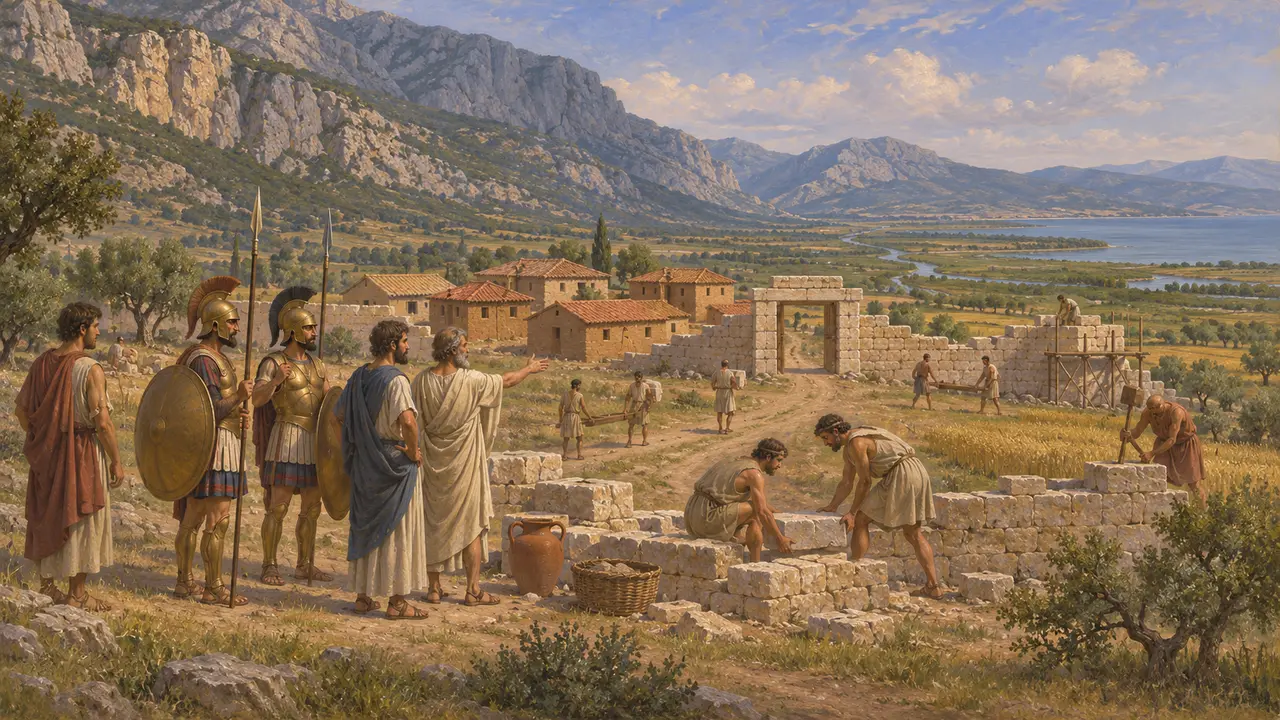
Trachis was a small town of the Malians on the plain at the head of the Malian Gulf, under the cliffs Herodotus calls the rocks of Trachis. In 480 Xerxes camped in its land while the Greeks held the pass of Thermopylae just to the east.
In the game: The Thermopylae level is built on the plain of Trachis: the King's camp town, its farms and the King's Pavilion stand there, and the townsfolk speak of the heat, the dust and the Greeks of Trachis.
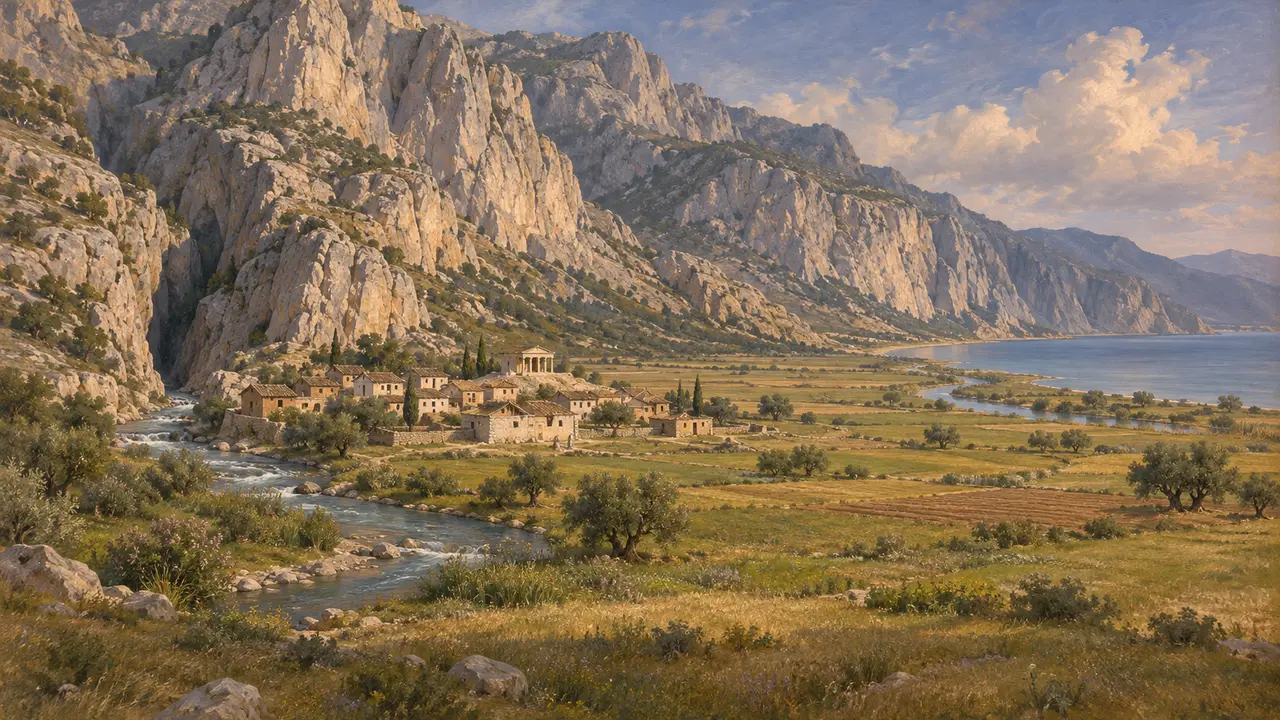
The plain under the rocks
Ancient accountHerodotus describes a level space round the Malian Gulf, wide in parts and narrow in others, shut in by high mountains called the rocks of Trachis. Trachis lay five furlongs from the river Melas, where the plain was widest, and the Asopus came out of a gorge in the mountains south of the town.
Herodotus 7.198-199
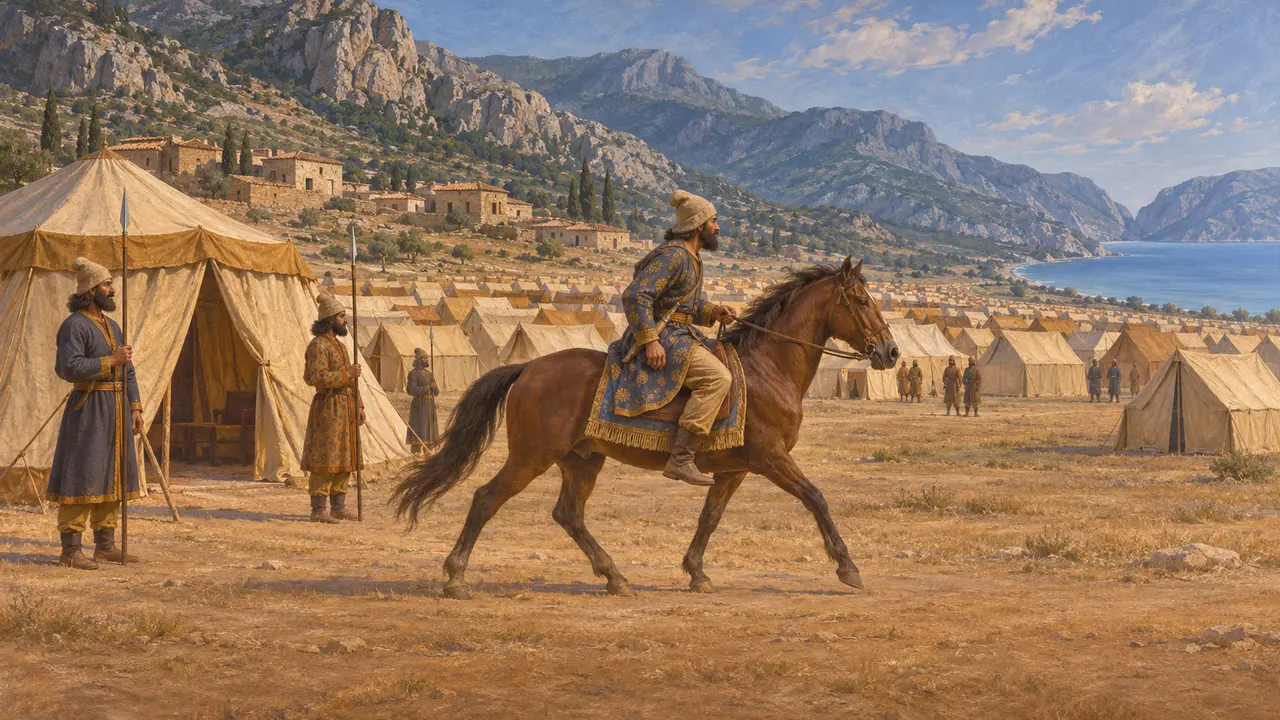
The King's camp
Ancient accountHerodotus says Xerxes was encamped in the region of Trachis in the land of the Malians, and the Greeks within the pass. He held everything north of Trachis, they everything to the south. The King's horseman rode from this camp to look at the Spartans before the wall.
Herodotus 7.201, 7.208
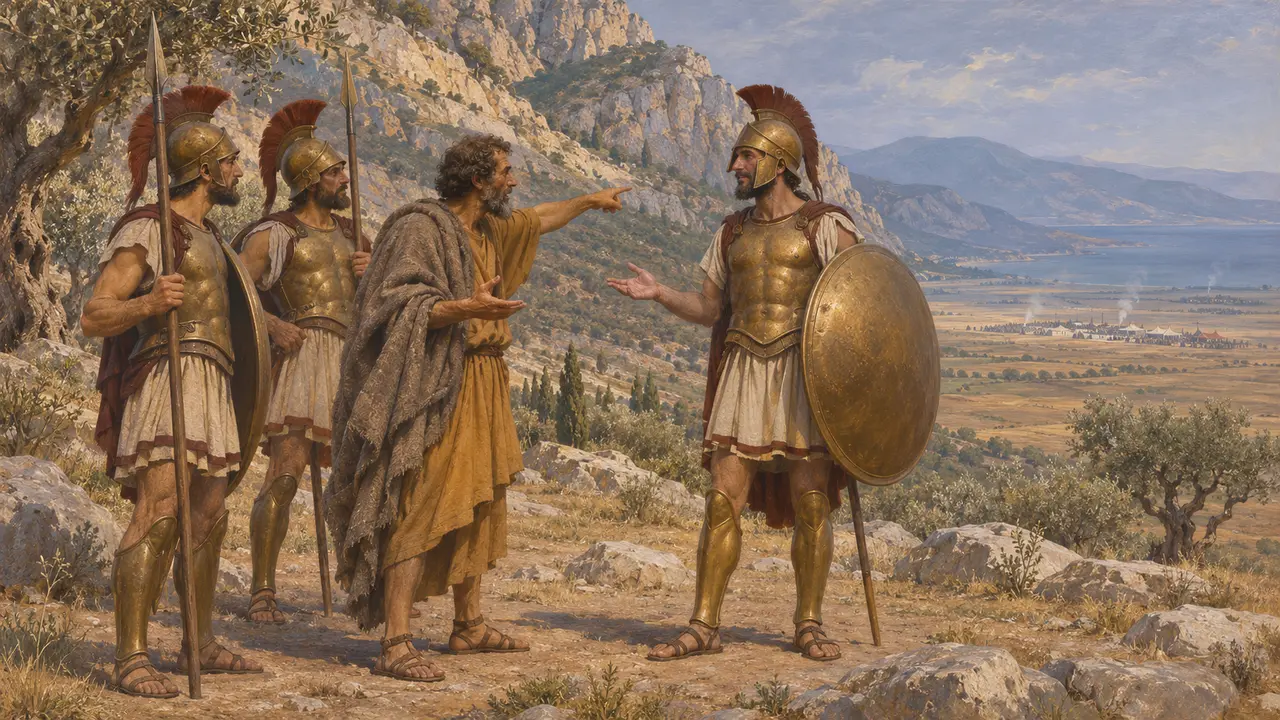
A man of Trachis and the shade
Ancient accountHerodotus says that before the battle a man of Trachis told the Greeks the Persian archers were so many that their arrows would hide the sun. The Spartan Dieneces answered that then they would fight in the shade. The story is Herodotus's, and he says it was one of several sayings remembered of Dieneces.
Herodotus 7.226
Trachis after the war
In the recordIn 426 Sparta founded a new colony, Heraclea in Trachis, close to the old town, to hold the road south through the pass. Thucydides reports it. The Persian camp of 480 has not been found on the ground, and the coastline has moved far out since, as the Spercheius has laid down silt.
Thucydides 3.92-93
Sources
- Herodotus 7.176, 7.198-201, 7.226
- Thucydides 3.92-93
- W. K. Pritchett, Studies in Ancient Greek Topography 1, 1965