Encyclopedia › Battles and events
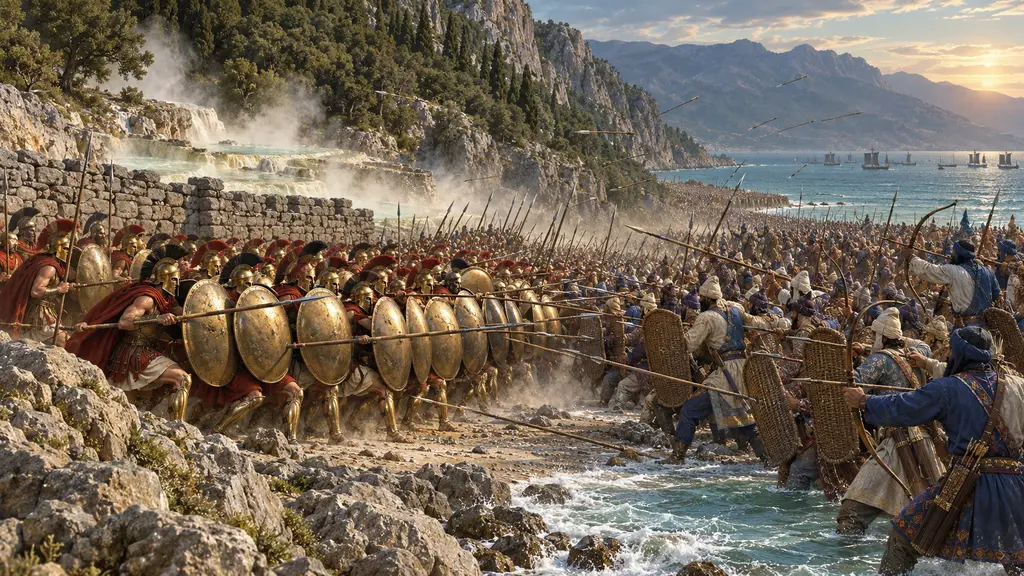
The battle of Thermopylae
Battle between Xerxes' army and the Greeks in the pass of Thermopylae, 480 BCE
In the game: Level 10: The Hot Gates
In late summer 480 a Greek force under King Leonidas of Sparta tried to stop Xerxes' army in the narrow pass of Thermopylae, between the mountains and the Malian Gulf. After two days of failed Persian assaults, troops under Hydarnes came round by a mountain path. On the third day Leonidas and those who stayed with him were killed, and the road into central Greece lay open.
In the game: The Thermopylae level is built around the battle. The game says the Spartans and Thespians died to a man. Herodotus mentions two Spartans, Aristodemus and Pantites, who were away from the fight and survived.
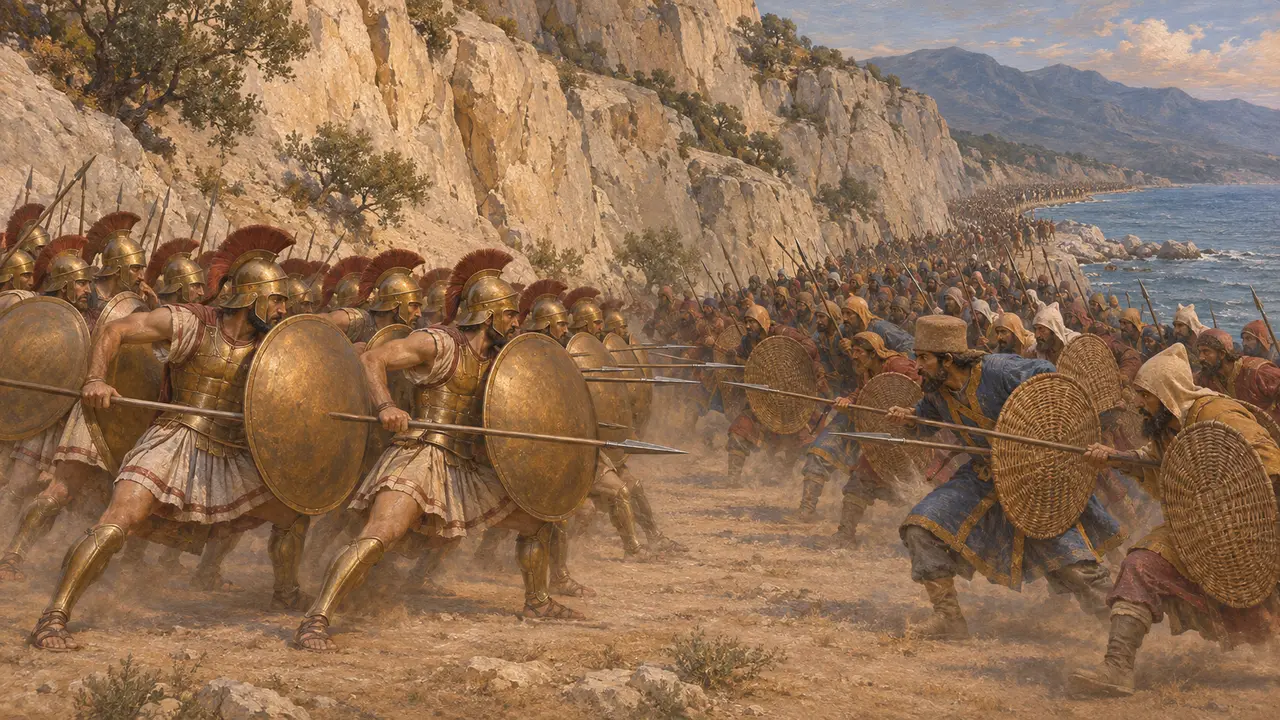
Holding the pass
Ancient accountHerodotus says Xerxes waited four days at Trachis, expecting the Greeks to withdraw. Then he sent in the Medes and Cissians, and after them the Immortals under Hydarnes. In the narrow ground their numbers counted for little, and Herodotus says the Spartans drew them on with feigned retreats before turning on them. The second day of fighting went the same way.
Herodotus 7.201-212
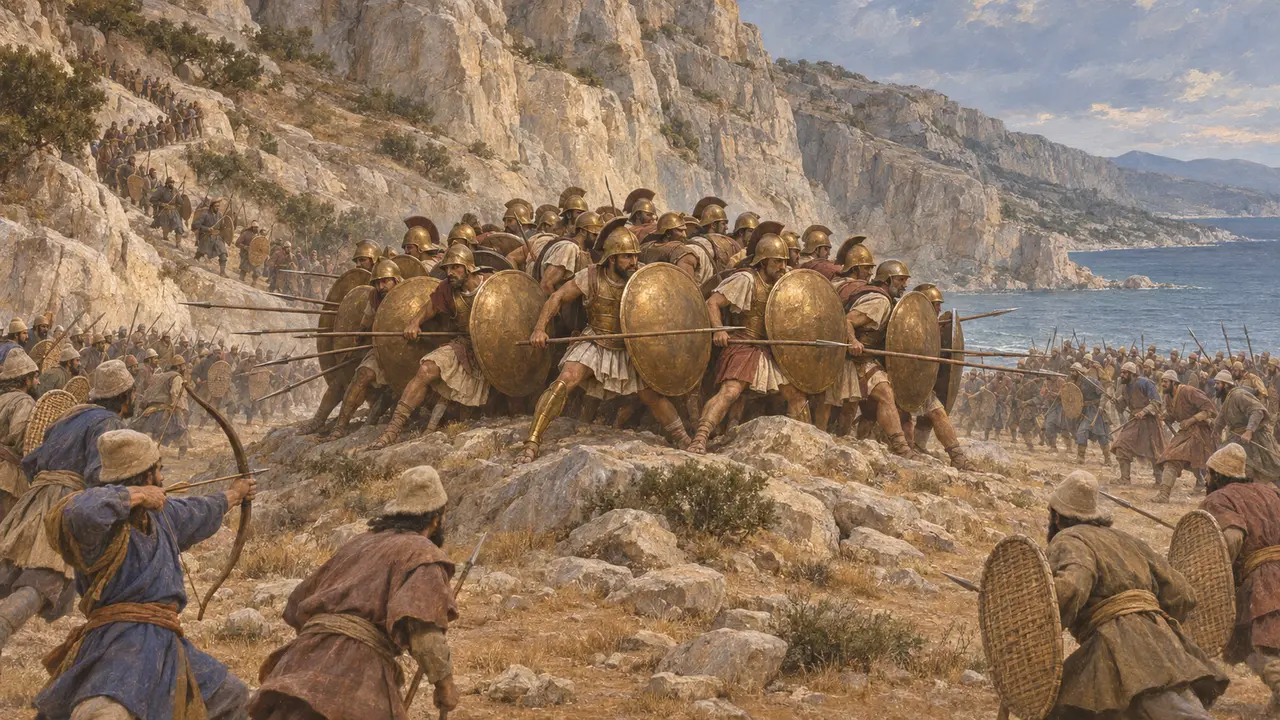
The mountain path and the last stand
Ancient accountHerodotus says a Malian named Ephialtes led Hydarnes' troops over the Anopaea path by night. A thousand Phocians guarded the heights but fell back to a summit, and the Persians marched past. Most allies then left, sent away by Leonidas or by their own choice, while the Spartans, Thespians and Thebans stayed. Herodotus says the Spartans and Thespians died on a hillock in the pass, and the Thebans surrendered and were branded.
Herodotus 7.213-233
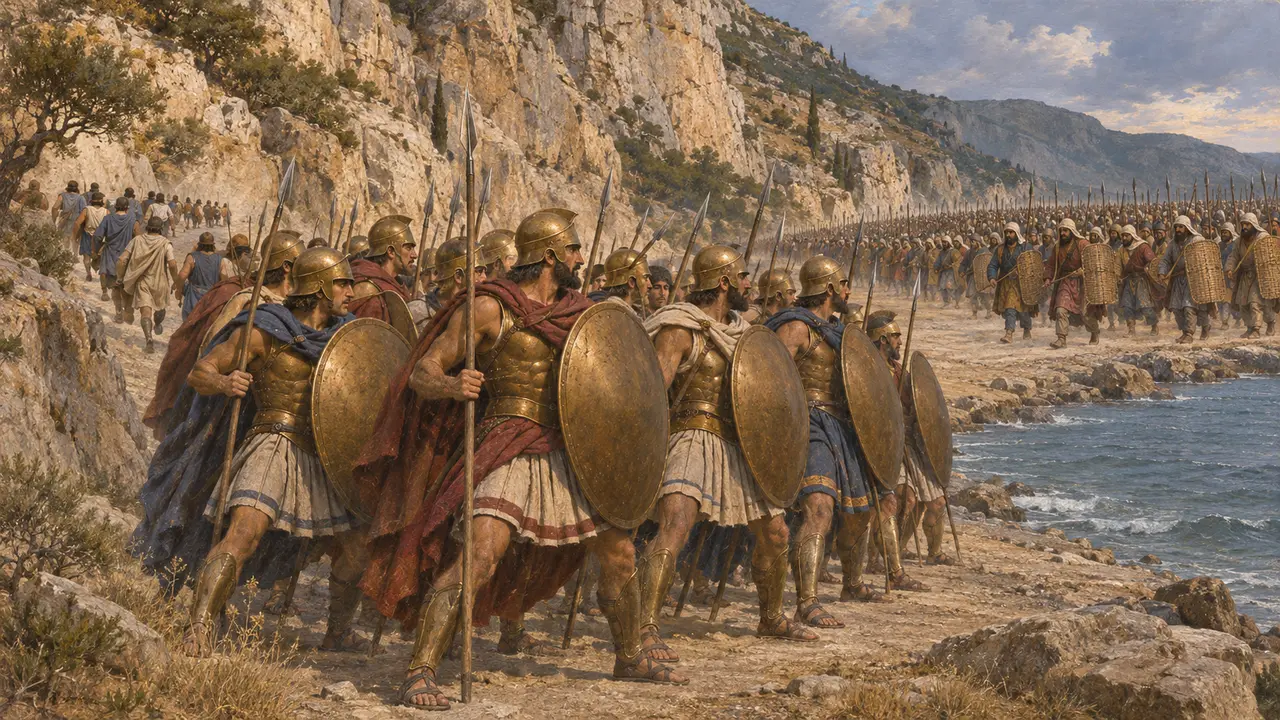
Numbers, motives and the Thebans
DisputedHerodotus gives Xerxes 1,700,000 infantry and over five million people with fleet and followers, figures historians regard as wildly exaggerated; modern estimates are a small fraction of them. Ancient writers also disagree on the size of the Greek force. Historians argue over whether Leonidas stayed for honour and an oracle, as Herodotus says, or to cover the retreat. Plutarch rejected Herodotus's claim that the Thebans stayed only as unwilling hostages.
Herodotus 7.60, 7.186, 7.202, 7.220-222; Diodorus 11.4; Plutarch, On the Malice of Herodotus
What survives, and the Persian silence
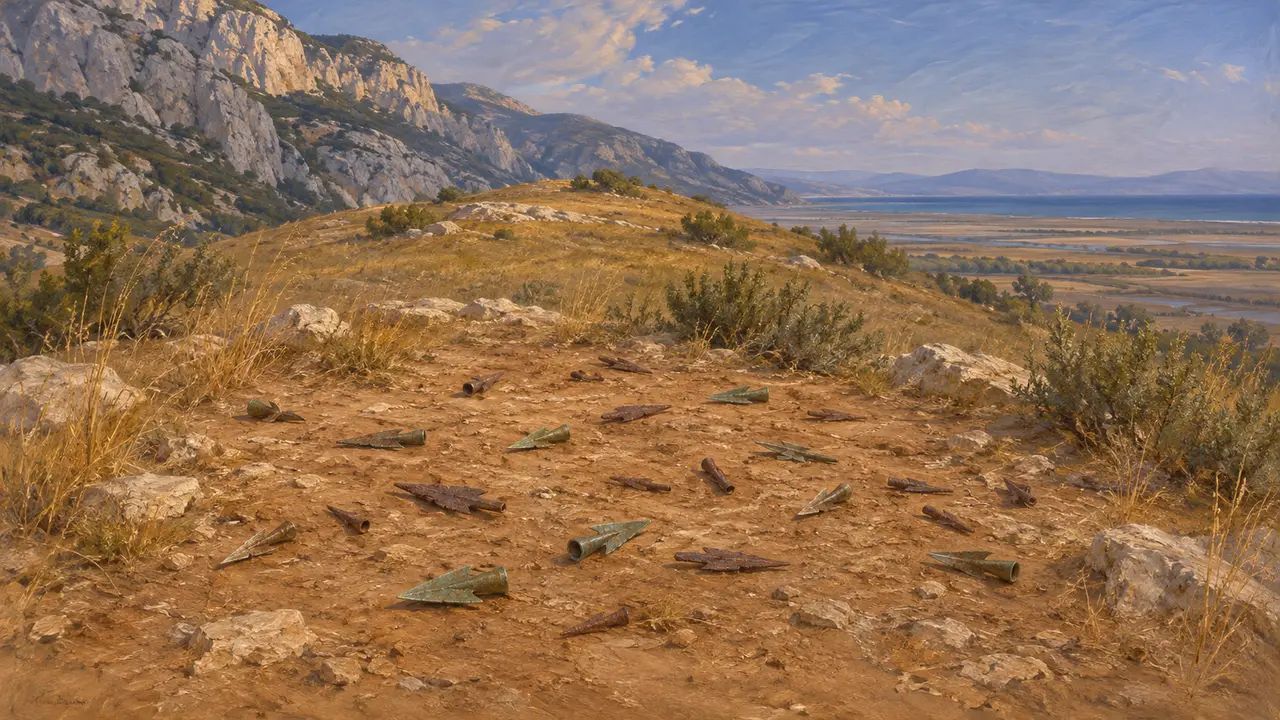
In the recordIn 1939 Spyridon Marinatos excavated the low hill of Kolonos in the pass and found many bronze and iron arrowheads. Most scholars take the hill to be the place of the last stand. River silt has since pushed the coastline far back from the old pass. No Persian document mentions the battle, so the Persian side of it is known only through Greek writers.
Excavations of S. Marinatos, 1939; P. Briant, From Cyrus to Alexander, 2002
Later sayings and stories
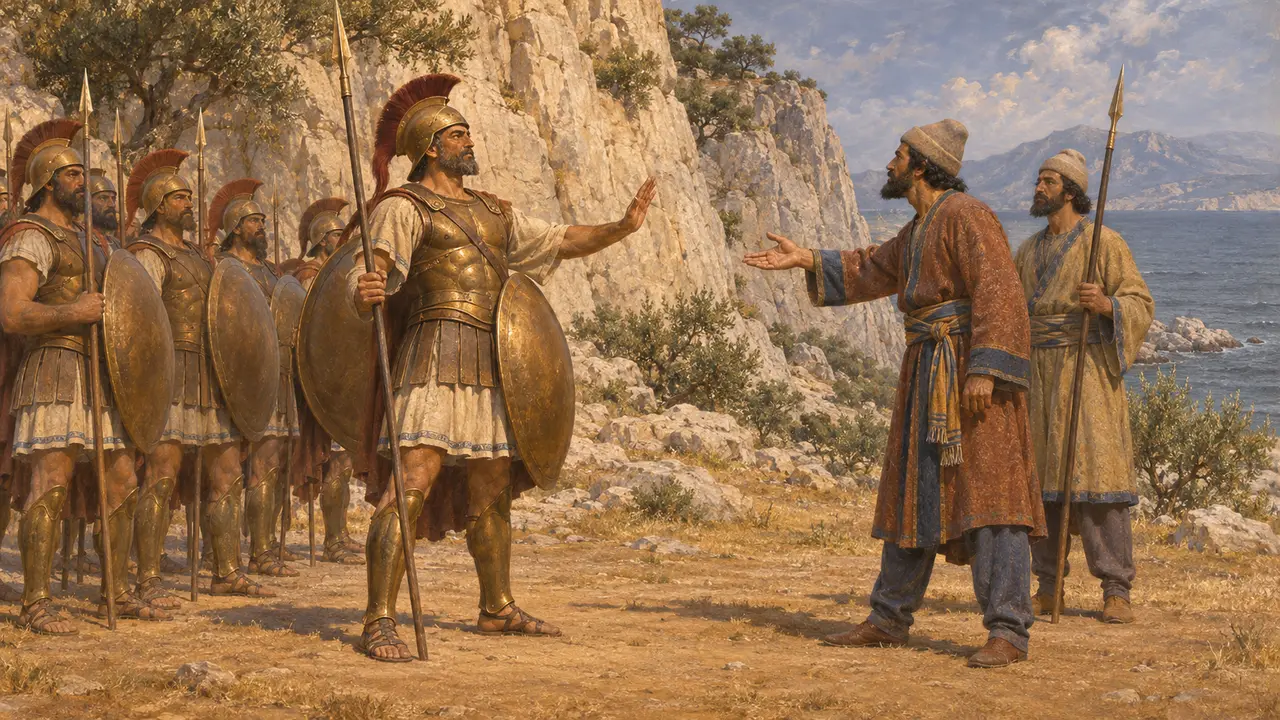
Later legendPlutarch's collection of Spartan sayings has Leonidas answer a demand to hand over his arms with the words come and take them. Diodorus tells of a Greek night raid on the King's tent, which Herodotus does not mention. These stories were written down centuries later and shaped to praise Spartan courage. They are best read as tradition, not as reports of what was said or done.
Plutarch, Sayings of the Spartans; Diodorus 11.9-10
Sources
- Herodotus 7.175-239
- Diodorus 11.4-11
- Plutarch, On the Malice of Herodotus
- J. F. Lazenby, The Defence of Greece 490-479 BC, 1993
- P. Cartledge, Thermopylae: The Battle That Changed the World, 2006
- P. Briant, From Cyrus to Alexander, 2002