Encyclopedia › Battles and events
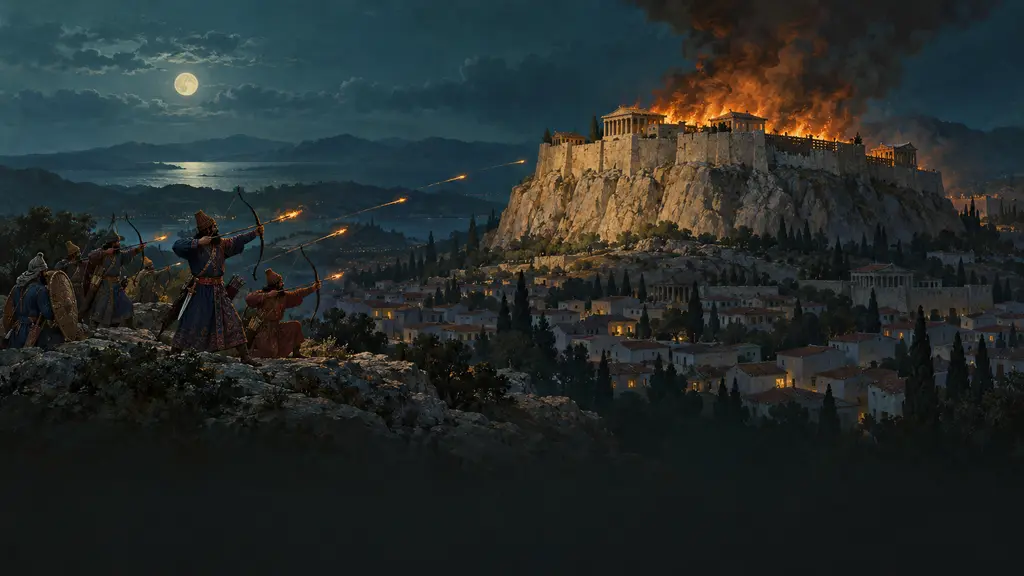
The Persian capture of Athens
Xerxes' taking and burning of Athens and its Acropolis, late summer 480 BCE
In late summer 480, a few weeks after Thermopylae, Xerxes' army entered Attica and found Athens nearly empty. A handful of defenders held the Acropolis until the Persians climbed the cliff, killed them and burned the temples. Herodotus links the burning to revenge for Sardis, but the Athenian fleet survived to fight at Salamis. No Persian text mentions the capture.
In the game: The game shows a siege of Athens and the burning of the Acropolis and Athena's olive. In Herodotus only the Acropolis held out, since the lower city stood empty, and the refuges were Troezen, Aegina and Salamis.
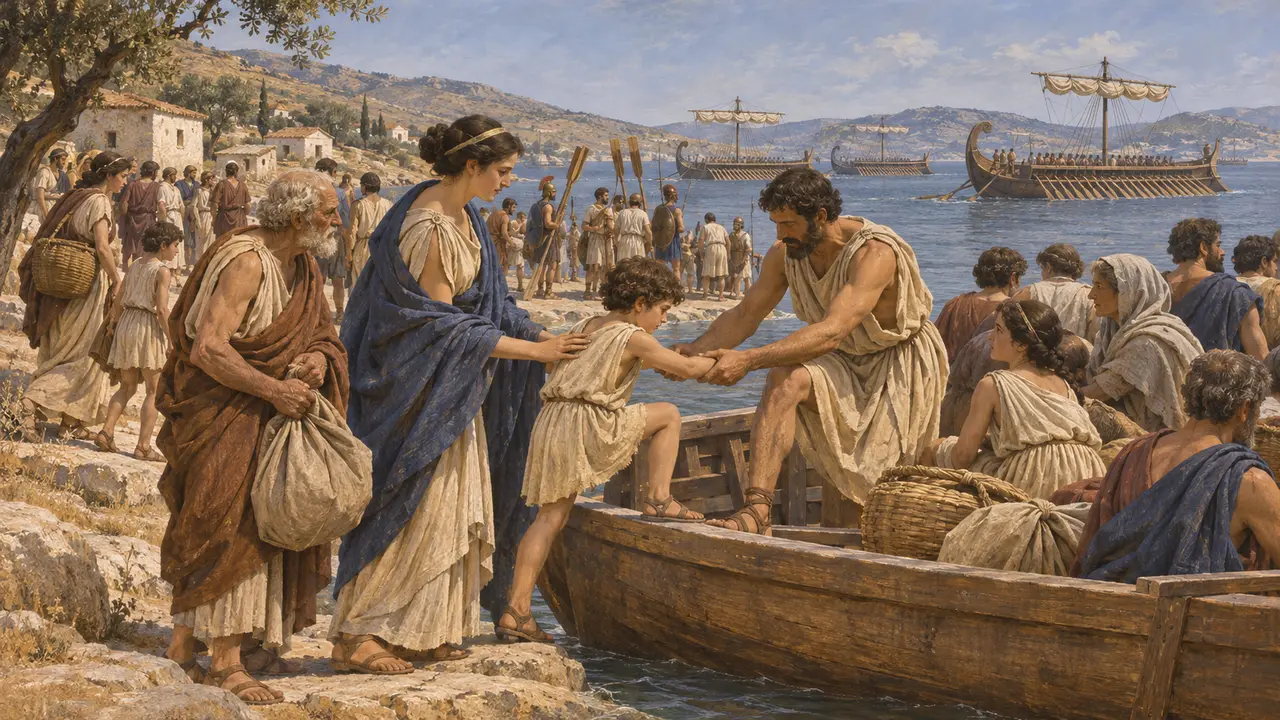
The evacuation of Attica
Ancient accountHerodotus says that when the Greek fleet came back from Artemisium, the Athenians asked it to put in at Salamis while they moved their families out of Attica. A proclamation told each Athenian to save his children and household as best he could. Most sent them to Troezen in the Peloponnese, and others sent them to Aegina and Salamis. The men then crewed the fleet, to which Herodotus says Athens gave 180 ships at Salamis.
Herodotus 8.40-41, 8.44
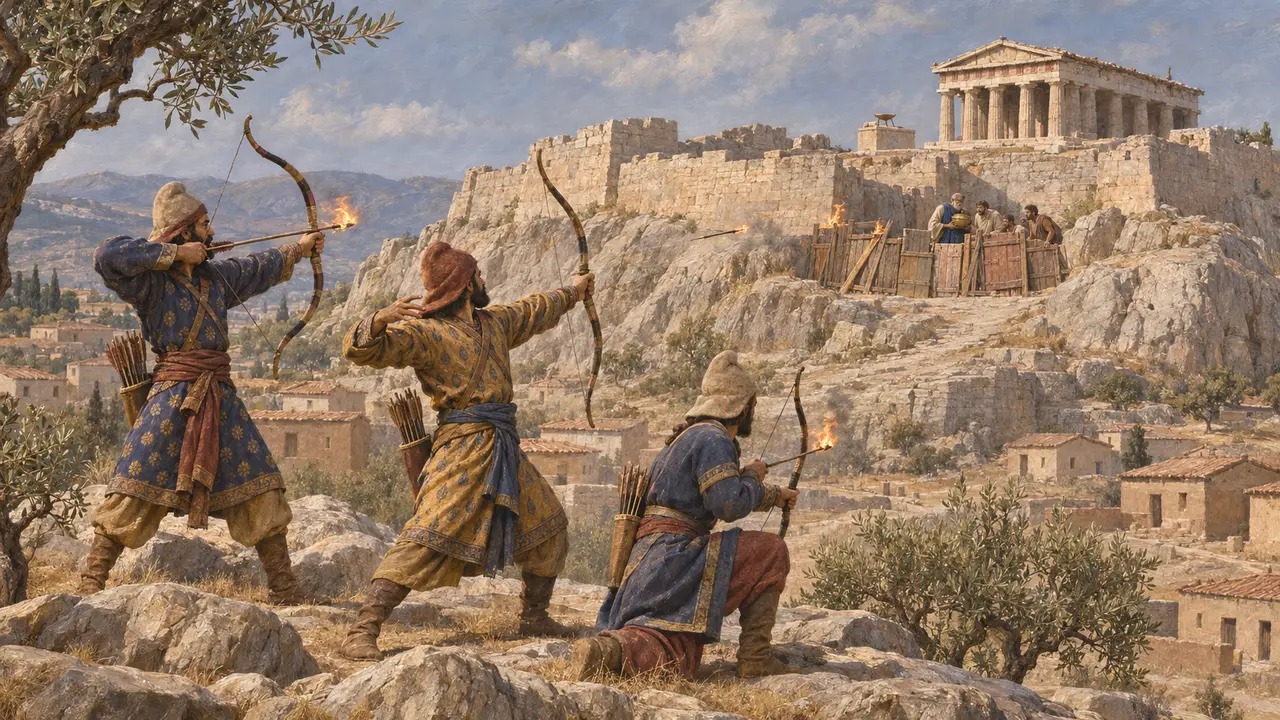
The siege of the Acropolis
Ancient accountHerodotus says the Persians found the city empty except for a few temple treasurers and poor men on the Acropolis. These men had built a barricade of doors and planks, taking it for the oracle's wooden wall. From the Areopagus the Persians shot burning arrows into the barricade. The defenders refused terms offered through the Pisistratids. Soldiers then climbed the steep face by the shrine of Aglaurus, killed the defenders, plundered the temple and burned the Acropolis.
Herodotus 8.51-53
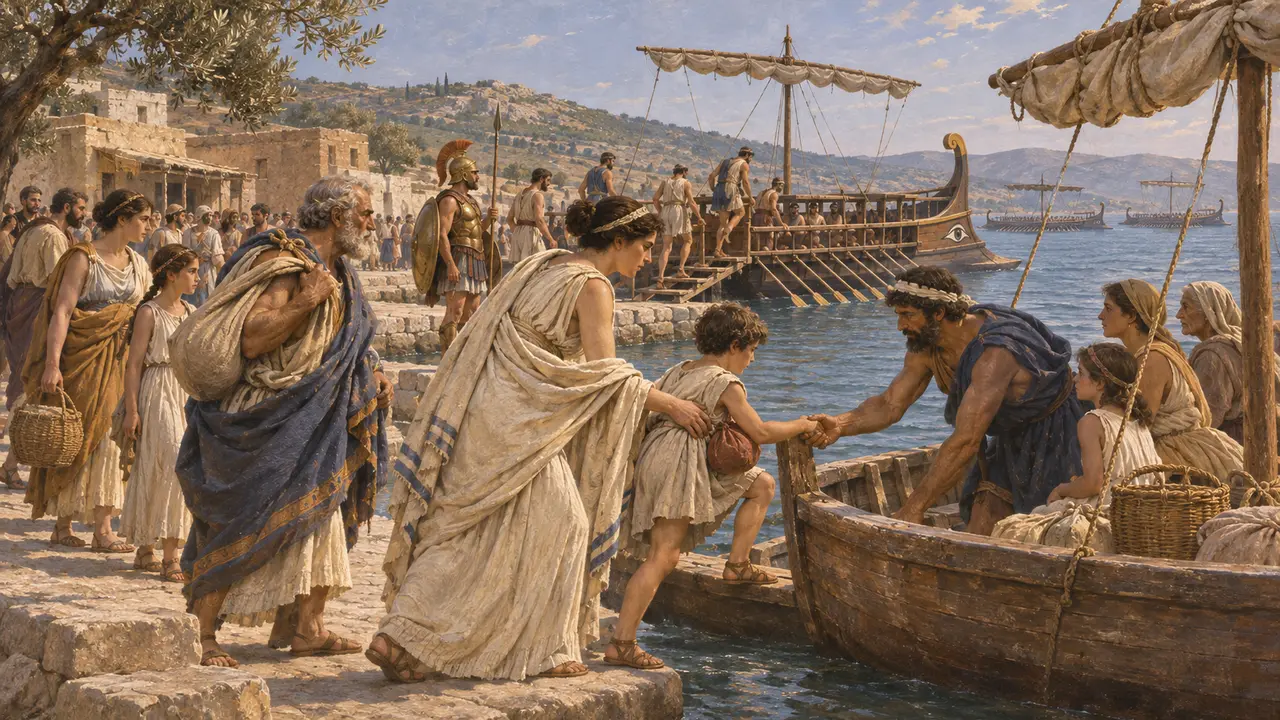
The Troezen decree
DisputedIn 1960 a marble slab from Troezen was published as a decree moved by Themistocles, ordering the evacuation of Attica and the manning of 200 ships. It was carved in the 3rd century, about two hundred years after the events. Some historians think it preserves a genuine decree, perhaps passed before Thermopylae. Others see a later patriotic reconstruction. If genuine, it points to a planned evacuation rather than the hurried one Herodotus describes.
M. H. Jameson, A Decree of Themistokles from Troizen, Hesperia 29, 1960
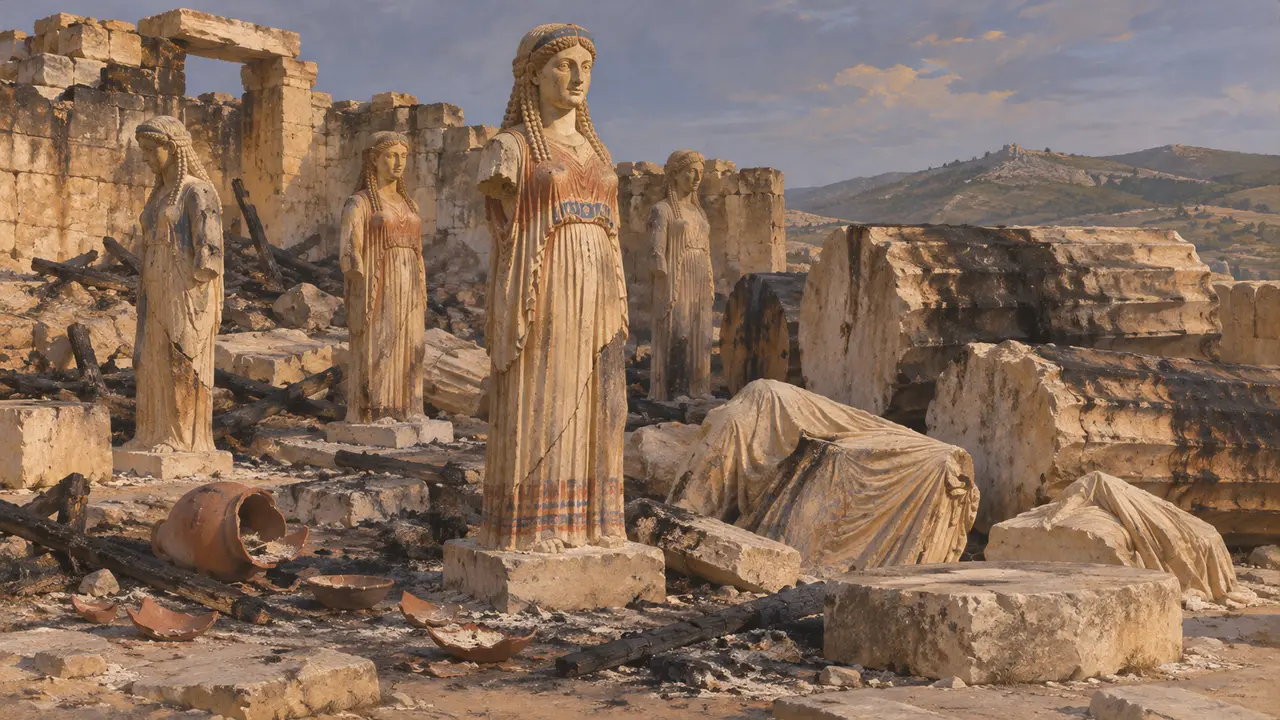
The burned debris on the Acropolis
In the recordExcavations on the Acropolis in 1885-1890 found statues of korai, inscribed bases and pottery buried in fills, many of them broken and scorched. Archaeologists long linked all this debris with the Persian sacks of 480 and 479, though some deposits may have been laid down later. Burned column drums from the unfinished Older Parthenon were built into the north wall of the Acropolis, where they can still be seen.
J. M. Hurwit, The Athenian Acropolis, 1999
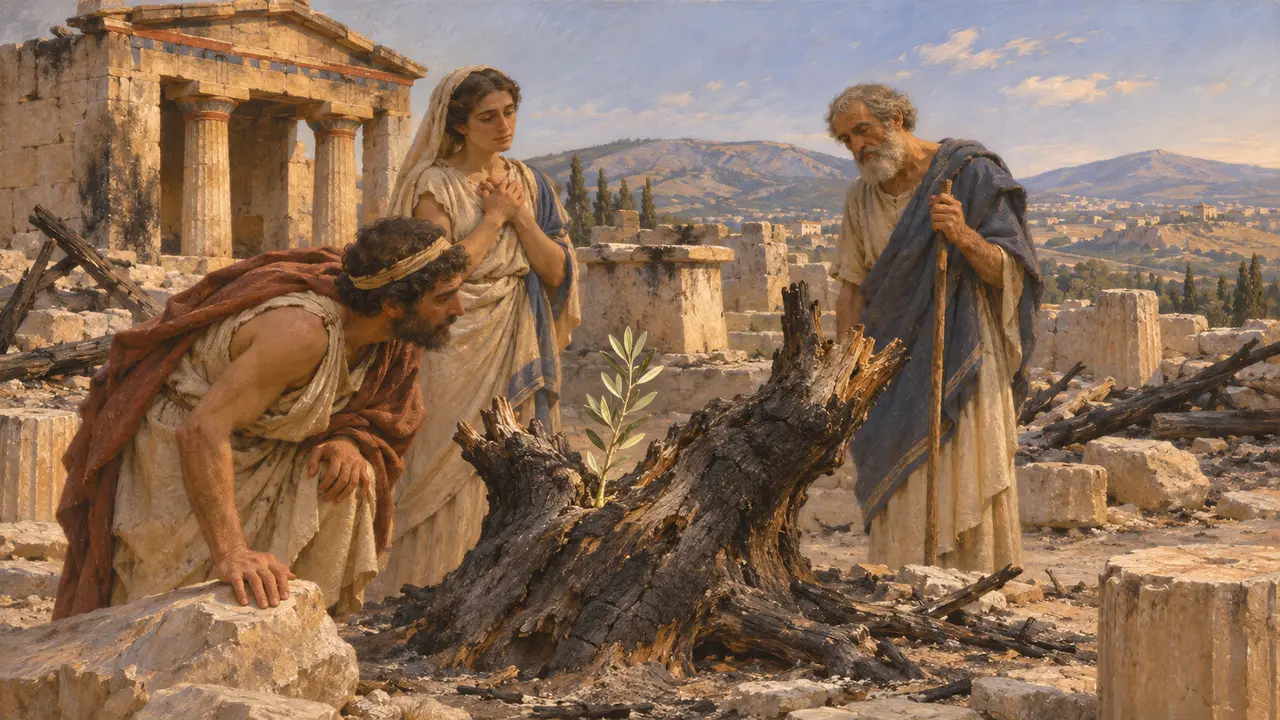
The sacred snake and Athena's olive
Later legendHerodotus tells two omens. Before the evacuation, the monthly honey-cake for the sacred snake that guarded the Acropolis lay untouched, and the Athenians took this to mean the goddess had left. Plutarch says Themistocles used the sign to urge departure. After the burning, Athenian exiles sent by Xerxes to sacrifice found that Athena's burned olive had put out a shoot about a cubit long. Both stories read as signs of Athenian survival.
Herodotus 8.41, 8.54-55; Plutarch, Themistocles 10
Sources
- Herodotus, Histories 8.40-55
- Herodotus, Histories 5.102
- J. M. Hurwit, The Athenian Acropolis, 1999
- M. H. Jameson, A Decree of Themistokles from Troizen, Hesperia 29, 1960
- Plutarch, Themistocles 10
- P. Briant, From Cyrus to Alexander, 2002