Athena's Olive
Sacred olive tree on the Acropolis of Athens, burned by the Persians in 480 BCE
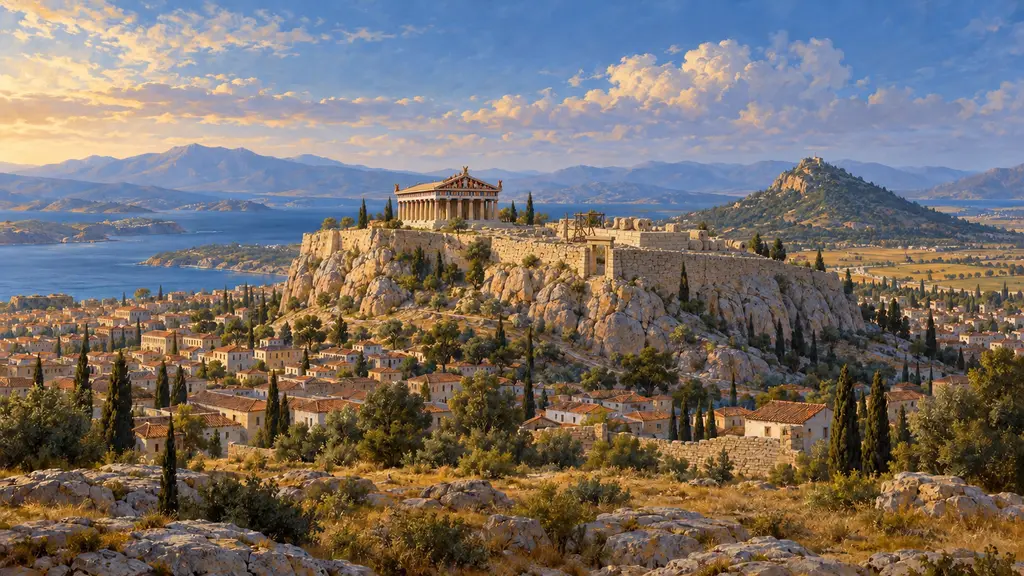
Athena's Olive was the sacred olive tree on the Acropolis of Athens, which Athenians believed the goddess herself had made grow there. Herodotus says it burned when Xerxes' army sacked the Acropolis in 480, and that a day later a new shoot had sprung from the stump. Athenians probably told the story as a sign that their city would outlast the invasion.
In the game: The olive stands on a level's map as a historic feature and is not built by the player. The game sets it by the old temple. Herodotus puts it inside the shrine of Erechtheus, so the game's placement is a simplification.
The goddess's gift
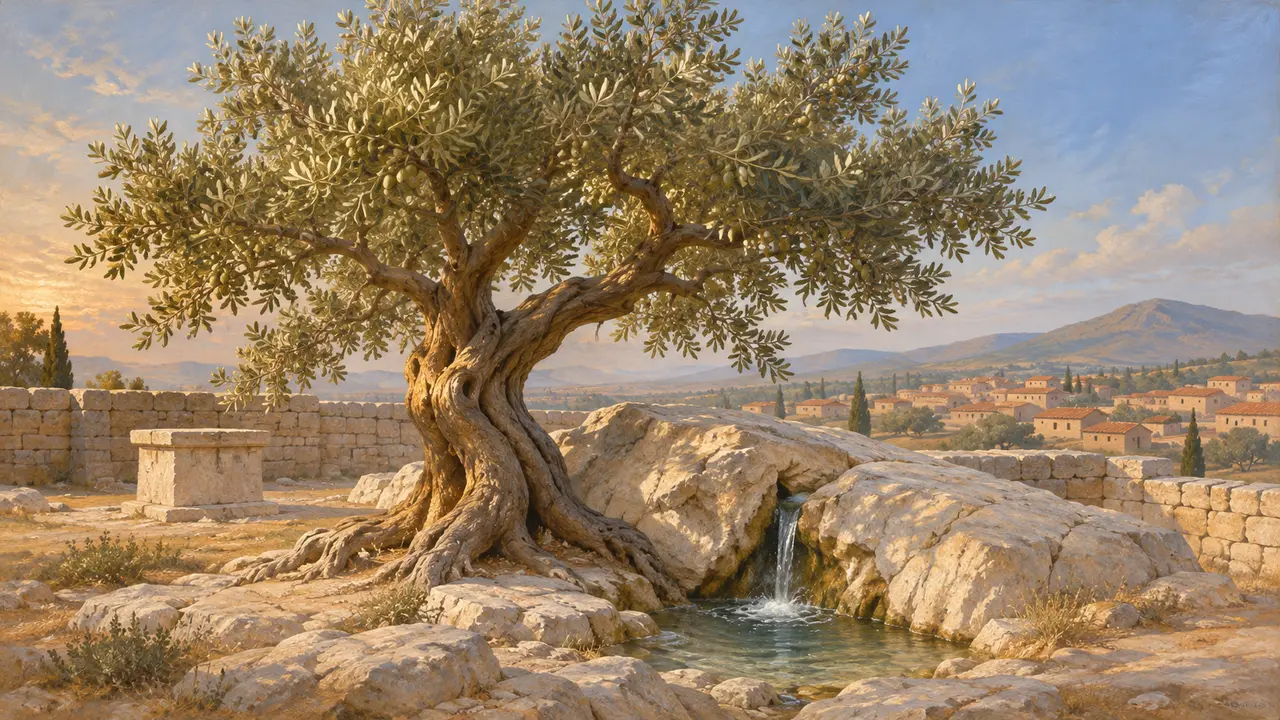
Later legendAthenians told that Athena and Poseidon once competed for their land: Poseidon struck the rock and brought up a spring of salt water, and Athena made an olive grow. The land was awarded to Athena. Herodotus mentions the olive and the salt spring only as the tokens of this contest. The fuller versions of the myth come from much later writers such as Apollodorus.
Herodotus 8.55; Apollodorus, Library 3.14.1
In the shrine of Erechtheus
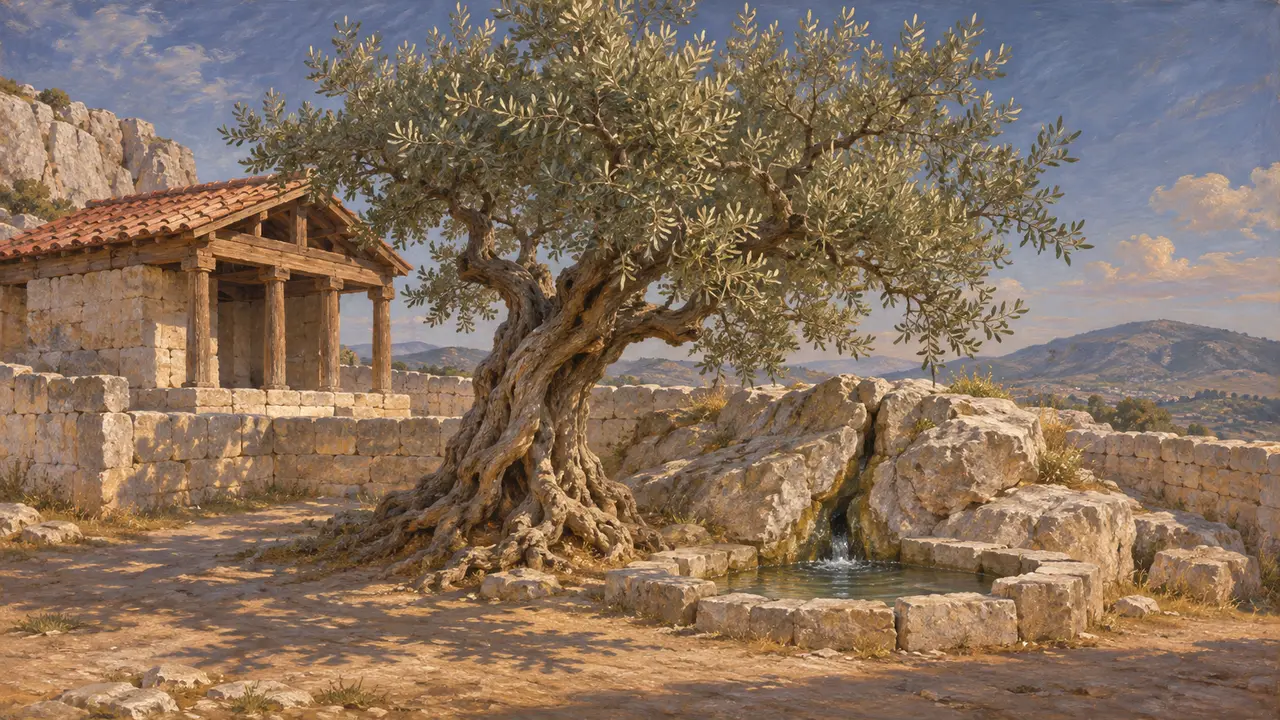
Ancient accountHerodotus places the olive inside the temple of Erechtheus, the earth-born king of early Athens, together with the salt-water spring. Later ancient writers and modern scholars put the tree in the Pandroseion, the open precinct of Pandrosos west of the later Erechtheion. Pausanias, describing the Acropolis in the 2nd century CE, still knew of the olive and repeated that it was the goddess's proof in the contest.
Herodotus 8.55; Pausanias 1.27.2
Burned and sprouting again
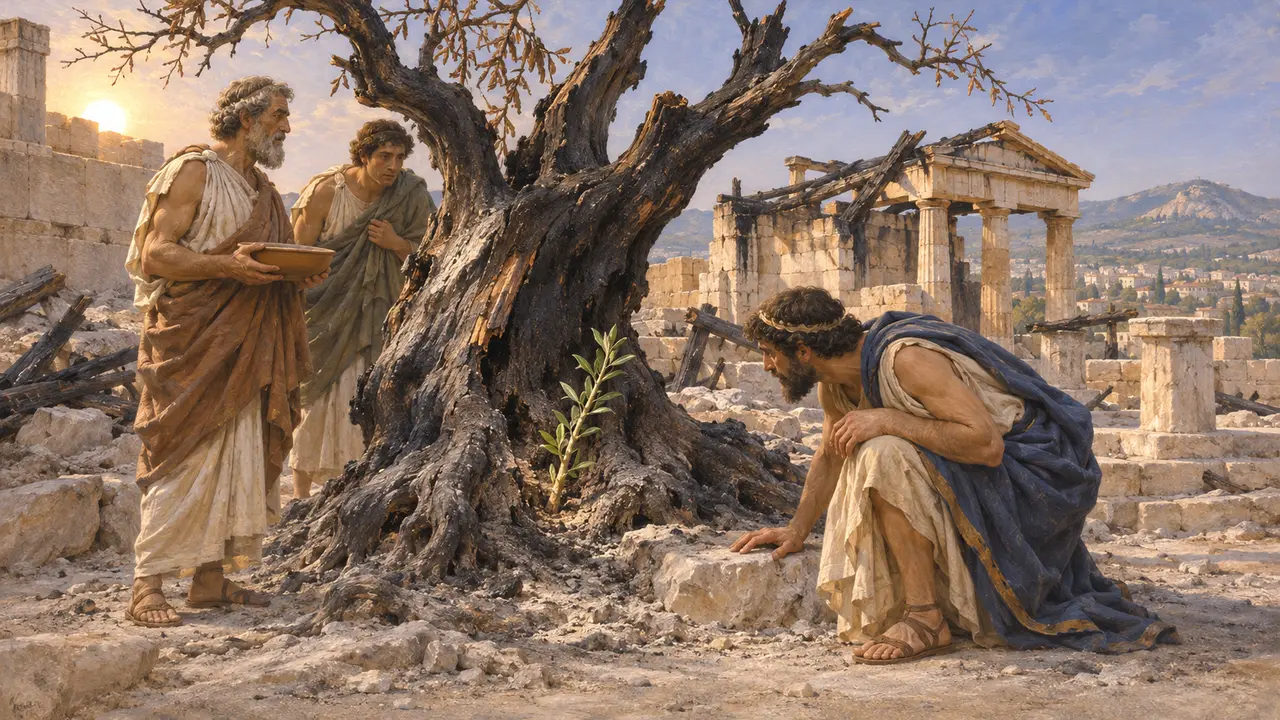
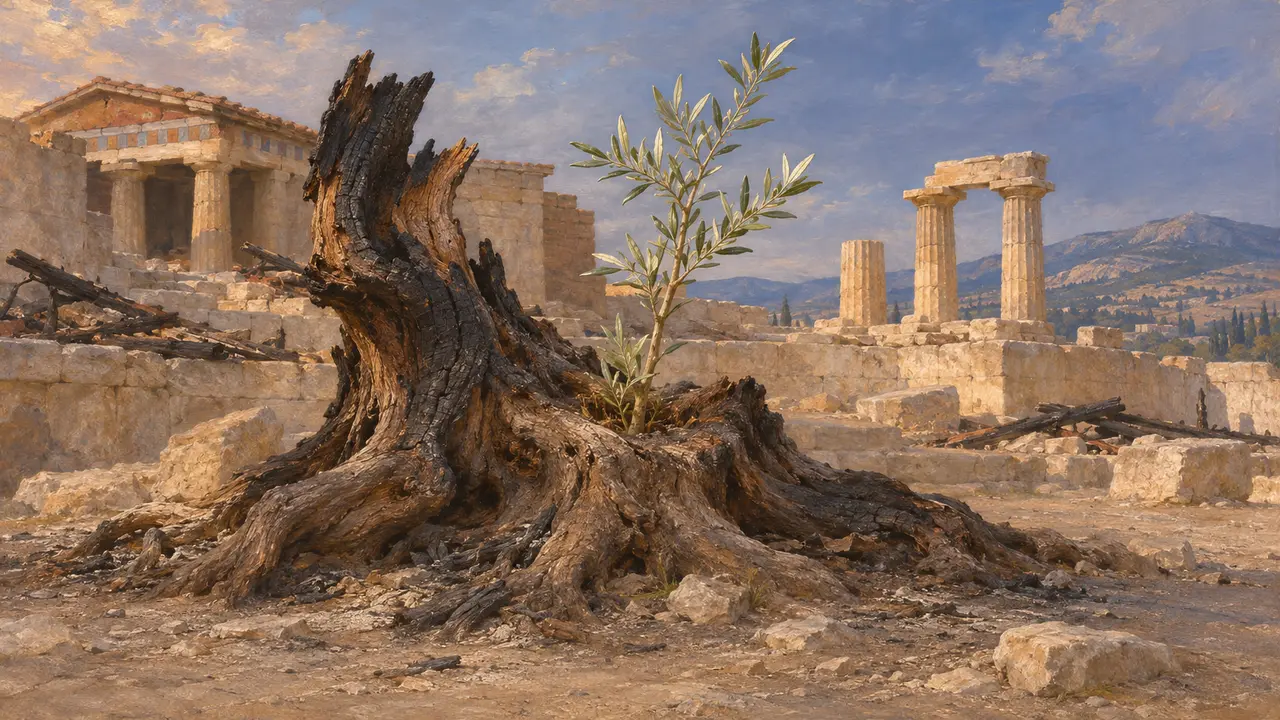
Ancient accountIn 480 the Persians climbed the Acropolis, killed its last defenders and burned the sanctuary. Herodotus says that the next day Xerxes ordered the Athenian exiles in his following to go up and sacrifice in their own manner, perhaps because of a dream or regret for the burning. The exiles found that a shoot about a cubit long, roughly half a metre, had grown from the burnt olive.
Herodotus 8.53-55
Traces of the sack
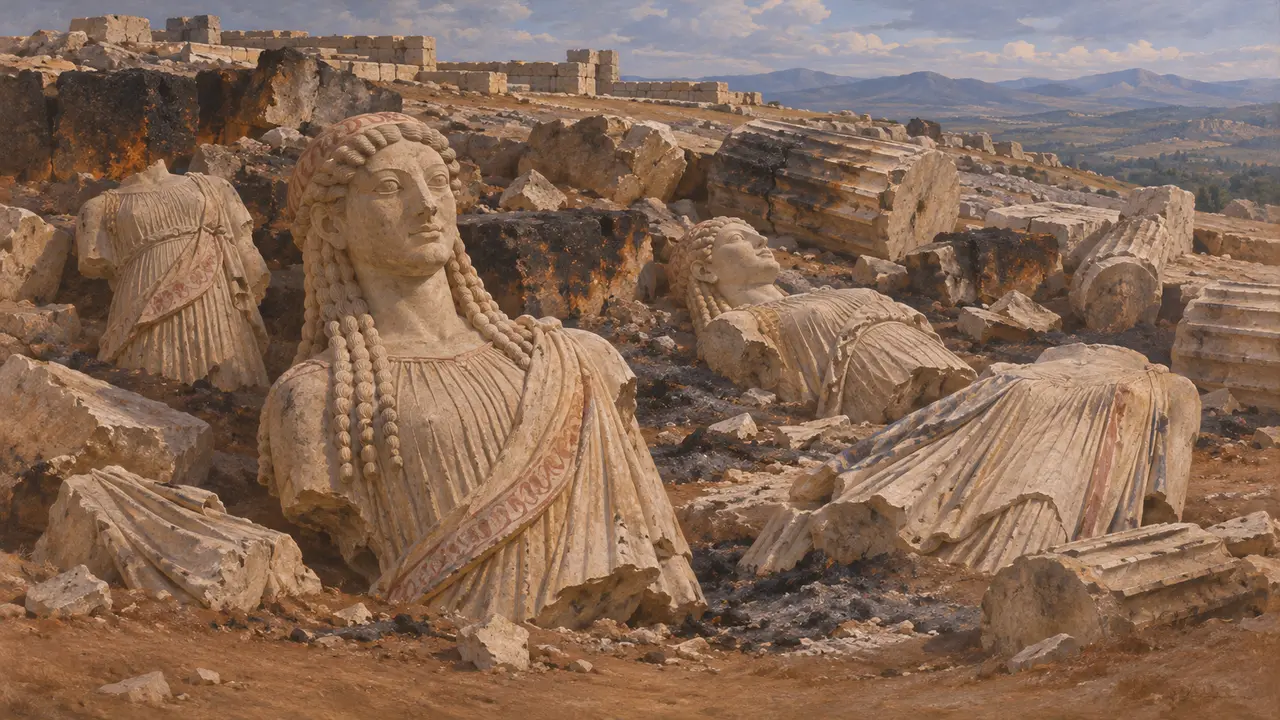
In the recordExcavations on the Acropolis in the 1880s uncovered debris from the Persian destruction. It included burnt building stone and broken marble statues, among them many korai, buried when the Athenians later cleared and levelled the hill. The sacred tree itself left no remains that can be identified. The olive growing on the spot today is a modern planting.
J. Hurwit, The Athenian Acropolis, 1999
How the story grew
DisputedPausanias, writing some six centuries later, reports a tradition that the olive grew again on the very day it burned and reached two cubits. Herodotus gives one cubit, a day later. Historians note that olives often resprout from burnt stumps, so the regrowth could be real. Many also see the tale as Athenian tradition shaped into an omen of the city's survival.
Herodotus 8.55; Pausanias 1.27.2
Sources
- Herodotus 8.53-55
- Pausanias 1.27.2
- Apollodorus, Library 3.14.1
- J. Hurwit, The Athenian Acropolis, 1999