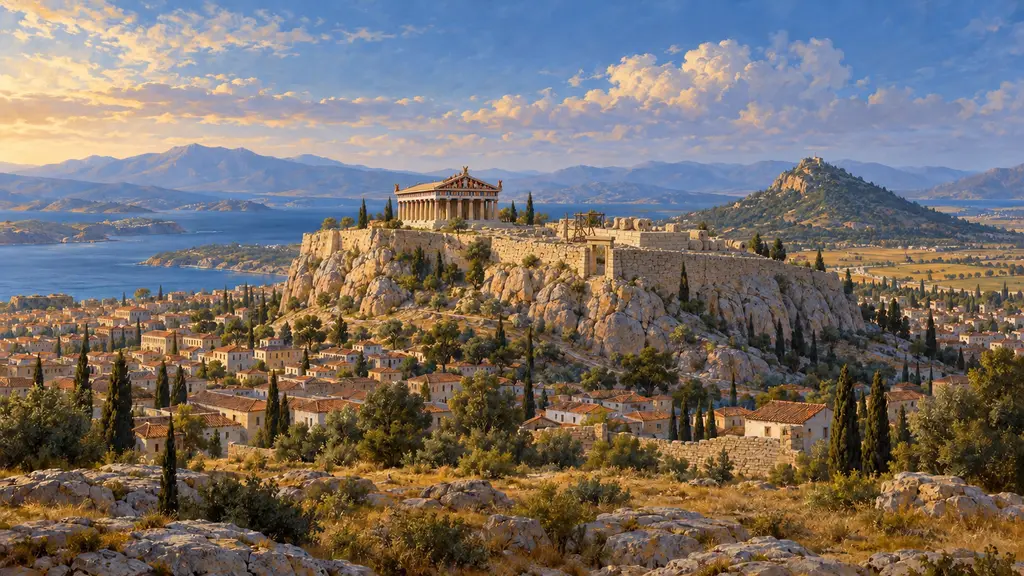
Old Temple of Athena
Temple of Athena Polias on the Athenian Acropolis, burned by the Persians in 480 BCE
The Old Temple was the main temple of Athena Polias, guardian of Athens. It stood on the Acropolis between the sites of the later Parthenon and Erechtheion and probably housed the ancient olive-wood image of the goddess. When Xerxes' army took the Acropolis in 480 the sanctuary was plundered and burned, and its ruin became one of the lasting Greek memories of the Persian invasion.
In the game: The Old Temple stands on a level's map as a historic building that the player cannot build. The game's note that the Persians burned it in 480 follows Herodotus 8.53.
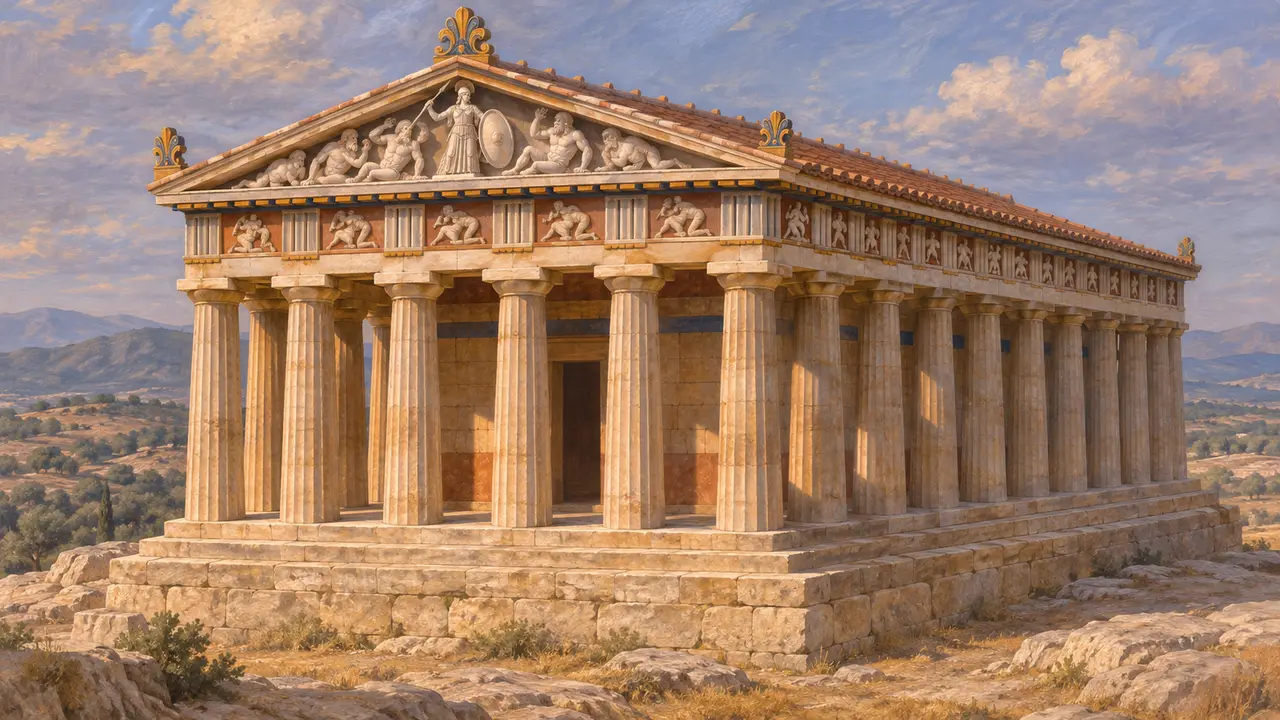
Foundations between two later temples
In the recordWilhelm Dörpfeld identified its limestone foundations in 1885, just south of the Erechtheion. They belong to a Doric temple with columns on all four sides. It was probably built about 525-500, perhaps under the sons of Pisistratus or soon after the reforms of 508. Parts of its marble pediment survive, showing Athena fighting the giants, and are now in the Acropolis Museum.
W. Dörpfeld, Der alte Athenatempel auf der Akropolis, 1885; J. M. Hurwit, The Athenian Acropolis, 1999
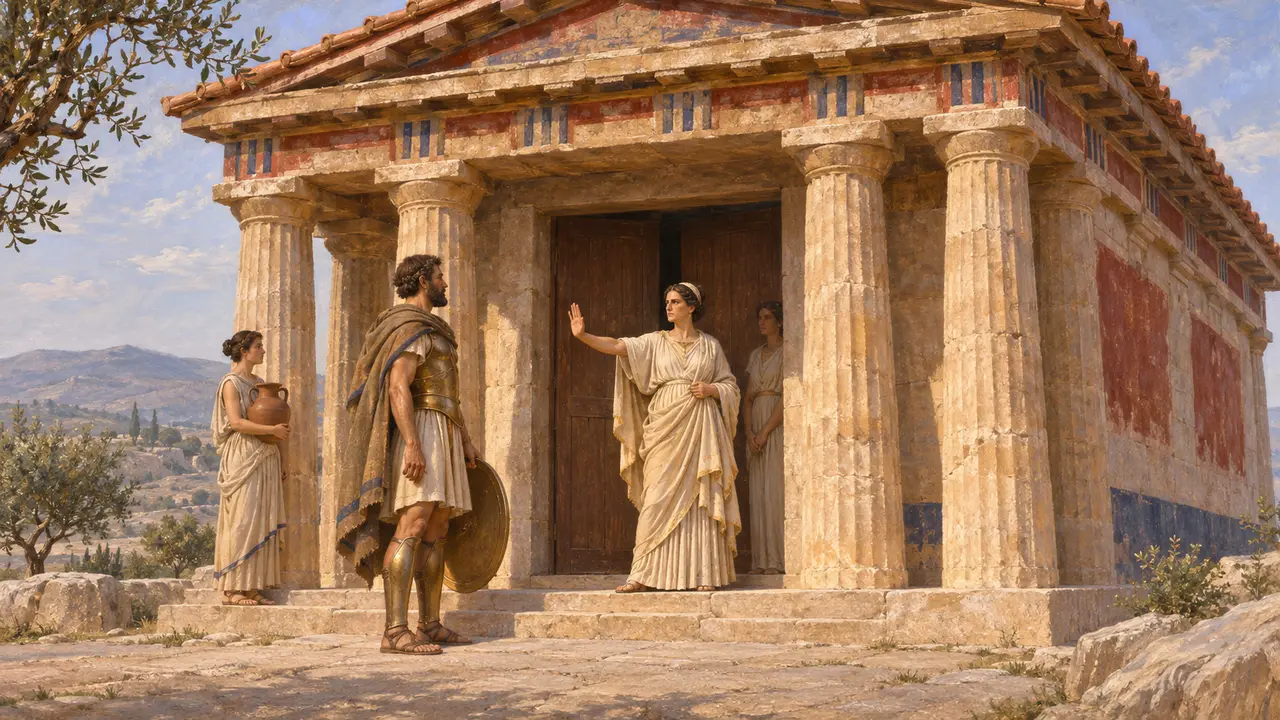
An older temple on the same spot
DisputedHistorians disagree about what stood here earlier. Some place a temple of about 570-560 on these foundations, decorated with limestone sculpture such as the three-bodied monster nicknamed Bluebeard. Others put that early building under the later Parthenon. Herodotus says a priestess stopped the Spartan king Cleomenes at the doors of the goddess's shrine in 508, so a temple of Athena stood on the rock by then, though he does not say which building it was.
Herodotus 5.72; J. M. Hurwit, The Athenian Acropolis, 1999
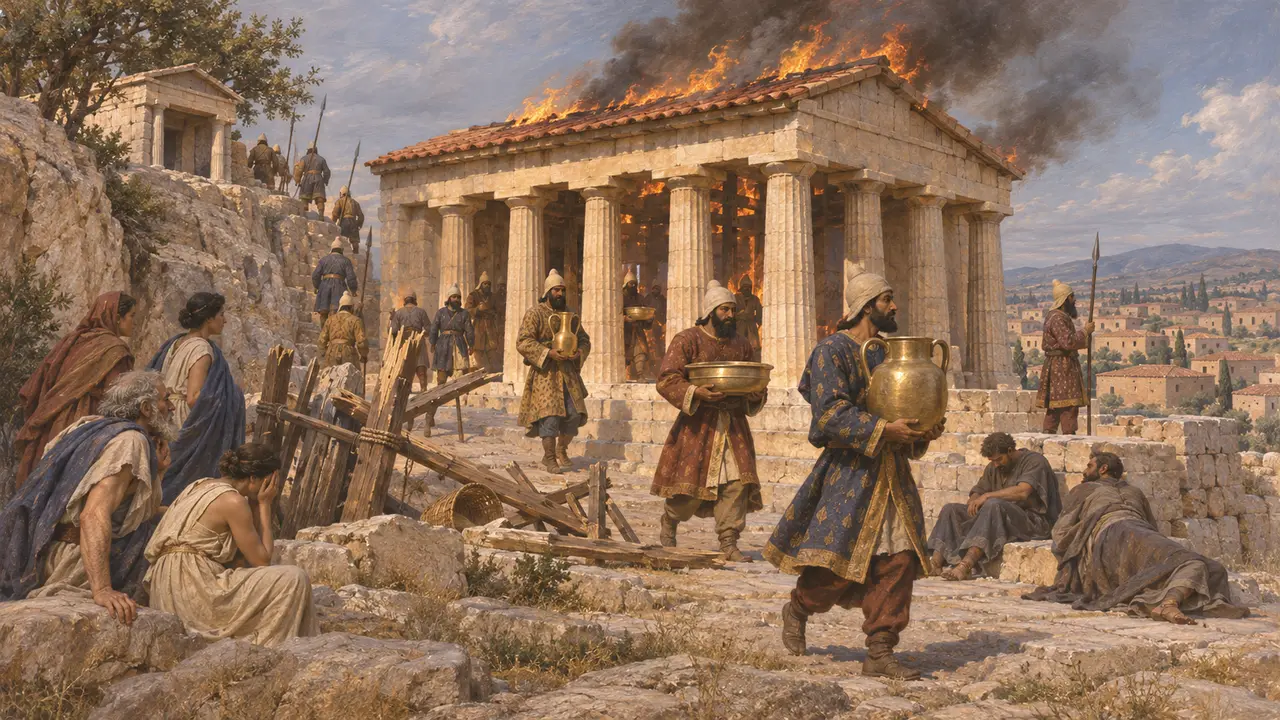
The sack of 480
Ancient accountHerodotus says most Athenians left the city, but temple treasurers and poor citizens held the Acropolis behind a wooden barricade. The Persians climbed the steep side near the shrine of Aglaurus, killed the defenders and suppliants, plundered the sanctuary and burned the whole Acropolis. He adds that Xerxes sent a rider to Susa with the news. No Persian text that survives mentions the event.
Herodotus 8.51-54
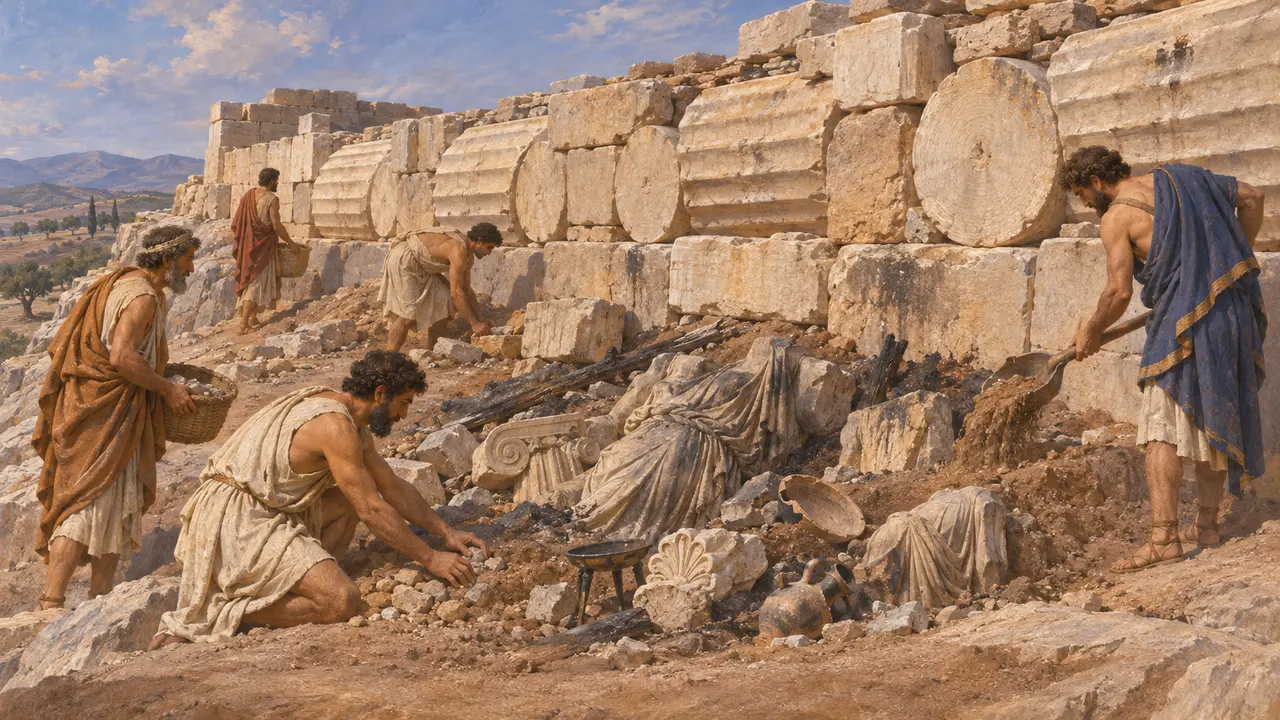
The Persian debris
In the recordExcavations on the Acropolis in 1885-1890 found burned sculpture, offerings and building pieces buried in fill laid down when the Athenians levelled the rock after the war. This deposit is called the Persian debris, though some of it may have been buried later. Blocks from the Old Temple and column drums from the unfinished Older Parthenon were built into the north wall of the Acropolis, where they can still be seen.
P. Kavvadias and G. Kawerau, Die Ausgrabung der Akropolis, 1906; J. M. Hurwit, The Athenian Acropolis, 1999
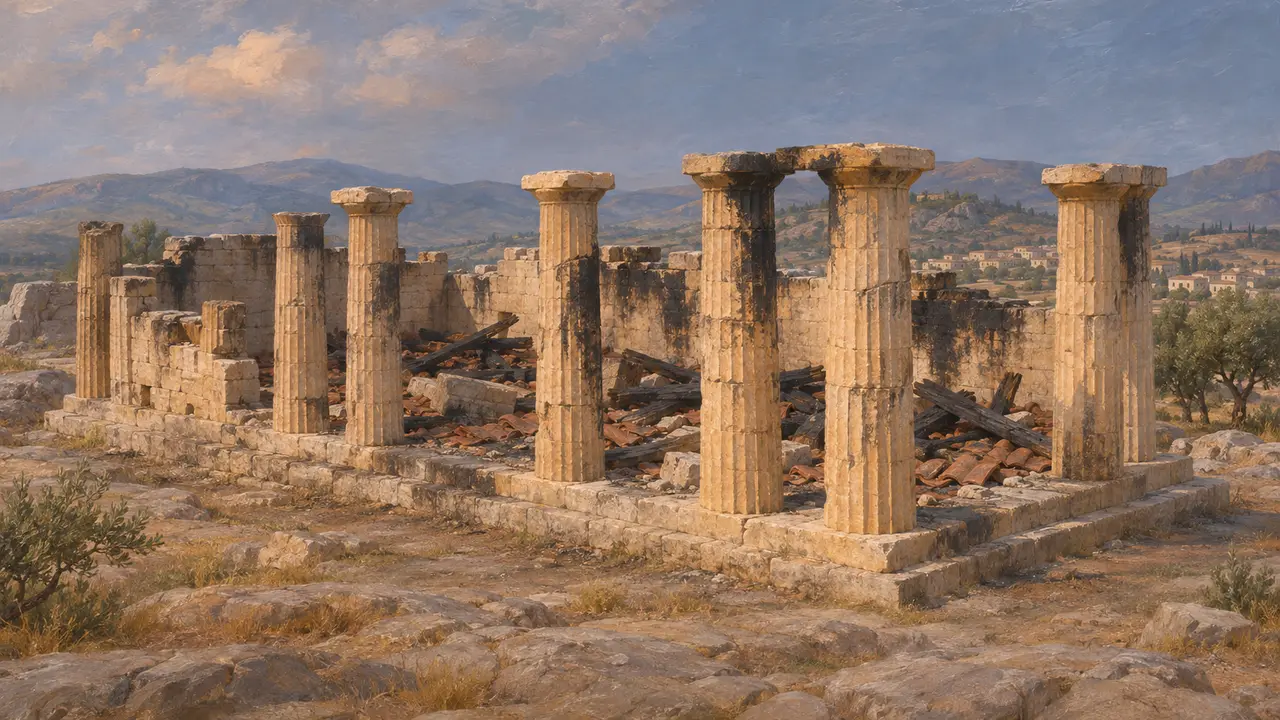
A ruin left standing
DisputedHistorians still argue over whether the burned temple was patched up. Some think its western rooms were repaired as a treasury, and that the old temple of Athena which Xenophon says caught fire in 406 was this building. Others think it was cleared soon after 480. Lycurgus and Diodorus report an oath sworn before Plataea not to rebuild temples burned by the barbarians, but its authenticity was doubted in antiquity and still is.
Xenophon, Hellenica 1.6.1; Lycurgus, Against Leocrates 81; Diodorus 11.29
Sources
- Herodotus 8.51-55
- Herodotus 5.72
- J. M. Hurwit, The Athenian Acropolis, 1999
- P. Kavvadias and G. Kawerau, Die Ausgrabung der Akropolis, 1906
- Xenophon, Hellenica 1.6.1
- Diodorus 11.29