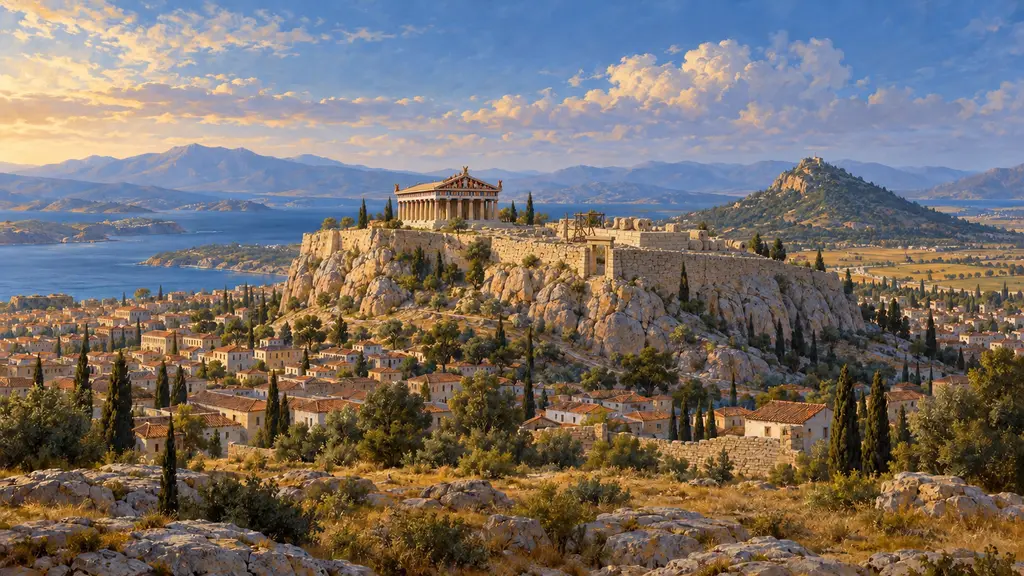
Altars and Statues
Dedications and small shrines on the Acropolis of Athens, sacked in 480 BCE
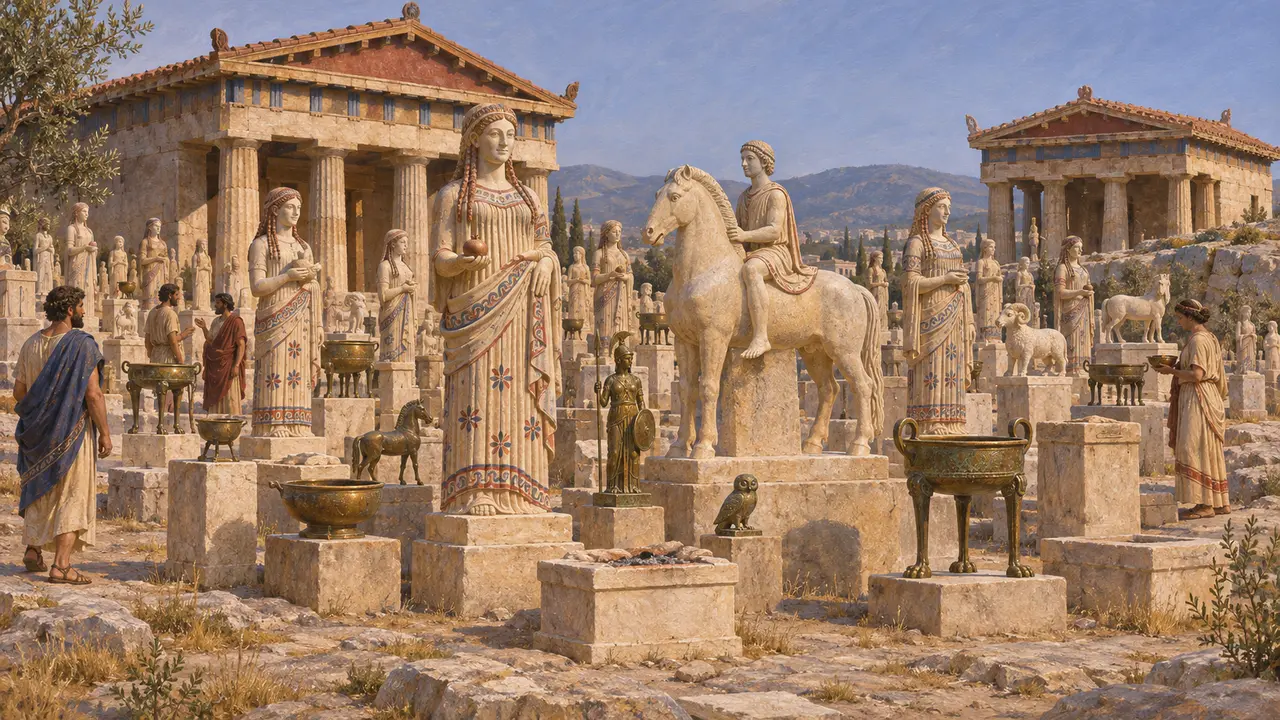
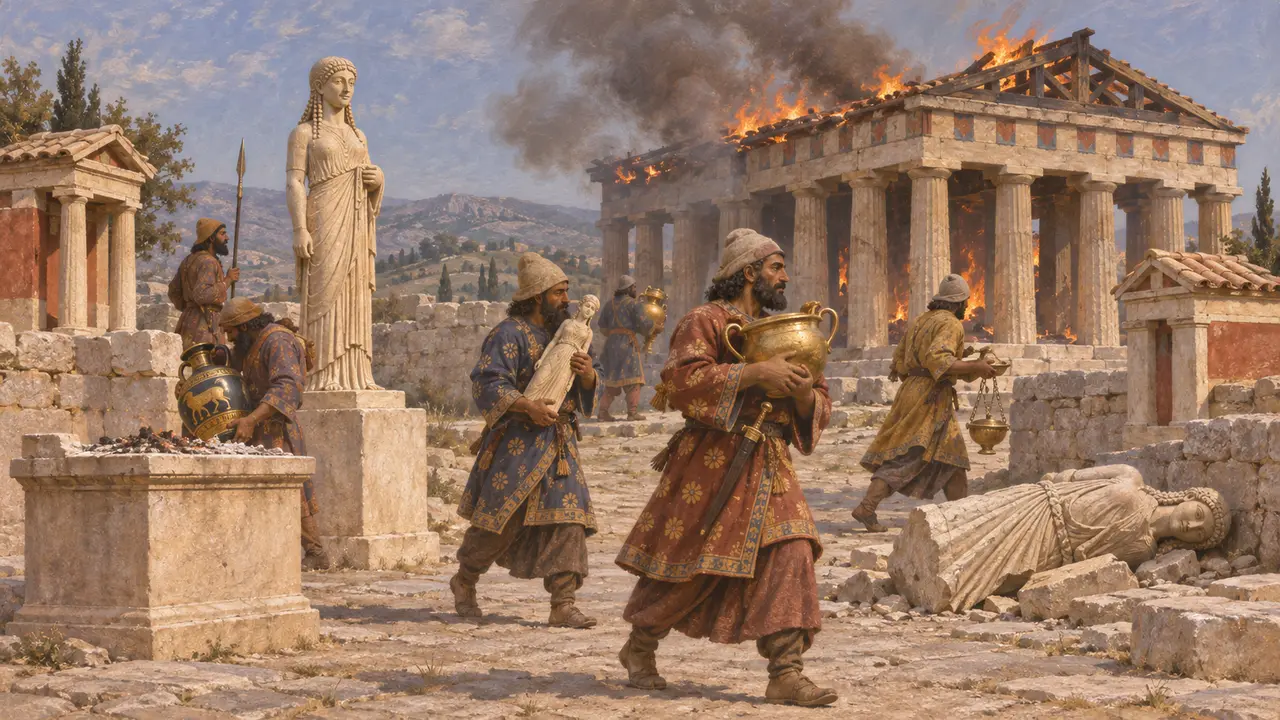
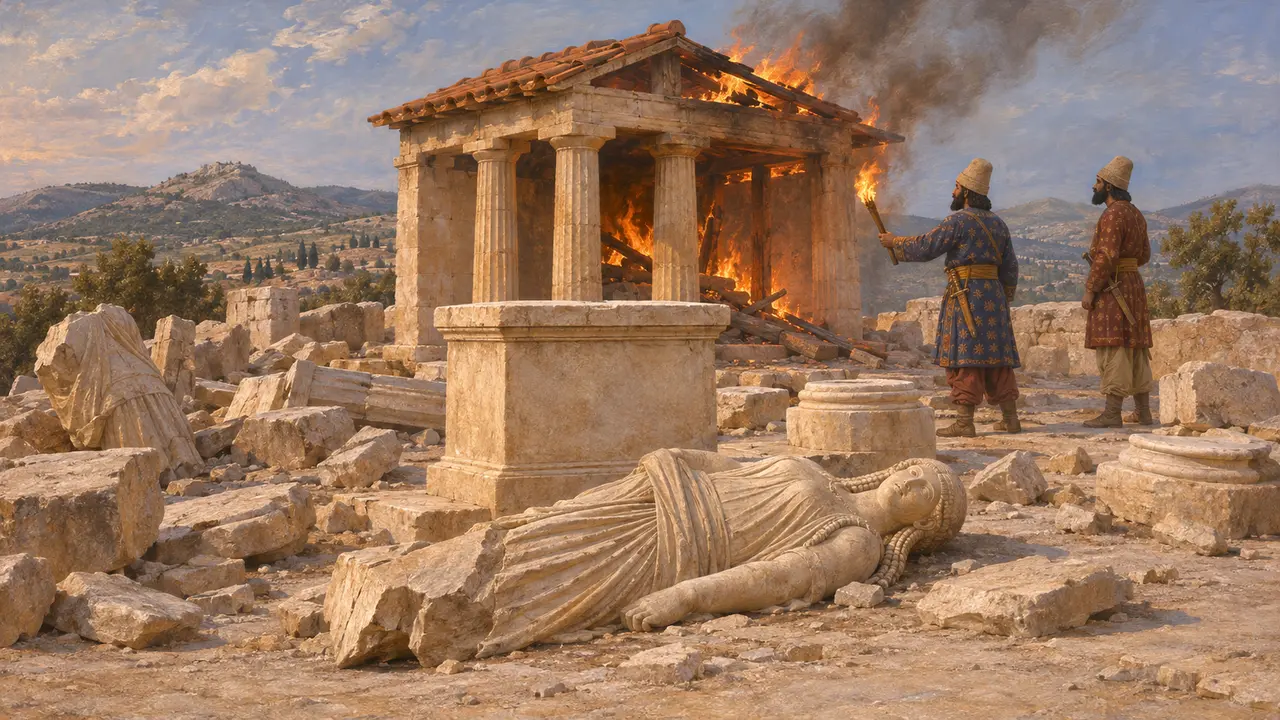
Before 480 the Athenian Acropolis was crowded with altars, small shrines and hundreds of offerings: marble maidens, horsemen, bronzes and inscribed bases set up by families and officials. When Xerxes' army took the rock, it looted and burned the sanctuary. The broken statues later buried by the Athenians are now among the best surviving works of Archaic Greek sculpture.
In the game: The Altars and Statues stand on a level's map as a historic structure that the player does not build. The game's description follows Herodotus 8.53 on the Persian plunder and burning of the rock.
A rock crowded with gifts
In the recordExcavation shows that in the 6th and early 5th centuries Athenians filled the open ground between the temples with dedications to Athena. Many were marble korai and riders, and others were bronze figures and vessels. Hundreds of inscribed bases survive, naming potters, officials and wealthy families who gave the goddess a tenth of their profits or a first-fruits offering.
A. E. Raubitschek, Dedications from the Athenian Akropolis, 1949; J. Hurwit, The Athenian Acropolis, 1999
The sack of 480
Ancient accountHerodotus says that Persian soldiers climbed the unguarded steep face near the shrine of Aglaurus. Some defenders leapt from the wall to their deaths, and the Persians killed those who had taken refuge in the temple, then plundered the sanctuary and set fire to the whole Acropolis. Xerxes next ordered Athenian exiles in his train to sacrifice there in their own way.
Herodotus 8.52-54; Herodotus 5.102
The buried statues
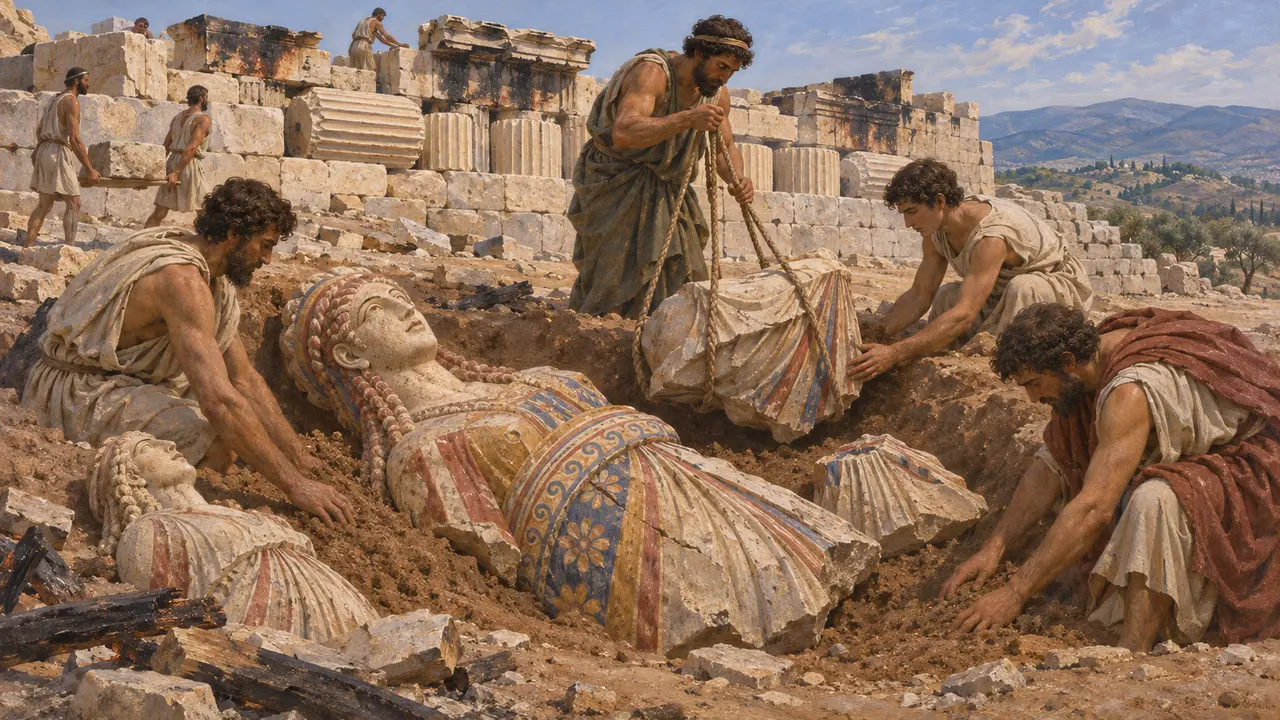
In the recordAfter the war the Athenians cleared the wreckage and buried broken statues and burnt architecture in the fill of new terraces. Excavators uncovered these deposits between 1885 and 1890 and found korai with their paint still visible. Burnt column drums and pieces of entablature were also built into the north wall of the Acropolis, where they can still be seen.
J. Hurwit, The Athenian Acropolis, 1999
How much was the Persians' work
DisputedArchaeologists call the deposits the Persian debris, but not all of it was buried at once, and some fill may date to building works decades later. Athens was also occupied a second time, in 479, when Herodotus says Mardonius burned whatever still stood. Historians still argue over whether certain statues, such as the Kritios Boy, were made before or after 480.
Herodotus 9.13; J. Hurwit, The Athenian Acropolis, 1999
The oath not to rebuild
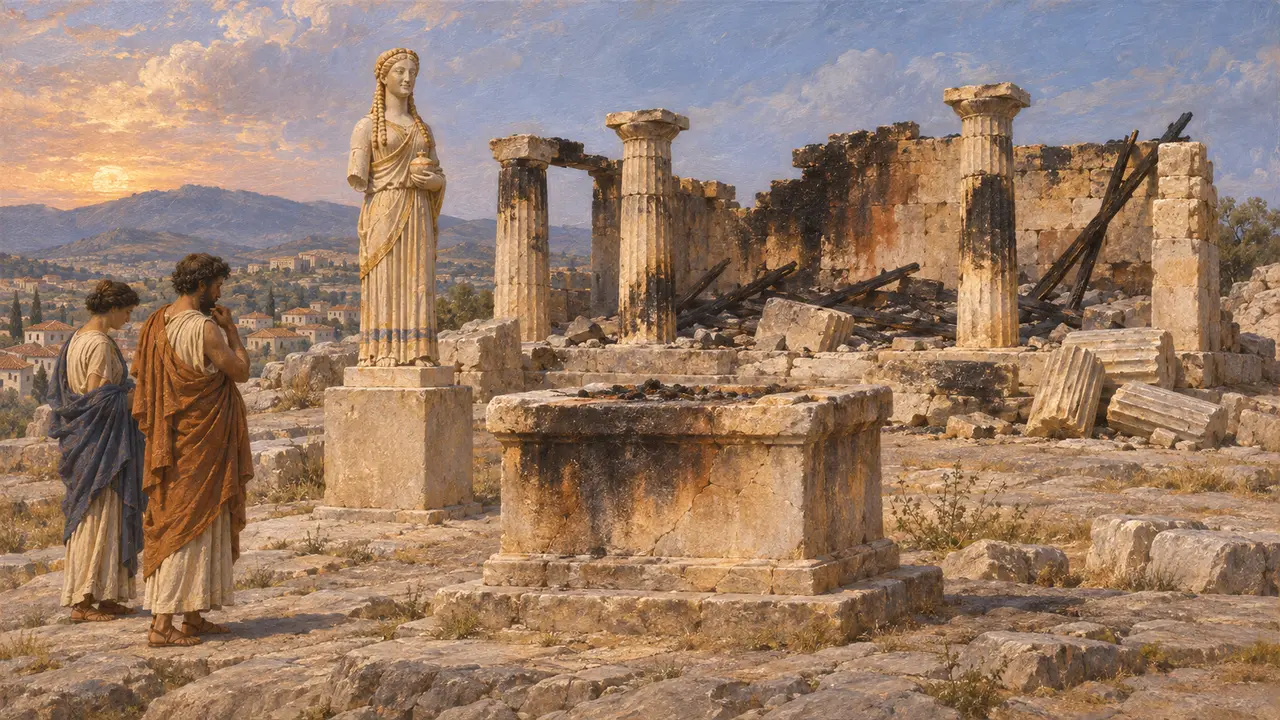
DisputedIn the 4th century Athenians claimed that the Greeks had sworn, before Plataea, to leave the burned sanctuaries in ruins as a memorial. The orator Lycurgus quotes the oath and the historian Diodorus repeats it. Theopompus, however, called the oath an Athenian fabrication, and a 4th-century inscribed copy found at Acharnae lacks the clause on temples. Scholars remain divided, though the long gap before new temples rose on the Acropolis fits the story.
Lycurgus, Against Leocrates 81; Diodorus 11.29; Theopompus, FGrHist 115 F 153
Sources
- Herodotus 5.102; 8.52-54; 9.13
- J. Hurwit, The Athenian Acropolis, 1999
- A. E. Raubitschek, Dedications from the Athenian Akropolis, 1949
- Lycurgus, Against Leocrates 81
- Diodorus 11.29
- Theopompus, FGrHist 115 F 153