Kore
Archaic Greek marble statue of a standing maiden, about 650-480 BCE
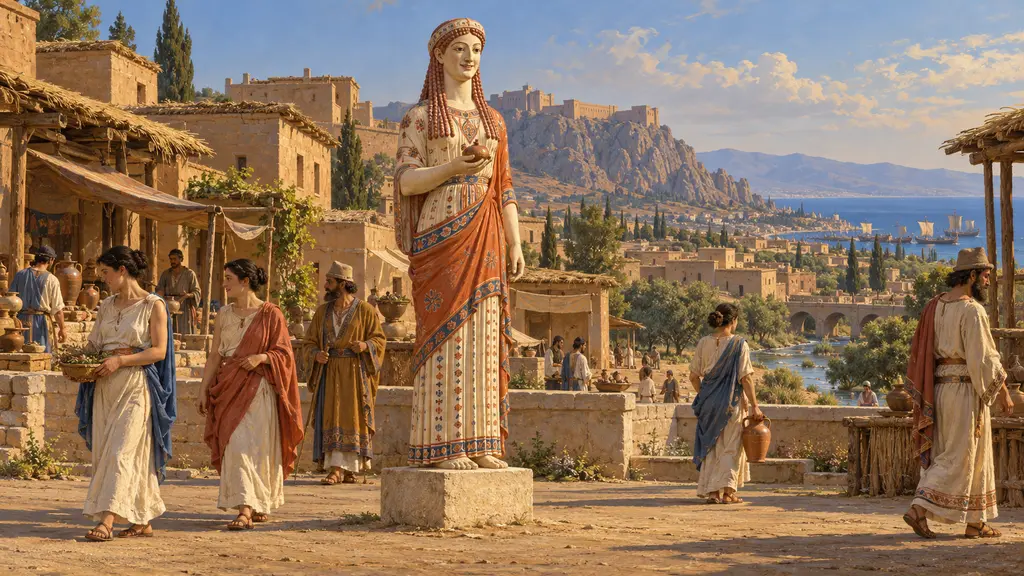
A kore (Greek for 'maiden', plural korai) was a marble statue of a young woman, usually life-size or smaller, standing and richly dressed and often holding out an offering. Greeks set them up as gifts to the gods in sanctuaries and sometimes as grave markers. The largest group, from the Athenian Acropolis, survives largely because the statues were broken in the Persian sack of 480 and later buried.
In the game: The game offers the Kore in its housing category in Greek towns and at Sardis, as a painted maiden in a pleated chiton. Its note names only sanctuary offerings, but some korai, such as Phrasikleia, also marked graves.
Gifts for the gods
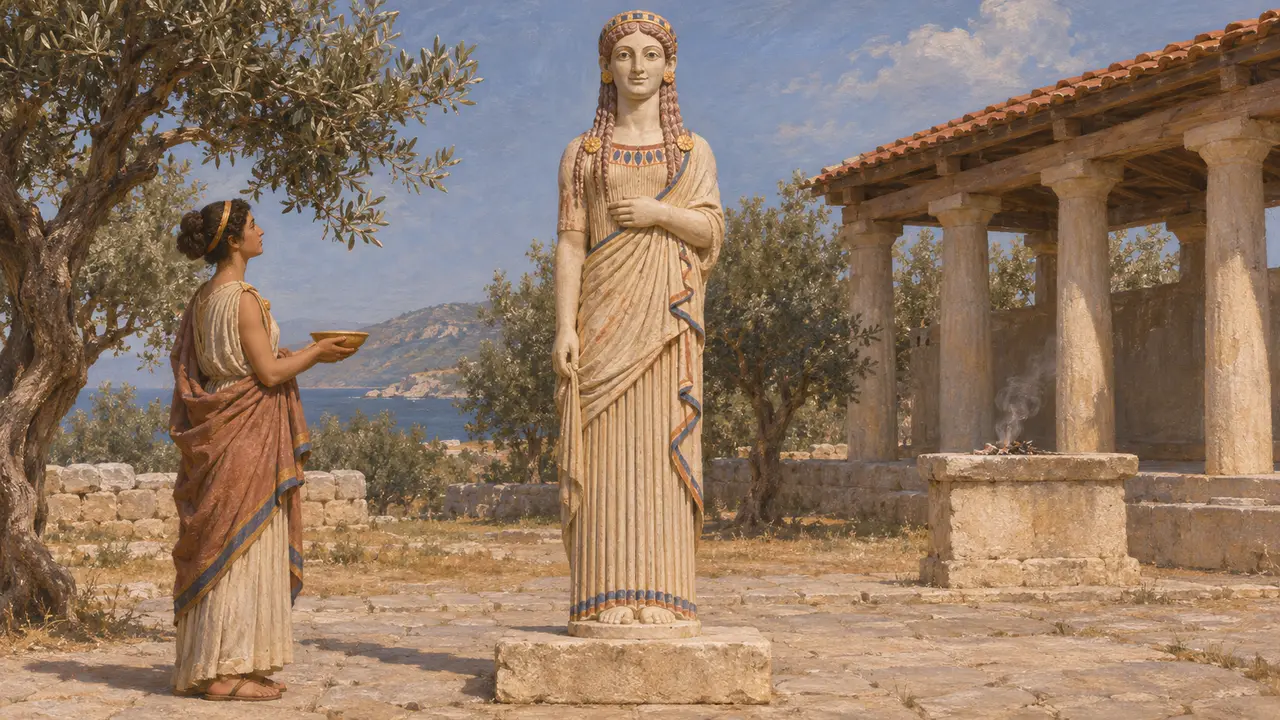
In the recordInscribed bases show that korai were dedications. The giver named himself or herself and the deity, often calling the statue an agalma, a gift meant to delight. One of the earliest, from Delos about 650, was offered to Artemis by a woman, Nikandre of Naxos. On Samos, a man named Cheramyes dedicated a kore to Hera about 570-560. It is now in the Louvre.
G. M. A. Richter, Korai: Archaic Greek Maidens, 1968
Dress, colour and the Ionian fashion
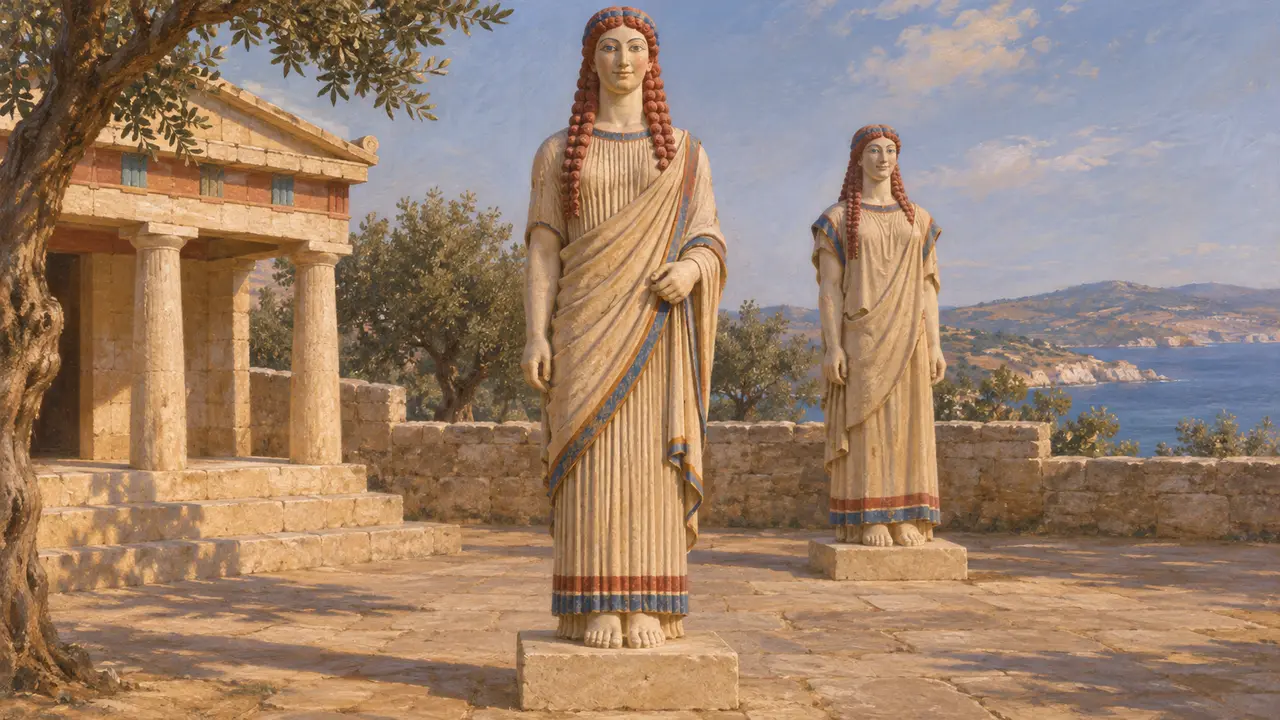
In the recordSome korai wear the heavy woollen peplos. The Peplos Kore from the Acropolis, of about 530, is named for it, though painted reconstructions suggest she may be a goddess in a different garment. From the middle of the 6th century many korai wear the Ionian fashion of a thin pleated linen chiton under a cloak draped diagonally. Traces of red, blue and other pigment survive on hair, eyes and hem patterns, showing that the marble was painted.
V. Brinkmann, Gods in Color, 2007
A kore on a grave
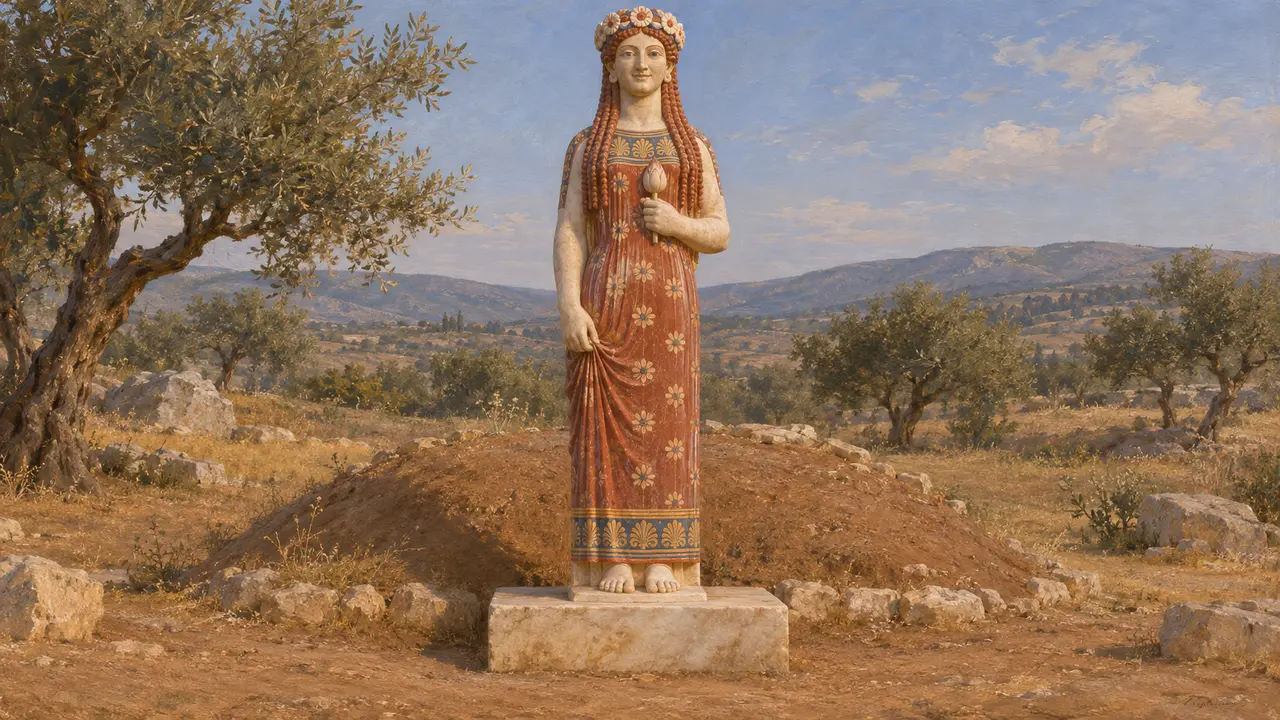
In the recordNot every kore stood in a sanctuary. The statue of Phrasikleia, found in 1972 at Merenda in Attica and signed by Aristion of Paros, marked the grave of a girl about 550-540. Her inscribed base says, in substance, that she will be called maiden forever, having received that name from the gods in place of marriage.
K. Karakasi, Archaic Korai, 2003
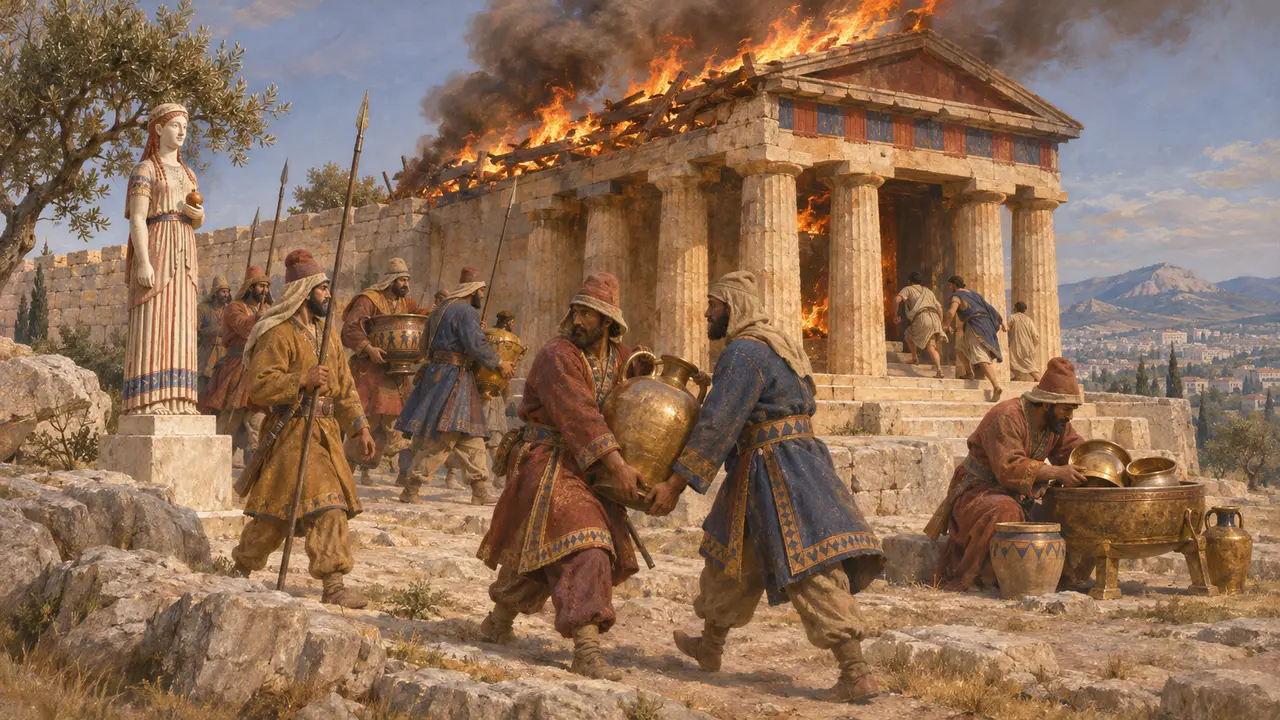
The Persian sack of the Acropolis
Ancient accountHerodotus says that in 480 Xerxes' troops climbed the Acropolis at a sheer, unguarded spot near the shrine of Aglaurus. Some defenders threw themselves from the wall and others fled into the temple. The Persians killed those who had taken refuge there, plundered the sanctuary and set the whole citadel on fire. Herodotus does not say what became of the statues.
Herodotus 8.53
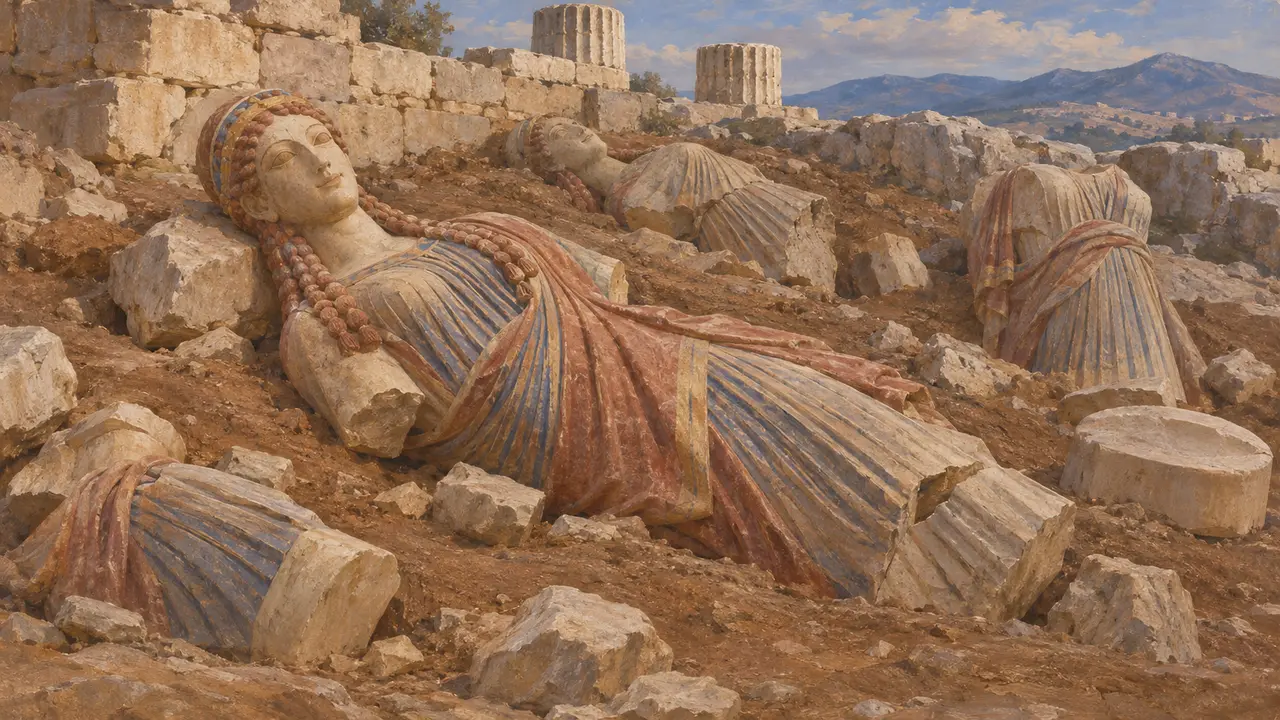
Buried debris and open questions
DisputedExcavations on the Acropolis in 1885-1890 found many korai, some still bright with paint, in fills of broken sculpture usually linked to the clean-up after the sack. Some scholars argue the debris was not all buried at once soon after 480, which affects how statues are dated. Historians also argue whom korai show: a goddess, the dedicator, a priestess or an idealised girl. Most Acropolis dedicators were men, which weakens the idea of a portrait of the giver.
C. Keesling, The Votive Statues of the Athenian Acropolis, 2003; A. Stewart, American Journal of Archaeology 112, 2008
Sources
- G. M. A. Richter, Korai: Archaic Greek Maidens, 1968
- K. Karakasi, Archaic Korai, 2003
- Herodotus 8.53
- C. Keesling, The Votive Statues of the Athenian Acropolis, 2003
- A. Stewart, 'The Persian and Carthaginian Invasions of 480 B.C.E. and the Beginning of the Classical Style', American Journal of Archaeology 112, 2008
- V. Brinkmann, Gods in Color, 2007