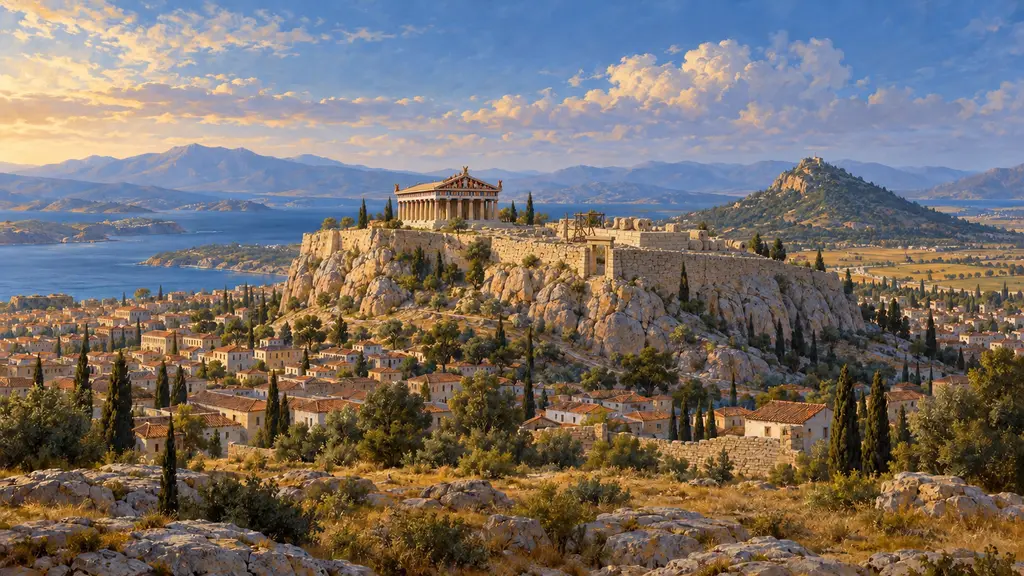
The Older Parthenon
Unfinished marble temple of Athena on the Acropolis of Athens, about 490-480 BCE
The Older Parthenon was a large temple to Athena, set on a limestone platform with columns of Pentelic marble. It was still under construction when the Persians took the Acropolis in 480. Its fire-damaged column drums were later built into the Acropolis wall, and its platform carried the Parthenon that Pericles began in 447.
In the game: The Older Parthenon stands on a level's map as a historic structure; the player does not build it. The game dates its start to after Marathon, the most common modern view, though historians still debate that date.
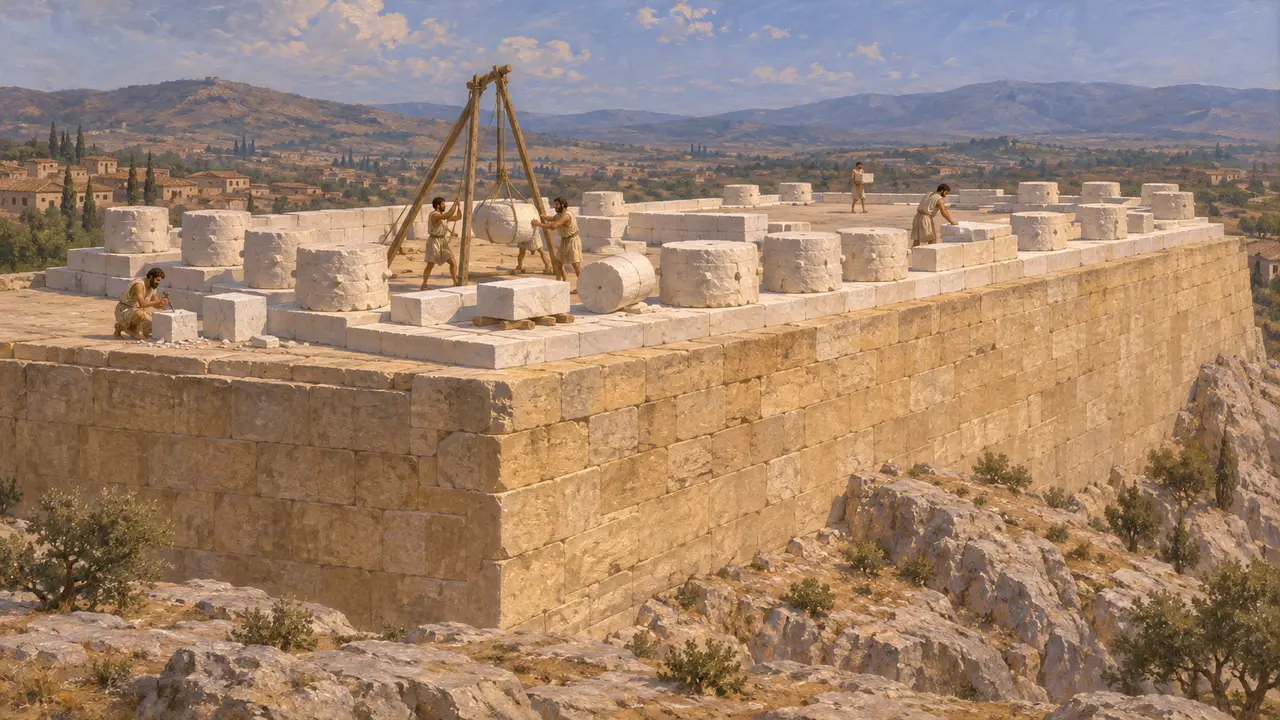
A marble temple on a limestone platform
In the recordExcavations in the 1880s and later studies show a massive podium of limestone blocks, deepened on the south side where the rock fell away. On this podium builders had begun a temple in white marble from Mount Pentelicus, one of the first large marble buildings in Athens. Only the lower parts were ever set in place. Many drums still keep the rough protective surface that masons would have removed at the end of the work.
B. H. Hill, The Older Parthenon, American Journal of Archaeology, 1912; J. M. Hurwit, The Athenian Acropolis, 1999
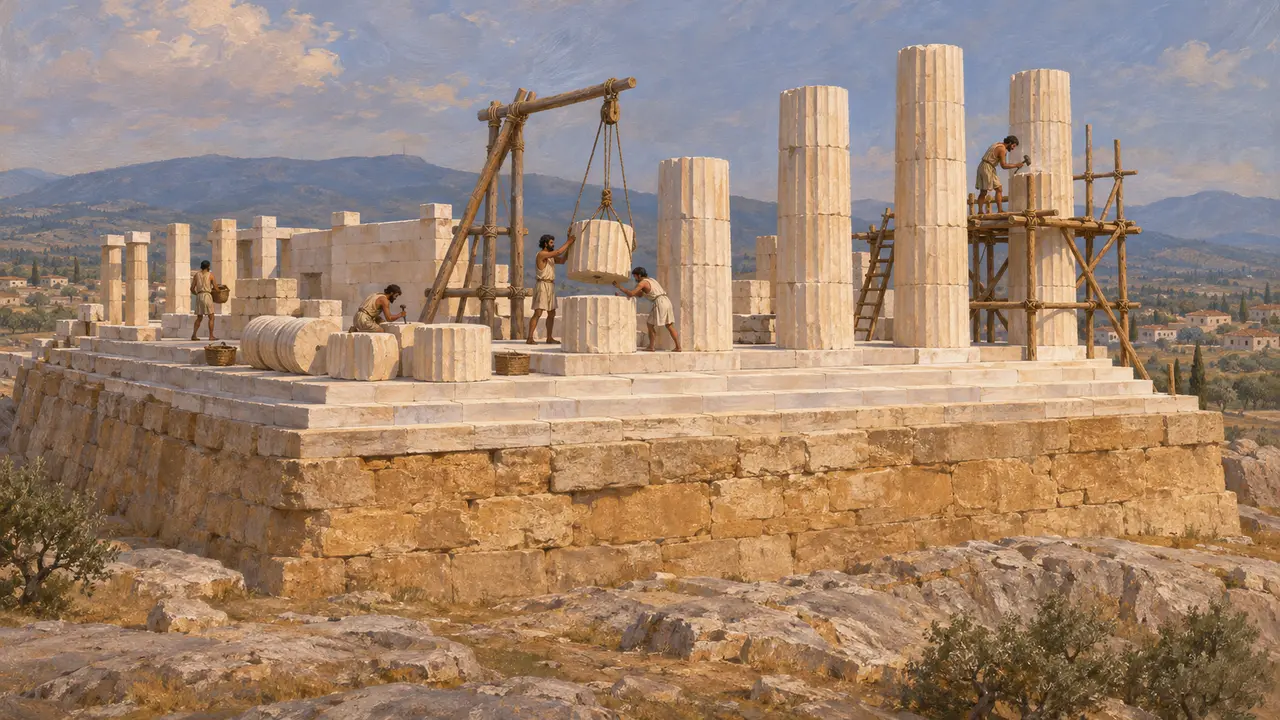
Dating the start of work
DisputedW. B. Dinsmoor argued that the temple was started soon after Marathon in 490, probably as a thank-offering for the victory. Others think the limestone podium is older and belonged to an earlier plan, with the marble temple added on top in a second phase. The link to Marathon is likely, but it rests on building evidence and inference, not on any ancient text.
W. B. Dinsmoor, The Date of the Older Parthenon, American Journal of Archaeology, 1934; J. M. Hurwit, The Athenian Acropolis, 1999
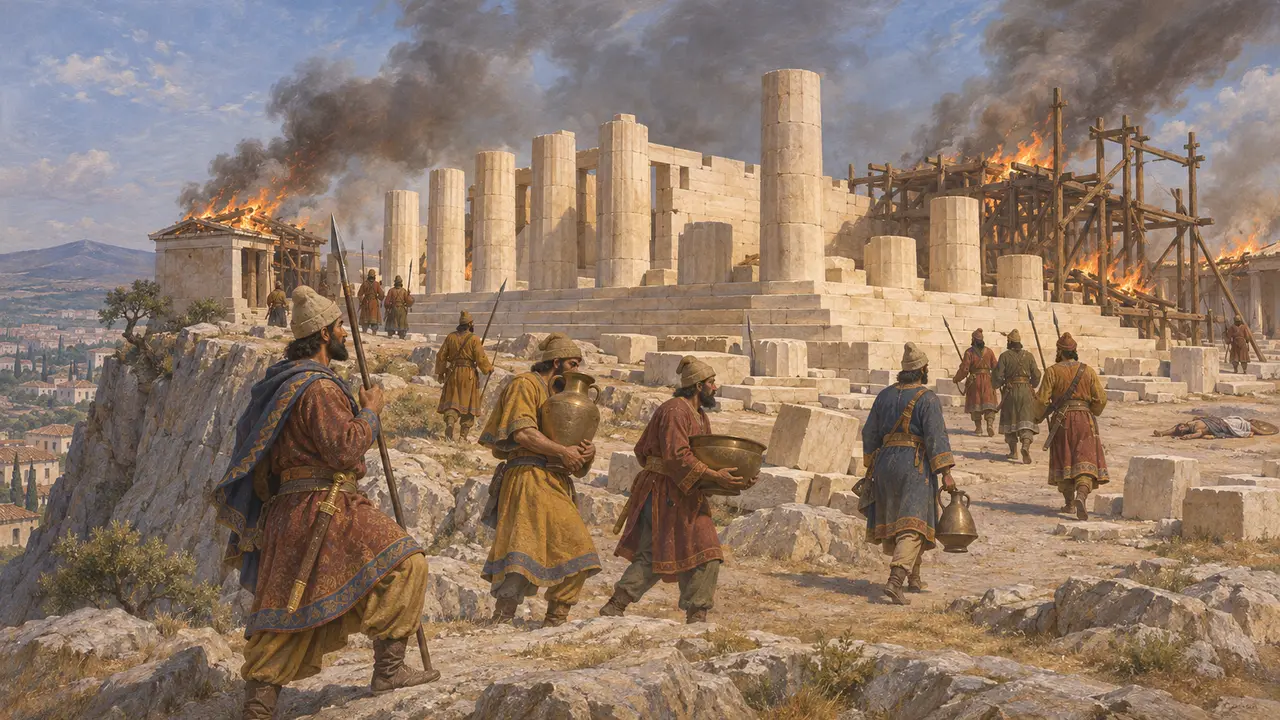
The Persian capture of the Acropolis
Ancient accountHerodotus says that in 480 the Persians climbed the steep face of the Acropolis near the shrine of Aglaurus. They killed the Athenians who had stayed behind, plundered the sanctuary and set the whole citadel on fire. He does not name the unfinished temple, but it stood within the area he describes as burned.
Herodotus 8.53
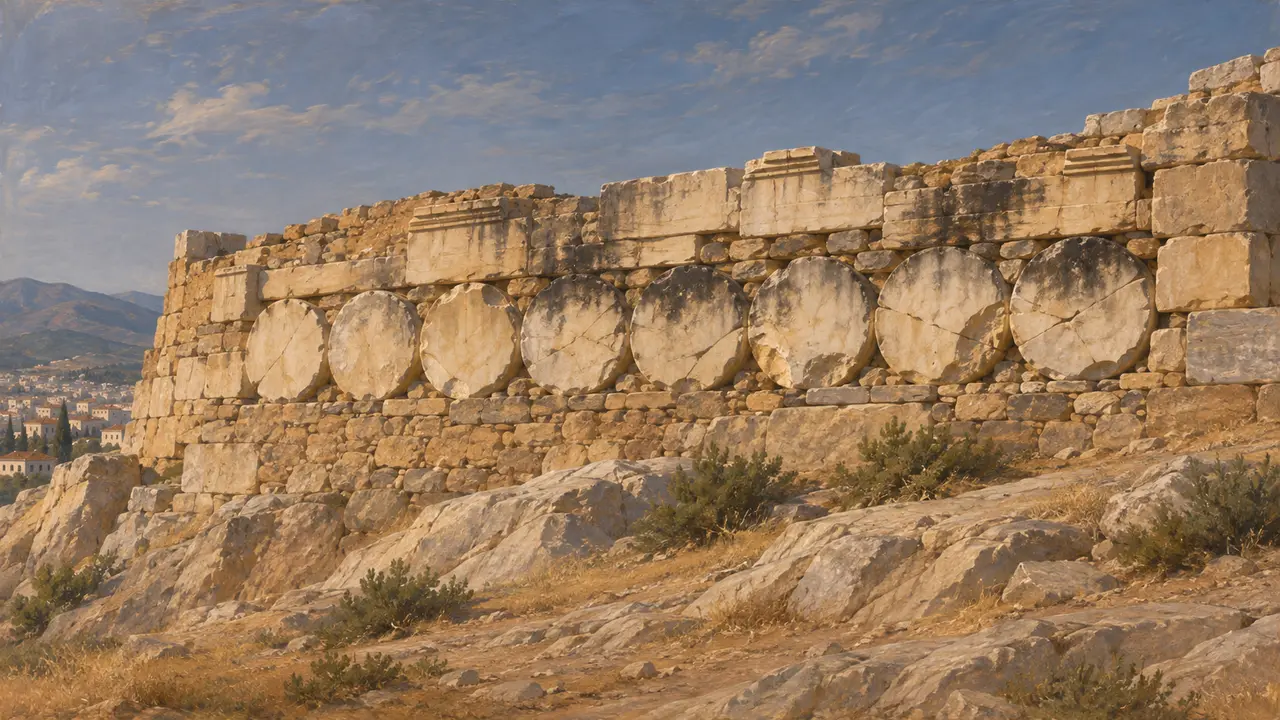
Drums in the north wall
In the recordAfter the war the Athenians rebuilt the north wall of the Acropolis. They set into it a row of the temple's marble drums beside blocks from the Old Temple of Athena. The drums are cracked and discoloured by fire, which suggests the wooden scaffolding around them burned. They are still visible from the Agora below. Many historians read this as a deliberate reminder of the sack, though it also reused heavy stone close at hand.
J. M. Hurwit, The Athenian Acropolis, 1999
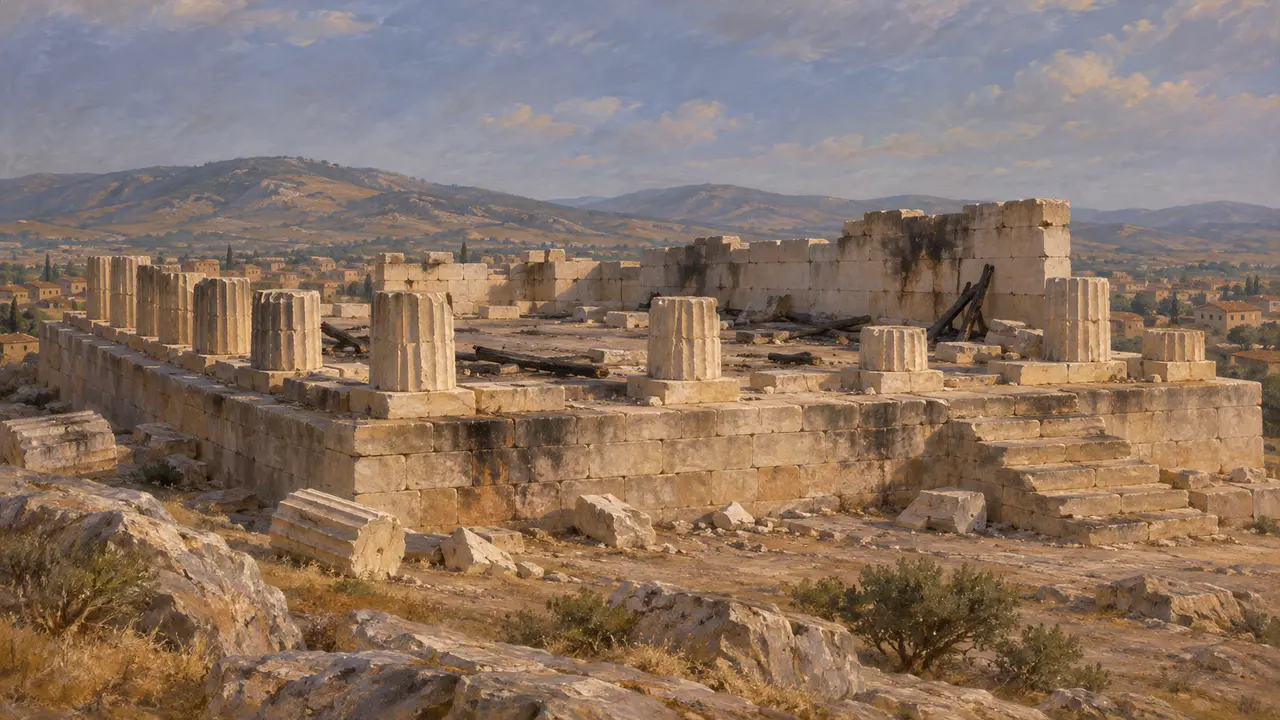
The oath of Plataea
DisputedThe orator Lycurgus, writing about 330, and later Diodorus say the Greeks swore an oath before Plataea in 479. In it they promised to leave the temples burned by the Persians unrebuilt, as memorials. Theopompus already called the oath an Athenian forgery, and a fourth-century copy inscribed at Acharnae lacks that clause. Scholars remain divided, but the site did lie unfinished for about thirty years until the Periclean Parthenon rose on the old podium.
Lycurgus, Against Leocrates 81; Diodorus 11.29; Theopompus, FGrH 115 F 153
Sources
- Herodotus 8.53
- J. M. Hurwit, The Athenian Acropolis, 1999
- W. B. Dinsmoor, The Date of the Older Parthenon, American Journal of Archaeology, 1934
- B. H. Hill, The Older Parthenon, American Journal of Archaeology, 1912
- Lycurgus, Against Leocrates 81
- Diodorus 11.29