Herm
Pillar of Hermes at Athenian roadsides and doorways, from about 520 BCE
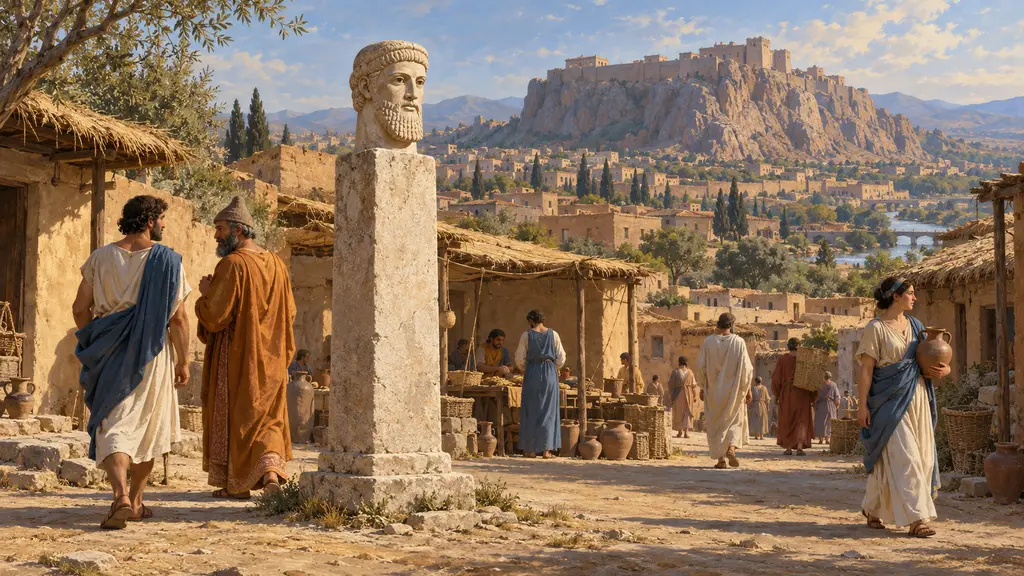
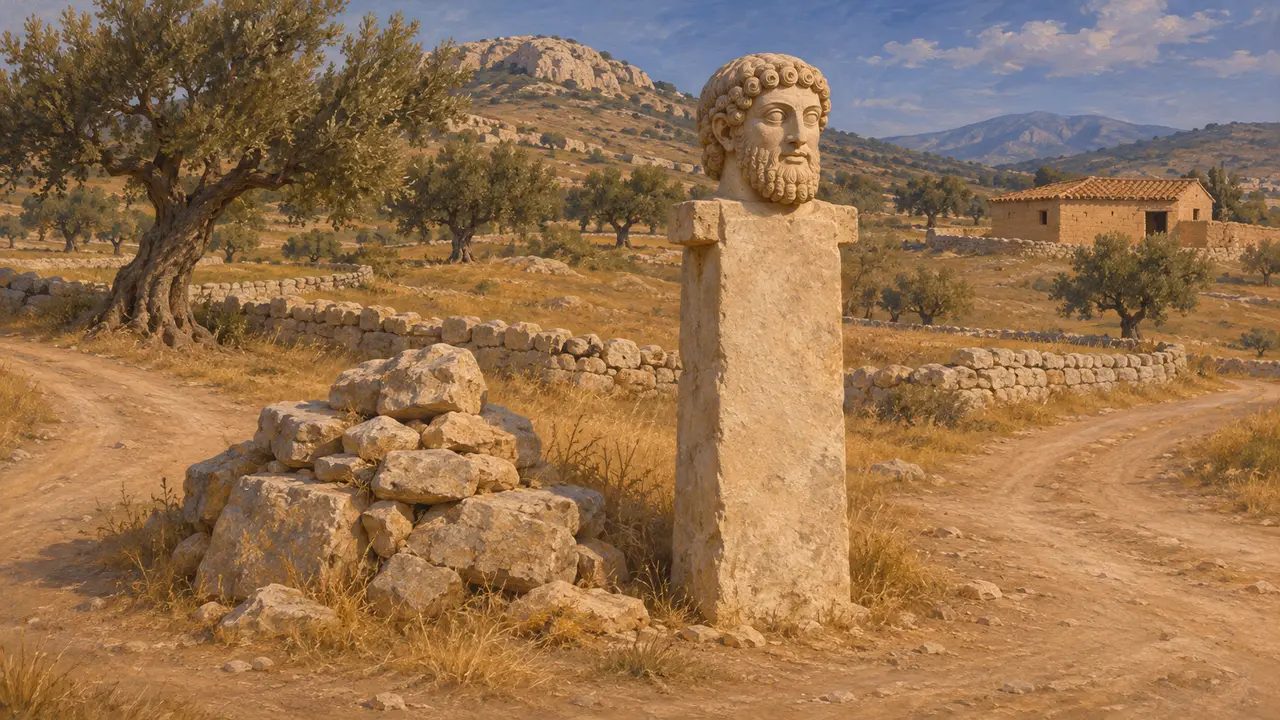
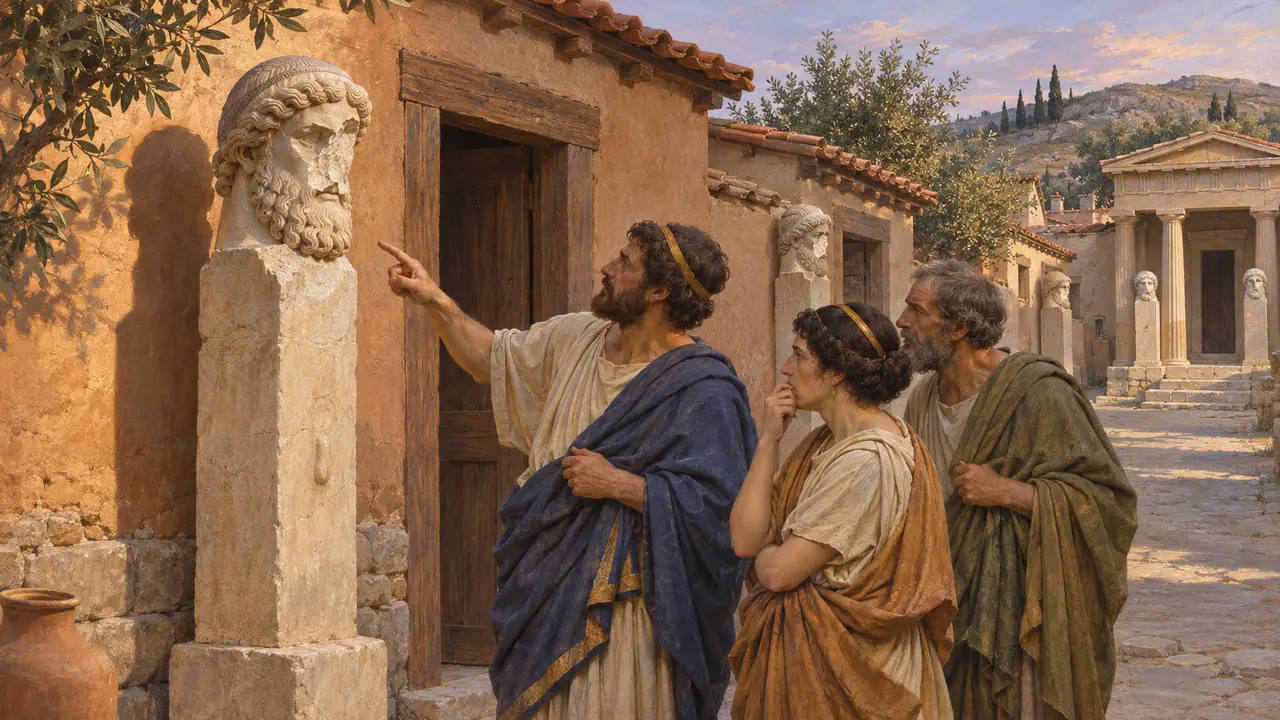
A herm was a square stone pillar topped with the bearded head of the god Hermes, protector of travellers and boundaries. In Athens and Attica such pillars were set along roads from the late sixth century, and by the fifth they stood at crossroads, gateways and house doors. They were at once road markers, guardians and objects of everyday worship, and they became one of the most familiar sights of an Athenian street.
In the game: In Greek towns the game offers the Herm as a housing building. Its note credits the road herms to Plato's Hipparchus. That dialogue was handed down under Plato's name, but most scholars doubt he wrote it.
What a herm looked like
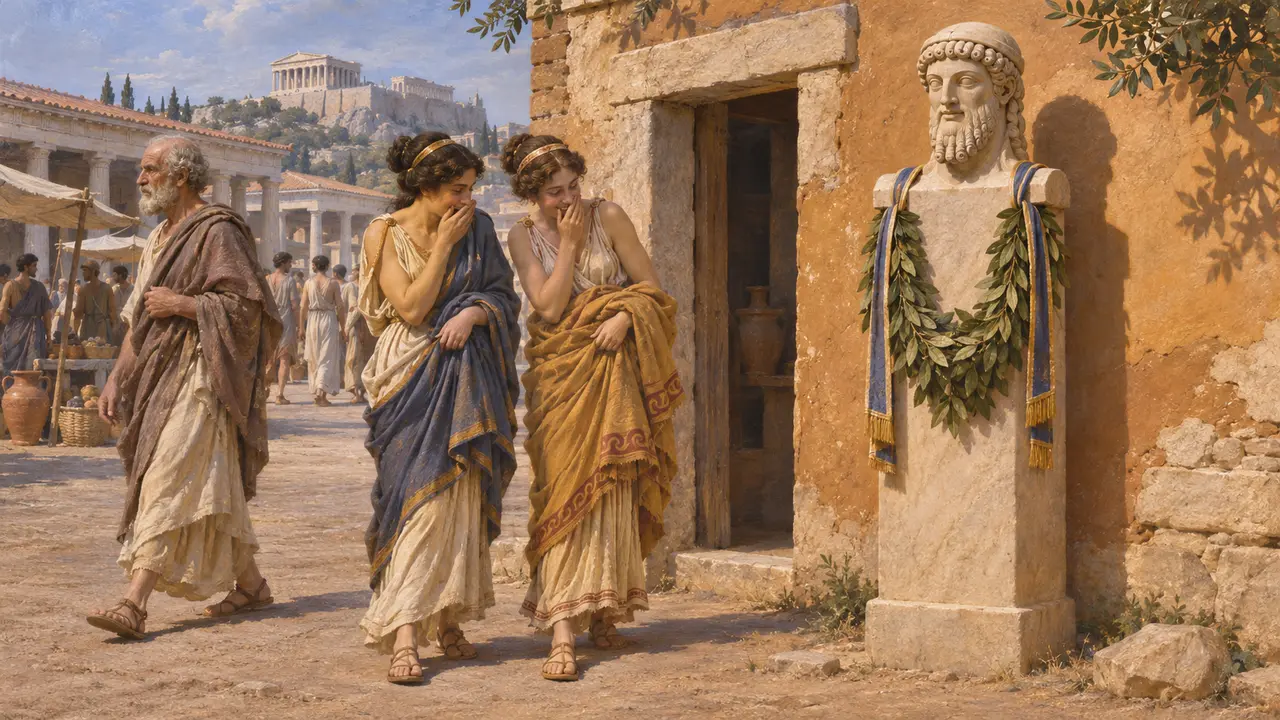
In the recordSurviving archaic and classical herms are plain rectangular shafts carrying a carved head of a bearded Hermes, often with stylised curls. Many also had male genitals carved on the front and short square stumps at the shoulders, which may have held wreaths or offerings. Fragments recovered in excavations of the Athenian Agora show that they were common in the city's public spaces.
E. B. Harrison, Archaic and Archaistic Sculpture (The Athenian Agora XI), 1965; R. Osborne, The Erection and Mutilation of the Hermai, 1985
Hipparchus and the roads of Attica
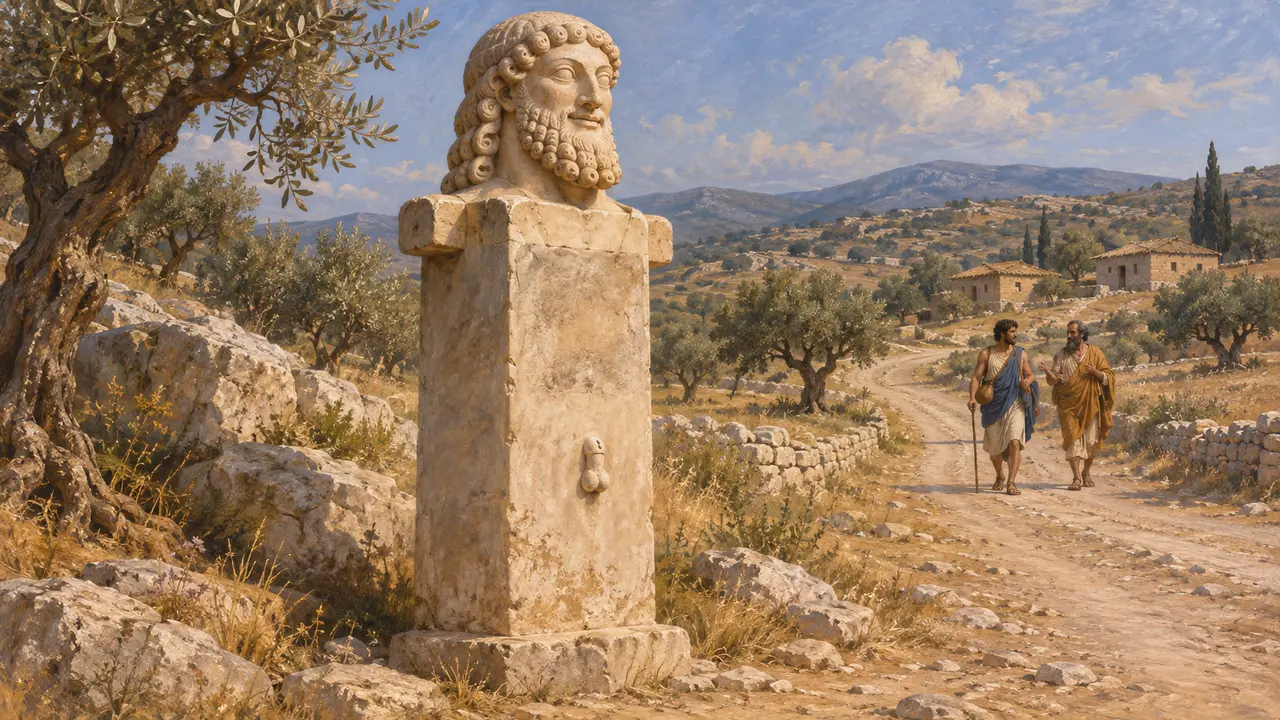
Ancient accountThe dialogue Hipparchus says that Hipparchus, son of the tyrant Pisistratus, set up herms along the roads of Attica. Each one stood halfway between the city and a country village, or deme. One side named the place, and the other carried a short verse of moral advice, such as a call to walk with just thoughts. Hipparchus was killed in 514, so the series probably belongs to the years before.
Plato (attributed), Hipparchus 228b-229b; Thucydides 6.54-59
Herodotus on where herms came from
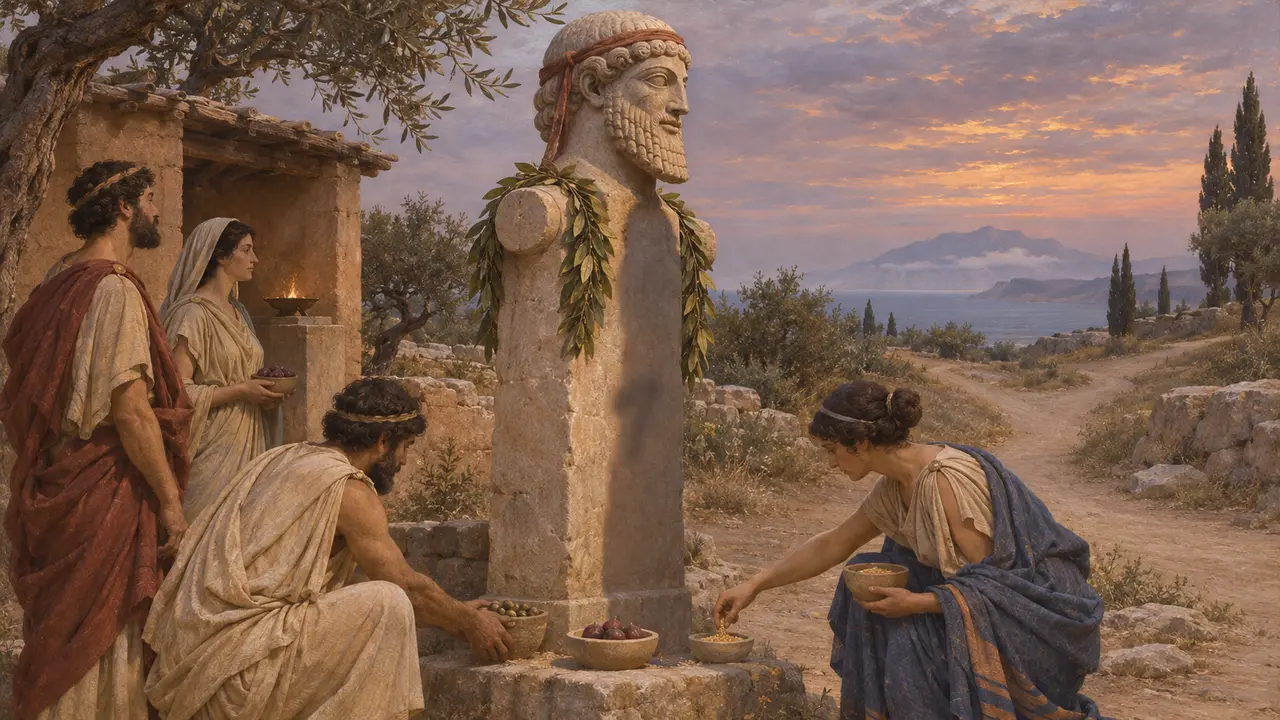
Ancient accountHerodotus says the Athenians were the first Greeks to make statues of Hermes with an erect phallus. He claims they learned the custom from the Pelasgians, an earlier people of Greece, and links it to the mysteries of Samothrace. His explanation reflects Greek ideas about the past more than any firm evidence for the origin of the type.
Herodotus 2.51
Authorship and the first herms
DisputedThe Hipparchus was transmitted with Plato's works, but most modern scholars think it was written by someone else, so its story of the road herms may be a later tradition. Historians also argue over whether Hipparchus invented the pillar form or adapted older roadside markers, such as the stone heaps linked to Hermes. An inscribed herm fragment found in the Attic countryside is often connected with his series, but the link is not certain.
R. Osborne, The Erection and Mutilation of the Hermai, 1985
Herms at every door
Ancient accountThucydides shows how widespread herms had become by the late fifth century. He says that in 415, just before the expedition to Sicily, most of the stone herms in Athens had their faces mutilated in a single night. He describes them as a traditional feature standing at the doorways of both private houses and sanctuaries, and the attack caused great alarm in the city.
Thucydides 6.27
Sources
- Plato (attributed), Hipparchus 228b-229b
- Herodotus 2.51
- Thucydides 6.27
- Thucydides 6.54-59
- R. Osborne, The Erection and Mutilation of the Hermai, 1985
- E. B. Harrison, Archaic and Archaistic Sculpture (The Athenian Agora XI), 1965