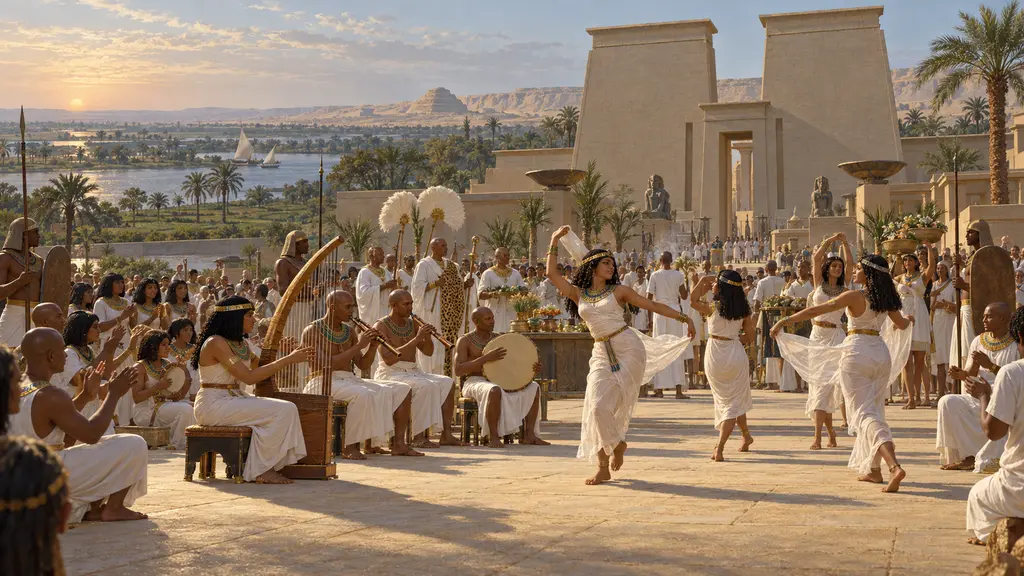
Temple Forecourt
Open court of an Egyptian temple, Memphis, about 525 BCE
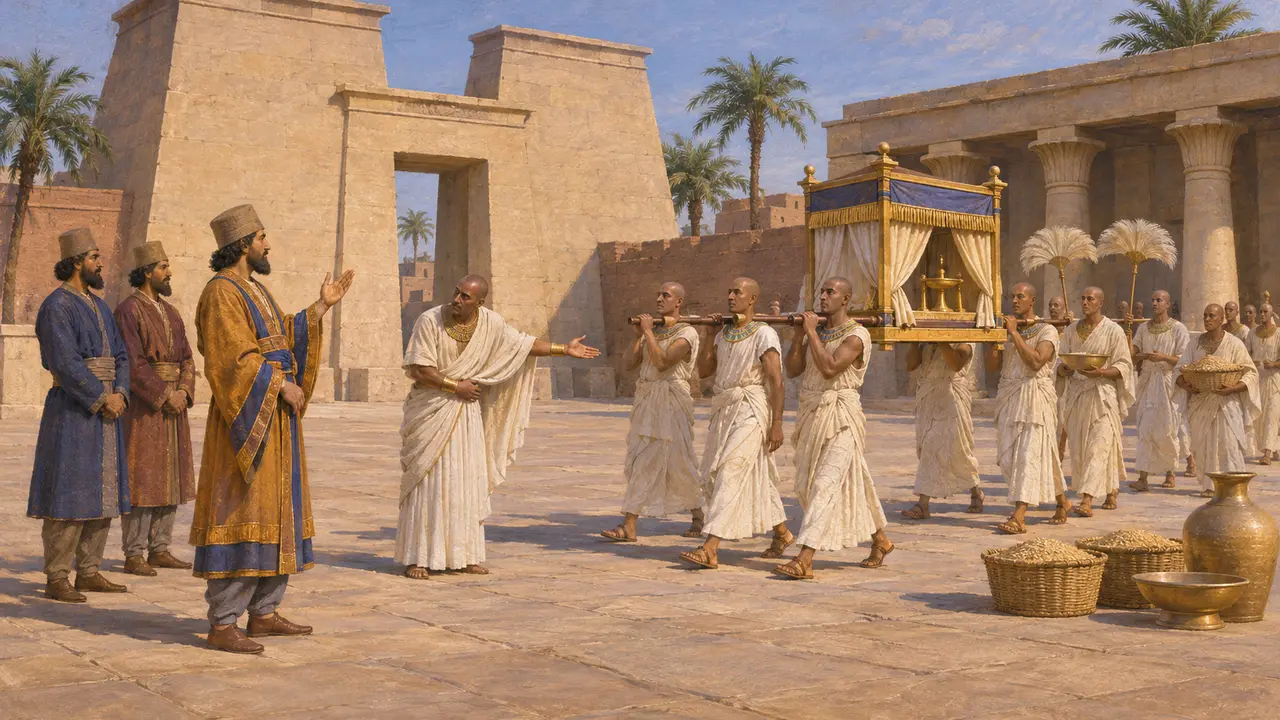
An Egyptian temple was built as a series of spaces that grew more private toward the god's shrine. The forecourt behind the great gateway was where most worshippers came closest to the god, and where festival crowds gathered and processions set out. At Memphis the chief temple belonged to Ptah, whose cult included the sacred Apis bull.
In the game: A service building offered at Memphis, described through Egypt's festivals. The game draws on Herodotus, but the boat and lamp festivals he describes centred on Bubastis and Sais, not on a Memphis forecourt.
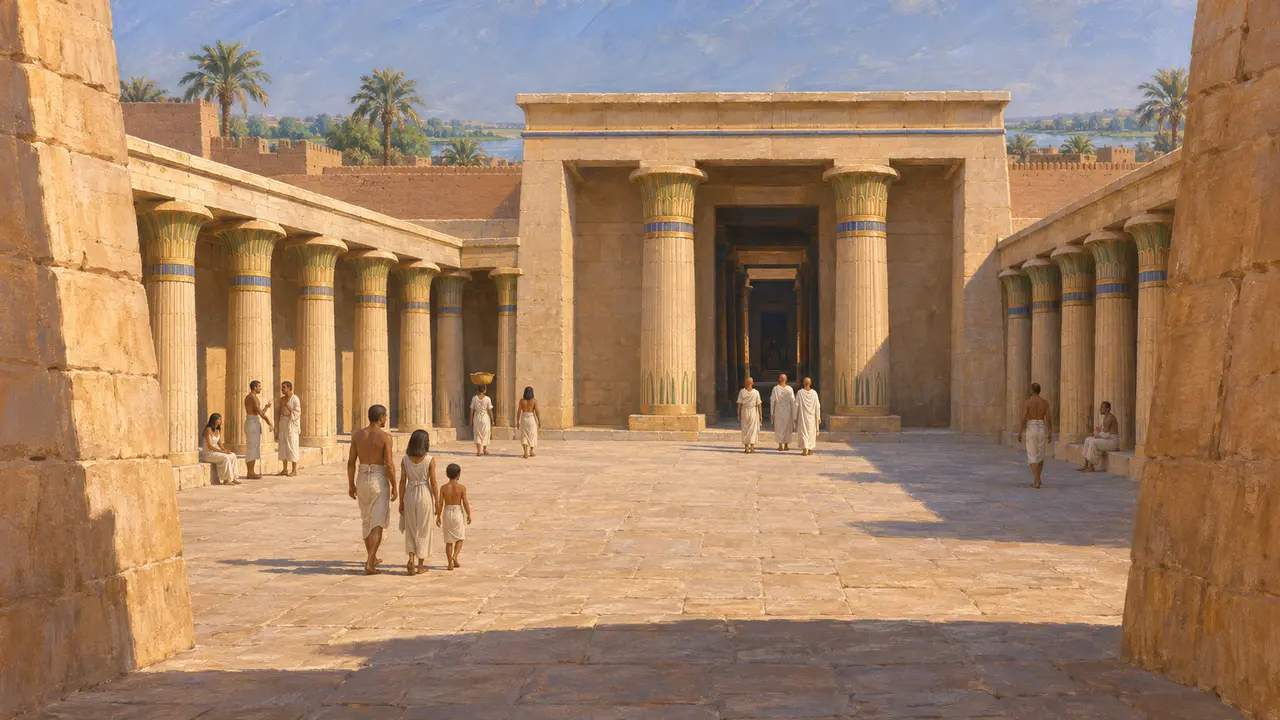
Behind the gateway, the court
In the recordEgyptian temples opened through a pylon gateway into a court, often lined with columns. Beyond it, halls led to the dark sanctuary where the god's image stood. Ordinary people seem to have been admitted at most to the outer courts, while priests served the god inside. At Mit Rahina, the site of Memphis, excavators have found parts of the Ptah temple and the embalming house of the Apis, with its alabaster tables.
R. H. Wilkinson, The Complete Temples of Ancient Egypt, 2000
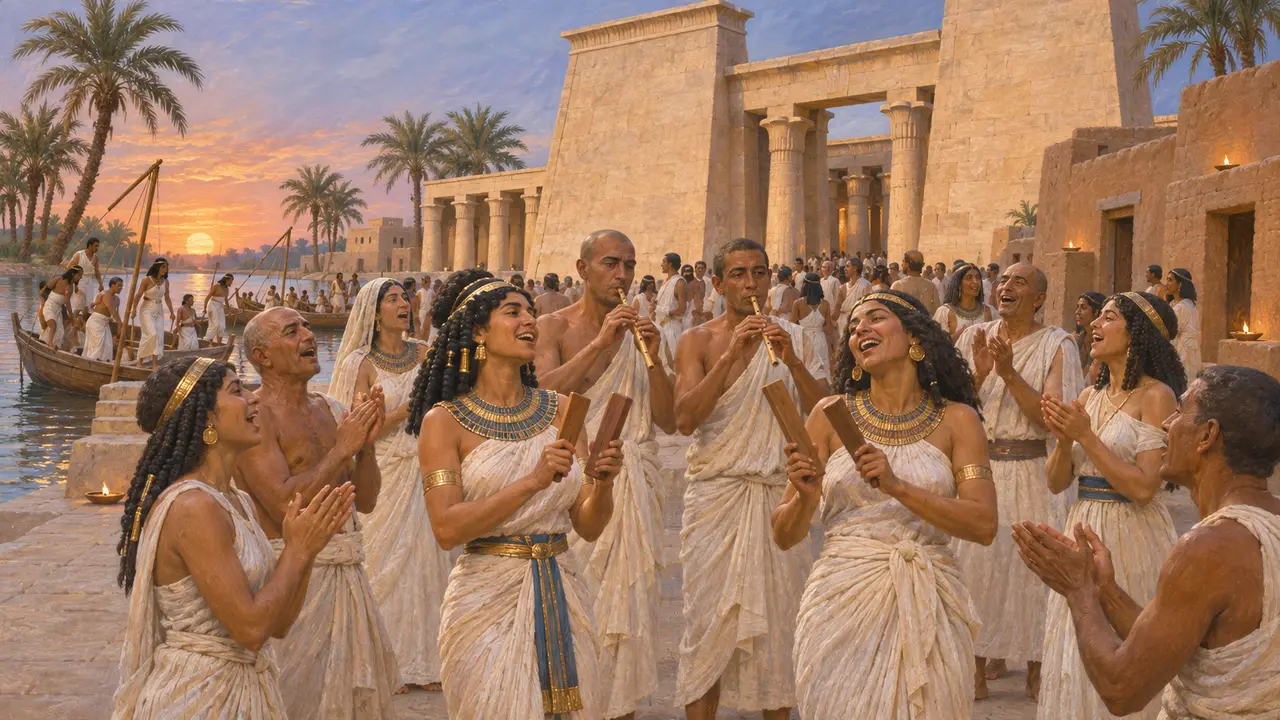
Boats, songs and lamps
Ancient accountHerodotus says the Egyptians held many festivals each year and that the Greeks learned processions from them. He describes crowds sailing to Bubastis. Women played clappers and men played pipes, while the rest sang and clapped. He also tells of a night at Sais when lamps burned outside houses across Egypt, and says that when a new Apis appeared, Egyptians put on their best clothes and feasted.
Herodotus 2.58-62; Herodotus 3.27
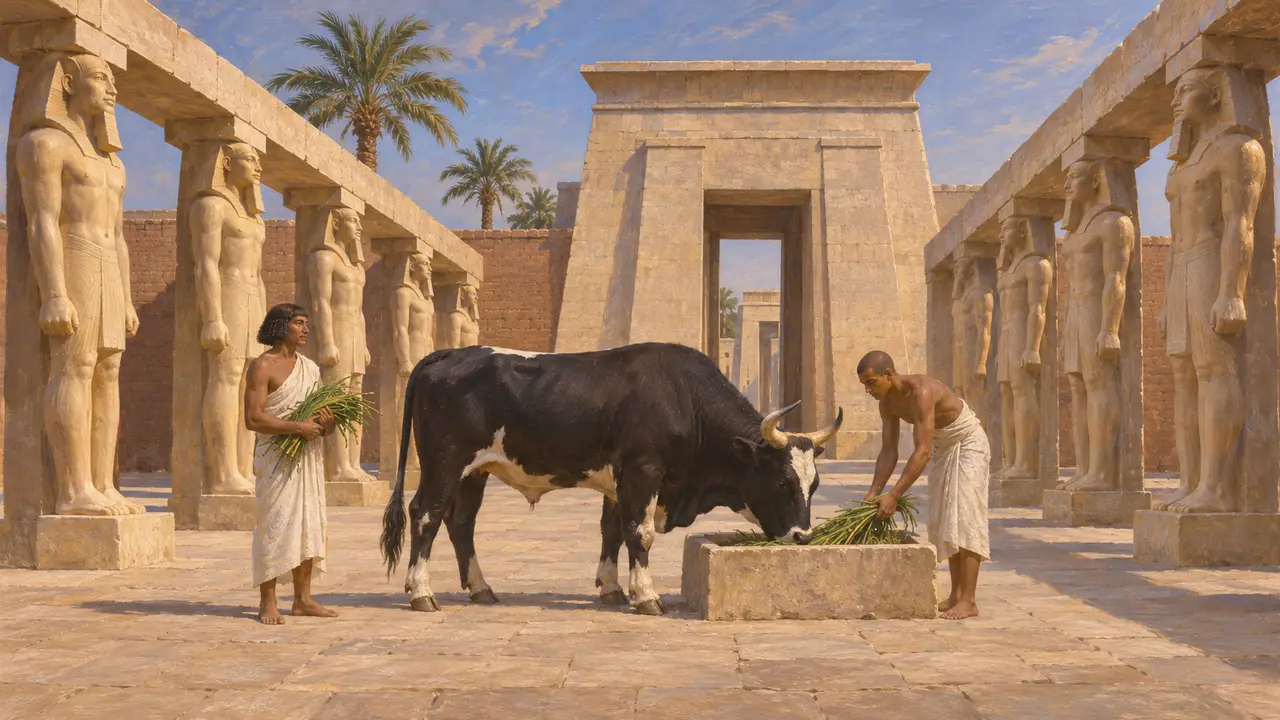
A court for the Apis
Ancient accountHerodotus says the pharaoh Psammetichus I added a southern gateway to the temple of Ptah, whom he calls Hephaestus. Opposite it he built a colonnaded court where the Apis was kept and fed, with tall statues standing in place of pillars. This court has not been securely identified on the ground.
Herodotus 2.153
Persian rule and the festivals
In the recordUdjahorresnet was an Egyptian official who served Cambyses and Darius. The inscription on his statue records that he asked Cambyses to remove foreigners who had settled in the temple of Neith at Sais. The text says the king ordered the temple cleansed, its revenues restored and its festivals and processions held as before. It is one man's account of himself, but it shows a Persian king acting as a pharaoh was expected to act.
Statue of Udjahorresnet, Vatican Museums
The death of the Apis under Cambyses
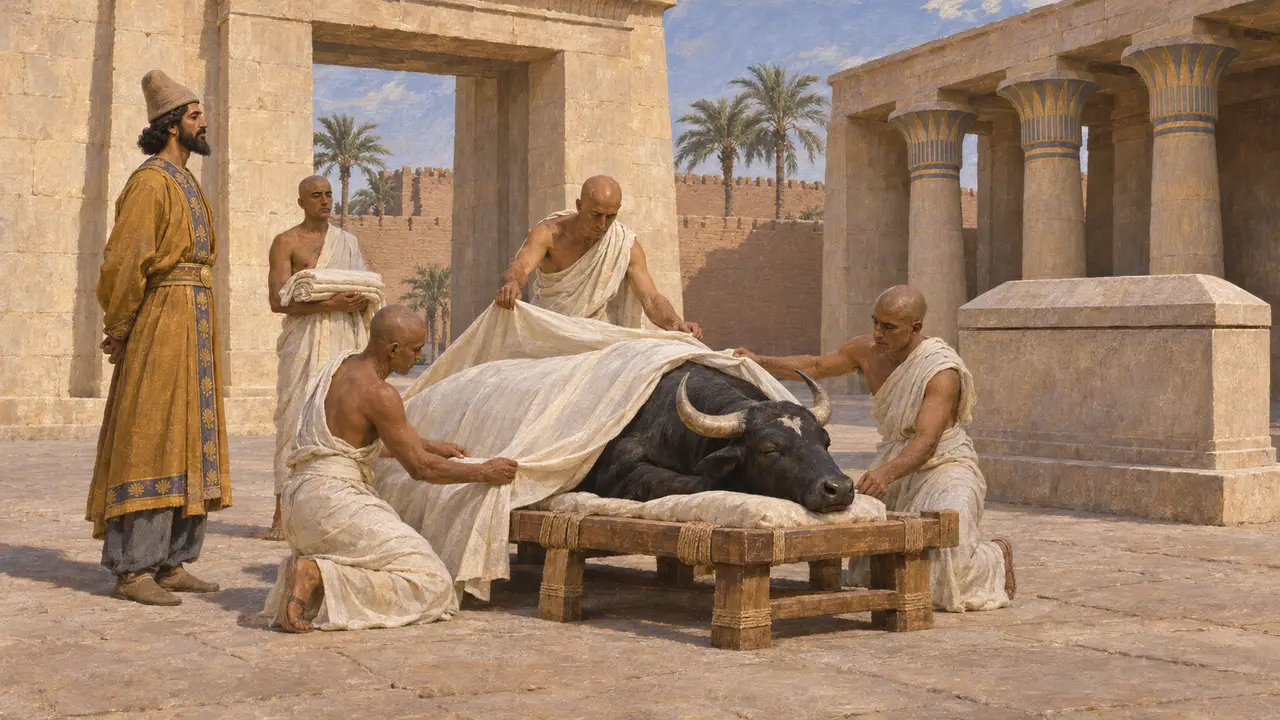
DisputedHerodotus says Cambyses, angered by the Apis festival, stabbed the bull in the thigh and it died. Yet a stela from the Serapeum at Saqqara records an Apis buried with honour in Cambyses' sixth year, about 524, and a sarcophagus was dedicated in his name. Many historians therefore treat the story as hostile Egyptian tradition, though some argue the dates still leave room for a bull to have been wounded.
Herodotus 3.27-29; Apis stelae from the Serapeum; P. Briant, From Cyrus to Alexander, 2002
Sources
- Herodotus, Histories, Book 2
- Herodotus, Histories, Book 3
- Statue of Udjahorresnet, Vatican Museums
- Apis stelae from the Serapeum at Saqqara
- P. Briant, From Cyrus to Alexander, 2002
- R. H. Wilkinson, The Complete Temples of Ancient Egypt, 2000