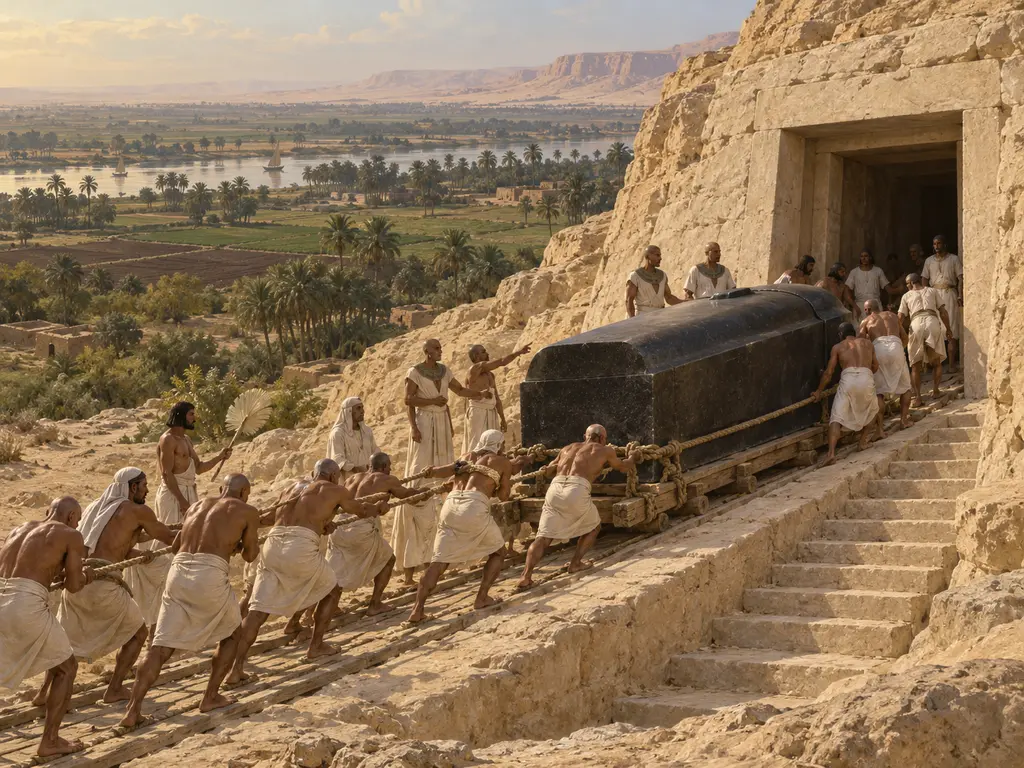
Burial of the Apis
Rock-cut tomb galleries of the sacred Apis bulls at Saqqara, Egypt; burial of 524 BCE
In the game: Level 2: The Spear-bearer
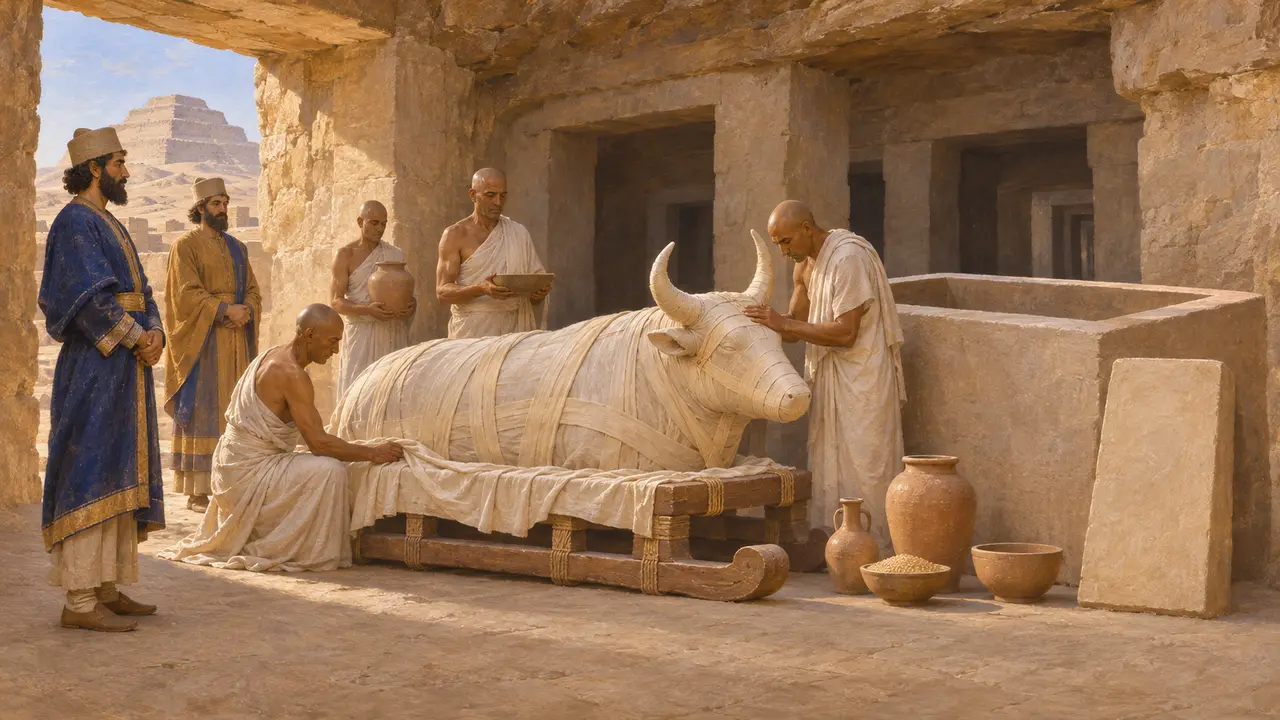
The Apis was a living bull kept at Memphis and honoured as the herald of the god Ptah. When one died it was embalmed and laid in a stone sarcophagus in galleries cut into the desert edge at Saqqara, known since Ptolemaic times as the Serapeum. An Apis was buried under Cambyses in 524, and the Egyptian record of that burial casts doubt on the Greek story that the Persian king killed the god.
In the game: The vault is raised in stages from limestone, Elephantine granite and timber for sledges and rollers. In reality each sarcophagus was one granite box with a separate lid, not a set of parts.
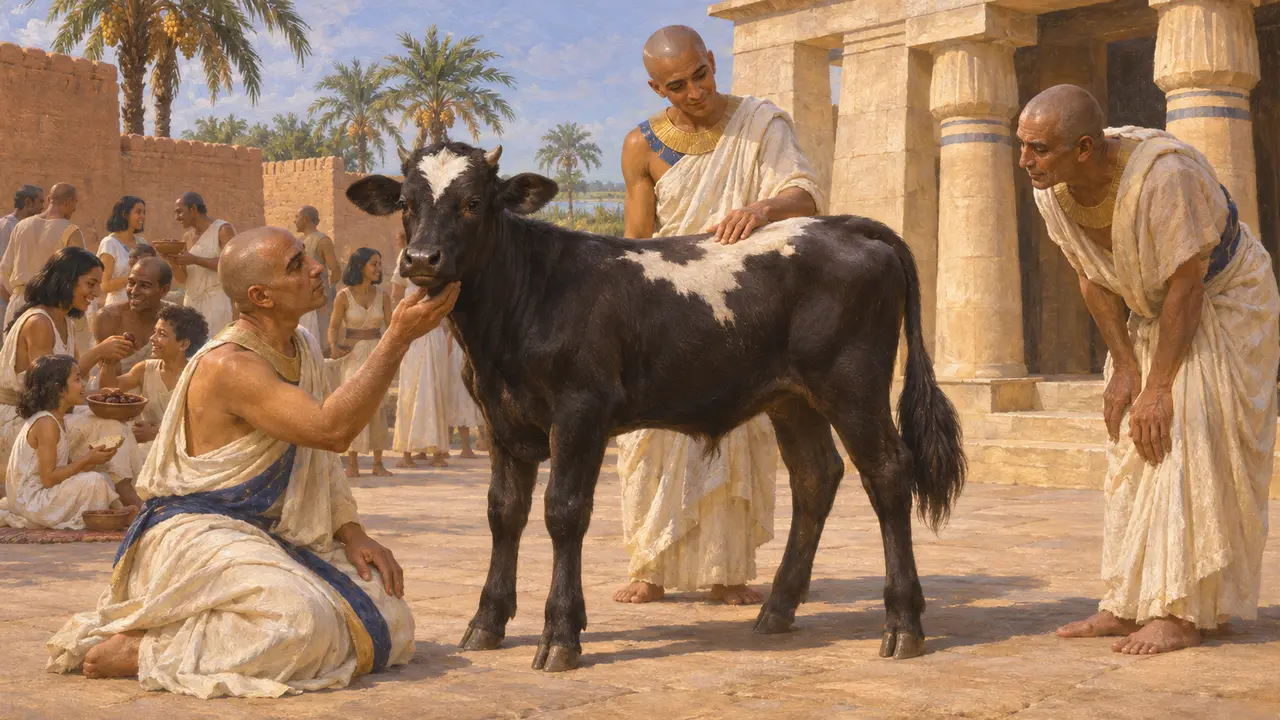
A living god at Memphis
Ancient accountHerodotus says the Apis was a calf born to a cow that could bear no other. He says priests knew it by its markings: a black hide, a white mark on the forehead, an eagle-like shape on the back, doubled tail hairs and a beetle-shaped mark under the tongue. Its appearance set off public feasting in Egypt, and he notes that the Greeks called it Epaphus.
Herodotus 3.27-28
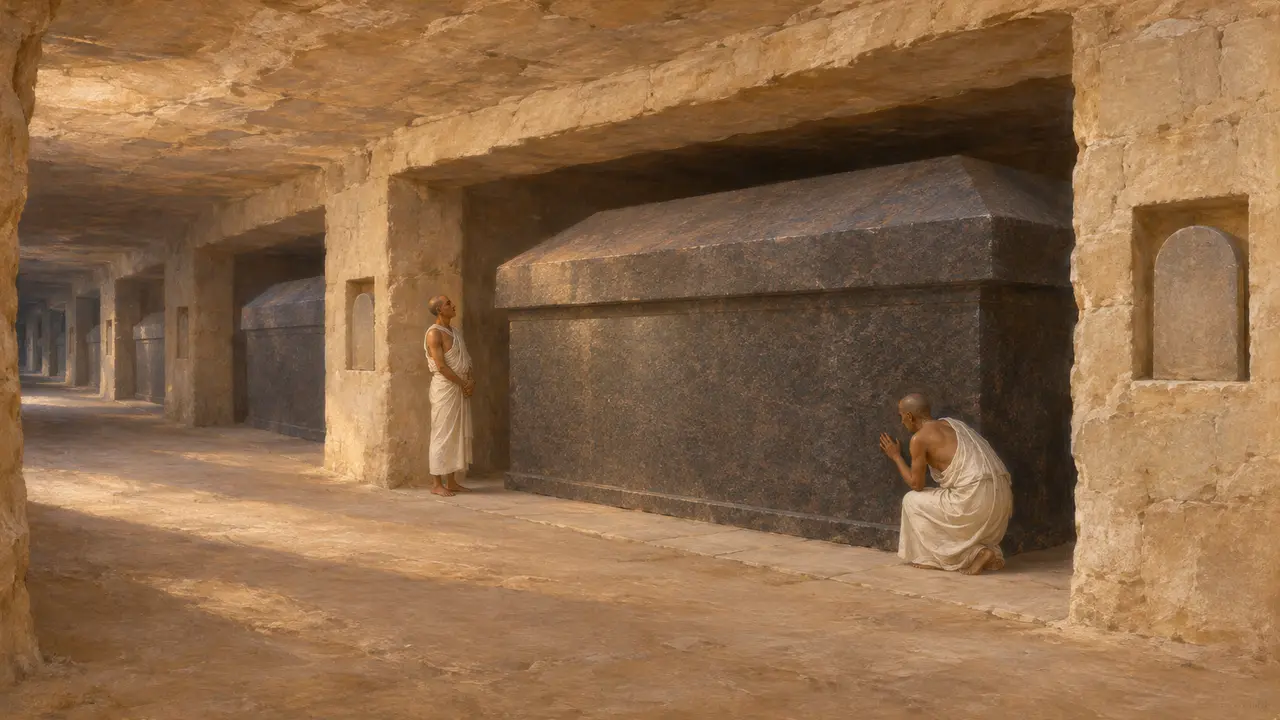
The galleries at Saqqara
In the recordAuguste Mariette uncovered the vaults in 1850 and 1851. The older Lesser Vaults go back to the reign of Ramesses II, while the Greater Vaults were begun under Psamtik I in the 7th century. Long corridors open onto side chambers, many holding sarcophagi of granite and other hard stone weighing many tonnes. Hundreds of stelae left by priests and visitors record burials and dates.
A. Mariette, Le Sérapéum de Memphis, 1857
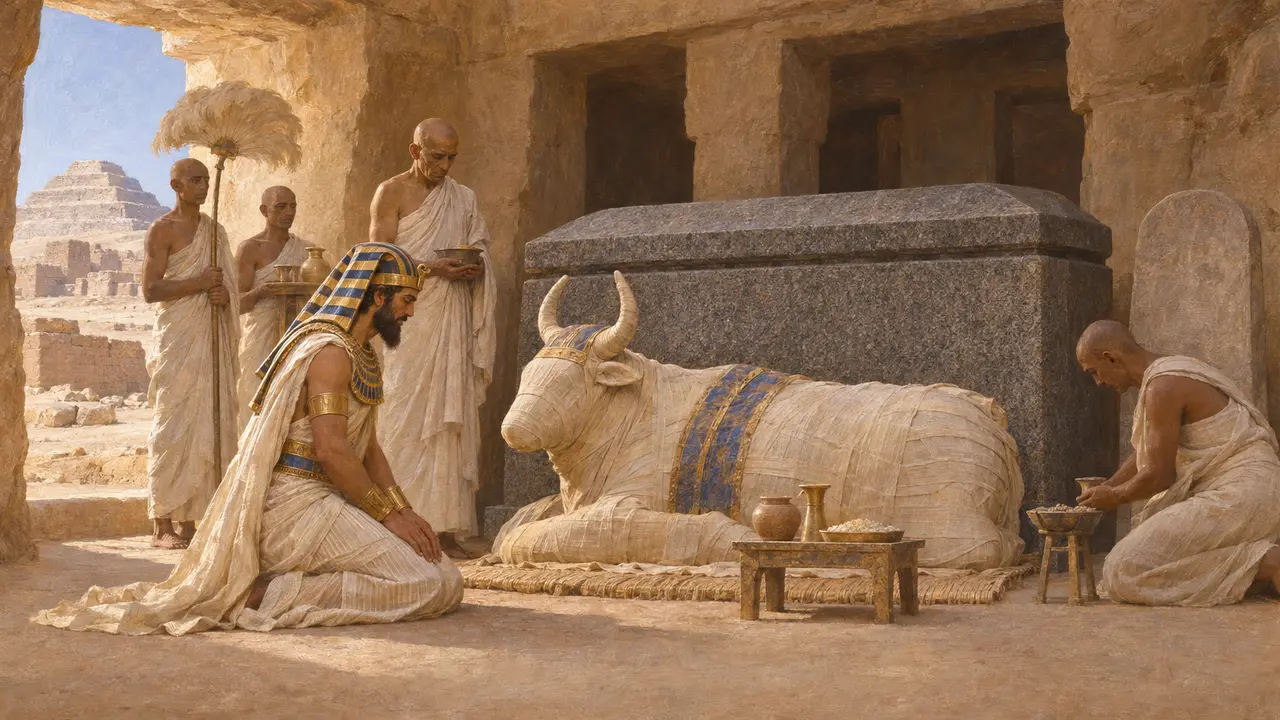
The burial of 524 under Cambyses
In the recordA stela from the vaults records the burial of an Apis in year 6 of Cambyses, that is 524, and shows the king kneeling before the bull as a pharaoh. A granite sarcophagus carries an inscription naming Cambyses as the one who made it for the god. These texts present the Persian ruler as a pious Egyptian king carrying out the proper rites.
G. Posener, La première domination perse en Égypte, 1936
Herodotus and the wounded bull
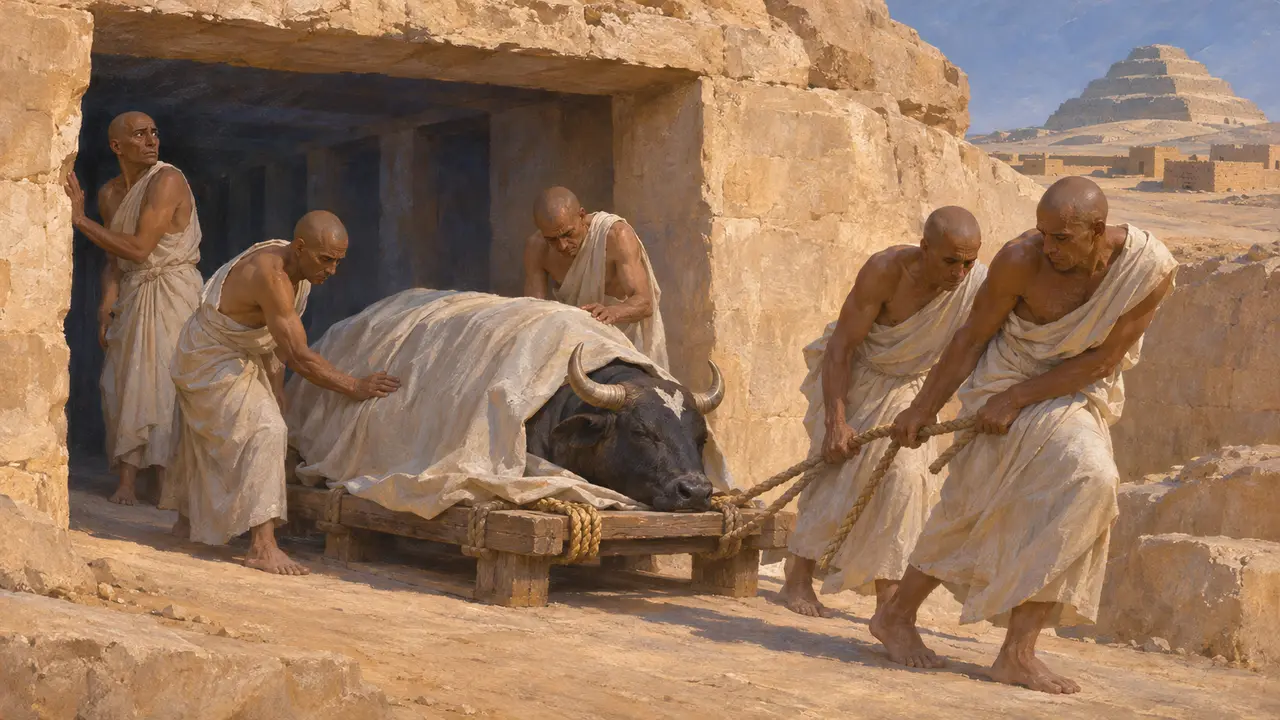
Ancient accountHerodotus tells that Cambyses, returning from a failed campaign against the Ethiopians, found Memphis celebrating a new Apis and took it as mockery of his defeat. He says the king had the priests flogged and stabbed the bull in the thigh, and that it wasted away and was buried by the priests in secret. The Egyptians, he reports, said this crime drove Cambyses mad.
Herodotus 3.27-30
Squaring the two versions
DisputedMost historians think the stela and sarcophagus tell against the killing, since the bull of 524 was buried with royal honours. Some have proposed that the wounded bull was its successor, but that Apis, born under Cambyses, lived until year 4 of Darius, in 518. Many see the tale as hostile priestly memory, perhaps sharpened by Cambyses' cuts to temple incomes recorded in a later Demotic text.
P. Briant, From Cyrus to Alexander, 2002
Sources
- Herodotus 3.27-30
- G. Posener, La première domination perse en Égypte, 1936
- A. Mariette, Le Sérapéum de Memphis, 1857
- P. Briant, From Cyrus to Alexander, 2002
- A. Kuhrt, The Persian Empire: A Corpus of Sources from the Achaemenid Period, 2007