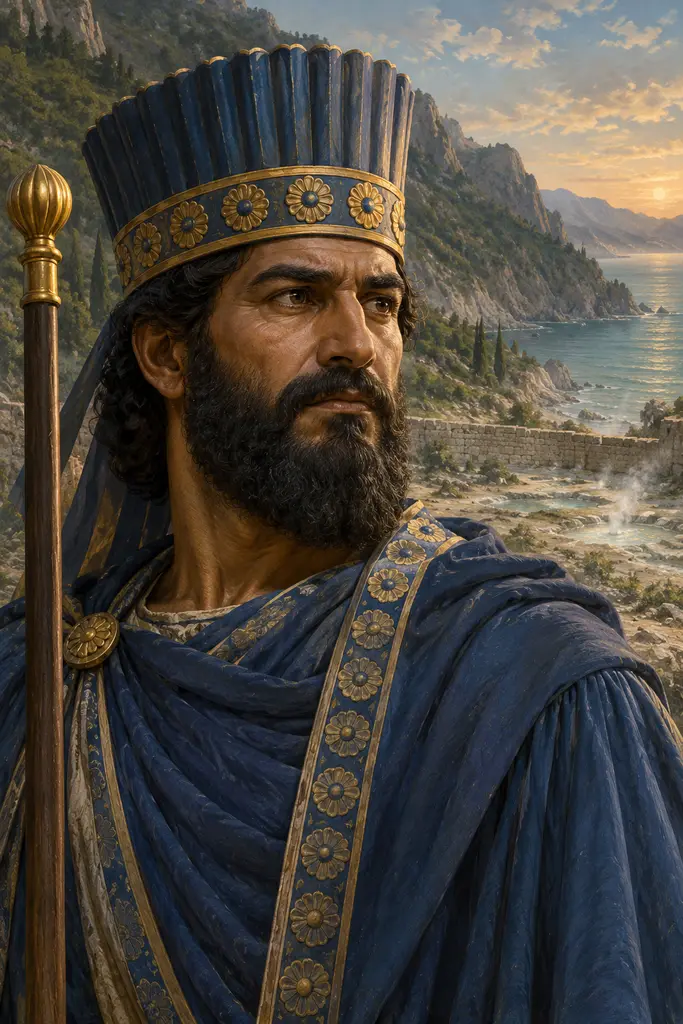
Hydarnes
Persian general, commander of the Immortals at Thermopylae, 480 BCE
In the game: Level 3: The Lie, Level 10: The Hot Gates
Hydarnes was the Persian general who commanded the Ten Thousand, the royal infantry the Greeks called the Immortals, during Xerxes' invasion of Greece in 480. Herodotus says he led them by night over the mountain path at Thermopylae and came down behind the Greek defenders, which decided the battle. He was probably the son of the Hydarnes who helped Darius take the throne.
In the game: The game's chronicle presents Hydarnes as the commander who led the Immortals over the mountain path to turn the pass, which follows Herodotus closely. The story of the night march rests on Greek accounts alone.
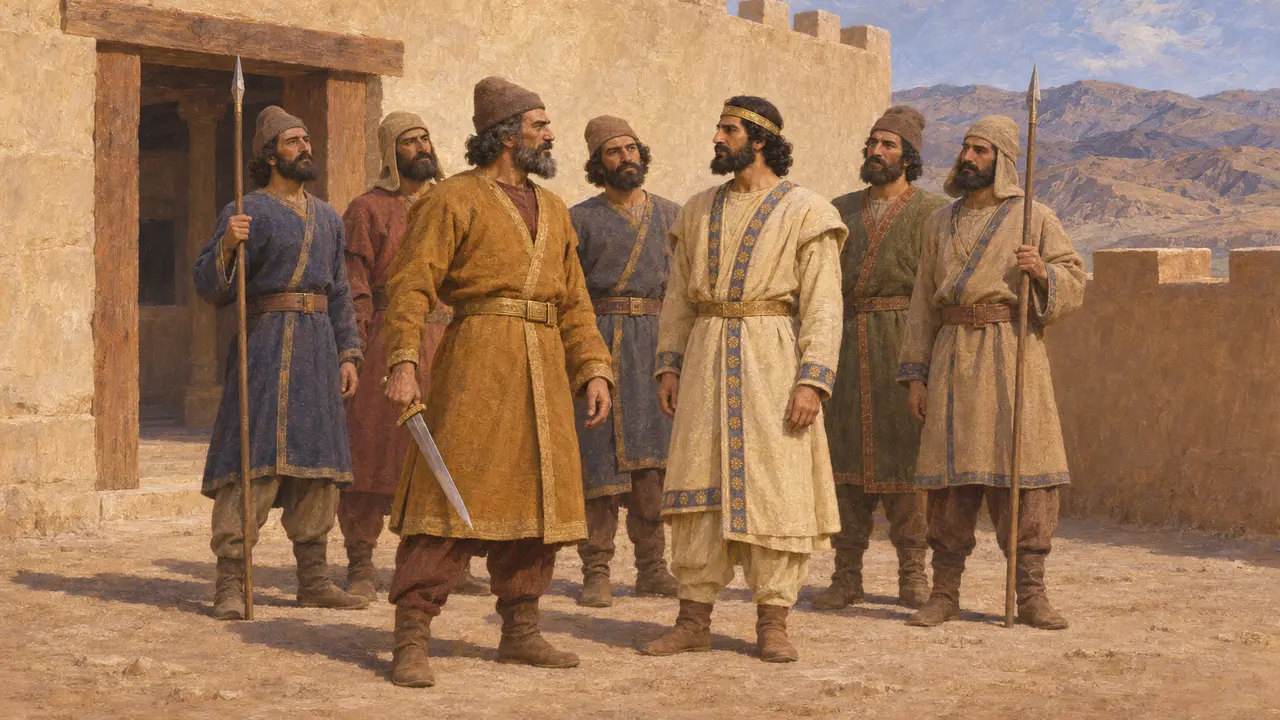
Son of one of Darius's six helpers
In the recordDarius's inscription at Behistun names Vidarna son of Bagabigna, a Persian, among the six men who stood with him when he killed Gaumata in 522. Darius also sent Vidarna against the Median rebels, and Vidarna fought them at Maru. Herodotus calls the commander of 480 Hydarnes son of Hydarnes, so the general at Thermopylae was probably the son of this companion of Darius.
DB §25, §68; Herodotus 7.83
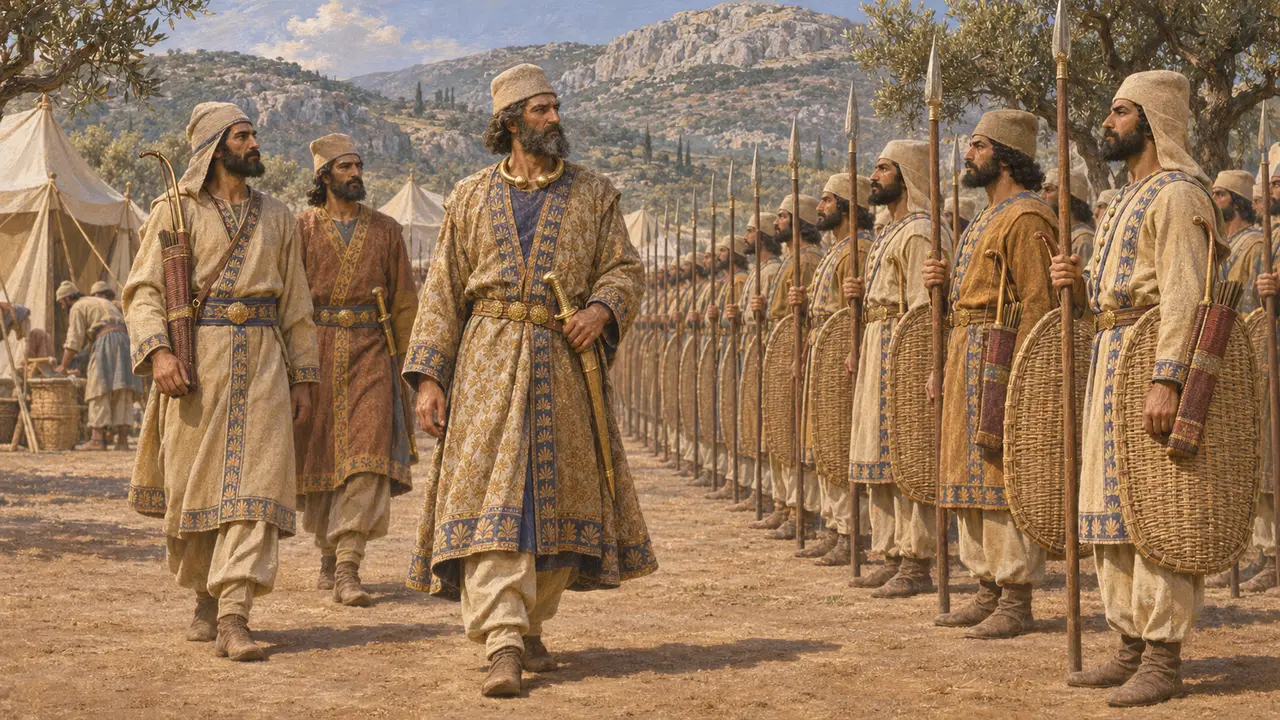
Commander of the Ten Thousand
Ancient accountHerodotus says the Ten Thousand were picked Persian foot soldiers under Hydarnes. They were kept at full strength, so that a man who died or fell sick was replaced at once, and for this the Greeks called them the Immortals. He says they wore the richest gear in the army. After Salamis, when Mardonius chose troops to stay in Greece, Herodotus reports that Hydarnes refused to leave the King and went back with Xerxes.
Herodotus 7.83, 8.113
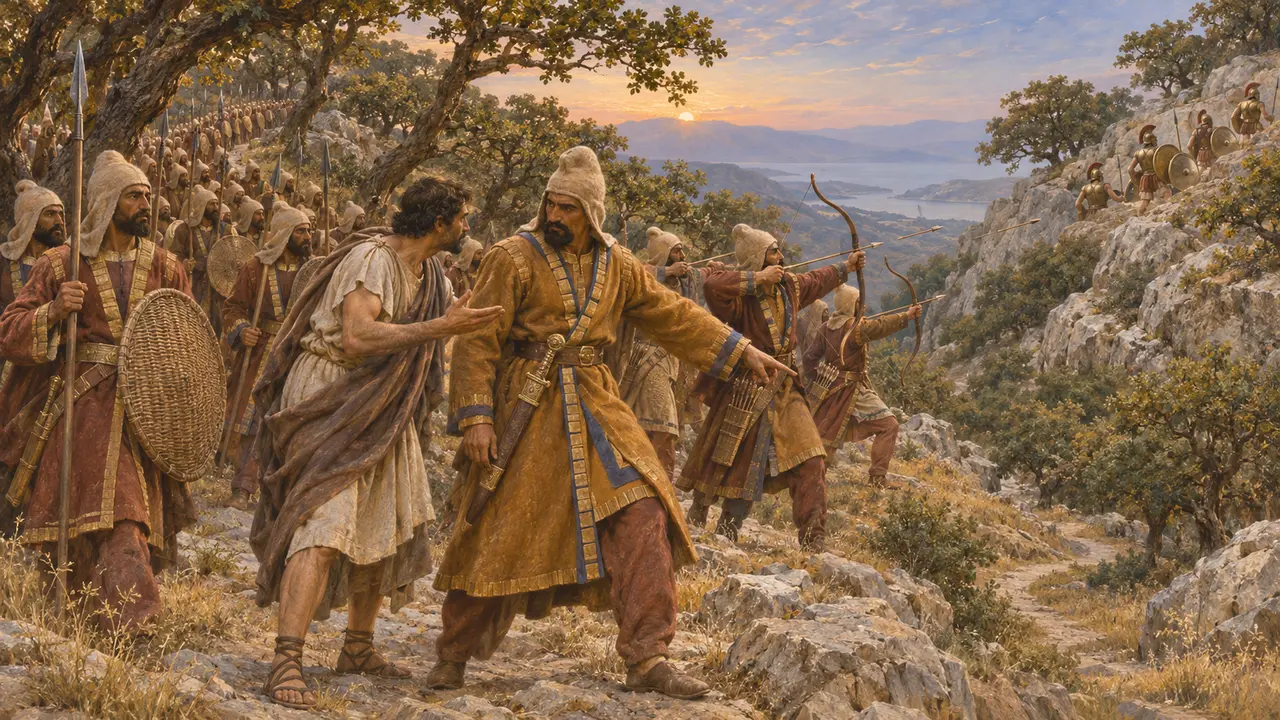
The night march over the mountain
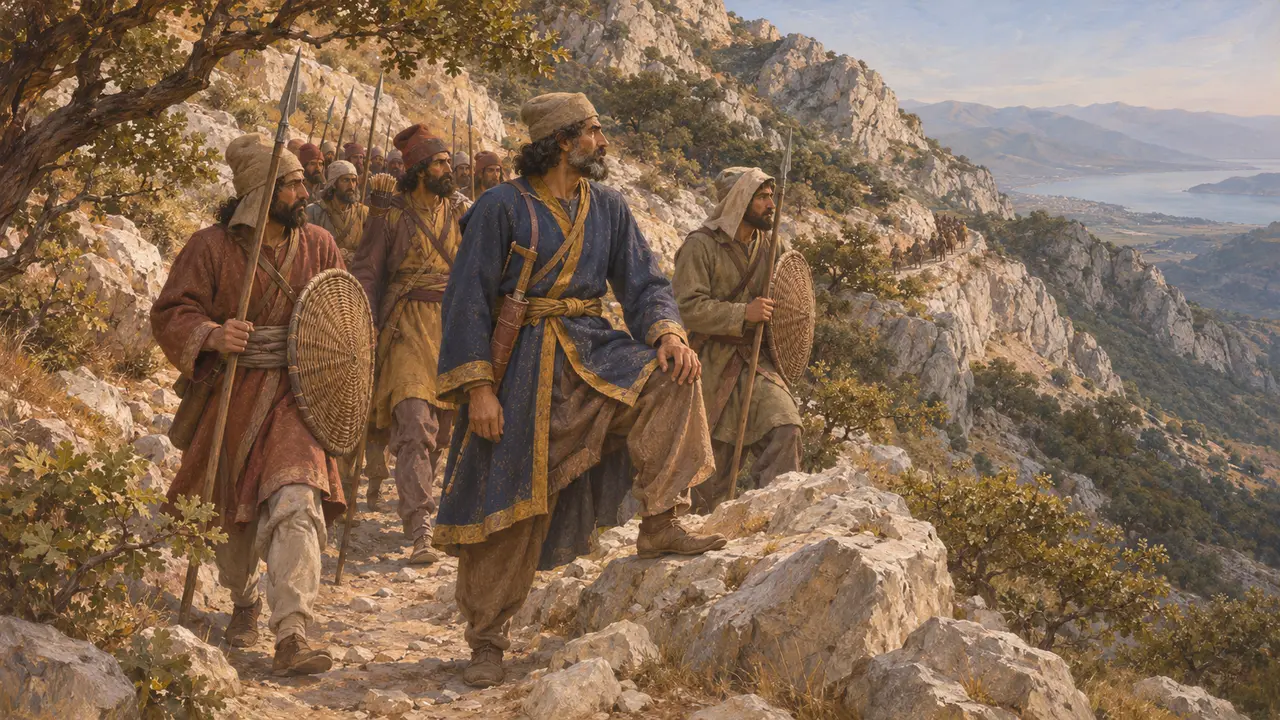
Ancient accountHerodotus says the Immortals first attacked the pass and failed, as the Medes had before them. Xerxes then sent Hydarnes and his men out at lamp-lighting time with Ephialtes of Malis as guide. At dawn they met a thousand Phocians guarding the path. Hydarnes feared they were Spartans, but once told otherwise his men shot at them, the Phocians drew back to the summit, and the Persians went on down behind Leonidas.
Herodotus 7.211, 7.215-218
What historians still argue over
DisputedHistorians still argue over the line of the Anopaea path and how long the march took, and many doubt that all ten thousand men went, though Herodotus implies it. The Greek name Immortals may come from a misunderstood Persian word, perhaps one meaning companions, but this is only a guess. Herodotus also mentions a Hydarnes as general of the coastal peoples of Asia, and it is unclear whether he meant this man or his father.
J. F. Lazenby, The Defence of Greece 490-479 BC, 1993; P. Briant, From Cyrus to Alexander, 2002
The Spartan envoys at his table
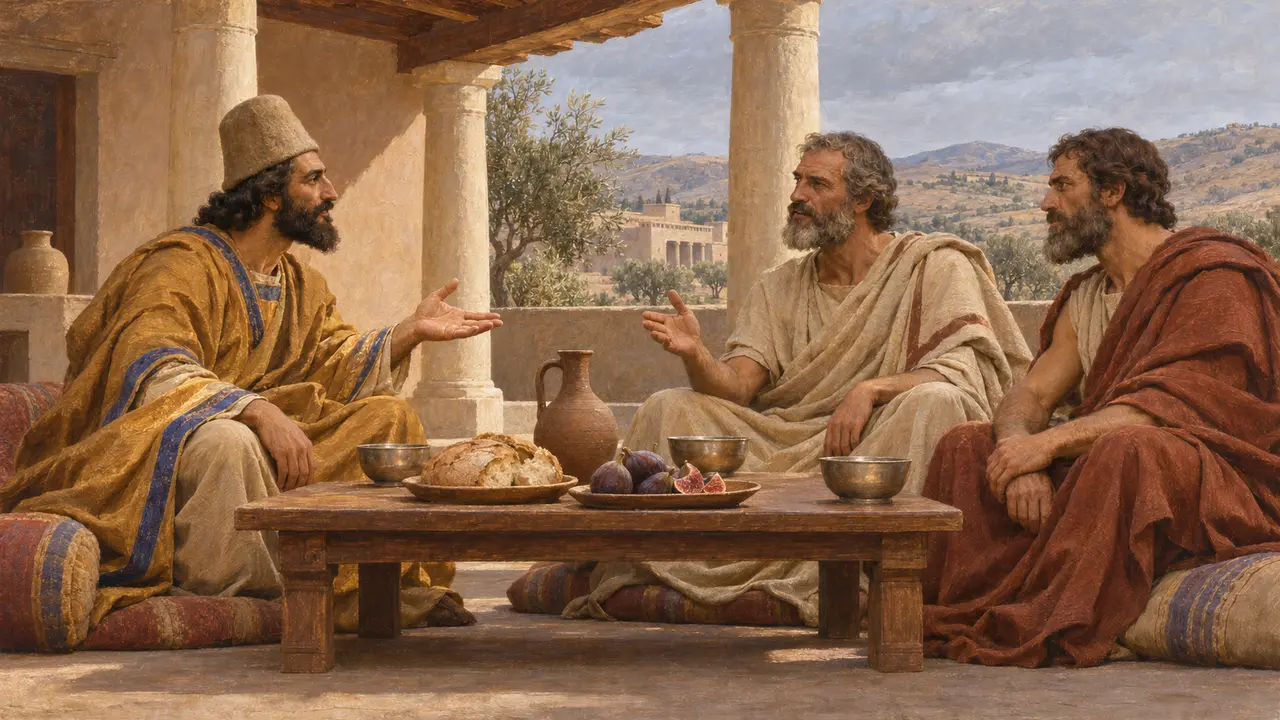
Later legendHerodotus tells how two Spartans, Sperthias and Bulis, travelling to the King to atone for Sparta's killing of Darius's heralds, were entertained by a Persian named Hydarnes. He urged them to serve the King and so win rule in Greece. They answered that he knew what it was to be a slave but had never tasted freedom. The story is shaped to praise Spartan liberty and cannot be checked.
Herodotus 7.134-136
Sources
- Herodotus 7.83, 7.211-218
- Darius, Behistun inscription (DB §25, §68)
- Herodotus 8.113
- Herodotus 7.134-136
- P. Briant, From Cyrus to Alexander, 2002
- J. F. Lazenby, The Defence of Greece 490-479 BC, 1993