Encyclopedia › Soldiers and ships
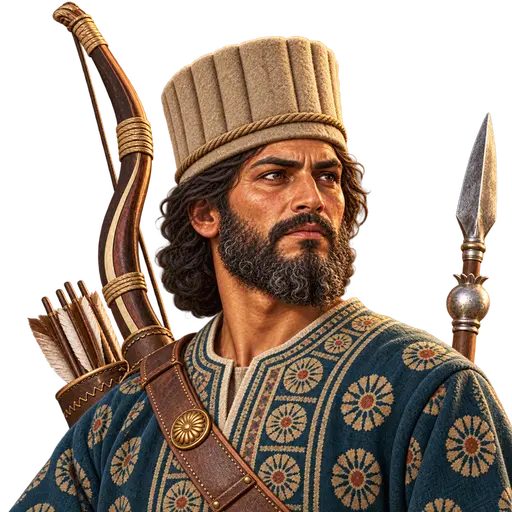
King's Archer
Trained Persian bowman of the King's army, Persia, about 550-479 BCE
The bow was the main weapon of the Persian foot soldier and a sign of royal power. Herodotus says Persian boys were trained to shoot from childhood, and the King himself appeared on reliefs and coins as an archer. Archery played a large part in Persian battles, and Greek writers remembered the arrow storms long afterwards.
In the game: The game fields the King's Archer as a separate trained archer. Most Persian infantry seem to have carried a spear as well as a bow, so splitting spearmen and archers into different units is a simplification.
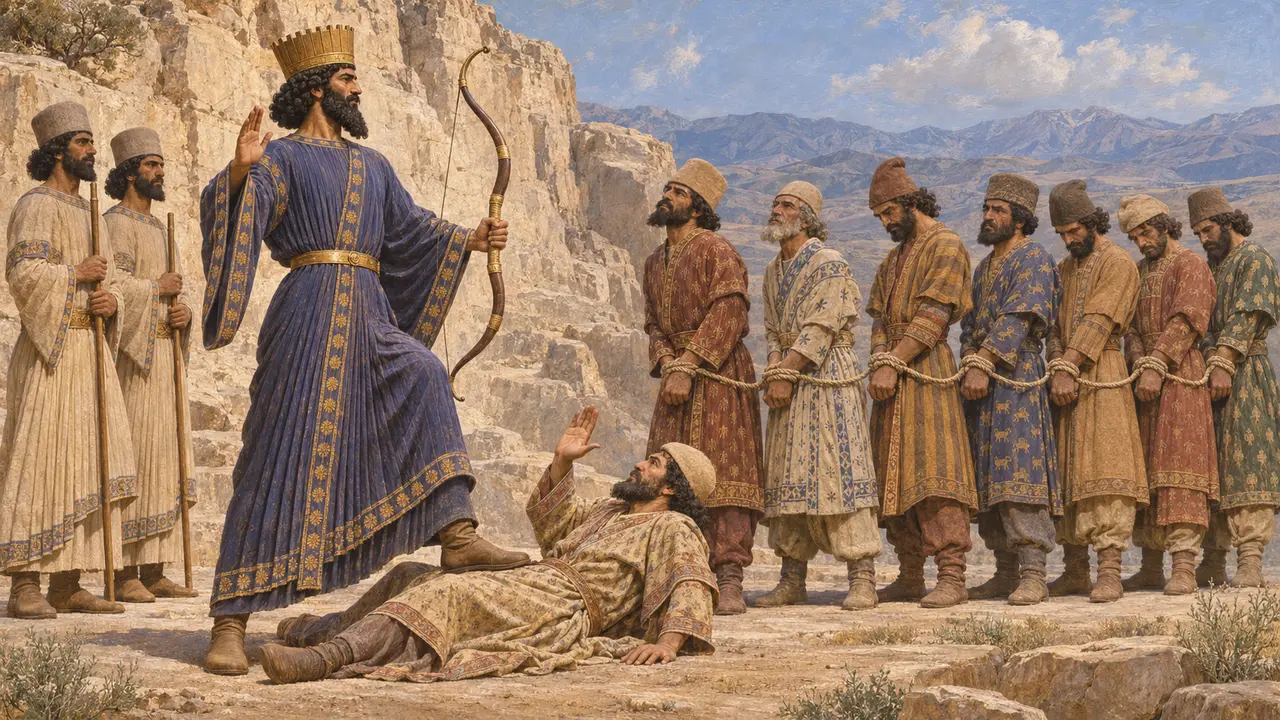
The King as bowman
In the recordOn the Behistun relief Darius holds a bow and rests his foot on the fallen Gaumata, while the other rebel leaders stand bound before him. In his tomb inscription at Naqsh-e Rostam he claims to be a good bowman both on foot and on horseback. The gold and silver coins struck from about 515-500 onwards show a crowned archer, usually taken to be the King.
DB relief; DNb; Briant, From Cyrus to Alexander, 2002
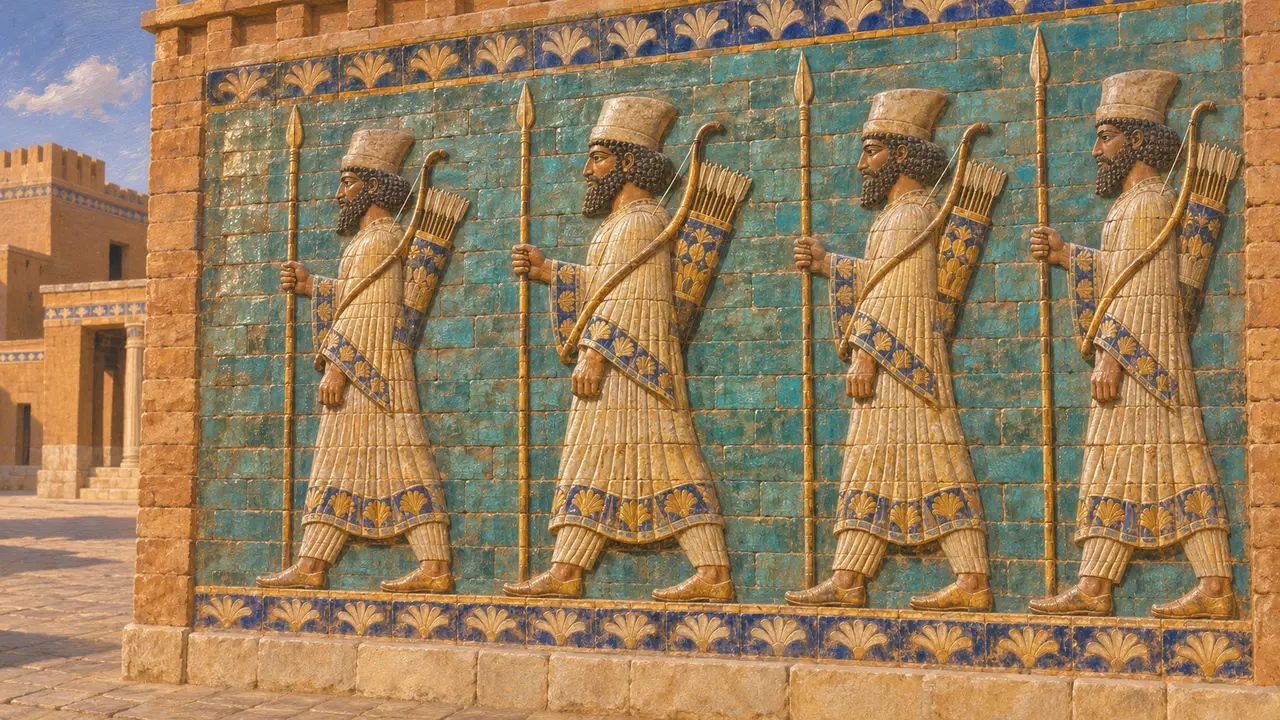
Archers in glazed brick and stone
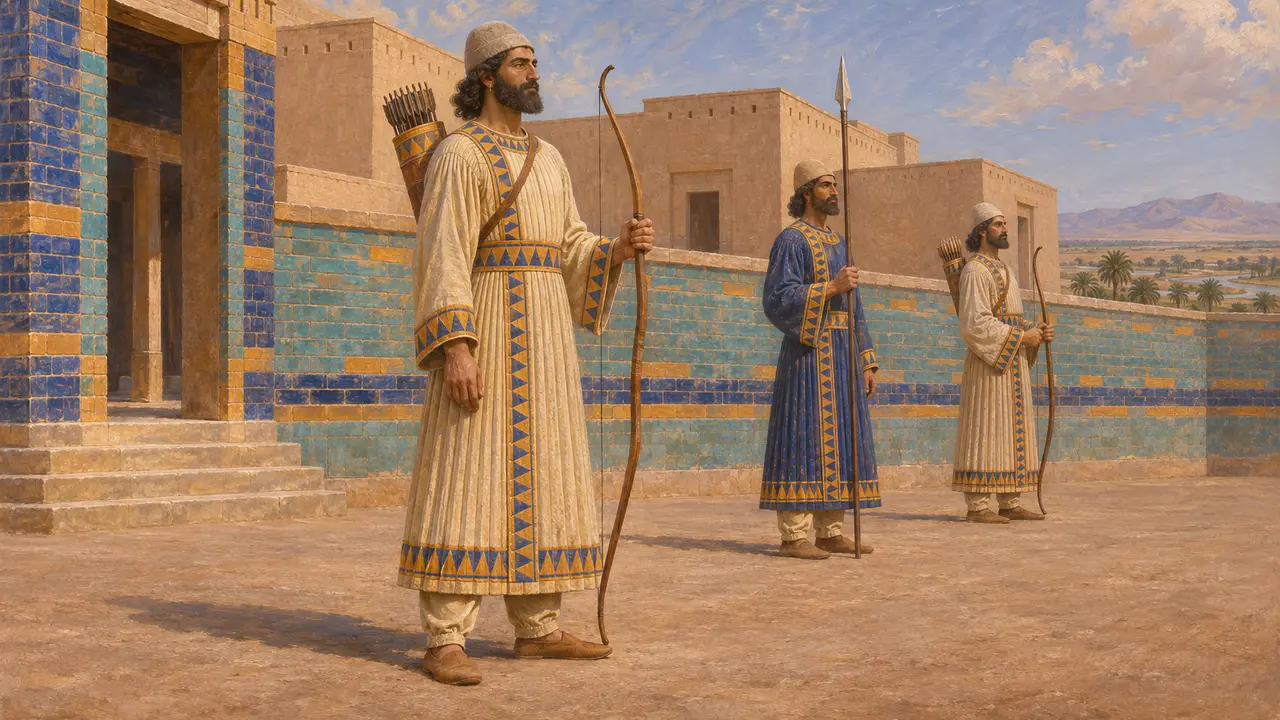
In the recordGlazed-brick panels from Darius's palace at Susa show rows of soldiers in long robes. Each carries a spear, with a bow over the shoulder and a quiver on the back. Many of these panels are now in the Louvre. Guards on the Persepolis reliefs carry the same pairing of spear and bow, which suggests that a royal soldier was trained in both.
Excavation reports from Susa; Persepolis reliefs
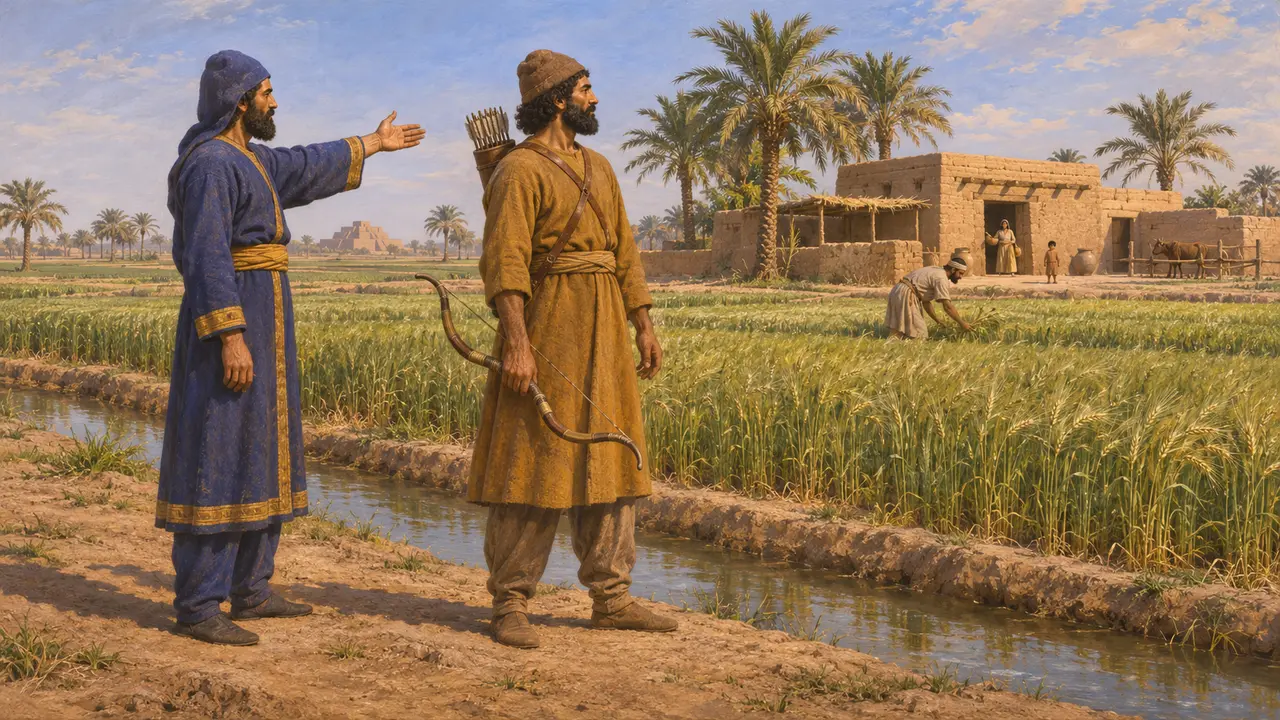
Land held for a bow
In the recordBabylonian documents record plots called bow land, held in return for military service to the crown. Such holdings already appear under Darius. They are best known from the Murashu archive of Nippur, which dates from about 455 to 403. By then the service was largely paid in silver. The system shows how the empire raised bowmen from settled subjects as well as from Persians.
M. Stolper, Entrepreneurs and Empire, 1985
Training and equipment
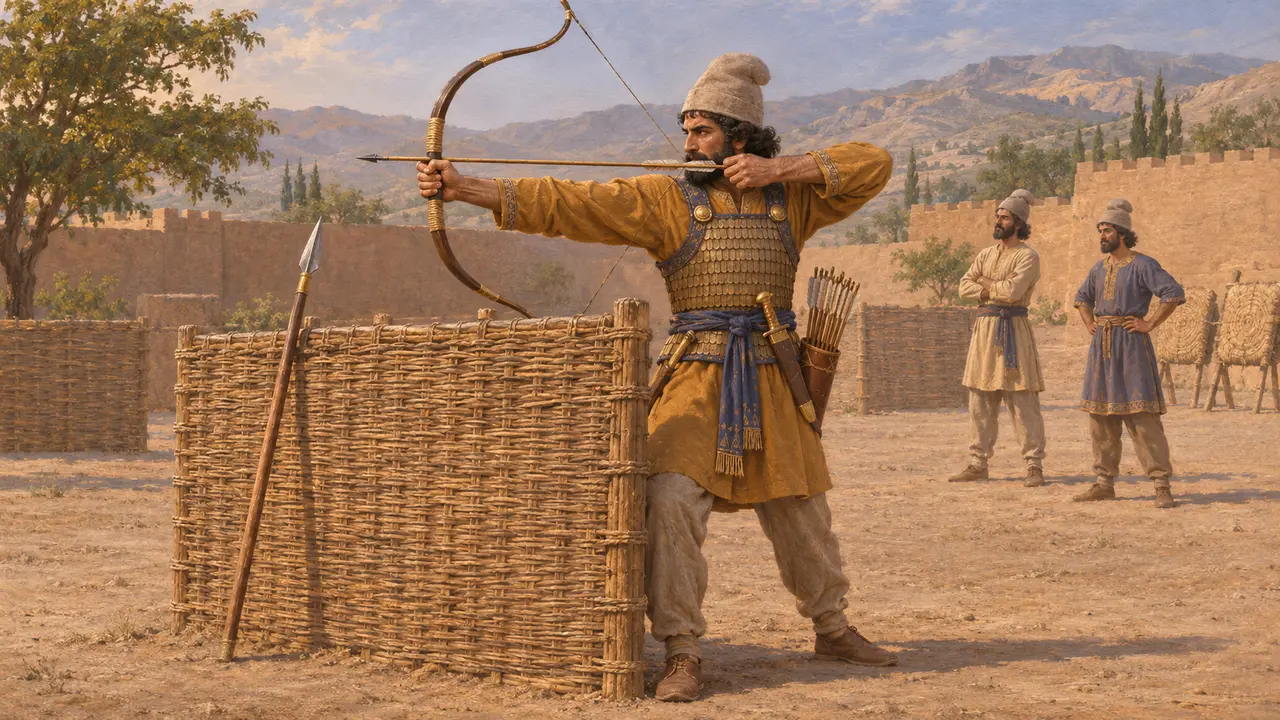
Ancient accountHerodotus says Persian boys were taught from five to twenty years old to ride, to shoot the bow and to speak the truth. He describes Persian infantry in Xerxes' army with felt caps, sleeved tunics, scale armour, wicker shields, short spears, long bows with cane arrows, and daggers. At Plataea, he says, the Persians shot from behind a wall of wicker shields but lacked the heavy armour of the Greeks.
Herodotus 1.136; Herodotus 7.61; Herodotus 9.61-63
Who the brick archers were
DisputedHistorians still argue over whether the Susa archers show the royal guard, often linked with the Immortals, or Persian and Elamite soldiers in general. The robes are of court style rather than field dress. The battle arrangement of archers and shield-bearing spearmen is reconstructed mostly from short Greek remarks, so modern pictures of the formation vary.
Briant, From Cyrus to Alexander, 2002
Sources
- Herodotus 7.61
- Herodotus 1.136
- Herodotus 9.61-63
- DNb; DB
- P. Briant, From Cyrus to Alexander, 2002
- M. Stolper, Entrepreneurs and Empire, 1985