Glazed-brick Panel
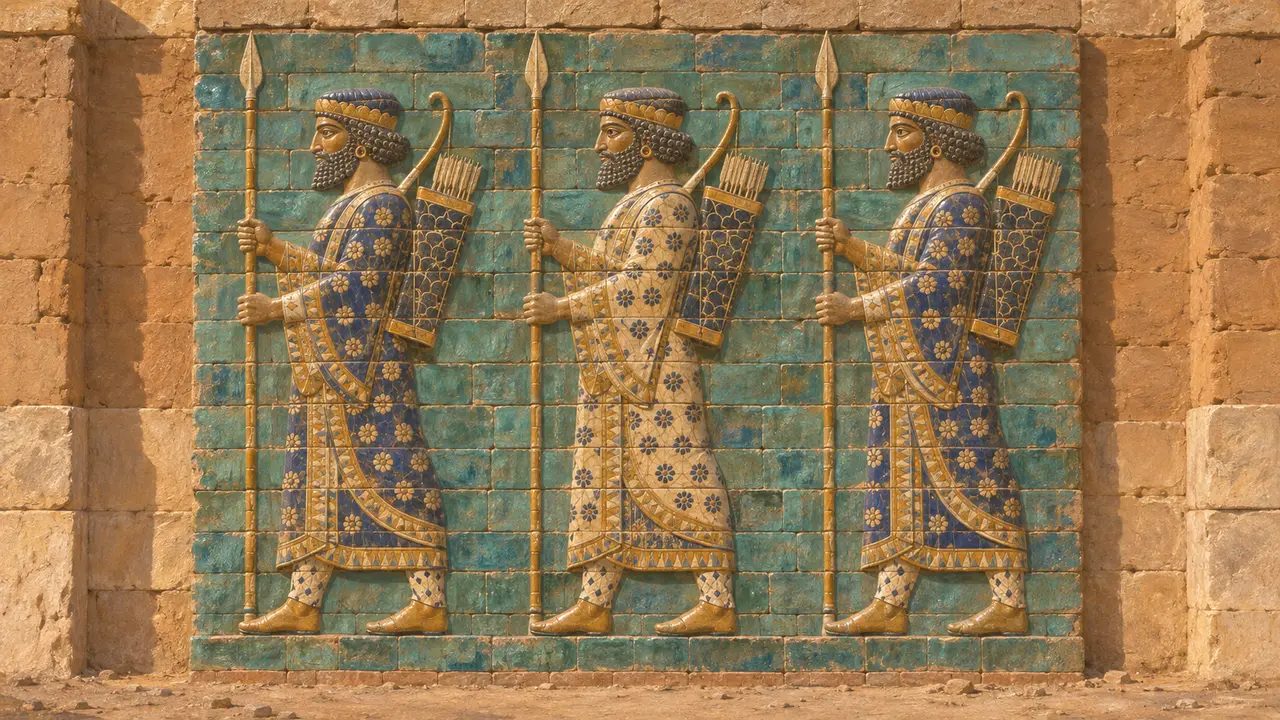
Moulded, glazed brick friezes from the Palace of Darius at Susa, late 6th century BCE
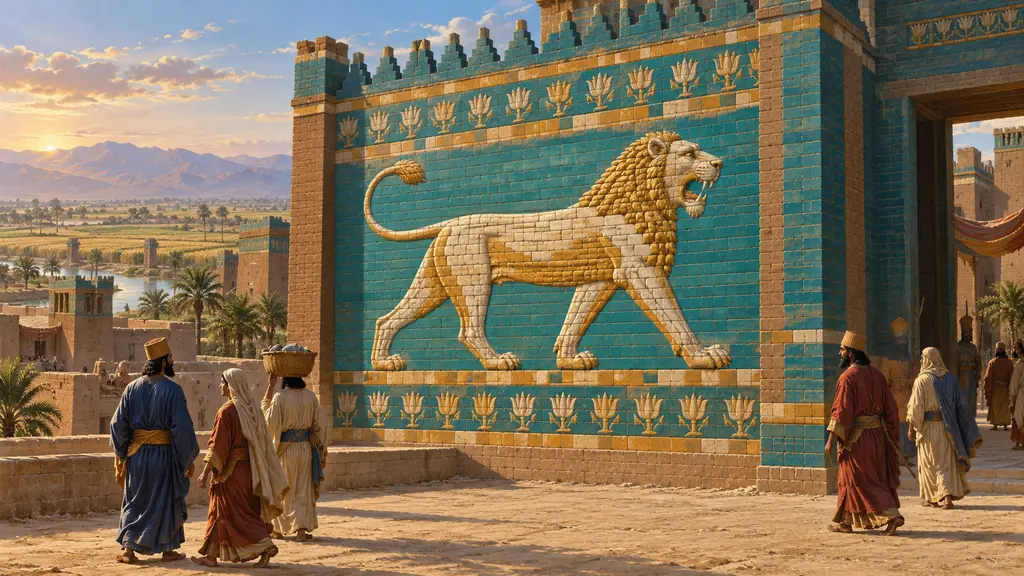
Glazed-brick panels were walls faced with moulded bricks, each carrying part of a figure in relief and coated in coloured glaze. Darius and his successors used them to line the courts and gateways of the palace at Susa with lions, griffins, winged bulls and rows of archers. The craft came from Babylon, and its use at Susa shows how the King drew the skills of many subject peoples into his own house.
In the game: In the game the Glazed-brick Panel is a housing building showing striding lions like the Susa friezes. Its credit to Babylonian craft follows DSf, though the charter names Medes and Egyptians as the men who adorned the wall.
A craft learned in Babylon
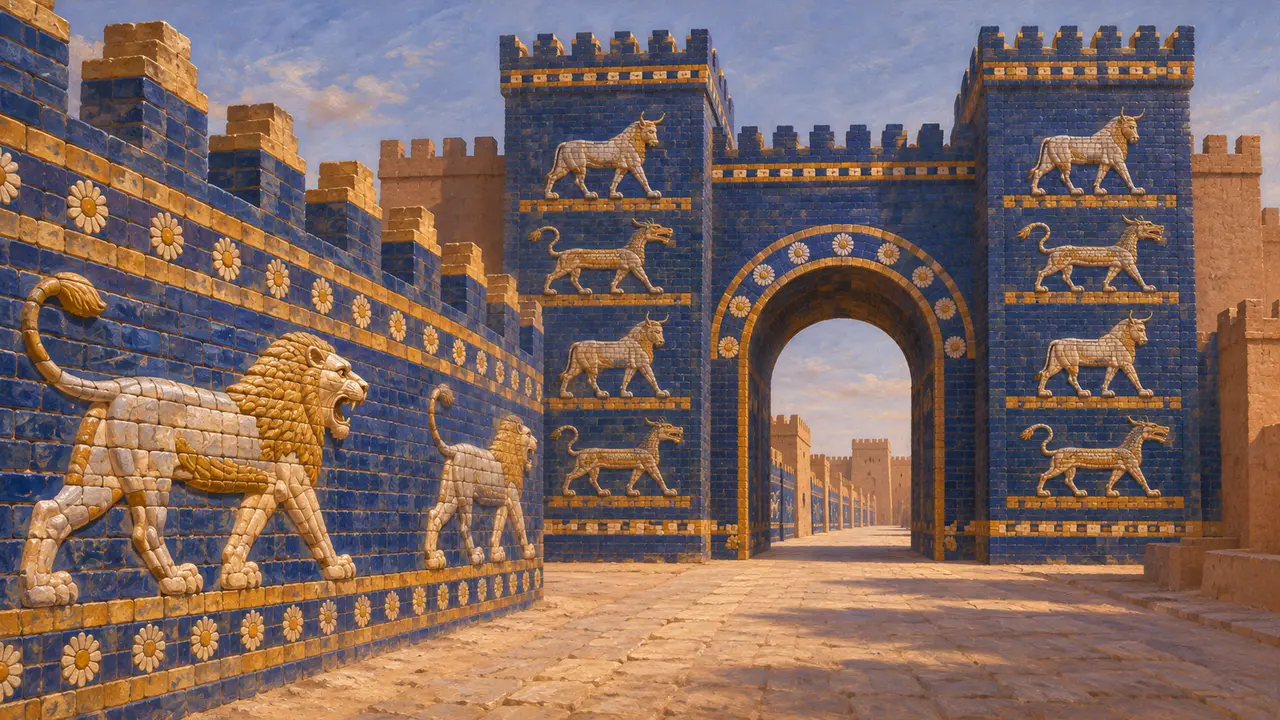
In the recordMoulded glazed brick was a Mesopotamian art before the Persians took it up. Under Nebuchadnezzar II, in the early 6th century, Babylon's Ishtar Gate and Processional Way were faced with blue-glazed brick showing bulls, dragons and striding lions. German excavators uncovered these walls between 1899 and 1917, and reconstructed parts now stand in Berlin.
R. Koldewey, Das wieder erstehende Babylon, 1913
What the Susa charter says
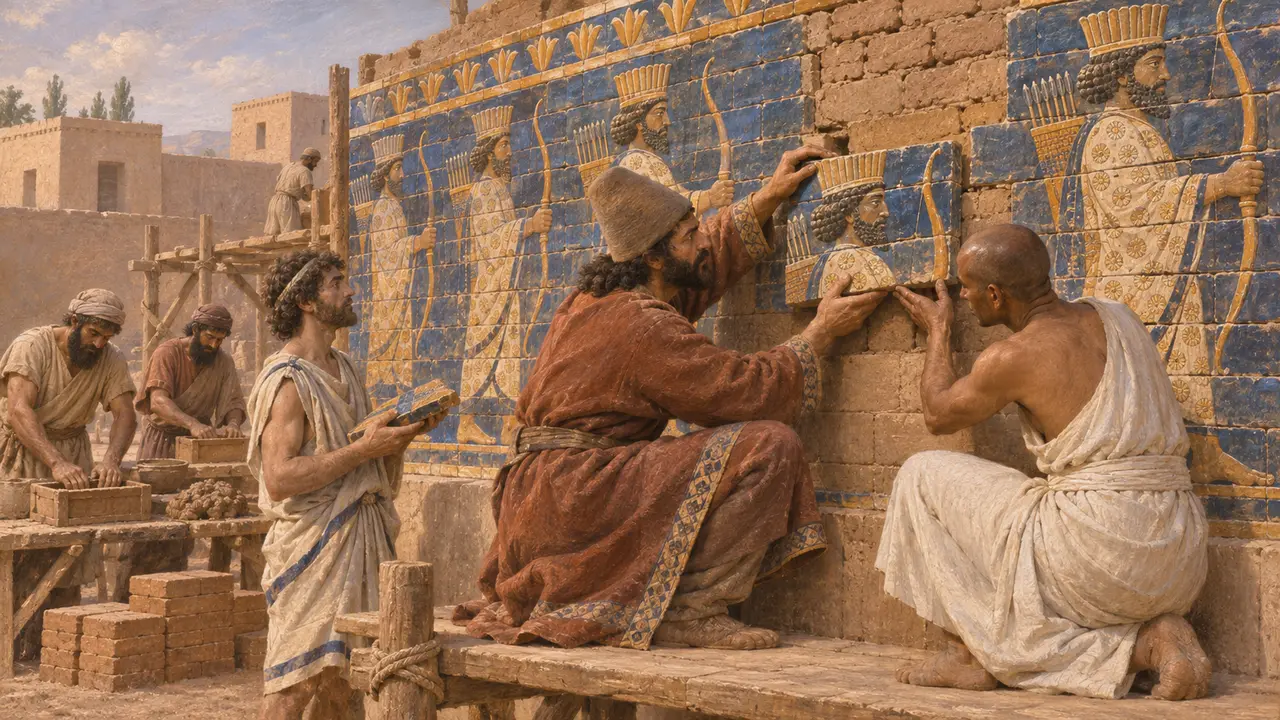
In the recordDarius's foundation charter for his Susa palace lists the peoples who supplied its materials and labour. It says the baked brick was moulded by Babylonians, and that the men who adorned the wall were Medes and Egyptians. Other craftsmen in the list came from Ionia, Sardis and elsewhere, so the charter presents the palace as the work of the whole empire.
DSf
Lions, griffins and guardsmen
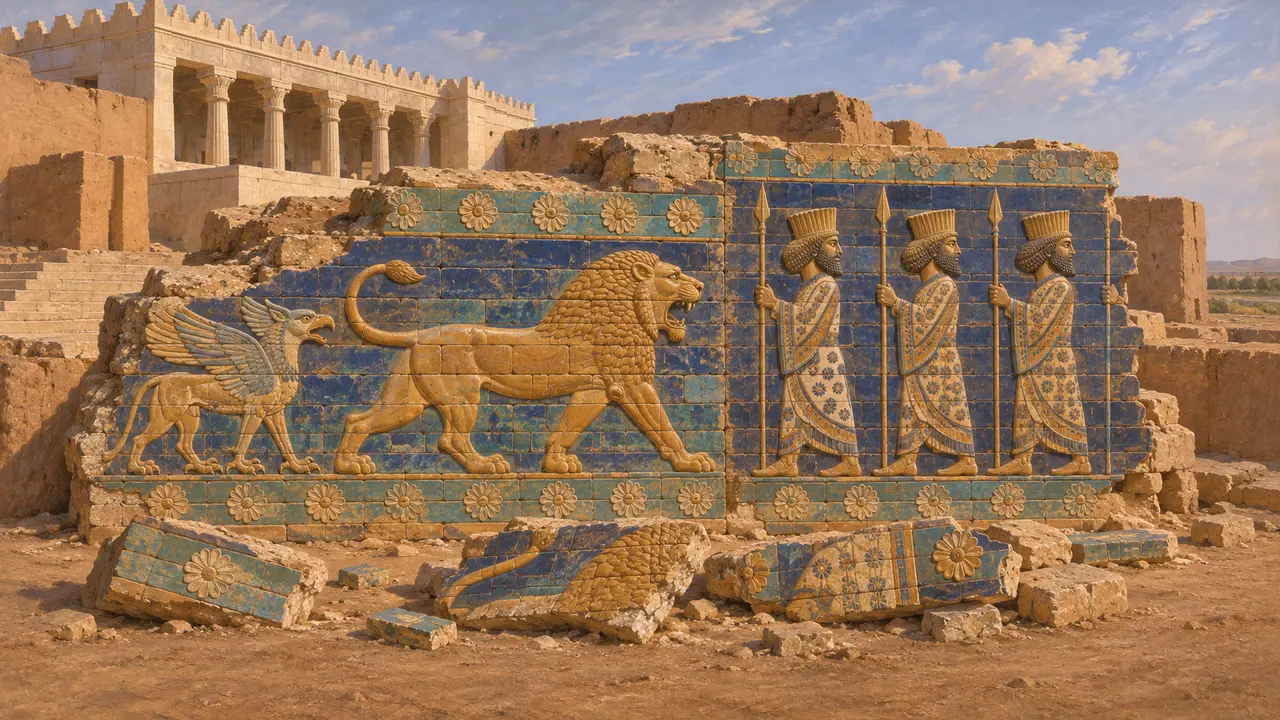
In the recordFrench excavators led by Marcel and Jane Dieulafoy found the friezes in fallen fragments at Susa in 1884 to 1886, and later French missions recovered more. Many Susa panels were made not of fired clay but of a siliceous, quartz-rich body, a change from Babylonian practice. The pieces were reassembled in the Louvre, where the lion frieze and the frieze of archers are on display today.
J. Perrot (ed.), The Palace of Darius at Susa, 2013
Who the archers are, and when
DisputedThe frieze of spear-carrying archers in rich robes is often called the Immortals, after the 10,000 picked Persians whom Herodotus describes. No inscription names them, and some scholars see them as royal guards in general. Because the bricks were found fallen and scattered, their original places in the palace are uncertain, and some may belong to the rebuilding under Artaxerxes II rather than to Darius.
Herodotus 7.83; P. O. Harper, J. Aruz and F. Tallon (eds), The Royal City of Susa, 1992
Sources
- DSf
- J. Perrot (ed.), The Palace of Darius at Susa, 2013
- P. O. Harper, J. Aruz and F. Tallon (eds), The Royal City of Susa, 1992
- P. Briant, From Cyrus to Alexander, 2002
- R. Koldewey, Das wieder erstehende Babylon, 1913
- Herodotus 7.83