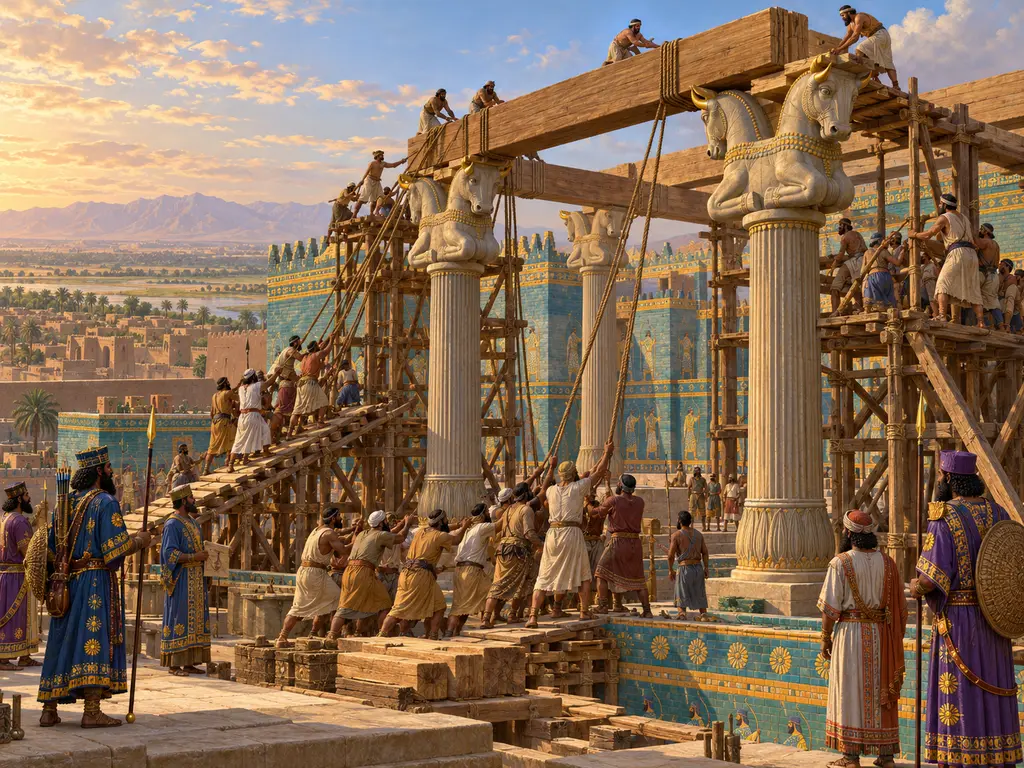
Palace of Darius
Palace and columned hall of Darius I at Susa, in Elam, begun about 520-518 BCE
In the game: Level 5: The Charter
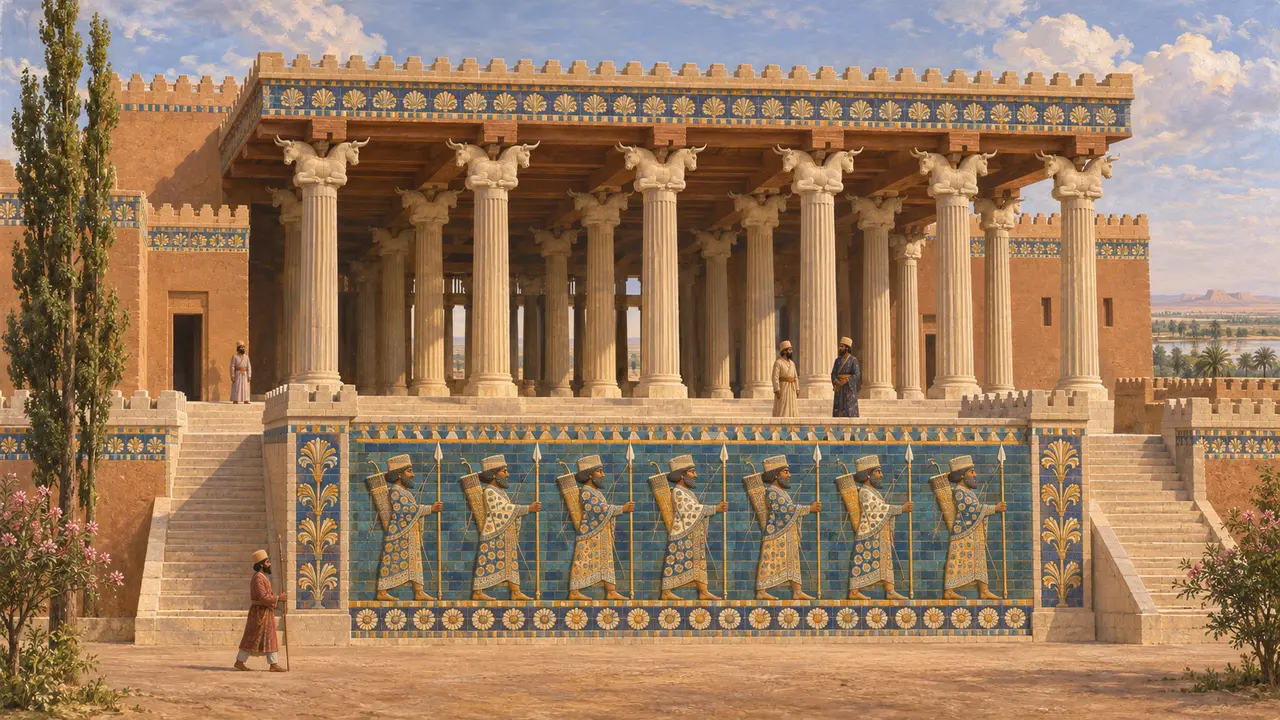
The Palace of Darius was the royal residence Darius I built at Susa, the ancient Elamite city that became a chief seat of the Persian kings. His foundation charter names the lands that sent its materials and the peoples who worked on it, so the building itself declared that the whole empire served the King. Its remains include a courtyard palace, a great columned hall and friezes of glazed brick.
In the game: The game raises the palace in stages from the charter's materials, with timber for every fourth part. The real work took many years. Its walls were mud brick faced with glazed brick, and the level's 519 to 515 span simplifies an uncertain start.
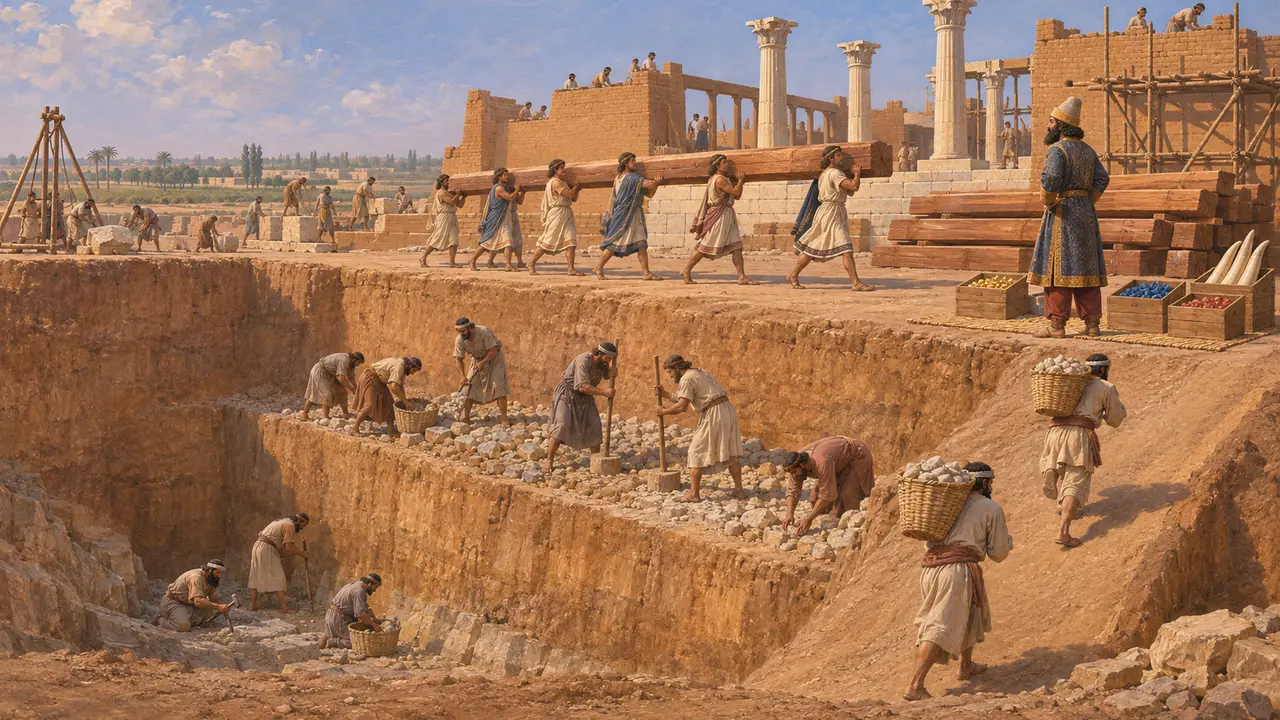
What the foundation charter says
In the recordIn his charter Darius says the earth was dug down until bedrock was reached, then packed with rubble, 40 cubits deep in one part and 20 in another, and the palace was raised on it. Cedar came from Lebanon, carried by Assyrians to Babylon and by Carians and Ionians to Susa. Gold came from Sardis and Bactria, lapis lazuli and carnelian from Sogdiana, and ivory from Kush, Sind and Arachosia.
DSf
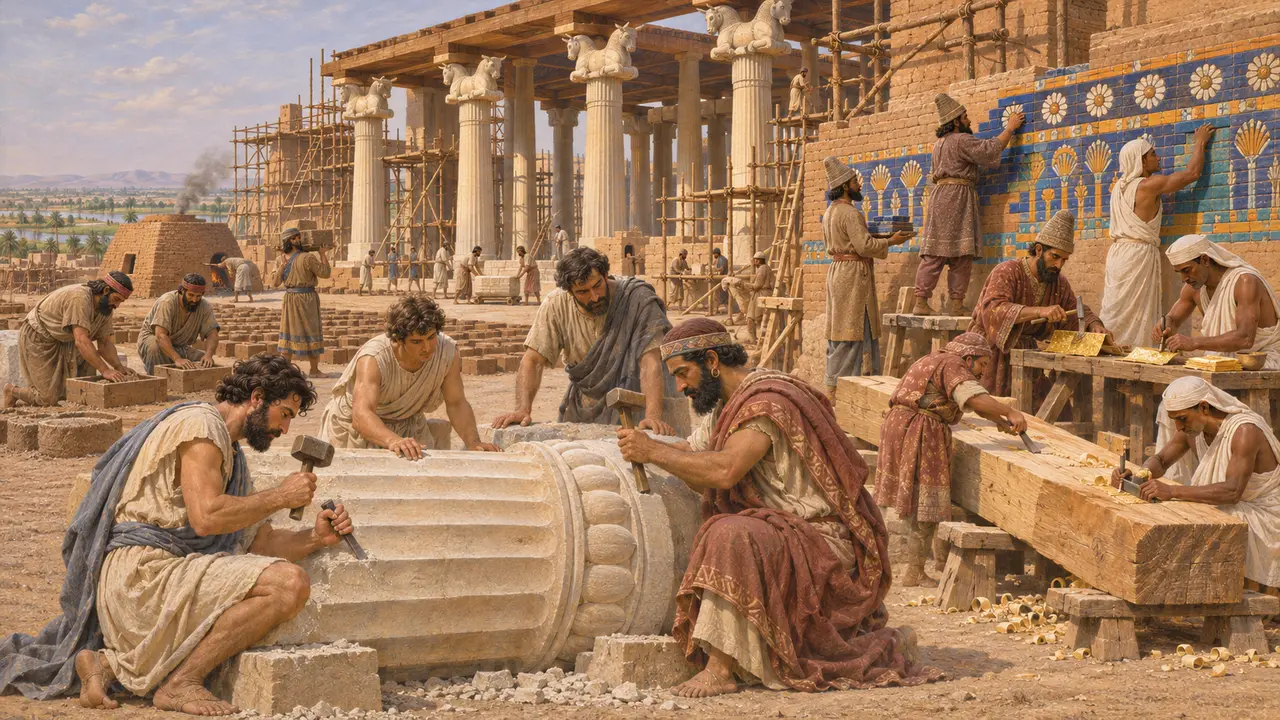
The workers of many lands
In the recordThe charter also lists who did the work. Babylonians moulded and baked the brick, Ionians and Sardians cut the stone, Sardians and Egyptians worked the wood, Medes and Egyptians worked the gold, and Medes and Egyptians adorned the walls. A related text, DSz, known chiefly in Elamite, repeats much of this list. The charter presents the palace as a picture of the empire, each people bringing its share.
DSf; DSz
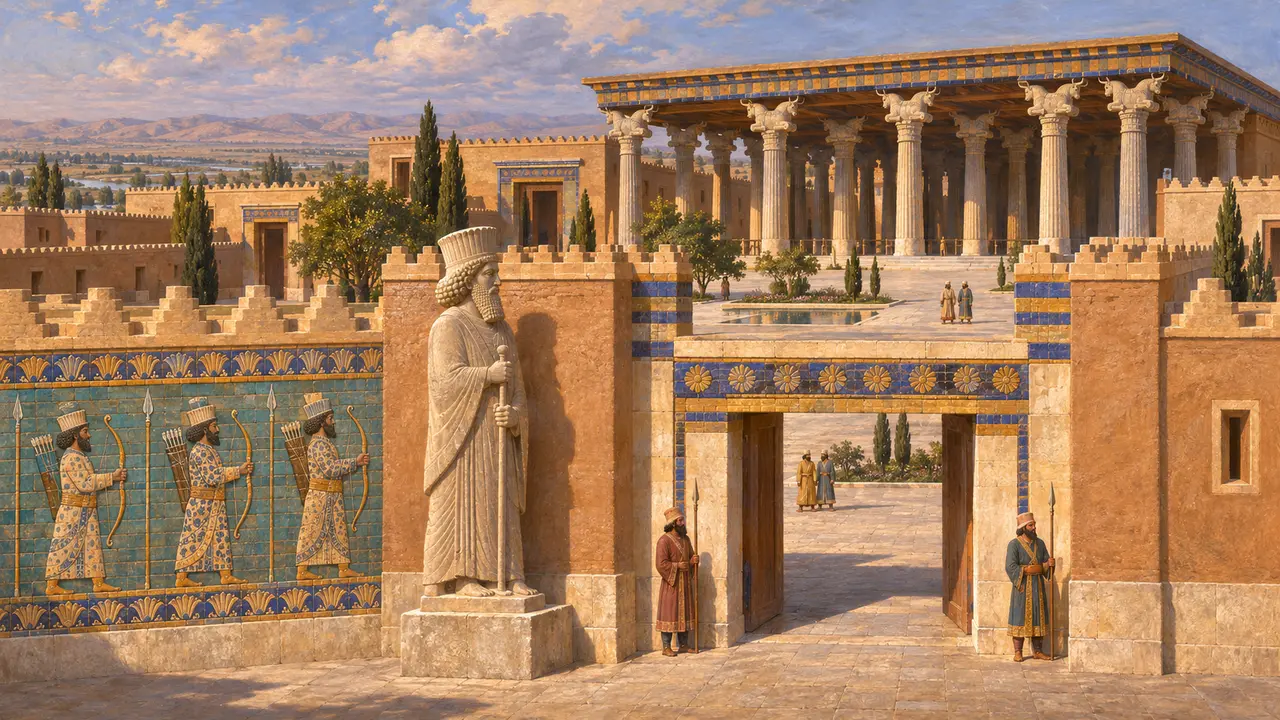
What the excavators found
In the recordFrench teams have dug at Susa since the 1880s, when Marcel Dieulafoy recovered glazed-brick friezes of archers now in the Louvre. Jean Perrot's work in the 1970s clarified a residential palace of mud brick built round courtyards in a Babylonian manner, and a hall of 36 columns. In 1972 a statue of Darius, carved in Egypt and inscribed in hieroglyphs and cuneiform, was found at the gate of the palace.
J. Perrot (ed.), The Palace of Darius at Susa, 2013
When it was built and what it shows
DisputedThe charter carries no date. Some historians place the start as early as about 520, soon after the rebellions of 522 to 521, and others somewhat later. Later kings altered the site: Artaxerxes II says the columned hall burned under Artaxerxes I and that he rebuilt it. Scholars also debate whether the glazed archers show a royal guard, such as the troops Herodotus calls Immortals, or Persians in general.
A2Sa; P. Briant, From Cyrus to Alexander, 2002
Susa in Greek eyes
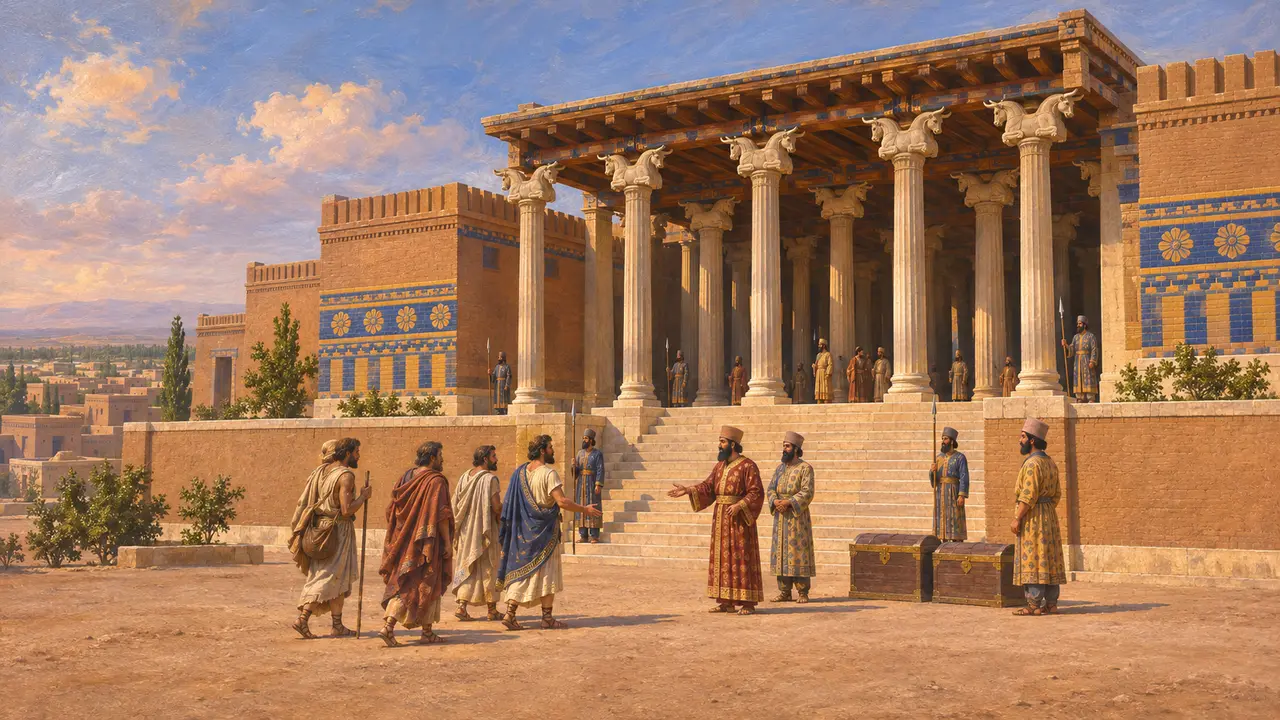
Ancient accountHerodotus makes Susa the King's residence and the place of his treasuries. He has Aristagoras of Miletus describe the road from Sardis to Susa, a journey Herodotus reckons at about three months. For Greek writers Susa stood for the wealth and distance of the Persian court, though they say little about the palace itself.
Herodotus 5.49-54
Sources
- DSf
- DSz
- J. Perrot (ed.), The Palace of Darius at Susa, 2013
- P. O. Harper, J. Aruz and F. Tallon (eds), The Royal City of Susa, 1992
- P. Briant, From Cyrus to Alexander, 2002
- Herodotus 5.49-54