Encyclopedia › Battles and events
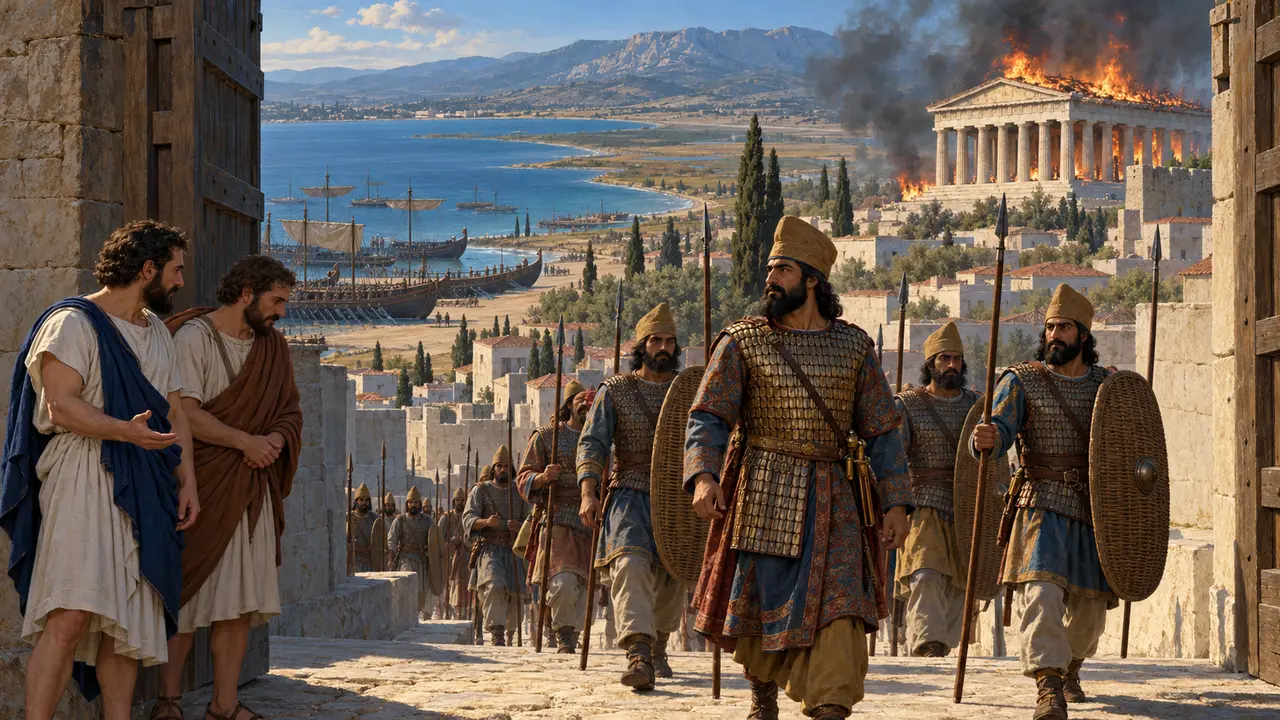
The fall of Eretria
Persian siege and capture of the Euboean city of Eretria, 490 BCE
In the game: Level 8: The Bay of Marathon
In 490 the fleet of Datis and Artaphernes besieged Eretria on Euboea, one of the two Greek cities that had helped the Ionians burn Sardis. After six days of fighting, two leading citizens betrayed the city on the seventh. Herodotus says the Persians burned its sanctuaries and carried its people to Susa, then crossed to Marathon, where the expedition was defeated.
In the game: The game follows Herodotus: six days of defence, betrayal on the seventh, temples burned for Sardis. This is the Greek account only; no known Persian document mentions the siege.
Why Eretria was a target
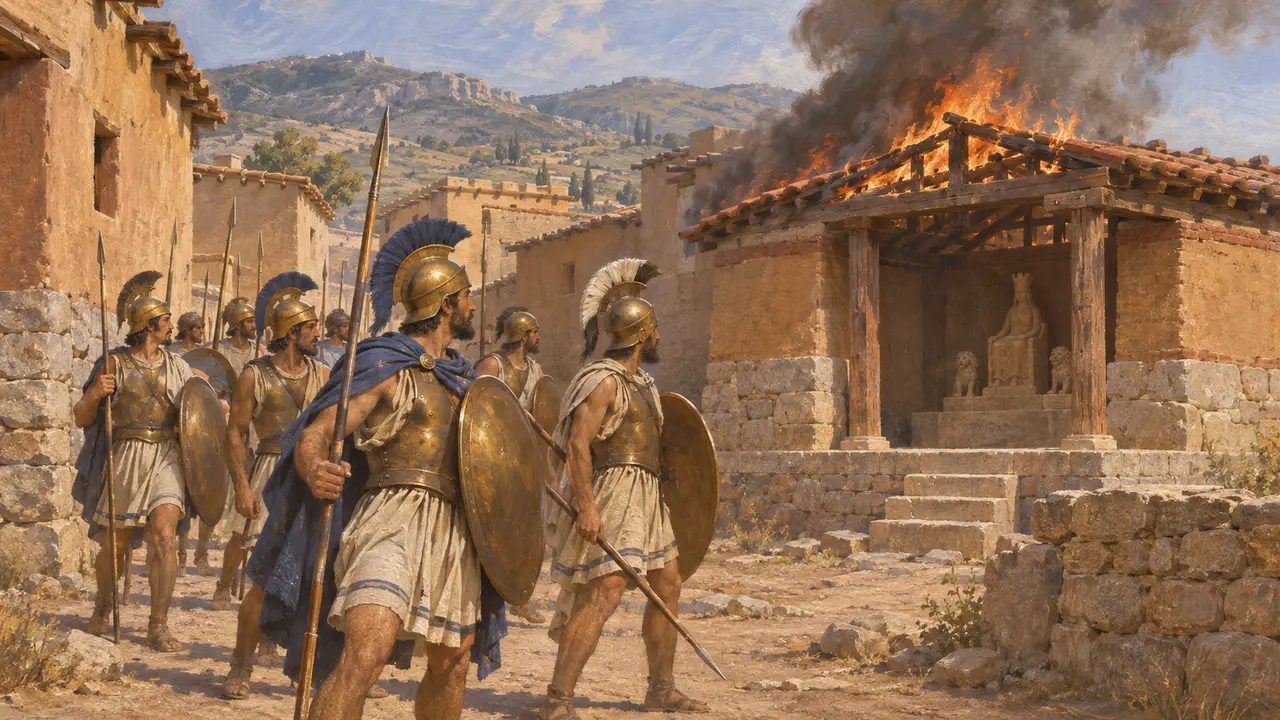
Ancient accountHerodotus says Eretria sent five triremes to help the Ionian Revolt in 498, repaying an old debt to Miletus. Its men marched inland with the Athenians and took part in the burning of Sardis, where a temple of the goddess Cybebe was destroyed. He reports that Darius later ordered Datis and Artaphernes to enslave Athens and Eretria and bring the captives before him.
Herodotus 5.99-102; 6.94
Six days on the walls
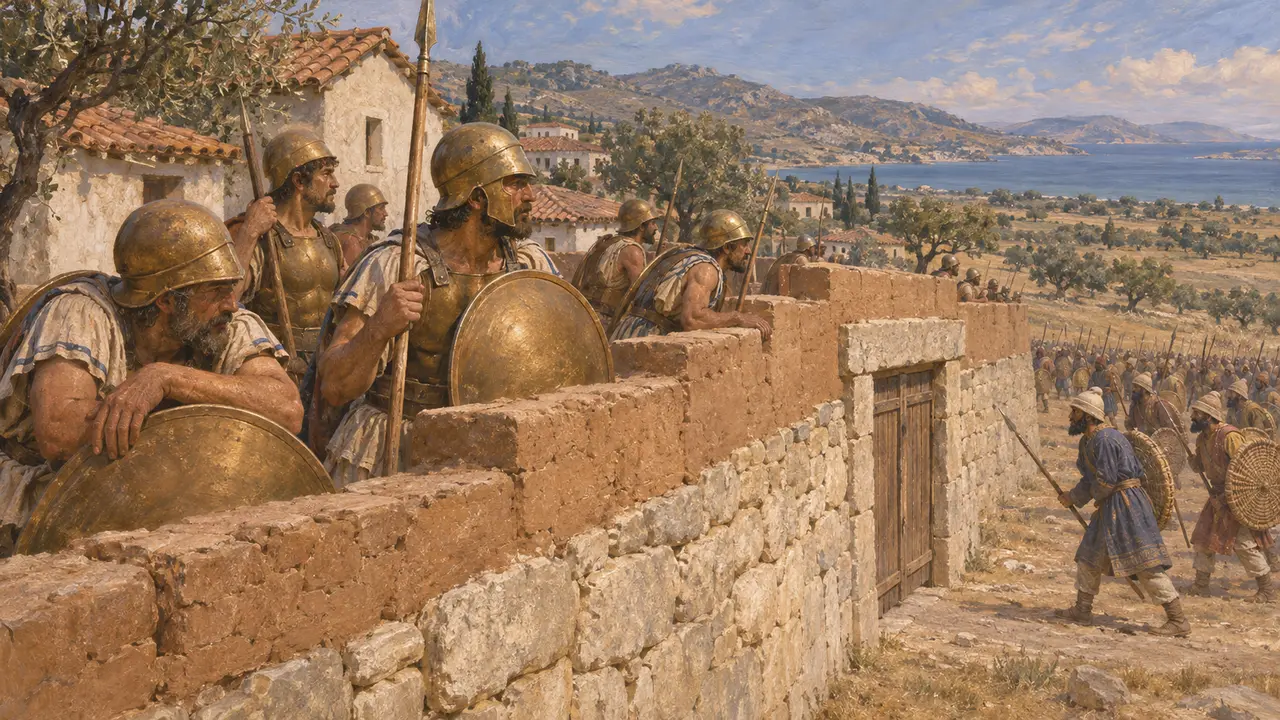
Ancient accountHerodotus tells that Athens sent the 4,000 settlers it held at Chalcis to help. The Eretrians were divided, however, and on the advice of Aeschines son of Nothon the Athenians withdrew to Oropus. The Persians landed near Tamynae, Choereae and Aegilia. The Eretrians chose to hold their walls rather than fight in the open, and on the seventh day Euphorbus and Philagrus betrayed the city to the Persians.
Herodotus 6.100-101
Sanctuaries burned, people deported
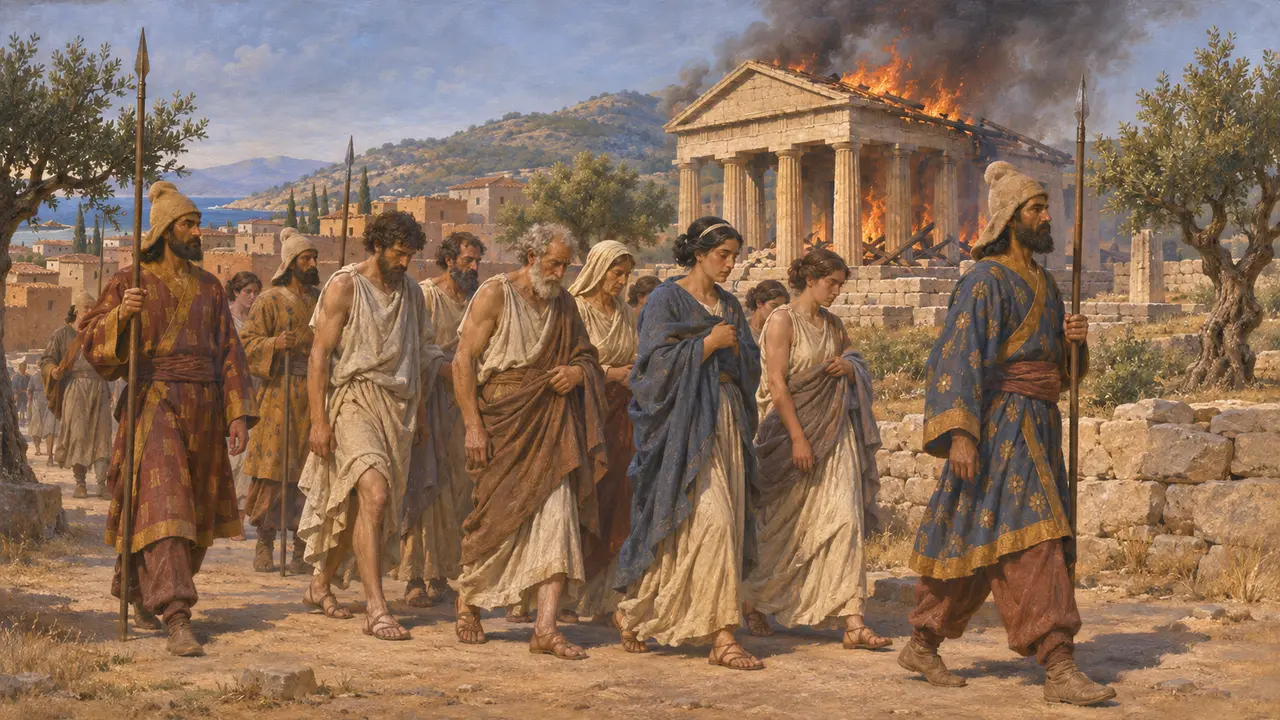
Ancient accountAccording to Herodotus the Persians plundered and burned the sanctuaries in revenge for those burned at Sardis, and enslaved the inhabitants as Darius had ordered. He adds that the captives were brought to Susa and that Darius did them no harm. He settled them at Ardericca in the Cissian land, some 40 stades from a well that yielded bitumen, salt and oil. Herodotus says they still spoke their own language in his day.
Herodotus 6.101; 6.119
The human net
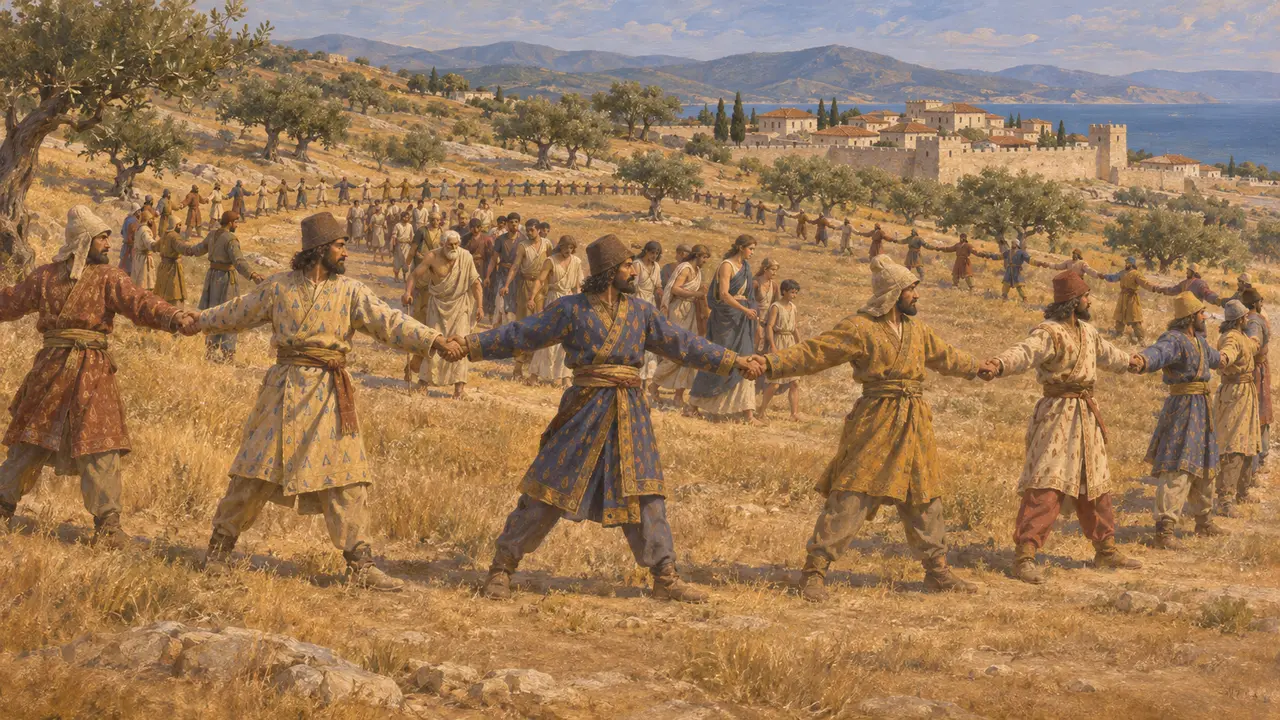
Later legendPlato, writing more than a century later, tells that Datis's soldiers joined hands and swept across Eretrian territory like a net so that no one escaped. The image appears in two of his dialogues and suits his theme of Persian power. Herodotus tells of the same netting method in the Persian capture of Chios, Lesbos and Tenedos after Lade. For this reason some historians see it as a stock tale rather than a record of Eretria.
Plato, Laws 698d; Plato, Menexenus 240b; Herodotus 6.31
What the ground shows
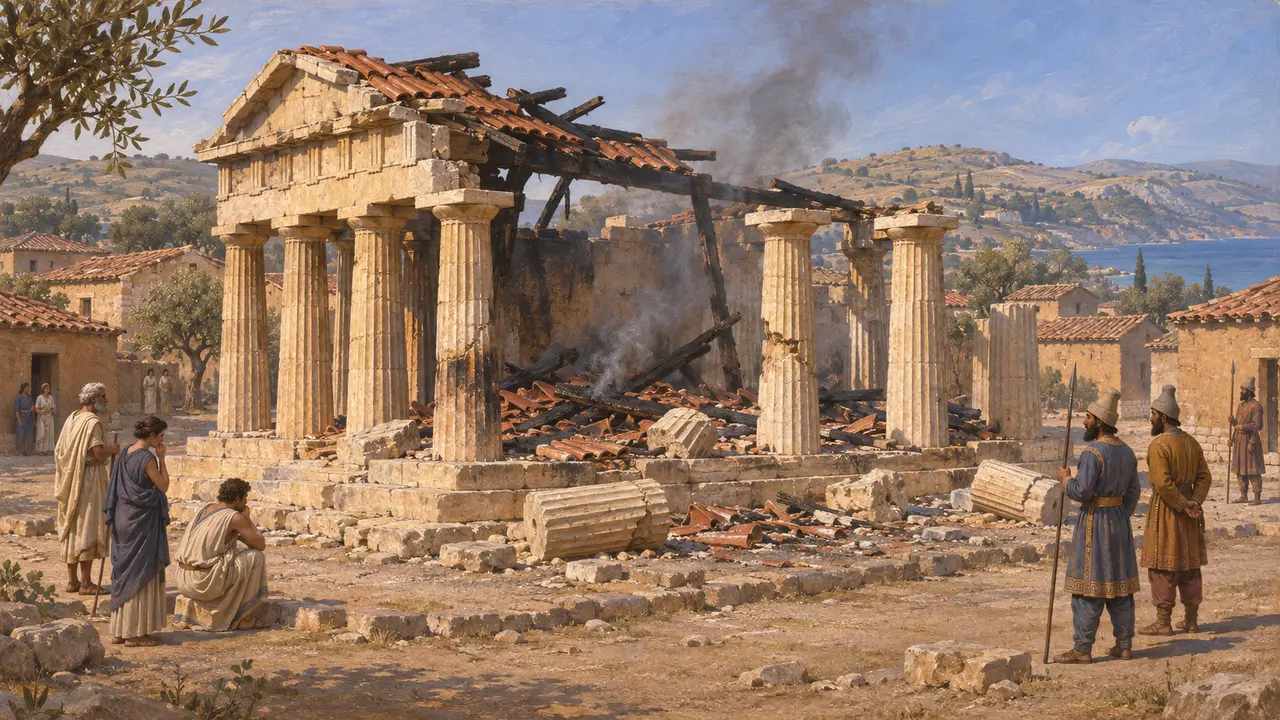
DisputedStrabo says the Persians razed old Eretria and that the later city was founded afterwards. Swiss excavations show that the classical city stood on the site of the archaic one, and the destruction of the archaic temple of Apollo Daphnephoros is often dated to 490. Some scholars think Strabo's old Eretria was an earlier settlement. How complete the deportation was is argued, since Eretria sent ships to Artemisium and Salamis in 480.
Strabo, Geography 10.1.10; Herodotus 8.1; 8.46; P. Ducrey et al., Eretria: A Guide to the Ancient City, 2004
Sources
- Herodotus, Histories 5.99-102; 6.94-119
- Plato, Laws; Menexenus
- Strabo, Geography 10.1.10
- P. Ducrey et al., Eretria: A Guide to the Ancient City, 2004
- J. F. Lazenby, The Defence of Greece 490-479 BC, 1993
- P. Briant, From Cyrus to Alexander, 2002