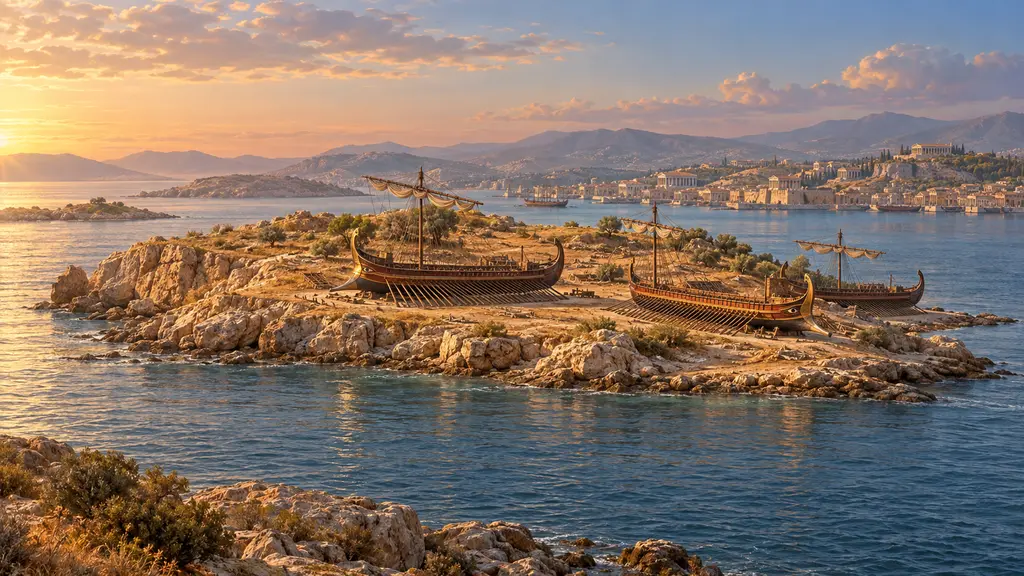
Chios
Ionian island whose hundred ships fought on at Lade, 494 BCE
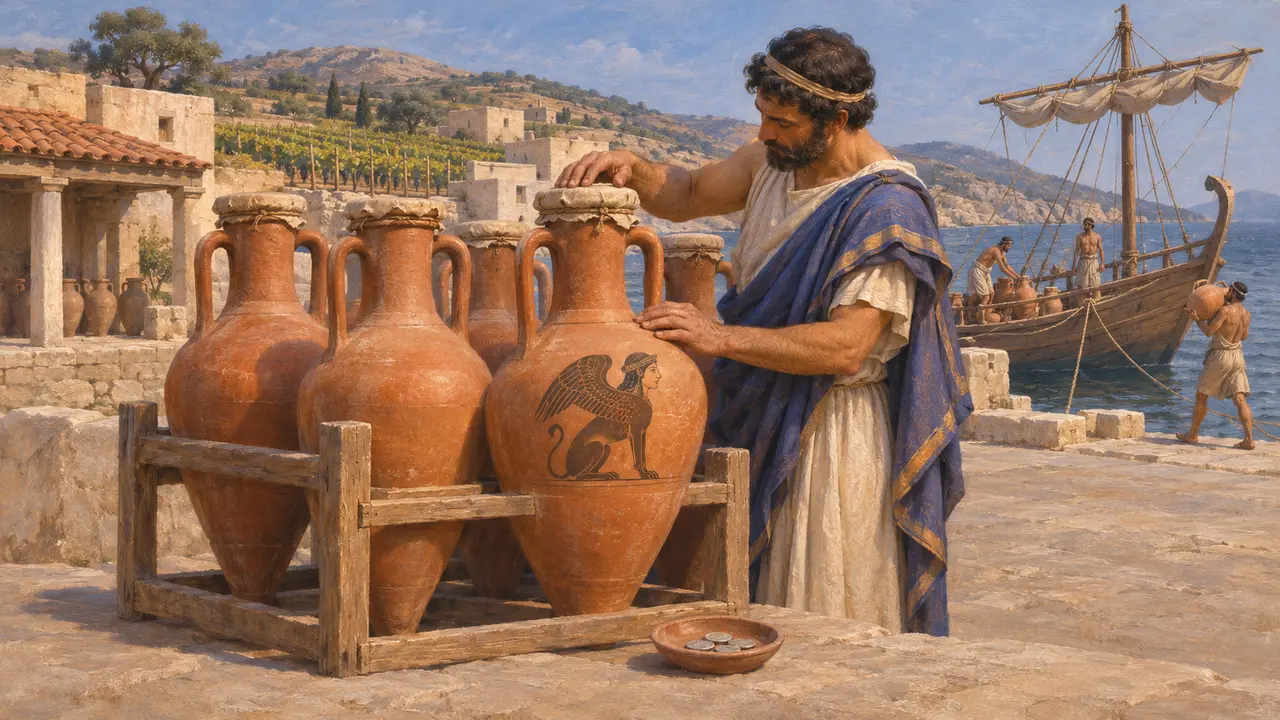
Chios is a large island off the Ionian coast, famous for its wine. It joined the Ionian Revolt, and at Lade in 494 its hundred ships fought on after the Samians and Lesbians fled. The Persians then took the island, and in 479 the Chians joined the Greek alliance after Mycale.
In the game: Chios is named in the Sardis level's Lade texts, where the Chians fight on, and in the chatter about its wine.
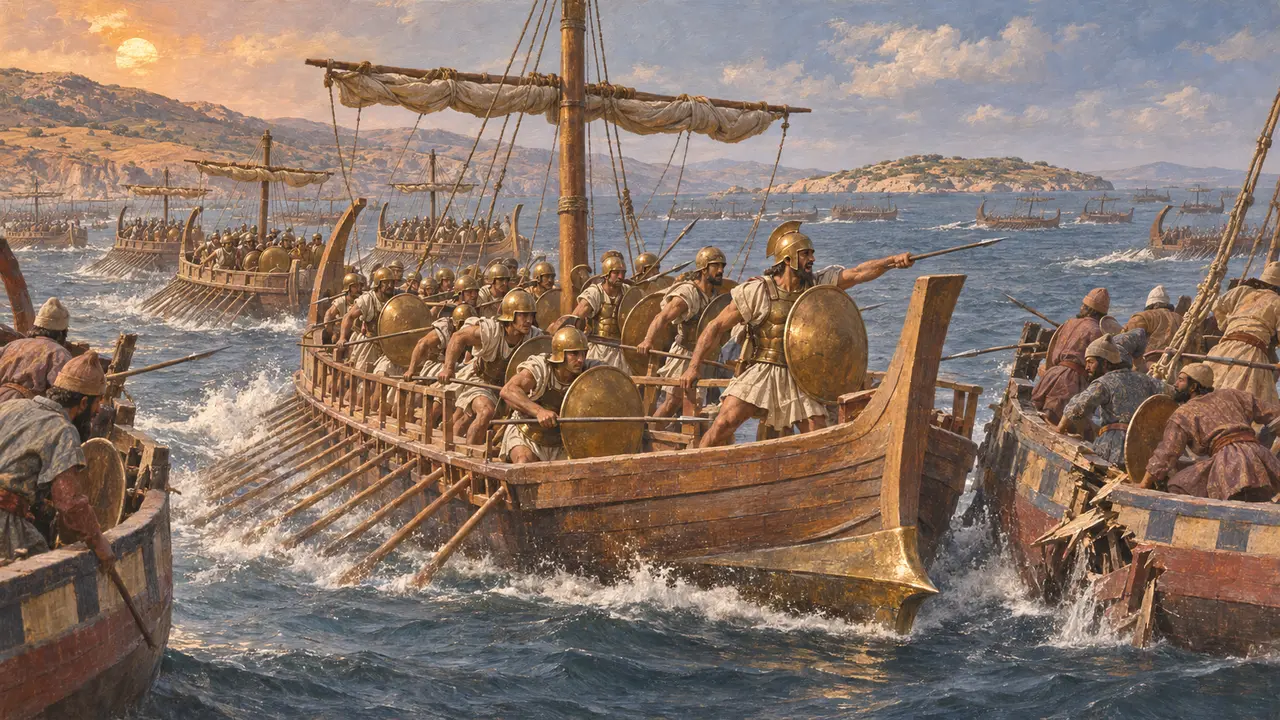
A hundred ships at Lade
Ancient accountThe Chians brought a hundred ships to Lade, each with forty picked citizens as marines. Herodotus says that when others fled they fought on, breaking through the enemy line again and again, until they had lost most of their ships and the rest escaped home.
Herodotus 6.8, 6.15-16
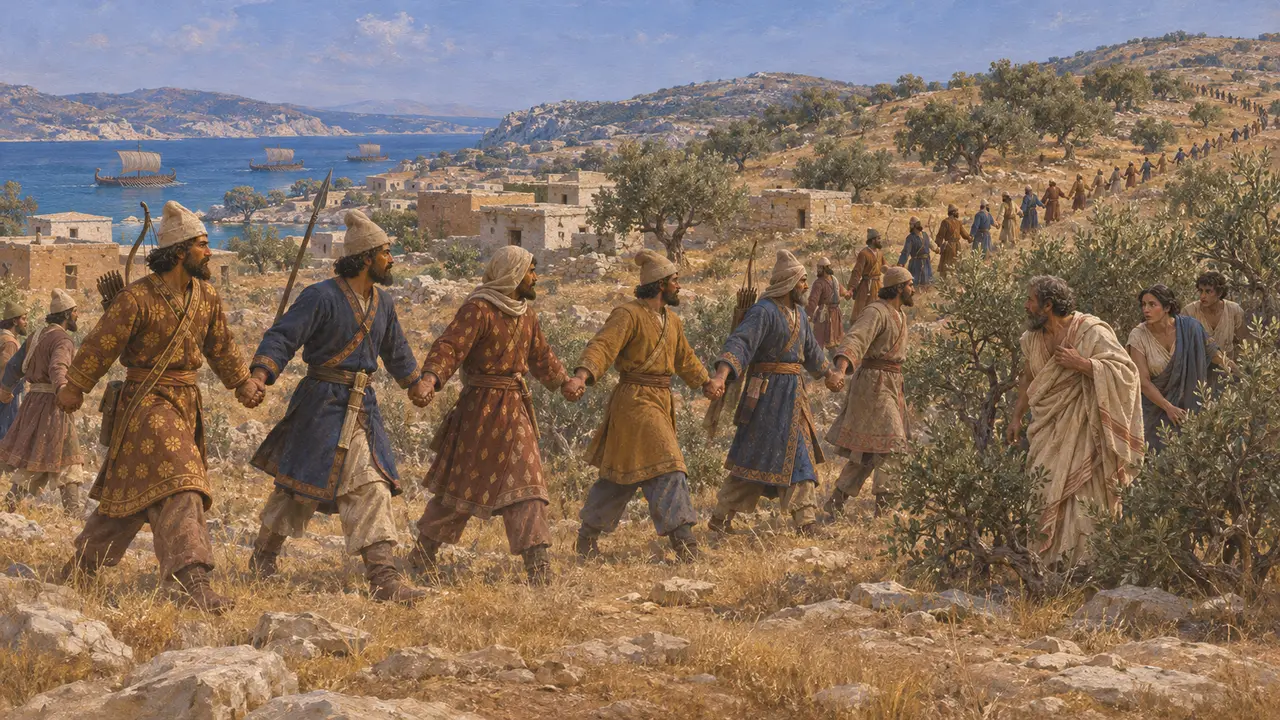
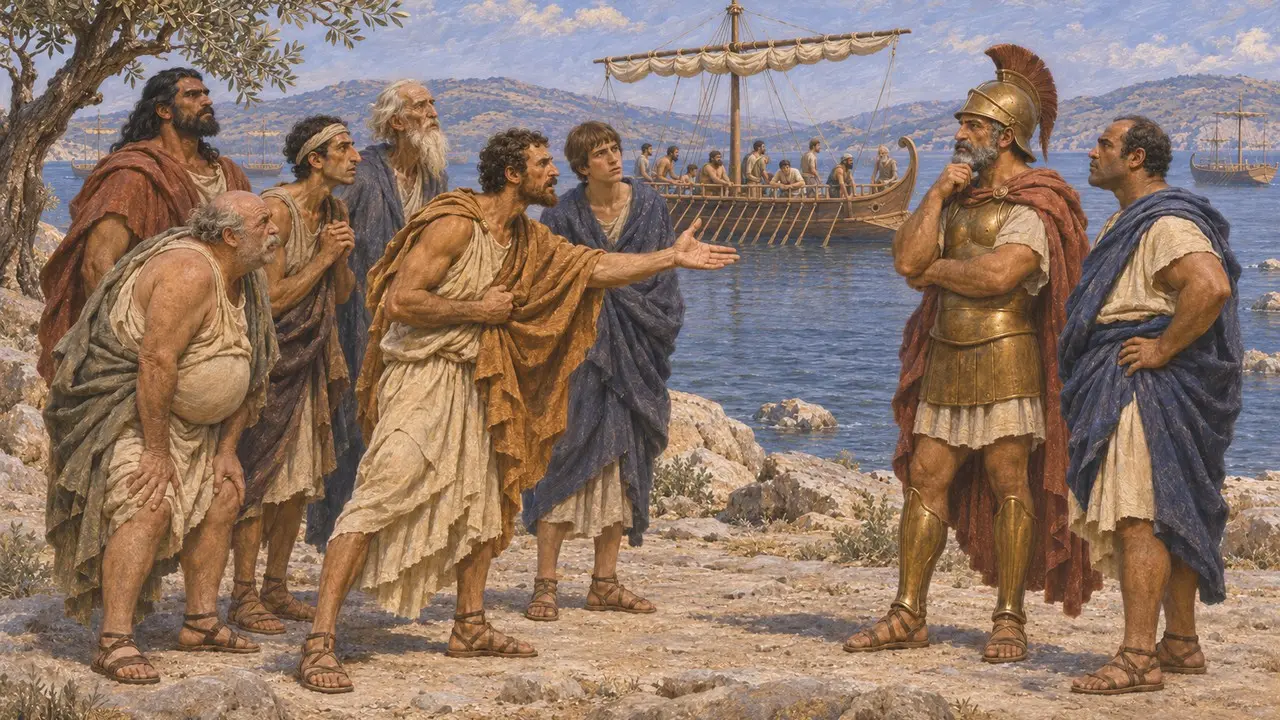
The tyrant Strattis
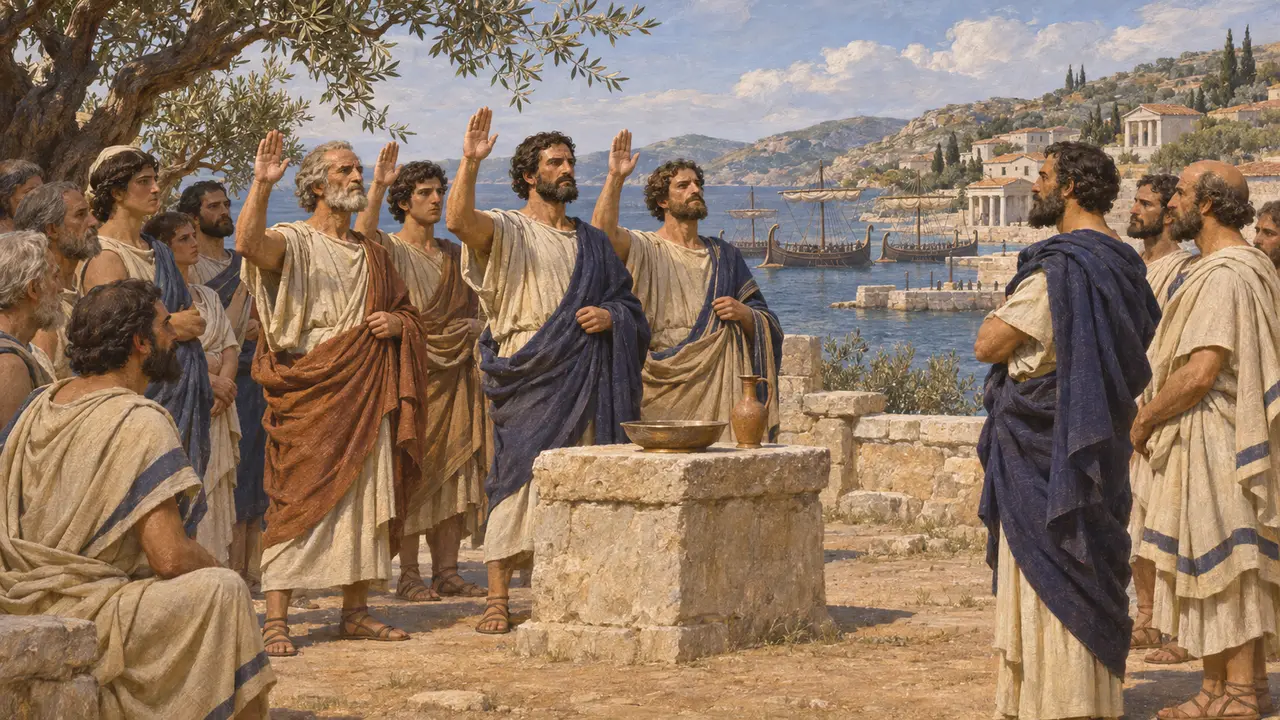
Ancient accountIn 480 Chios was ruled for Persia by the tyrant Strattis. Herodotus says six Chians who had plotted to kill him fled to the Greek fleet and begged it to sail to Ionia; one of them was named Herodotus.
Herodotus 8.132
Sources
- Herodotus 6.8, 6.15-16, 6.26-27, 6.31, 8.132, 9.106
- C. M. Kraay, Archaic and Classical Greek Coins, 1976