Encyclopedia › Battles and events
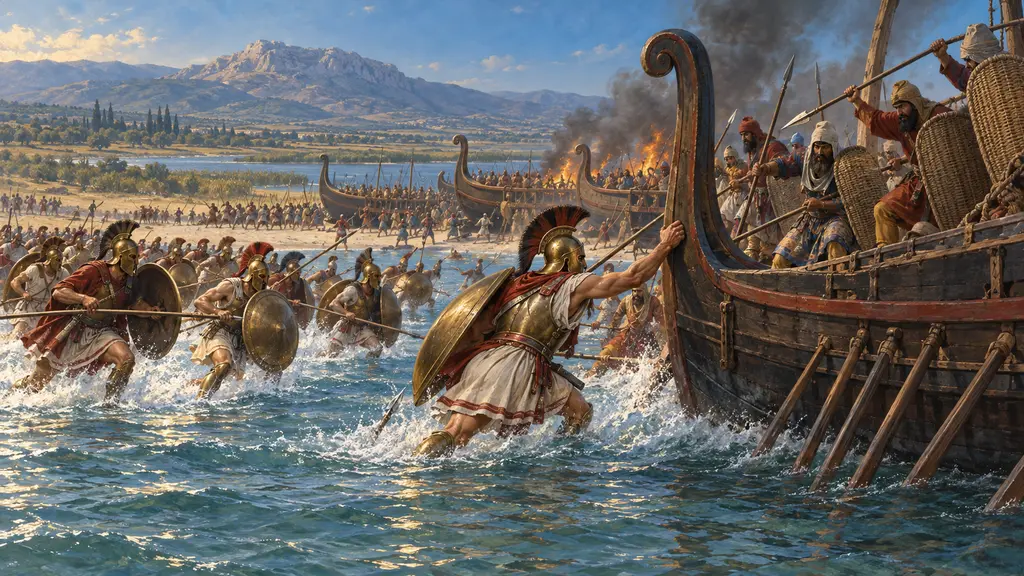
The battle of Mycale
Greek landing against a Persian camp on the Ionian coast opposite Samos, 479 BCE
In the game: Level 11: The Finale
In 479 a Greek fleet under Leotychides of Sparta and Xanthippus of Athens attacked a Persian army camped behind a stockade around its beached ships at Mycale, the promontory facing Samos. The Ionians in Persian service changed sides, the camp fell and the ships were burned. The defeat began a second Ionian revolt and carried the war from Greece to the coasts of Asia.
In the game: The epilogue shows Leotychides and Xanthippus landing, the Ionians turning and the beached ships burned. The game calls them the King's last ships, but Herodotus says the Phoenician ships had been sent away first.
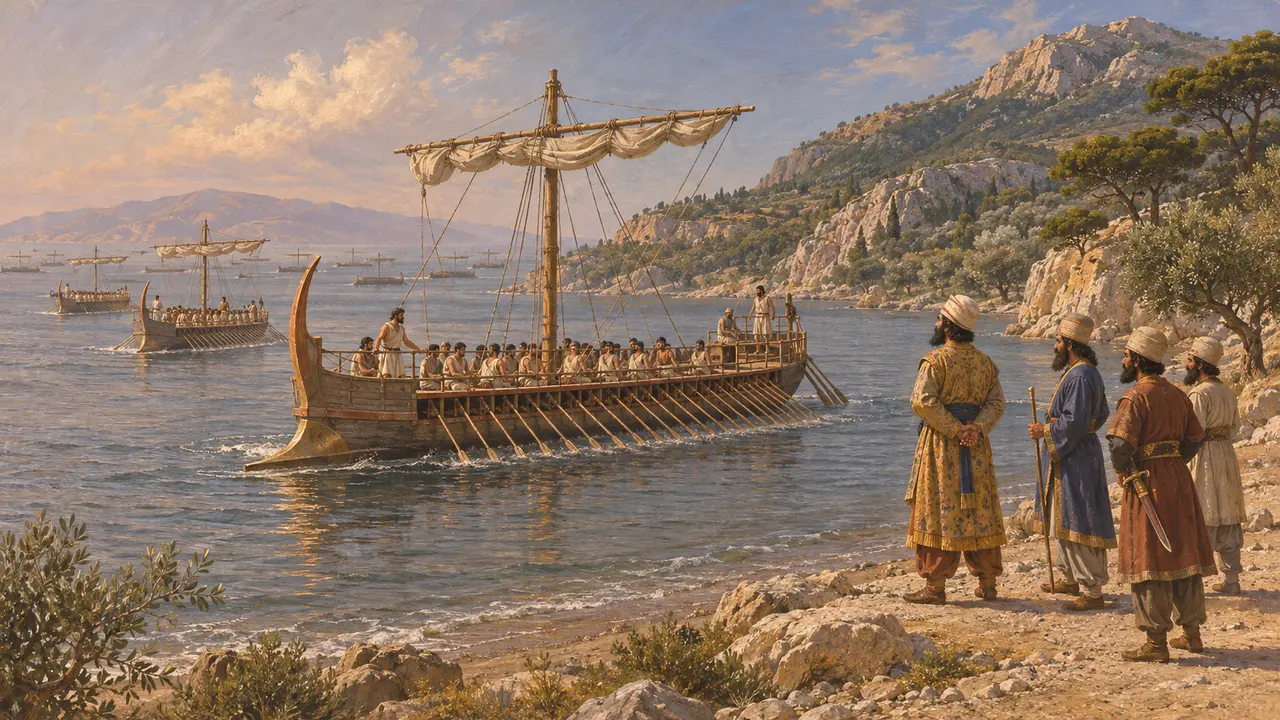
The fleets in spring 479
Ancient accountHerodotus says the King's fleet wintered at Cyme and gathered at Samos in spring, about 300 ships with the Ionians among them. The Greek fleet of 110 ships under Leotychides waited at Aegina and then Delos, where envoys from Samos urged it to cross and free Ionia. When the Greeks reached Samos, the Persian commanders sent the Phoenician ships away and drew the rest back to the mainland at Mycale.
Herodotus 8.130-132, 9.90-96
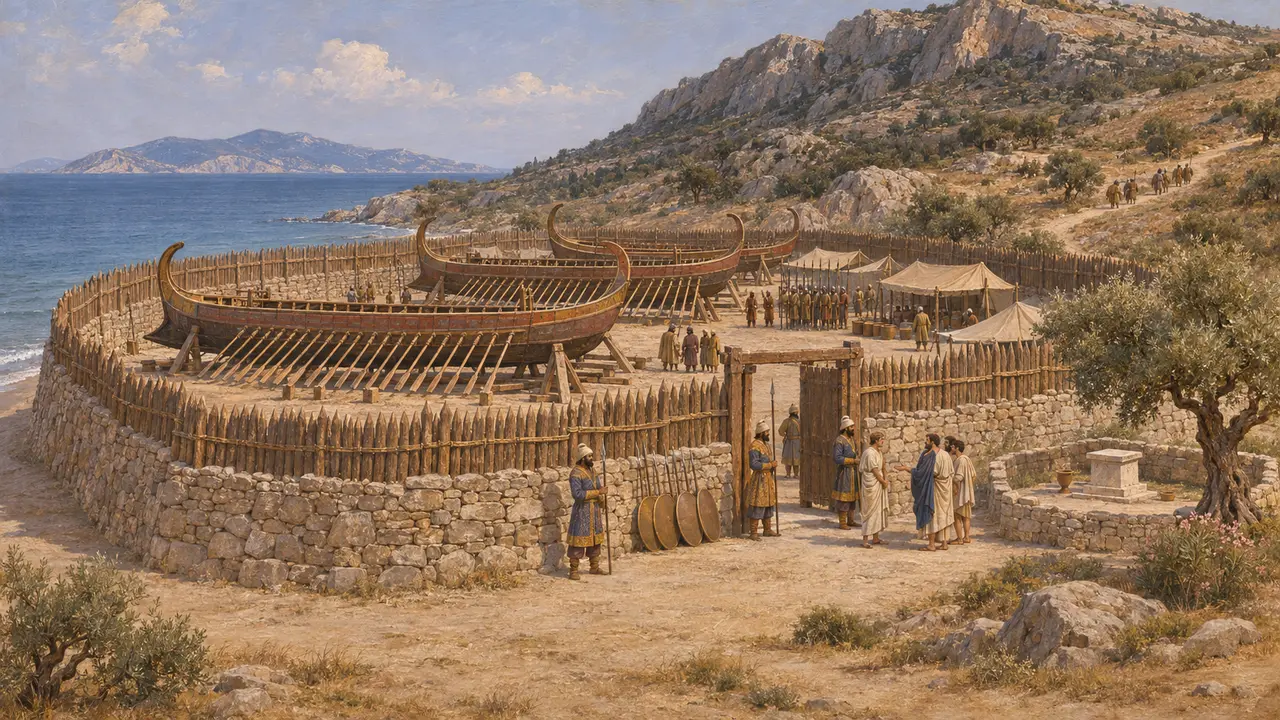
The stockade by the shore
Ancient accountThere, Herodotus says, the ships were hauled ashore and ringed with a wall of stones and timber near a precinct of Demeter of Eleusis. A land army under Tigranes guarded them; Herodotus gives it as 60,000 men, a figure historians treat as probably inflated. Distrusting the Samians, the Persians disarmed them and sent the Milesians to hold the paths up the mountain.
Herodotus 9.96-99
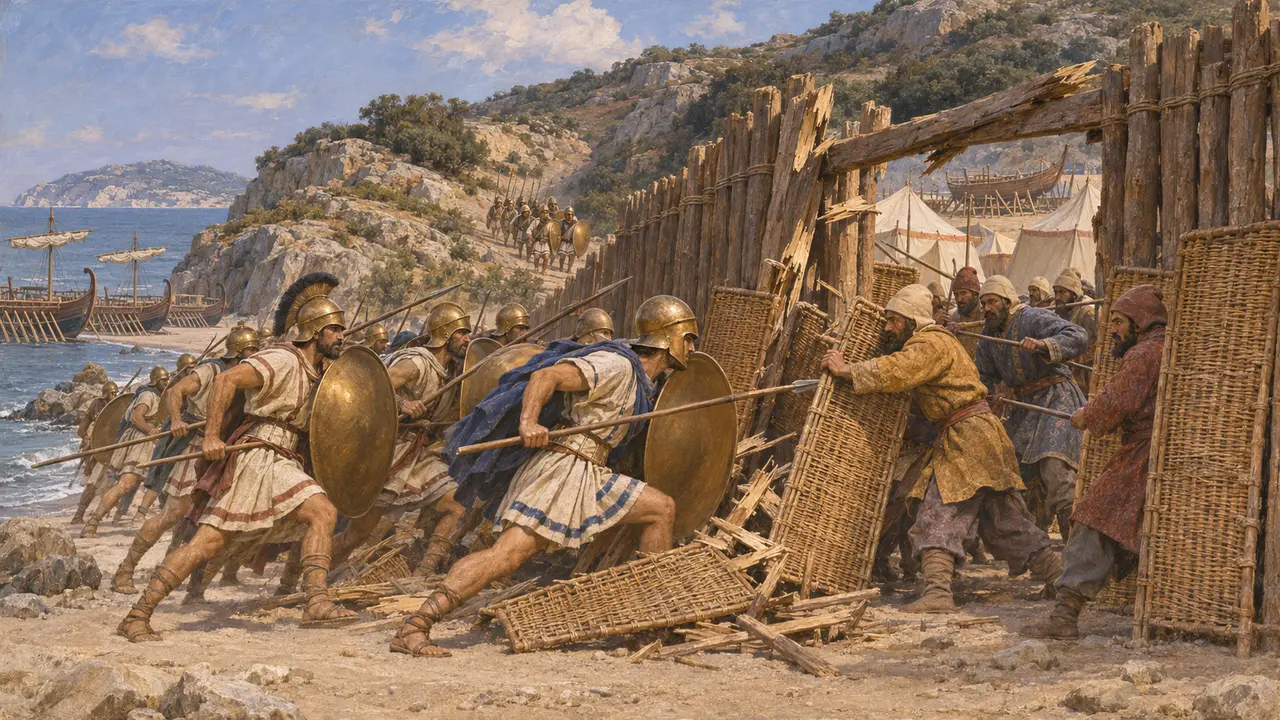
The attack on the camp
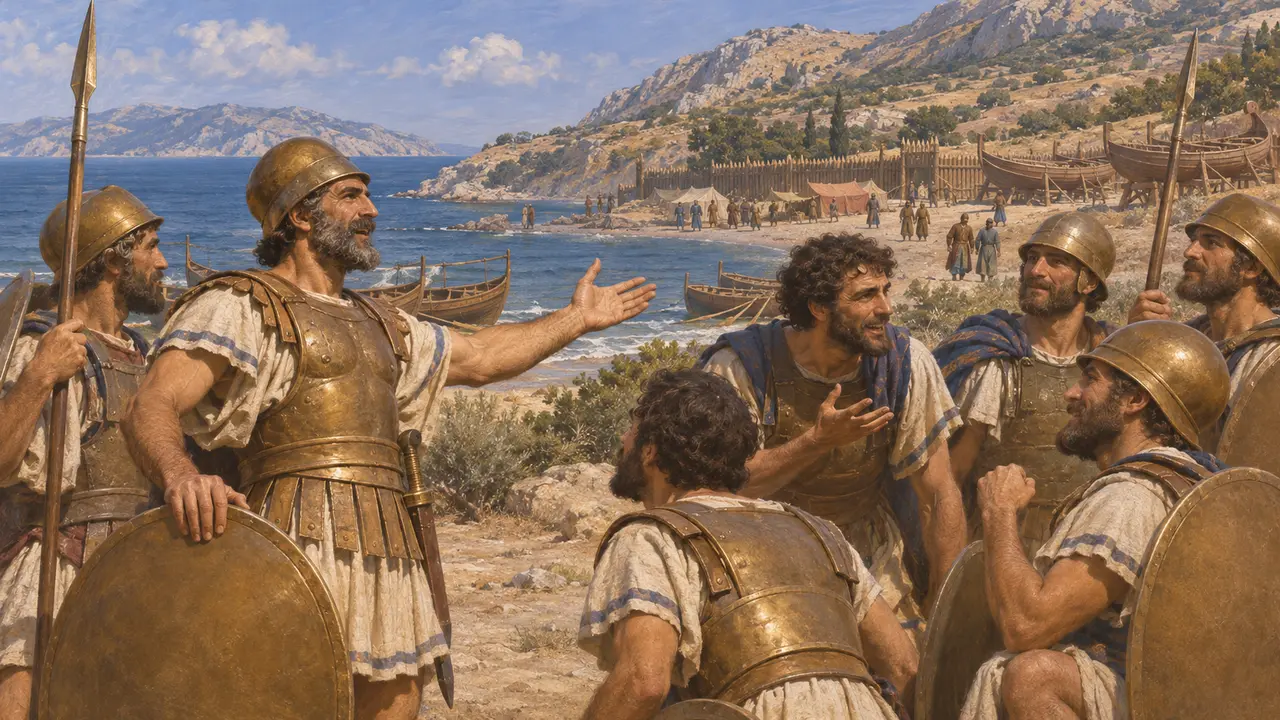
Ancient accountLeotychides first sailed close inshore and had a herald call on the Ionians to remember their freedom. The Athenians and the troops beside them advanced along the shore and broke the Persian wall of wicker shields, then the stockade, while the Spartans came round by a ravine and the hills. Tigranes and Mardontes were killed; Herodotus says the fleet commanders Artayntes and Ithamitres escaped.
Herodotus 9.98-102
The Ionians turn
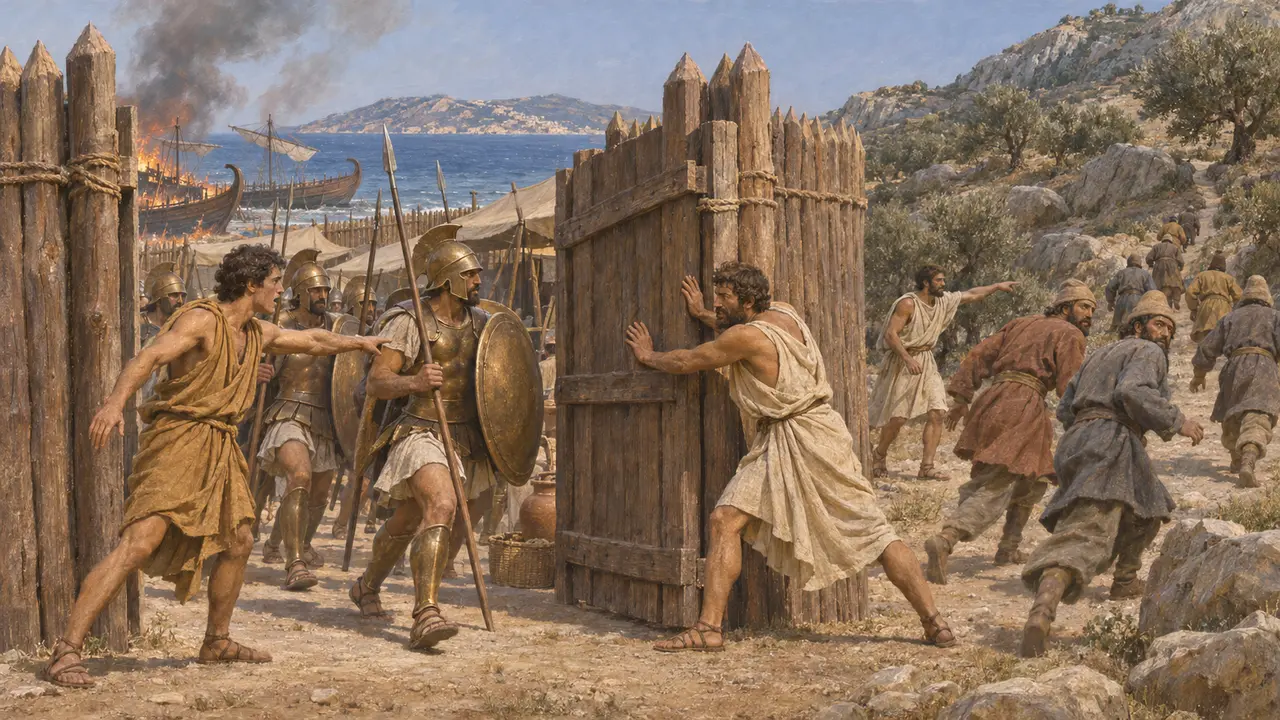
Ancient accountHerodotus says the disarmed Samians helped the Greeks as best they could and the other Ionians followed them. The Milesians led fleeing Persians onto the wrong paths and killed them. He calls this the second revolt of Ionia from Persia. The Greeks burned the ships and the stockade, then debated moving the Ionians to Greece; the Athenians refused, and Samos, Chios and Lesbos joined the alliance instead.
Herodotus 9.103-106
One day, two battles
DisputedHerodotus dates Mycale to the same day as Plataea, with Plataea in the morning and Mycale in the afternoon, and treats the rumour of victory that reached the Greeks before they attacked as a sign from the gods. Diodorus says Leotychides invented the report to hearten his men. Many historians doubt the exact coincidence. No Persian text mentions the battle, so the Greek story stands alone.
Herodotus 9.90, 9.100-101; Diodorus 11.35
Sources
- Herodotus 9.90-107
- Herodotus 8.130-132
- Diodorus 11.34-37
- Thucydides 1.89
- C. Hignett, Xerxes' Invasion of Greece, 1963
- P. Briant, From Cyrus to Alexander, 2002