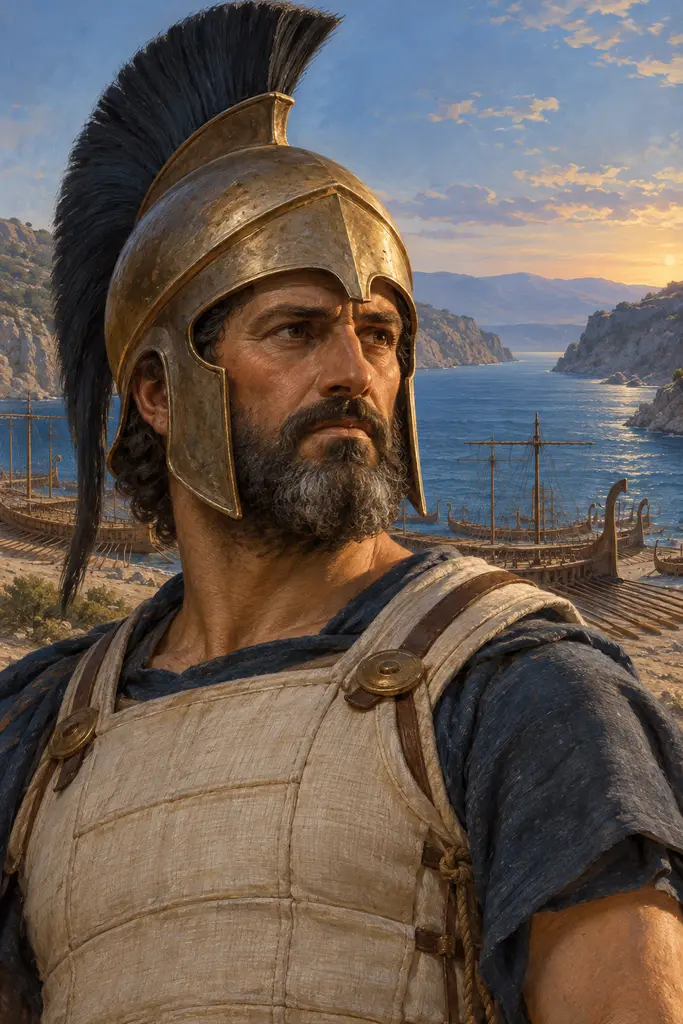
Xanthippus
Athenian politician and general, commander at Mycale and Sestos, 479 BCE
In the game: Mycale
Xanthippus son of Ariphron was an Athenian aristocrat who prosecuted Miltiades, was ostracised in 484, was recalled in 480 and in 479 commanded the Athenian fleet. After the Greek victory at Mycale he stayed on to besiege Sestos, the Persian stronghold on the Hellespont, and sent the cables of Xerxes' bridges home to Athens. He was the father of Pericles.
In the game: The chronicle names Xanthippus as the Athenian general of 479 and father of Pericles, who led the Athenians at Mycale, besieged Sestos and brought home the bridge cables. This follows Herodotus.
Family and the trial of Miltiades
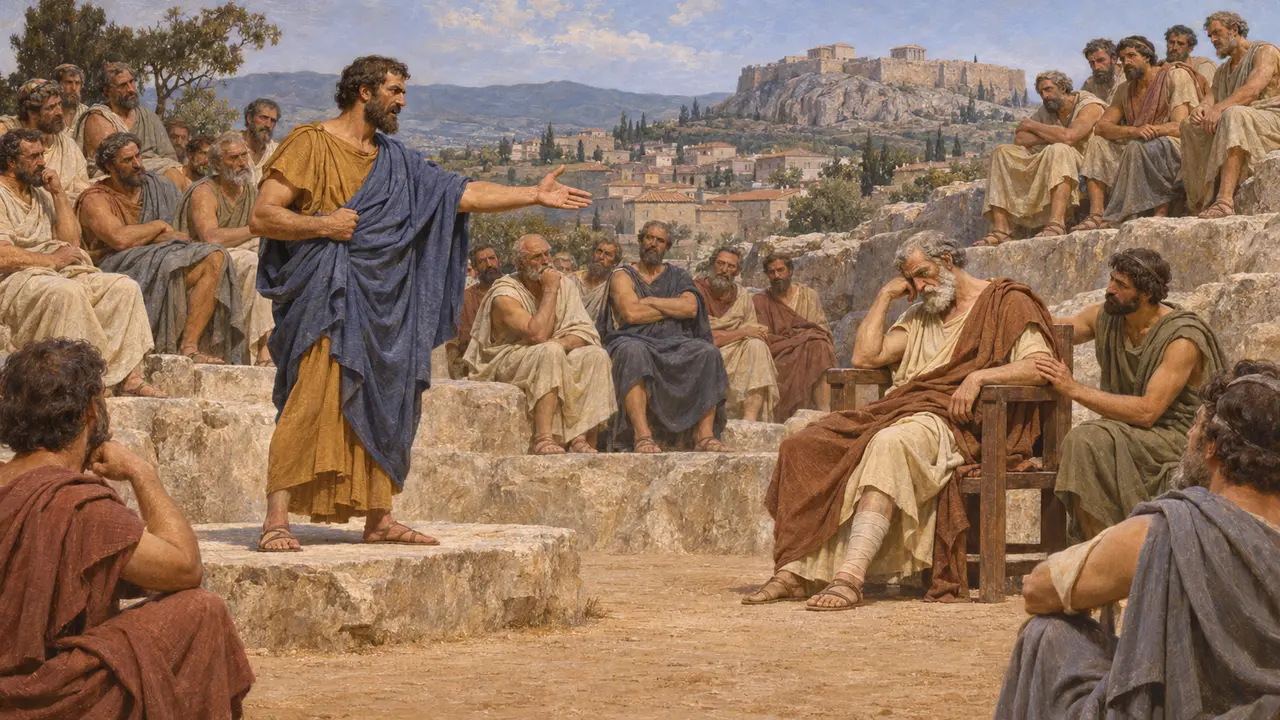
Ancient accountHerodotus says Xanthippus married Agariste, a niece of the reformer Cleisthenes, and that their son was Pericles. In 489, after Miltiades failed in his attack on Paros, Xanthippus prosecuted him before the Athenian people and asked for the death penalty. Miltiades, the victor of Marathon, was spared death but fined fifty talents, and died of his wound soon after.
Herodotus 6.131, 6.136
Ostracism on the potsherds
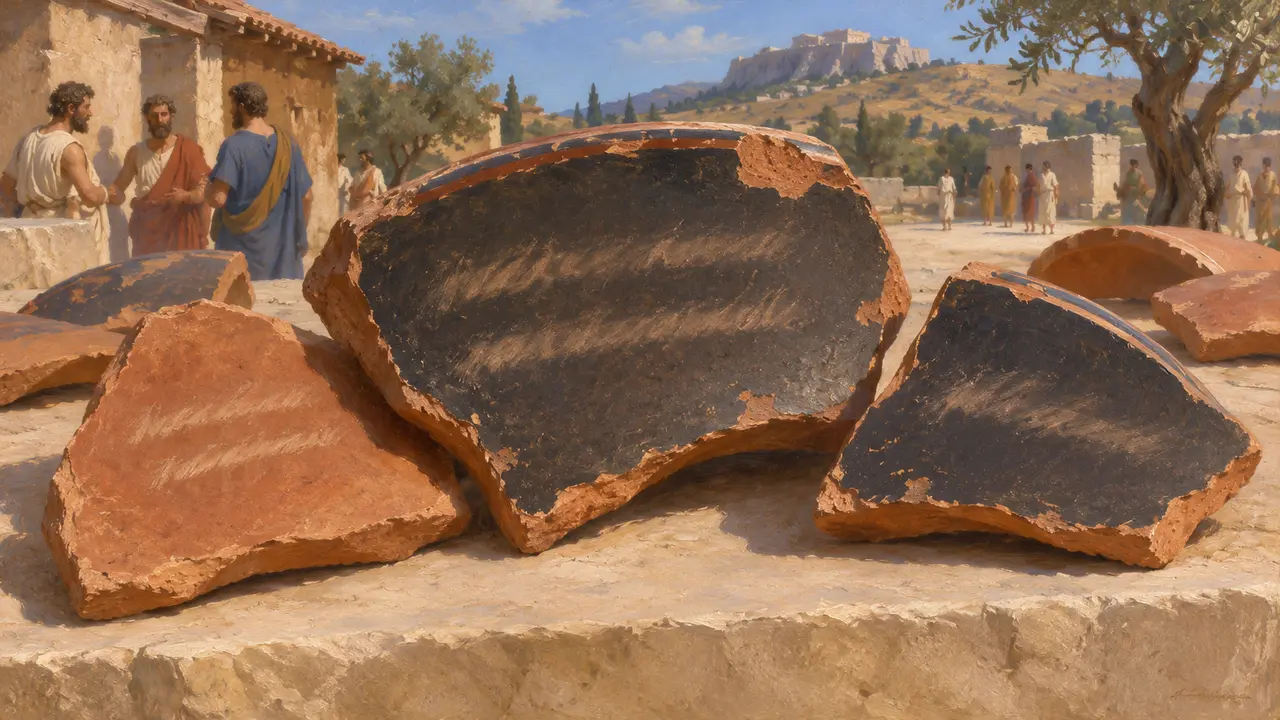
In the recordPotsherds inscribed with the name of Xanthippus son of Ariphron have been excavated in Athens. They were votes cast in an ostracism, the procedure by which the Athenians could exile a leading citizen for ten years. One carries a short elegiac couplet accusing him of doing more wrong than any other leader. The sherds themselves carry no date.
Ostraca from Athens; M. Lang, Ostraka (The Athenian Agora XXV), 1990
Exile, recall and command of the fleet
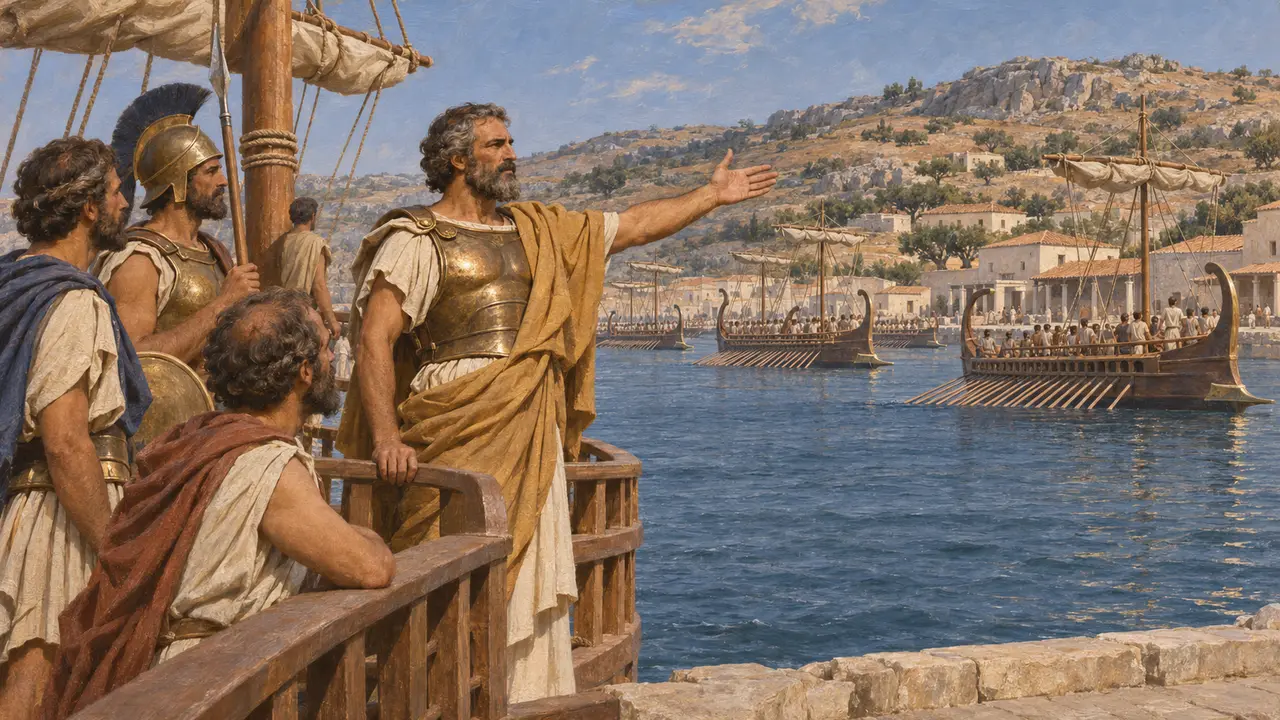
Ancient accountThe Aristotelian Constitution of the Athenians dates his ostracism to 484 and says the exiles were recalled in 480 as Xerxes advanced. In spring 479, Herodotus says, Xanthippus commanded the Athenian ships in the Greek fleet gathered at Aegina under the Spartan king Leotychides. At Mycale that summer the Greeks stormed the Persian camp and burned the beached ships, the Athenians fighting along the shore.
Aristotle, Athenaion Politeia 22.6-8; Herodotus 8.131, 9.96-106
The siege of Sestos and the cables
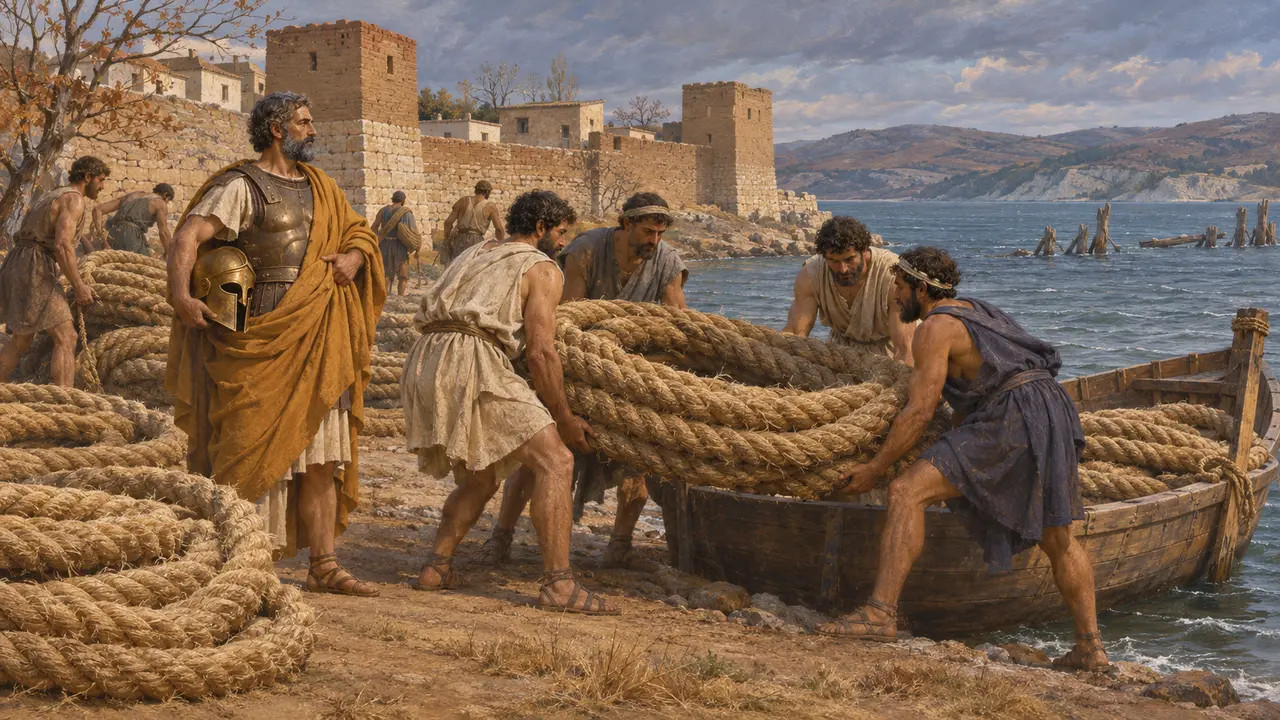
Ancient accountFinding Xerxes' bridges already broken, Leotychides and the Peloponnesians sailed home. Xanthippus and the Athenians stayed to besiege Sestos, which held out into the autumn or winter. When it fell, the Persian governor Artayctes, accused by local Greeks of plundering the shrine of Protesilaus, was put to death near where the bridge had ended. The cables went to Athens for the temples. No Persian record of these events survives.
Herodotus 9.114-121; Thucydides 1.89
The faithful dog
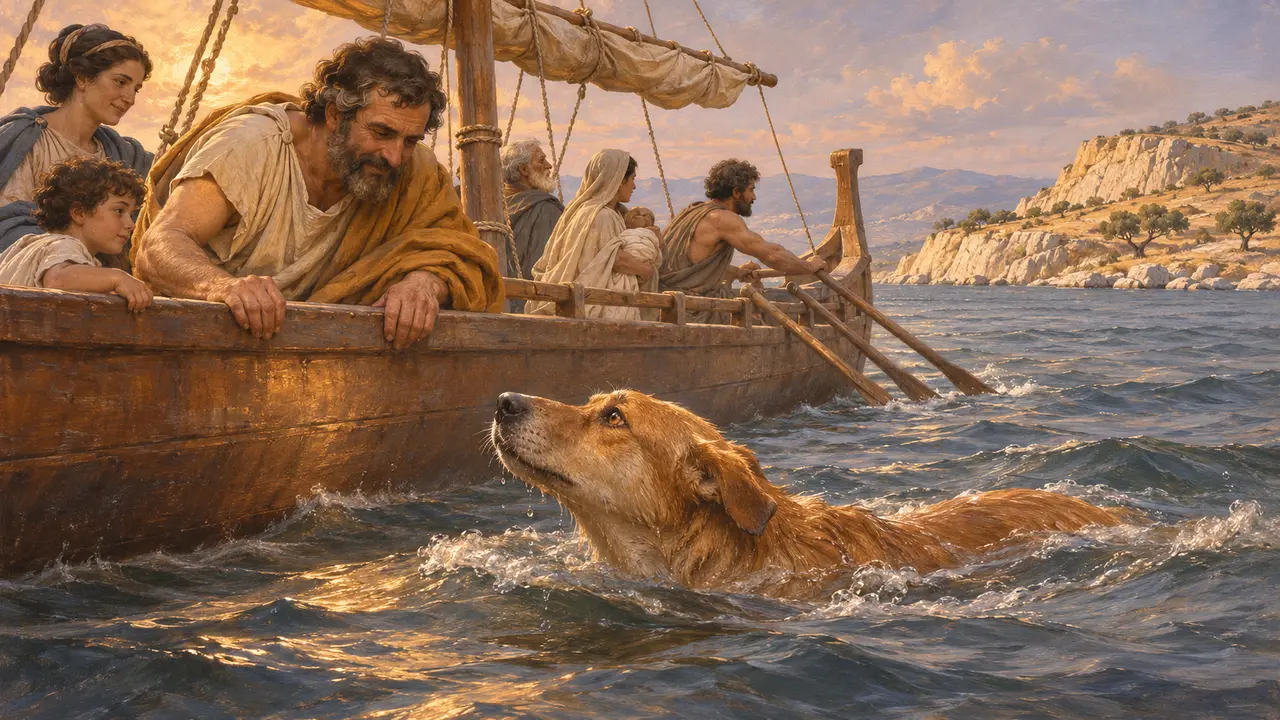
Later legendPlutarch, writing nearly six centuries later, tells a story about the abandonment of Athens in 480. The dog of Xanthippus would not be left behind and swam beside his ship to Salamis, then collapsed and died. It was buried on a headland afterwards called the Dog's Grave.
Plutarch, Themistocles 10
Sources
- Herodotus 8.131, 9.96-121
- Herodotus 6.131, 6.136
- Thucydides 1.89
- Aristotle, Athenaion Politeia 22
- M. Lang, Ostraka (The Athenian Agora XXV), 1990
- Plutarch, Themistocles 10