
Artayctes
Persian governor of Sestos on the Hellespont, put to death by the Athenians in 479 or 478 BCE
In the game: Level 11: The Finale, Mycale
Artayctes was the Persian governor of Sestos under Xerxes. Herodotus says he plundered the shrine of Protesilaus at Elaeus, then held out in Sestos from the autumn of 479 until hunger forced the garrison to flee. The Athenians under Xanthippus caught and killed him, and Herodotus closes his narrative on that event.
In the game: Artayctes has no mechanic of his own. The game mentions him only in its event articles on the siege of Sestos and the battle of Mycale, where Xanthippus has him crucified.
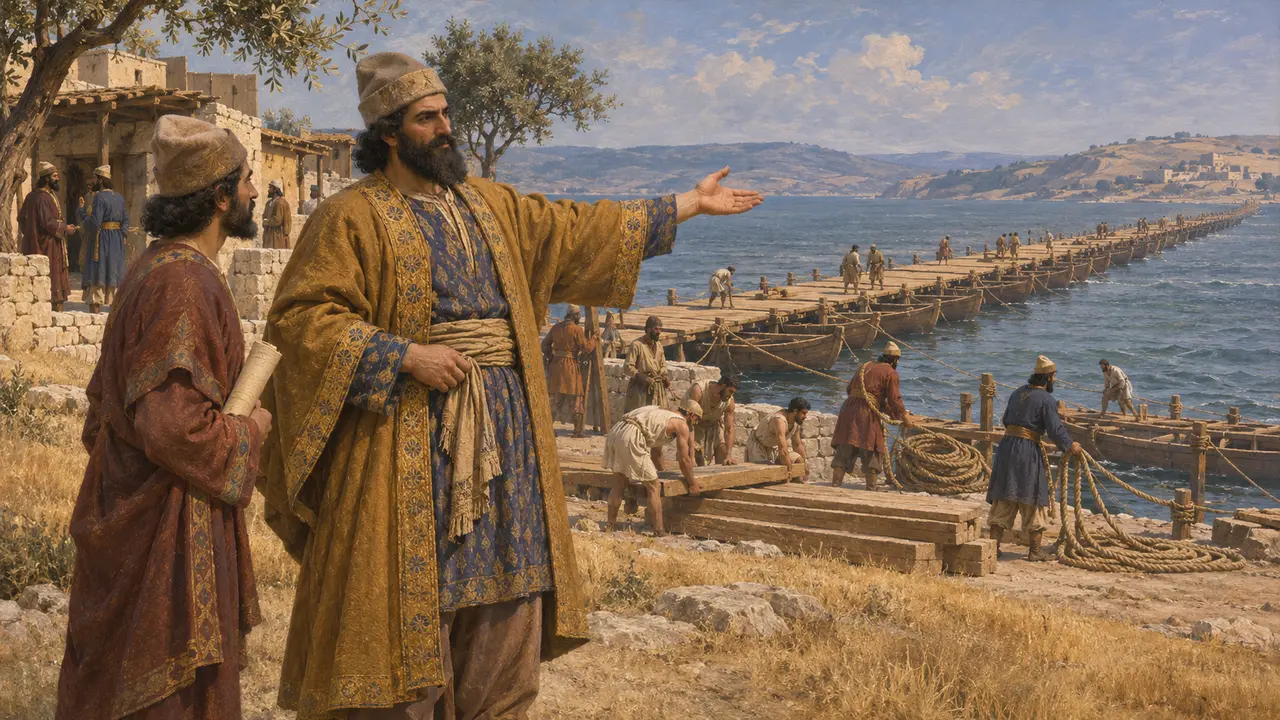
Governor of Sestos
Ancient accountHerodotus calls Artayctes the son of Cherasmis and a Persian governor of Sestos, and says he helped Xerxes with the bridging of the Hellespont. He describes him as a clever and wicked man. Herodotus is the only source for his career, and no Persian document naming him is known.
Herodotus 7.33, 9.116
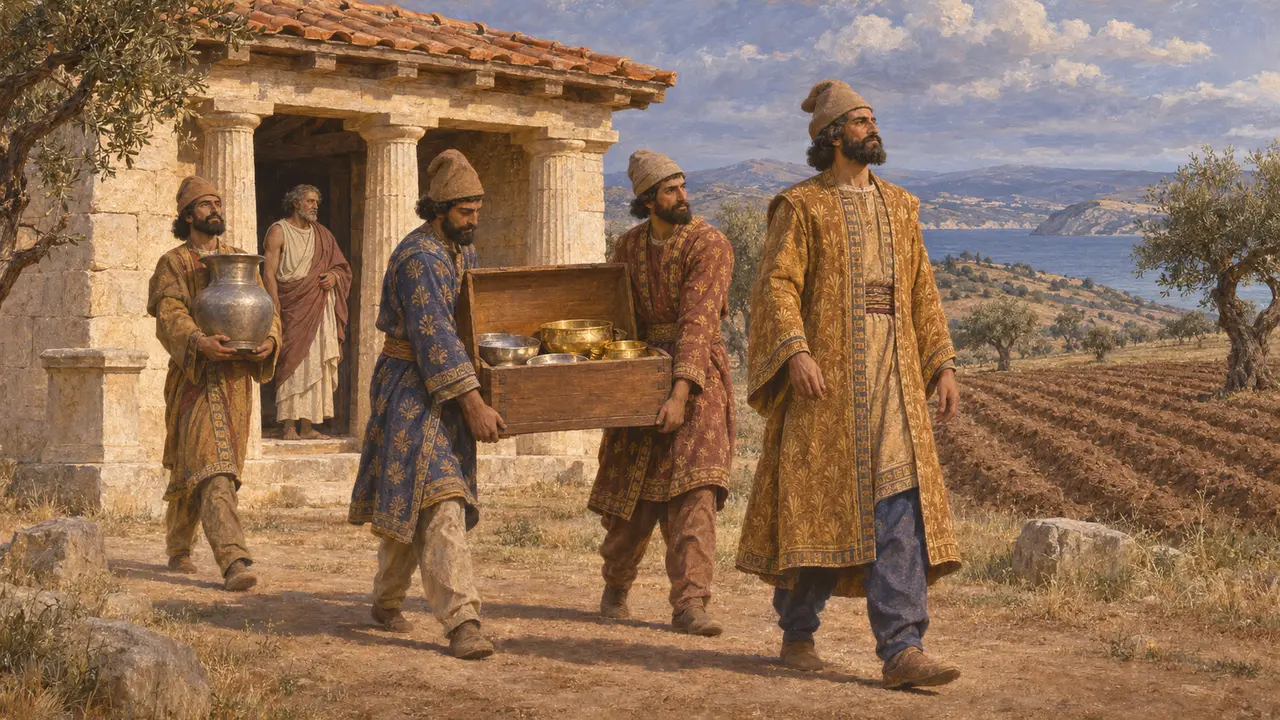
The shrine of Protesilaus
Ancient accountHerodotus says the shrine of Protesilaus at Elaeus, on the Thracian Chersonese, held rich treasure. Artayctes asked Xerxes to give it to him, arguing that its hero had marched against Persian land, and Xerxes agreed. Herodotus adds that Artayctes carried off the treasure, farmed the sacred ground and behaved indecently in the sanctuary.
Herodotus 9.116
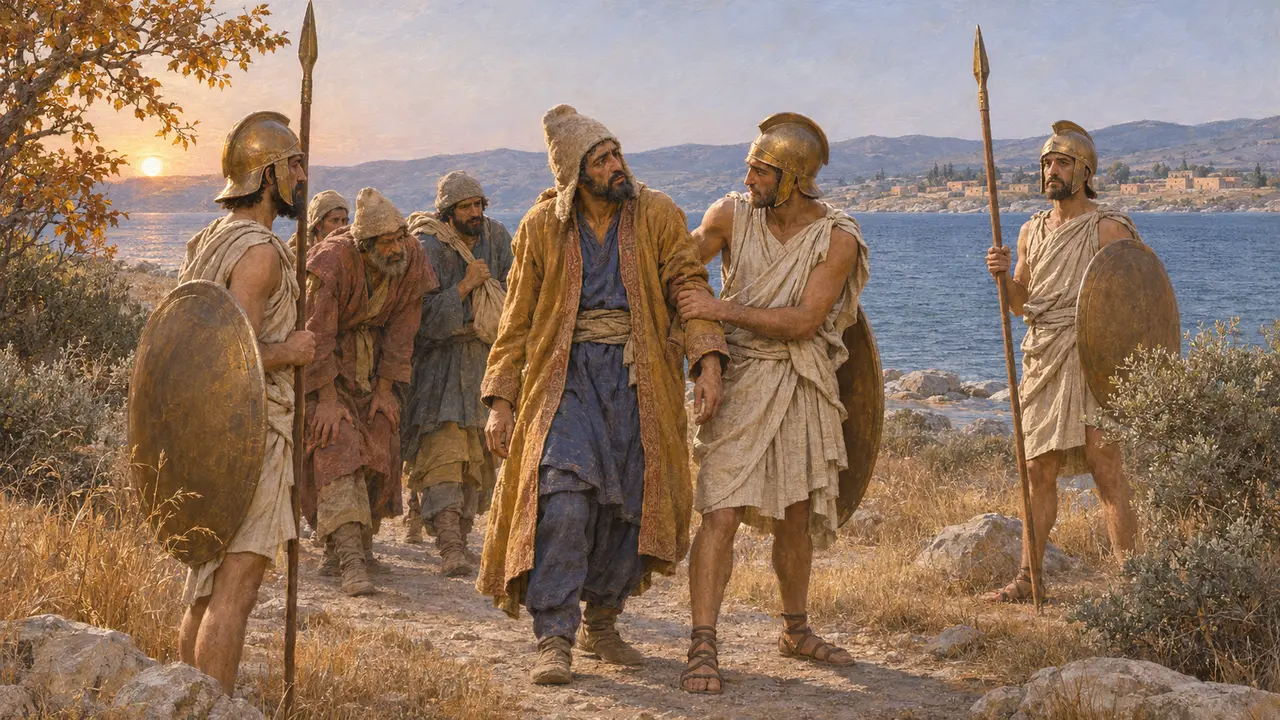
The siege of Sestos
Ancient accountAfter Mycale in 479 the Greek fleet sailed to the Hellespont and found the bridges already broken. The Athenians under Xanthippus besieged Sestos, where Persians and many local people had gathered. Herodotus says food ran short in autumn and Artayctes and Oeobazus slipped away by night. The townspeople told the Greeks, who pursued and caught Artayctes near Aegospotami.
Herodotus 9.114-118
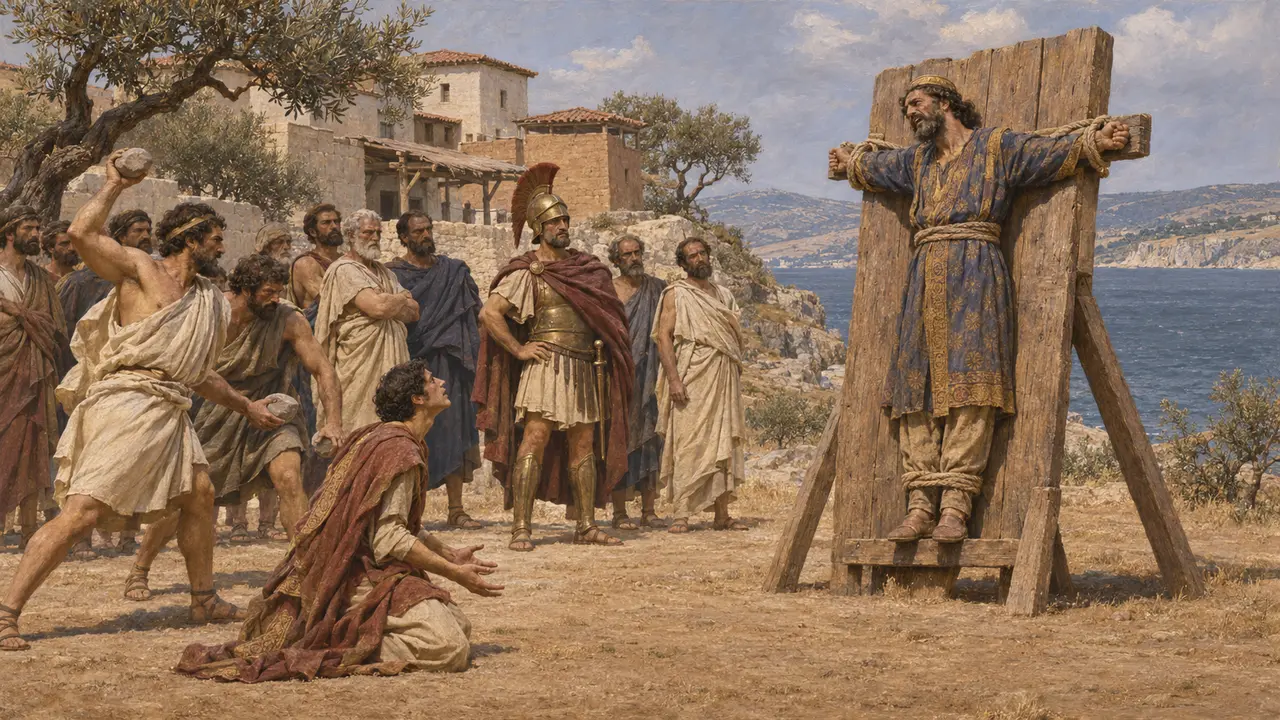
Capture and death
Ancient accountHerodotus says Artayctes offered a large sum for himself and his son, but Xanthippus refused because the people of Elaeus demanded vengeance for the shrine. Artayctes was nailed to planks and hung up, and his son was stoned before his eyes. Herodotus tells this at the very end of his narrative.
Herodotus 9.118-120
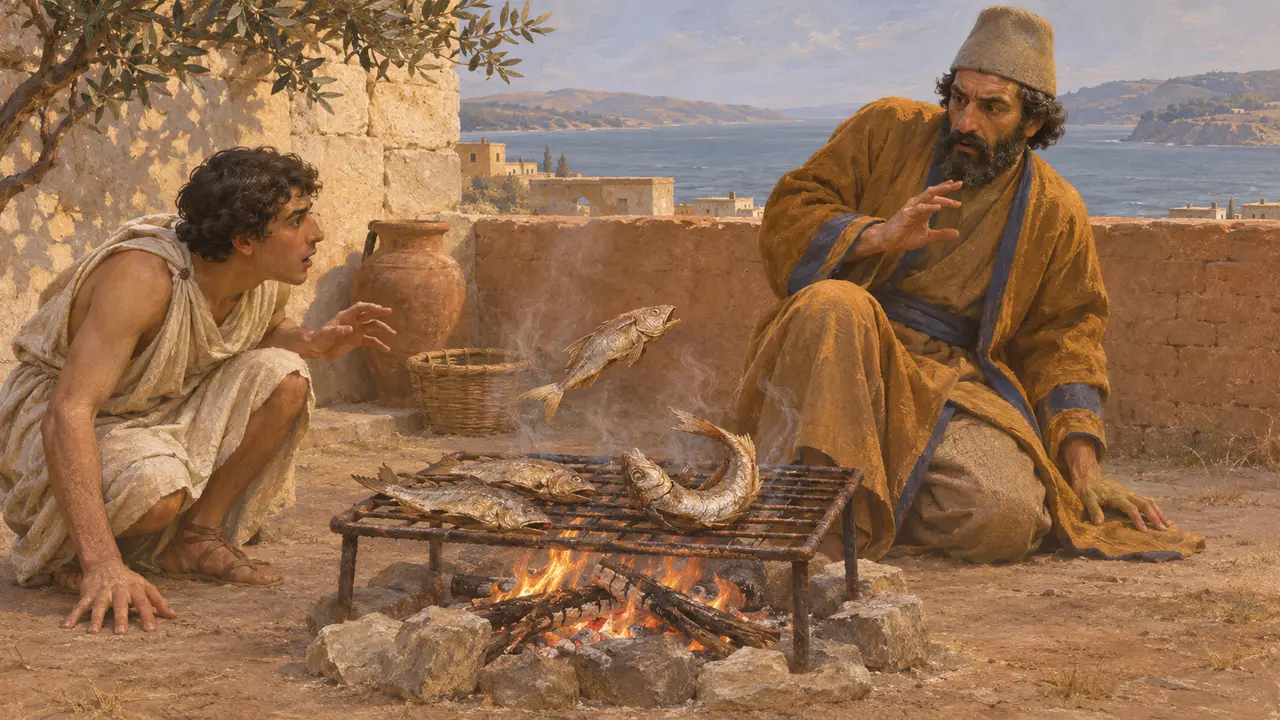
The omen of the fish
Later legendHerodotus relates that dried fish on a fire leapt and twitched, and that Artayctes took this as a sign from Protesilaus. The tale is shaped as a moral story about divine punishment for sacrilege. It should be read as a story told by Greeks, not as a report of what Artayctes said.
Herodotus 9.120
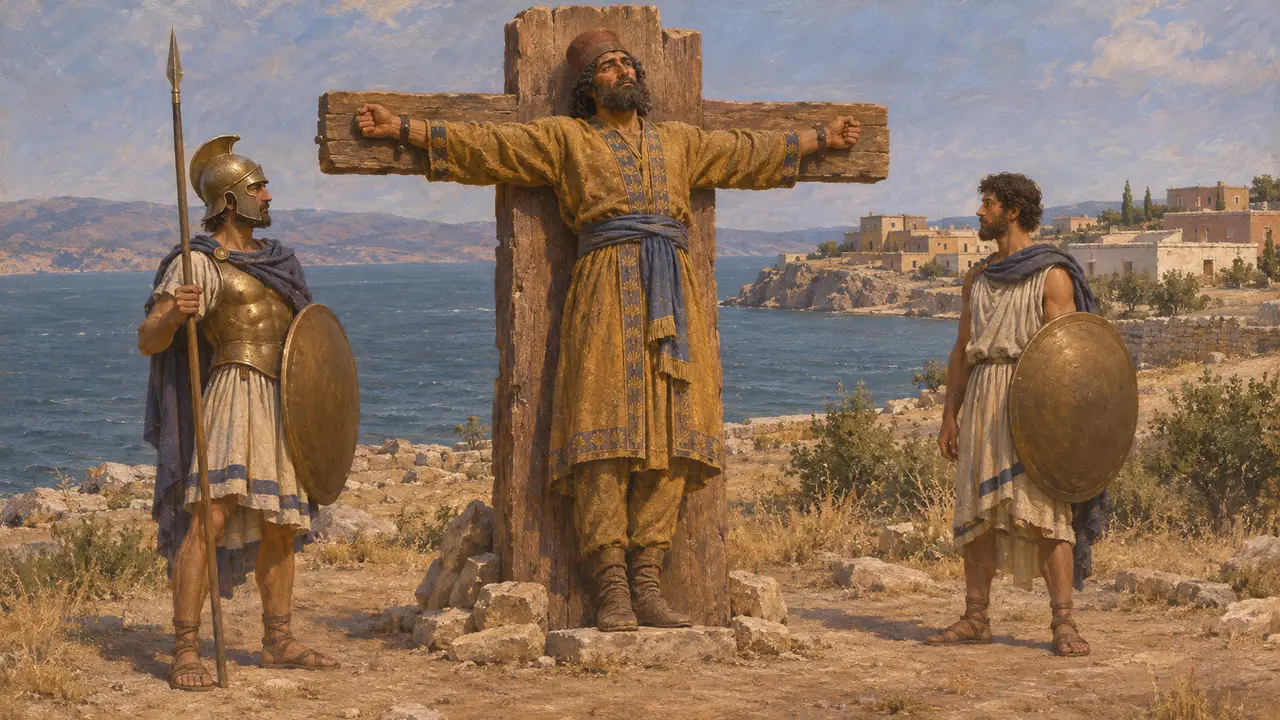
How the death is read
DisputedHerodotus describes nailing to planks, and modern writers often call this crucifixion, though the Greek wording is not exact. Historians also debate how far the story is shaped to close the Histories, with the Athenians punishing a Persian for the same impiety that Xerxes' expedition had shown. Because only Greek sources tell it, the Persian view of Artayctes is unknown.
Herodotus 9.120
Sources
- Herodotus 9.114-120
- Herodotus 7.33
- Thucydides 1.89