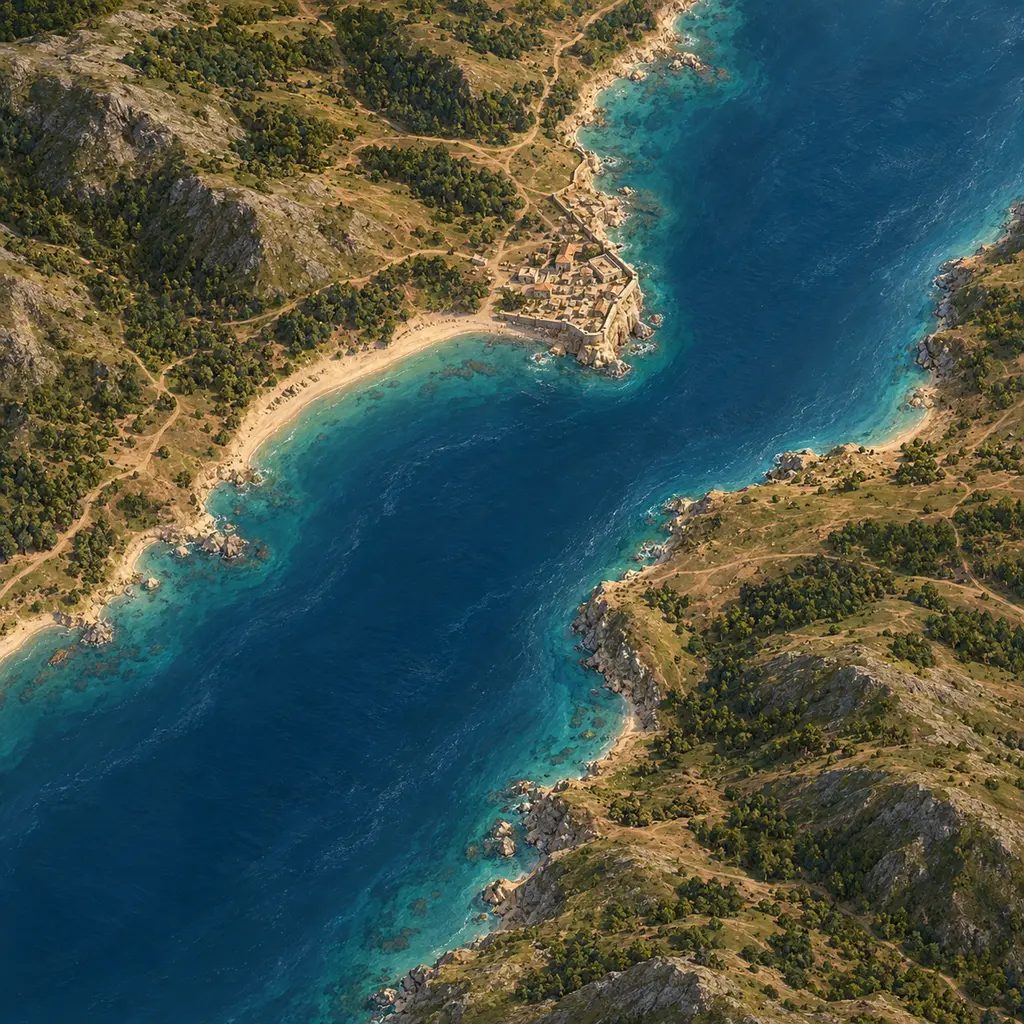
Sestos
Fortress town on the Hellespont, besieged and taken by Athens, 479-478 BCE
In the game: Mycale
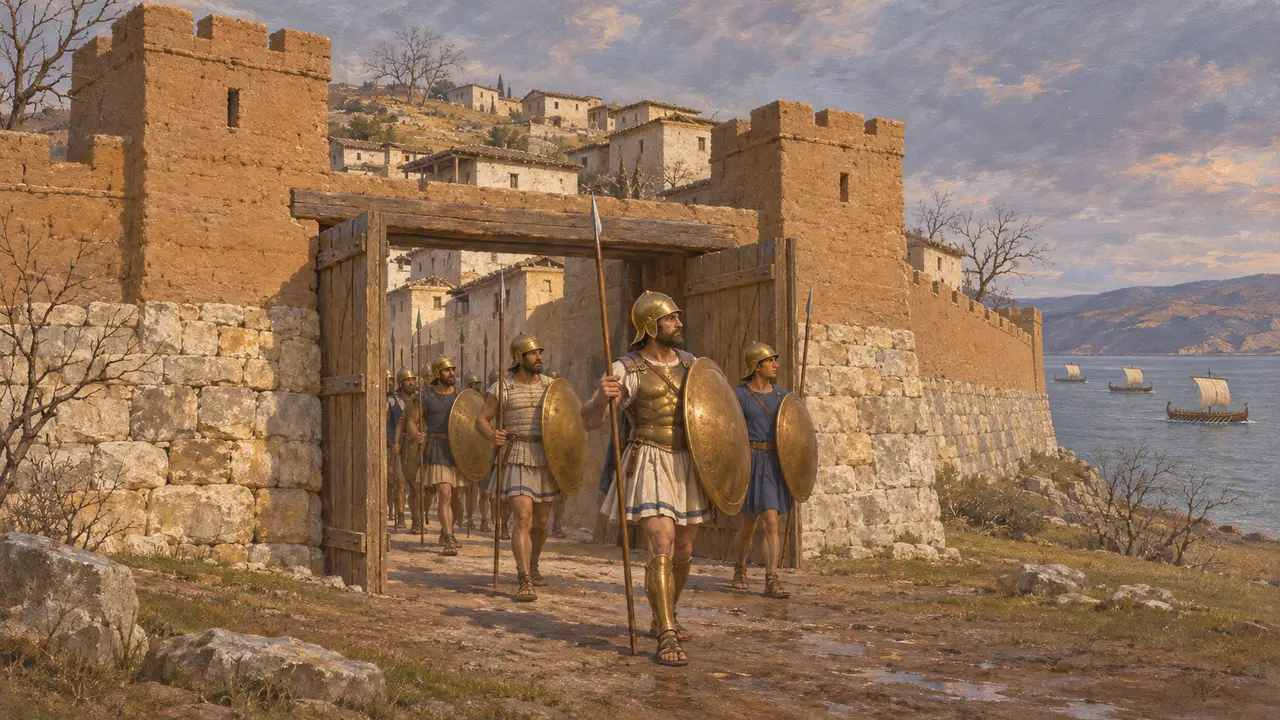
Sestos was a Greek town on the European shore of the Hellespont, facing Abydos across the strait. Under Persian rule it guarded the main crossing between Asia and Europe. After the Greek victory at Mycale in 479, an Athenian fleet besieged and captured it, and the siege is the last event Herodotus narrates in his Histories.
In the game: The Mycale epilogue includes the fight at Sestos and the House of Sestos, though the real siege was an Athenian blockade lasting months. The sources describe no particular house at Sestos.
A crossing between two continents
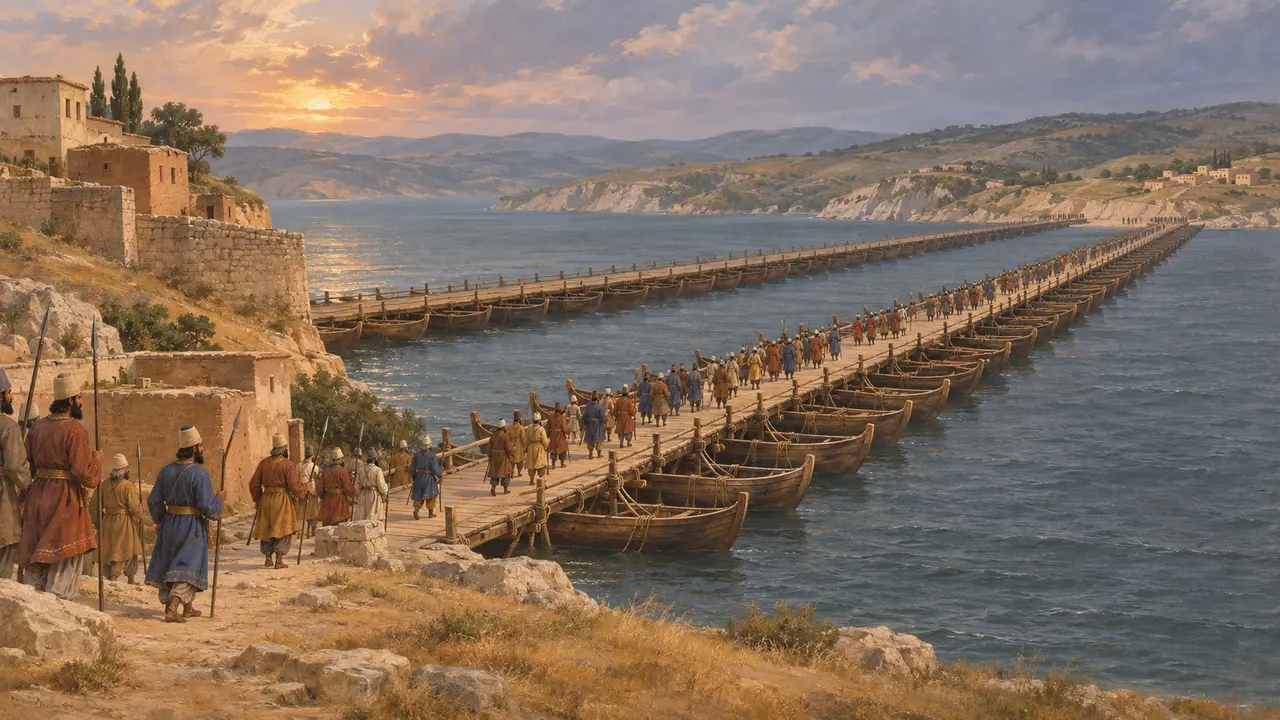
Ancient accountHerodotus says that Darius came back from his Scythian campaign by way of Sestos and crossed from there to Asia by ship. In 480 Xerxes' two bridges of boats ran from Abydos to a headland on the European side between Sestos and Madytus. Whoever held Sestos controlled the main crossing of the strait.
Herodotus 4.143; Herodotus 7.33-36
The siege after Mycale
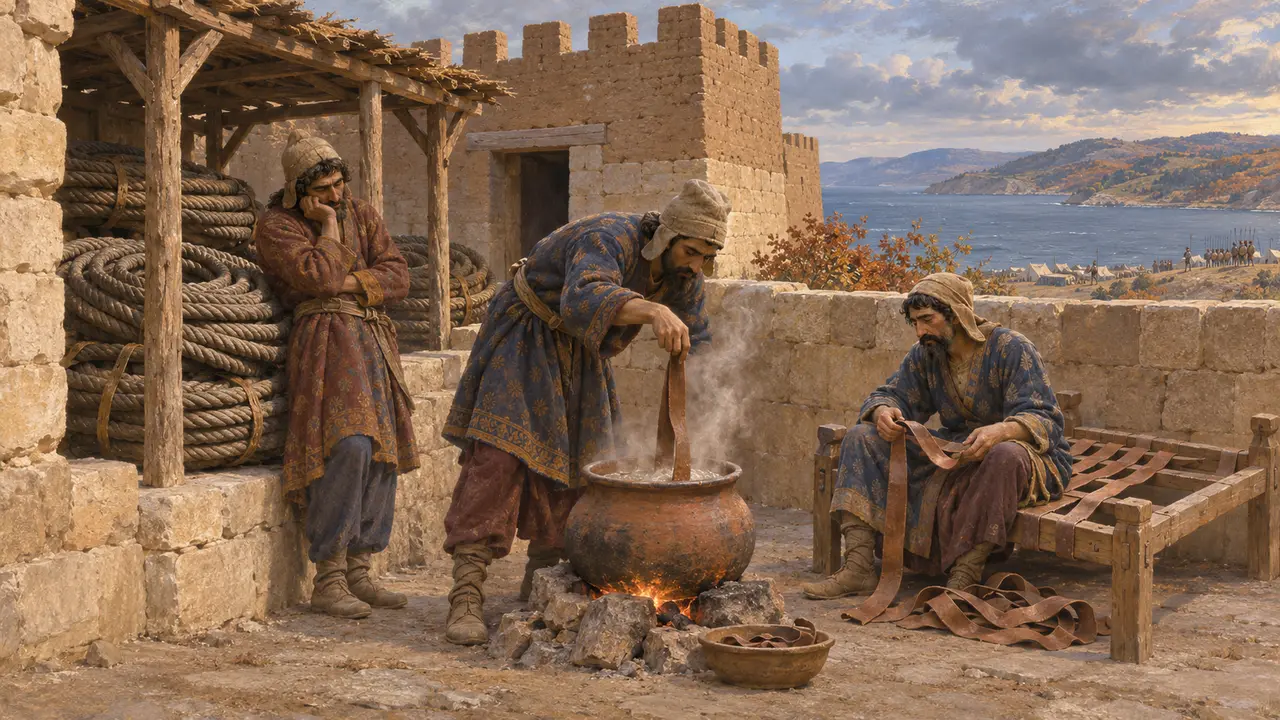
Ancient accountHerodotus says the Greek fleet sailed from Mycale to break Xerxes' bridges and found them already gone. Leotychides and the Peloponnesians went home, but the Athenians under Xanthippus stayed and besieged Sestos, the strongest fortress in the area, where the Persians had gathered and stored the bridge cables. The siege dragged on into autumn until the defenders were boiling the leather straps of their beds for food.
Herodotus 9.114-118
The fate of Artayctes
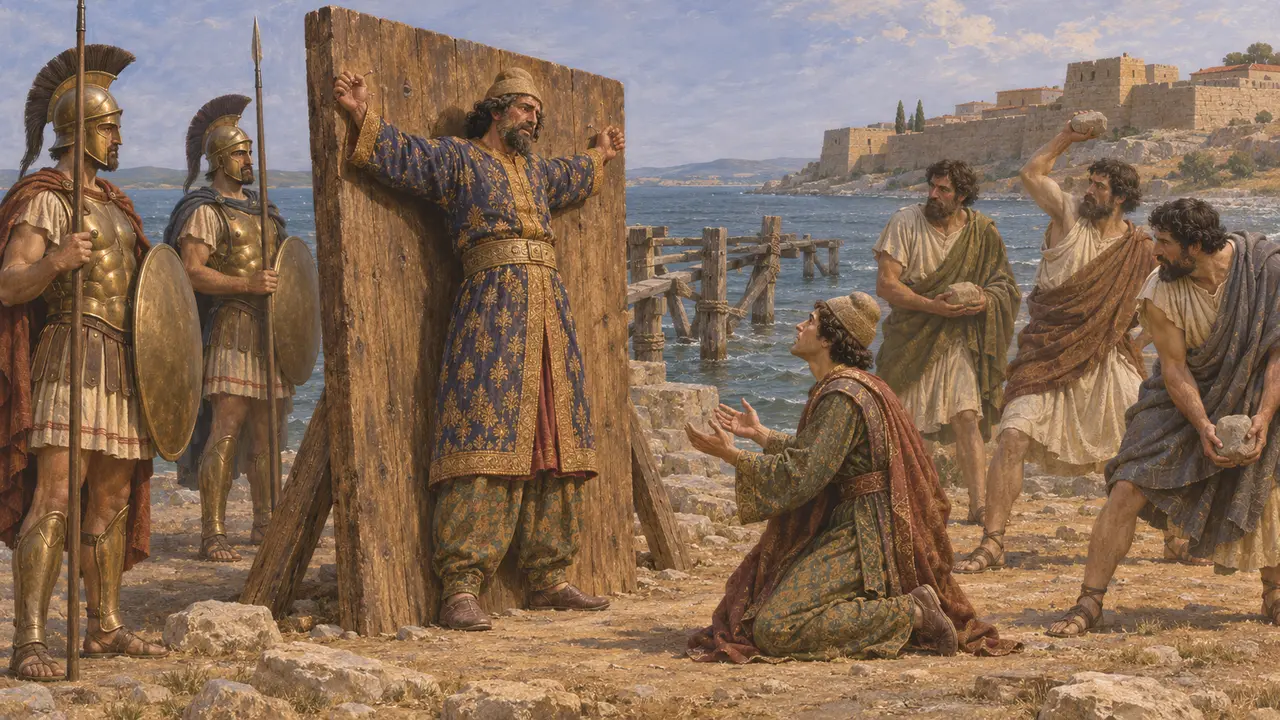
Ancient accountThe Persian governor was Artayctes, whom Herodotus accuses of looting the shrine of the hero Protesilaus at nearby Elaeus. He and another Persian, Oeobazus, escaped by night. Herodotus says Thracians caught Oeobazus and sacrificed him to their god, while the Athenians captured Artayctes, nailed him to a plank where the bridge had reached land, and stoned his son before his eyes.
Herodotus 9.116-120; Herodotus 7.33
The omen of the salted fish
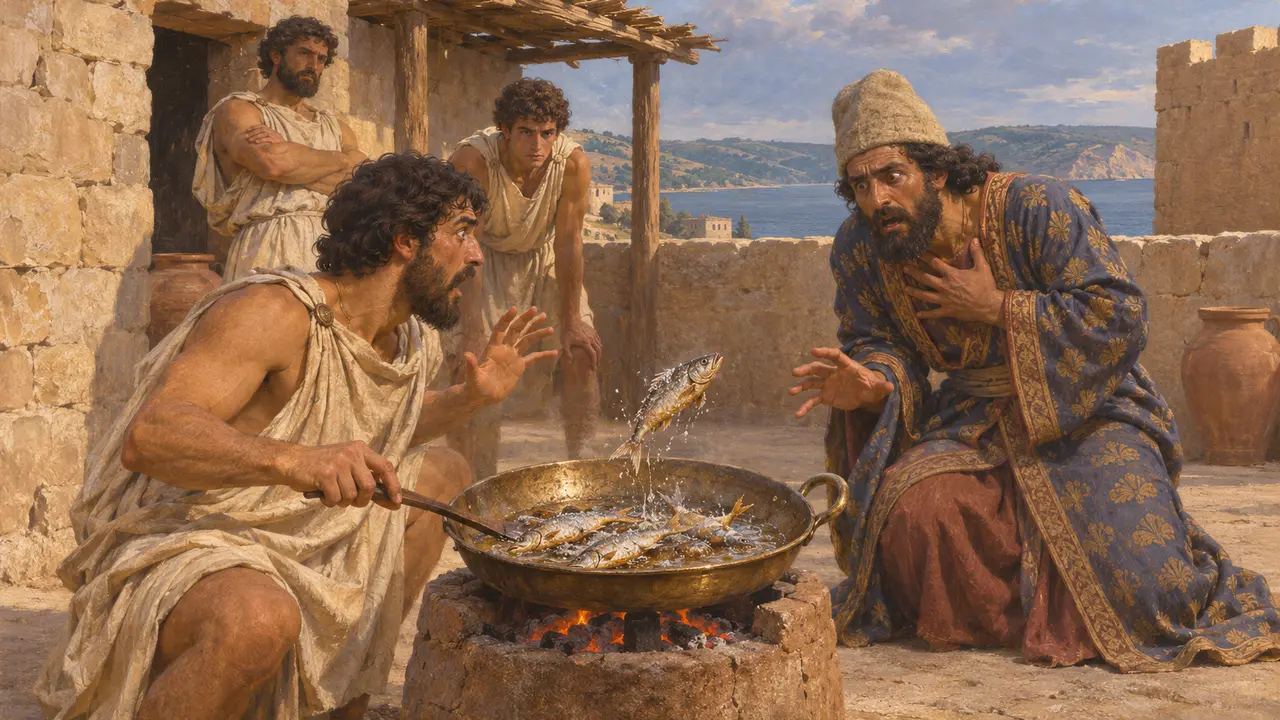
Later legendHerodotus tells that while a guard was cooking salted fish, the fish leapt and twitched in the pan. Artayctes took this as a sign from Protesilaus that the dead hero could still punish him, and offered a ransom, which was refused. The story is shaped as a moral tale about sacrilege and its reward.
Herodotus 9.120
End of a war or start of an empire
DisputedHerodotus places the fall of Sestos in autumn 479, while Thucydides says the Athenians took it after wintering there, so it may have fallen early in 478. Historians also debate its meaning: Herodotus closes his story here, but Thucydides treats the siege as the start of the period in which Athens led the Greeks and built its own power in the Aegean.
Thucydides 1.89; Herodotus 9.121
Sources
- Herodotus 9.114-121
- Herodotus 7.33-36
- Thucydides 1.89
- M. A. Flower and J. Marincola, Herodotus: Histories Book IX, 2002
- P. Briant, From Cyrus to Alexander, 2002