Abydos
Greek city on the Asian shore of the Hellespont, the bridgehead of Xerxes in 480 BCE
In the game: Level 9: The Canal
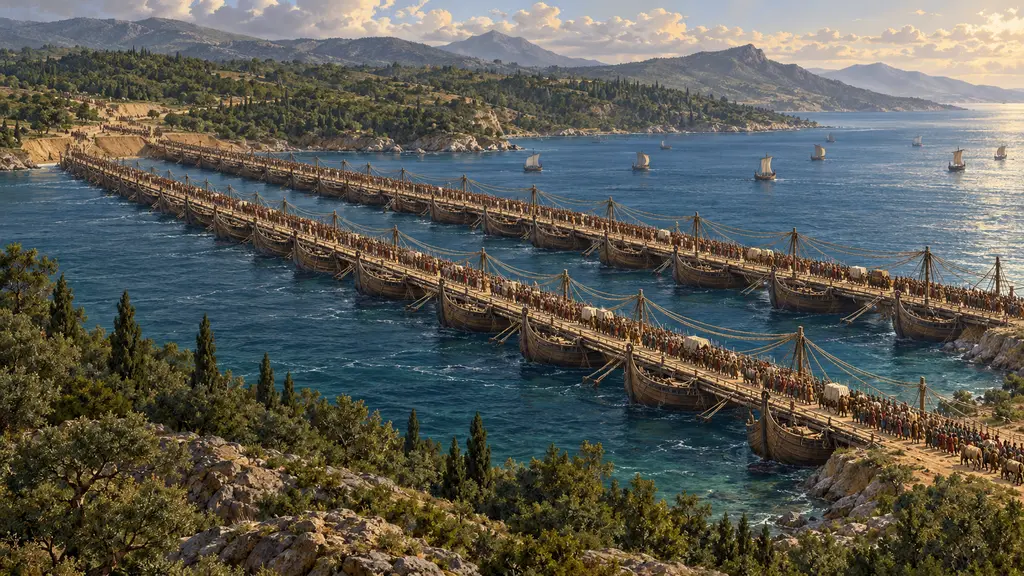
Abydos was a Greek town on the Asian side of the Hellespont, at one of the narrowest points of the strait. In 480 Xerxes' engineers anchored the Asian end of his two ship bridges here, and the King reviewed his army and fleet from a hill above the town before crossing into Europe.
In the game: The game marks Abydos as the place where Xerxes bridged the Hellespont. This matches Herodotus, who puts the Asian end of the bridges at Abydos and the European end on a headland near Sestos.
A Milesian town on the narrows
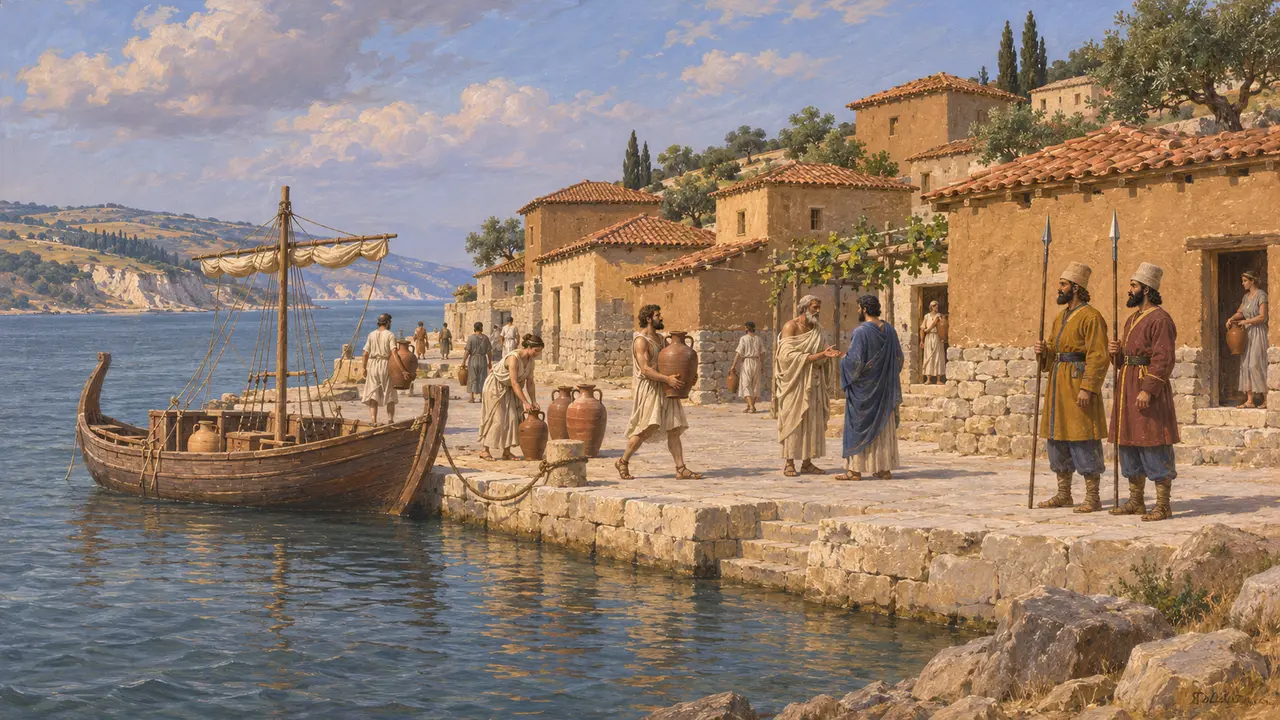
Ancient accountStrabo and Thucydides describe Abydos as a colony of Miletus, and Strabo adds that the Lydian king Gyges allowed the settlement. Under Darius it was ruled by a local tyrant: Herodotus lists Daphnis of Abydos among the Greek rulers who guarded the King's bridge on the Ister. During the Ionian Revolt it joined the rising, and Herodotus says the Persian general Daurises retook it along with other Hellespont towns.
Strabo, Geography 13.1.22; Thucydides, book 8; Herodotus 4.138; Herodotus 5.117
The bridges of 480
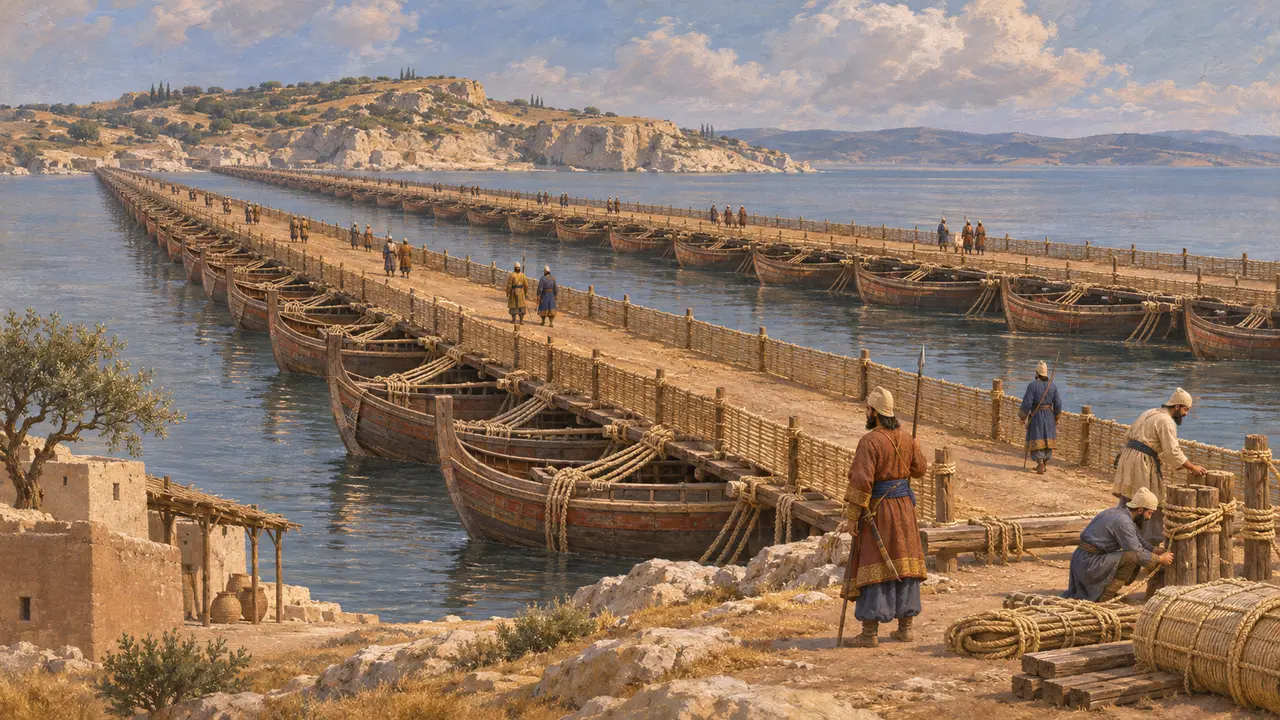
Ancient accountHerodotus says the bridges ran from Abydos to a rocky headland on the European shore between Sestos and Madytus, a crossing he gives as seven stades. A storm broke the first pair. The rebuilt bridges rested on lines of ships, about 360 in one and 314 in the other by his count, tied with cables of flax and papyrus, with a roadway of planks and earth laid on top.
Herodotus 7.33-36
The King's review above the town
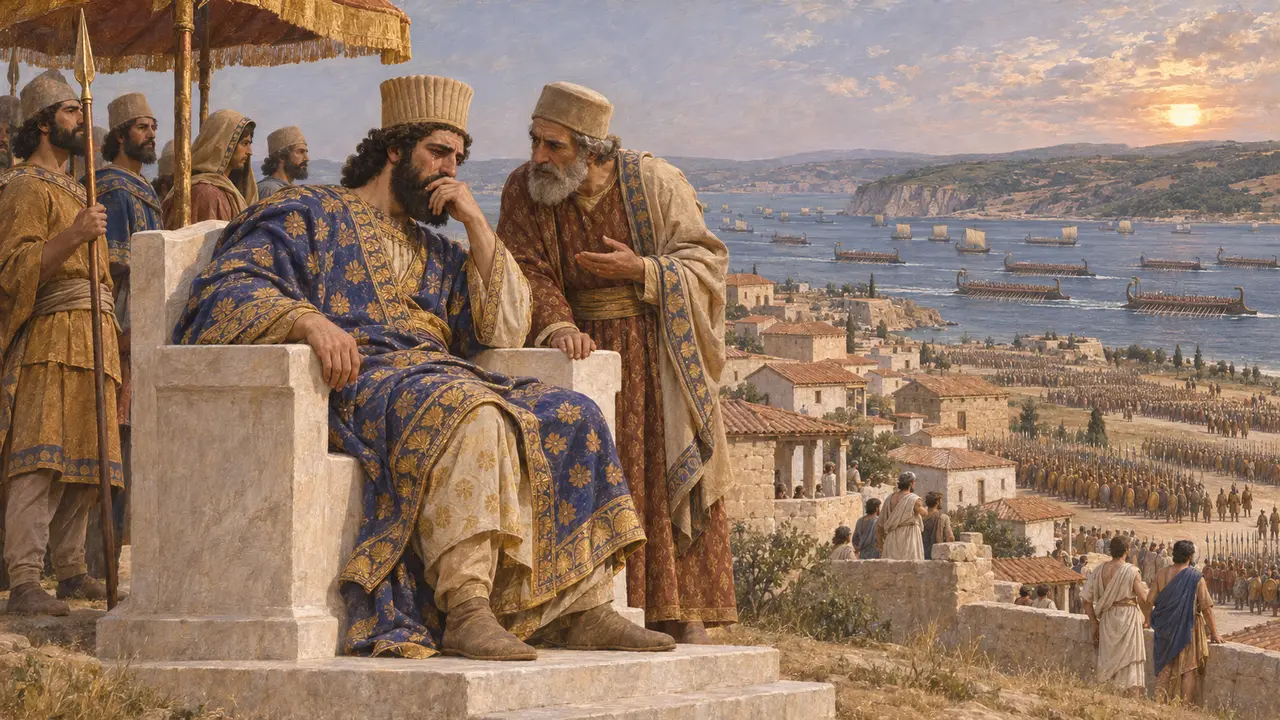
Ancient accountHerodotus tells that the people of Abydos had built a throne of white stone on a hill, from which Xerxes watched his army and a race between his ships. Seeing the strait full of vessels, he is said to have wept at the shortness of human life, and Herodotus gives a long talk on this theme between Xerxes and his uncle Artabanus. The talk is a literary set piece, best read as Herodotus's reflection rather than a record of words spoken.
Herodotus 7.44-52
Punishing the strait
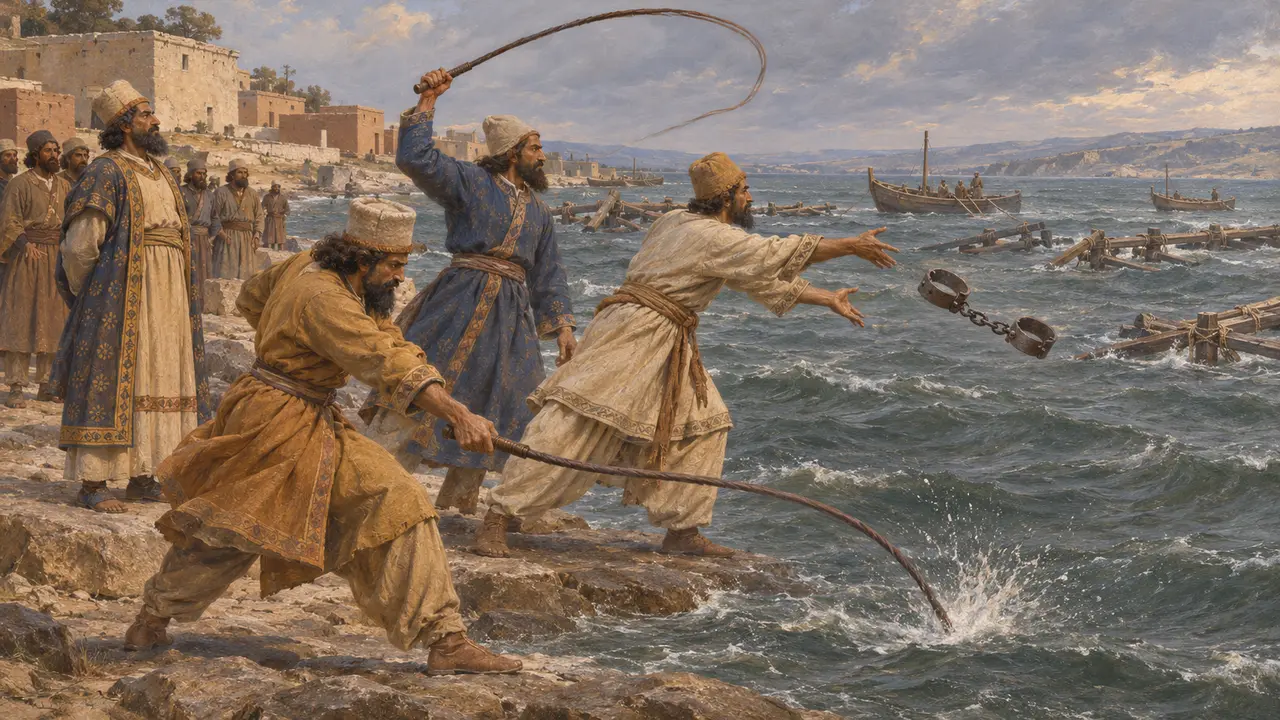
DisputedHerodotus says that after the storm Xerxes had the Hellespont given three hundred lashes and a pair of fetters thrown into it, and had the bridge builders beheaded. Some historians accept a real act behind the story, perhaps a ritual against hostile waters, while others see a Greek tale built to show royal arrogance. No Persian source mentions it.
Herodotus 7.35; P. Briant, From Cyrus to Alexander, 2002
Retreat and aftermath
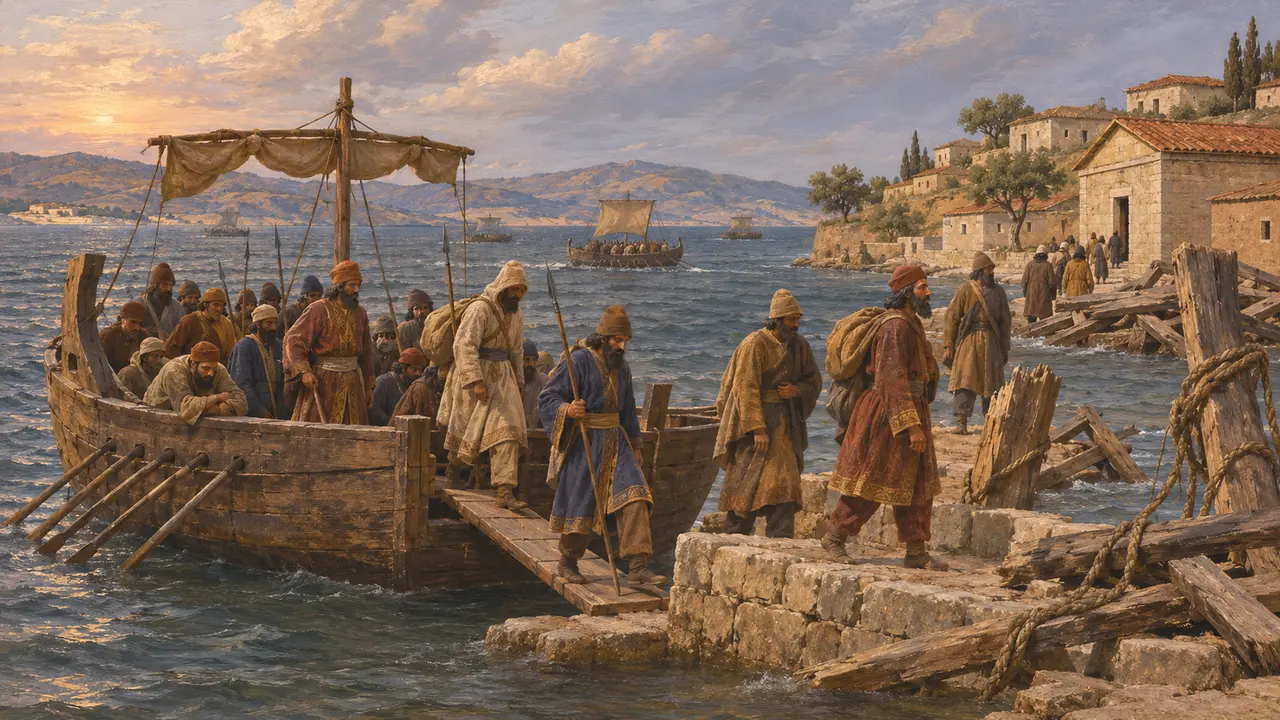
Ancient accountAfter Salamis, Herodotus says, the army reached the strait to find the bridges wrecked by storms and crossed by ship to Abydos. In 479, after Mycale, the Greek fleet sailed to Abydos to cut the bridges and found them already gone. Leotychides and the Peloponnesians then sailed home, while the Athenians under Xanthippus stayed to besiege Sestos on the far shore.
Herodotus 8.117; Herodotus 9.114
Sources
- Herodotus, Histories, book 7
- Herodotus 8.117; 9.114
- Strabo, Geography 13.1.22
- Thucydides, book 8
- P. Briant, From Cyrus to Alexander, 2002